Intro to AI
What is supervised Learning (Learn By Example)?
data is trained on labeled data -maps between input to labeled output.
acts as a teacher → goal is to train the model or machine to make predictions and decisions based on the data that is given.
What is classification?
sorts data into predefined classes and apply learned characteristics to them.
predicts discrete label or category for given input
Ex: Spam detection, disease detection, image classification, bank loan prediction
What is regression?
used to predict a continuous numerical value of a given input
Ex: house price, stock price
What is unsupervised Learning (learn By Observations)?
trained on unlabeled data
model learns by finding patterns - model learns through observations and finds structure in the data.
What is clustering?
groups data points into clusters where data points in the clusters are similar to each other
Ex: search engine, face recognition, targetted marketing, recommender system
What is Association Rule Mining?
used to discover interesting relationships or patterns between variables in large datasets (often in the form of if-then rules)
Ex: Market Basket: identifying which products are mainly purchased tgt, recommendation system, census data, medical diagnosis
What is reinforcement learning (Learn from Mistakes)?
agent is rewarded or penalized based on correct or wrong actions - the agent interacts with the environment and finds the best outcome, leading to less mistakes overtime
model trains itself based on the reward points it gets
What are the 3 steps for ML?
Train - train model with data
Validate - evaluating model’s performance on another data set and fins tuning the hyperparameters without affecting final result
Test - final test, use on test set (not involved in training or validating)
we test to avoid overfitting
model performs well for specific trained set and not for unseeded data (too specific to that set)
the model should provide generalization
should be applicable to different data
retrain if model does not work anymore
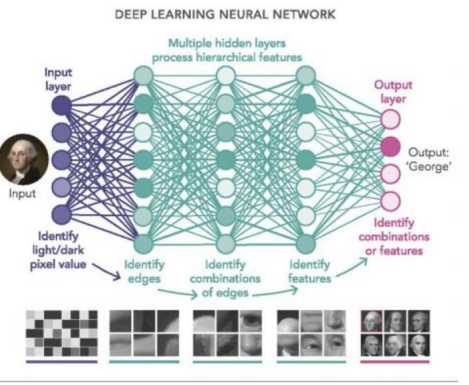
What are neural networks?
aims to mimic how the human brain works + its structure
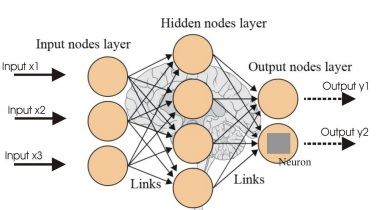
consists of layers of interconnected nodes (neurons) that signal e/o
good for complex tasks like facial recognition, nlp, speech recognition
In human brain, dendrites: input, cell body: processor, synapse: link, axon: output
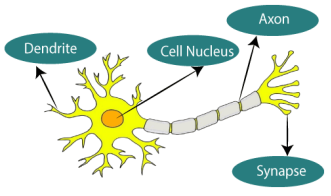
Neural Network:
Input Layer: takes in raw data as input - node represents feature of data
Hidden Layer: process input through series of transformation
they learn and extract patterns - no. of hidden noes represent model’s complexity
Output Layer: produces final result
e.g. class label or classification or number for regression
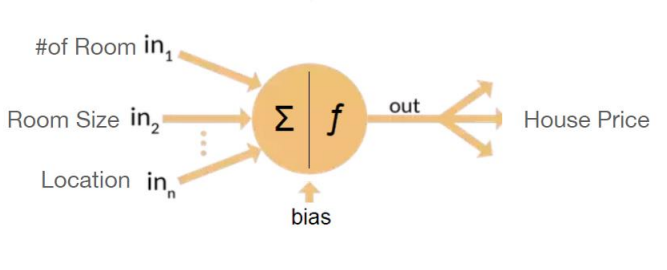
Simple Neural network with bias calc. and no hidden layers
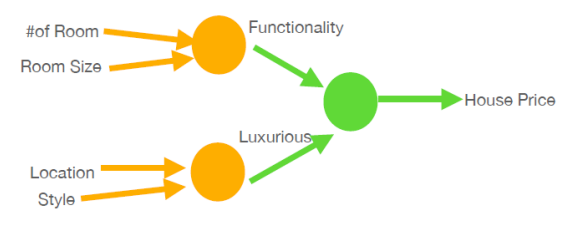
more complex with hidden layers
In facial recognition, features are transformed into matrix of numbers that ML models can use to identify faces
Autoencoders: NN that encodes input data into lower dimensional rep. and converts it back to og dimension
dimension reduction, anomaly detection
learn compressed rep. (encoding) while preserving important features
How do you evaluate the performance of your model?
Split data into 3 sets (not so small data)
1. Training Set: contains majority of data used to teach/train models to recognize patterns
Ex: perfect weight in MLP: learns weights between neurons to best fit data
2. Validating Set: tune hyperparameters and avoid overfitting
Finding right parameters (fine tunning)
Ex: best hidden unit in MLP
3. Test set: evaluate model’s performance on completely unseen data
used after training and validation process is complete
parameters are fixed
output is error metric: accuracy, precision, recall, MSE
How can we tell how well our machine works in supervised learning?
Regression: How close the system matches the OG data
Classification: how close you can predict the outcomes
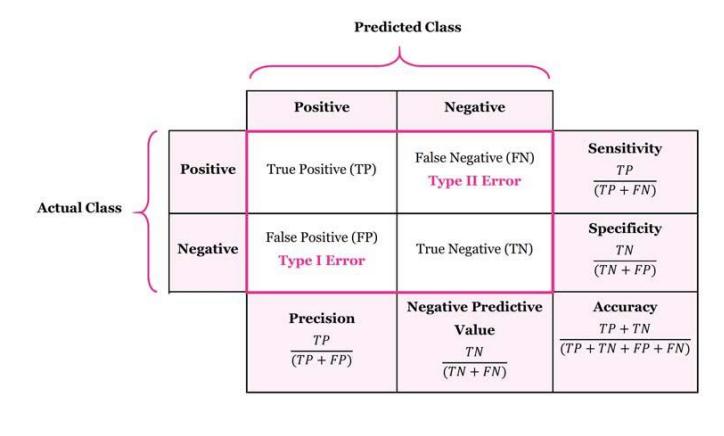
What is the accuracy rate?
ratio of correctly predicted instances
(TP + TN) / Total
best when data is balanced
What is recall/sensitivity?
correctly predicted positive instances over the actual total positive instances
TP/(TP + FN)
how well model identifies actual positives
What is precision?
correctly predicted positive instances/ total predicted positive instances
Of all the predicted positives, which of them are actually positive?
how accurate is the model when predicting positives
Ex: in medical diagnosis, high precision minimizes false alarms
TP/ (TP + FP)
What are all the rates?
TP: TP/(TP + FN)
TN: TN/(TN + FP)
FP: FP/(FP + TN)
FN: FN/(TP + FN)
What is specificity?
correctly predicted negative rate/ total negative instances
TN/ (TN + FP)
how well model identifies actual negative value
What are some applications of generative AI?
Image/ Video generation
Music/sound generation
text generation and copyright
healthcare: personalized treatment plans
gaming: character and environmental creation
customer service and chatbots: virtual assistants
What is an ROC curve?
plots FPR (x-axis) and TPR(y -axis), the closer curve is to 1, the better
the bigger the area under the curve, the better the classification
can properly identify between positives and negatives
What is a chatbot?
computer program designed to simulate conversations with human users
What is natural language understanding?
uses computer software to understand text/speech input
Parsing: breaks text into structured format that computers can understand
allows computers to respond to human text instead of relying on computer language syntax
makes it possible to carry out dialogue with computers with human language (since human language is complex and ambiguous)
What are the key components of NLU?
Intent Recognition:
identifying the user’s objective
establish meaning of text
Entity Recognititon:
identifies things in the message and extracts details about those entities
Ex: Name: John (person, organization, etc… different groups of entities)
What is the main goal of NLP?
enable computers to understand, interpret and generate human language in a way that is meaningful and relevant.
What are the phases of NLP?
Lexical Analysis:
breaking text into smaller units/ tokens
indeitfyig words, numbers, punctuations
removing spaces and formatting (unnecessary)
Syntactic Analysis:
examines sentence structure
parts of speech
determines how words relate to each other
Semantic Analysis:
understand literal meaning of words and phrases
identify relationships btw. words
synonyms, antonyms
interpret figurative language
Discourse Analysis:
understand relationship btw. sentences
identify main topic and theme
recognize overall structure
track reference (like pronouns) across the text
Pragmatic Analysis:
interprets intent behind words
considers real-world context
understands implied meaning
shift from literal meaning to what text implies in the specific context
What are some examples of NLP?
Googling: Q & A
Summarizattion: text analysis and generation
Machine Translation: translate from one language to another (combines fragments of translations together)
What is genrative AI?
AI that generates new content like images, sounds, text
Ex: Chat, DALLE (image generation), deepfake
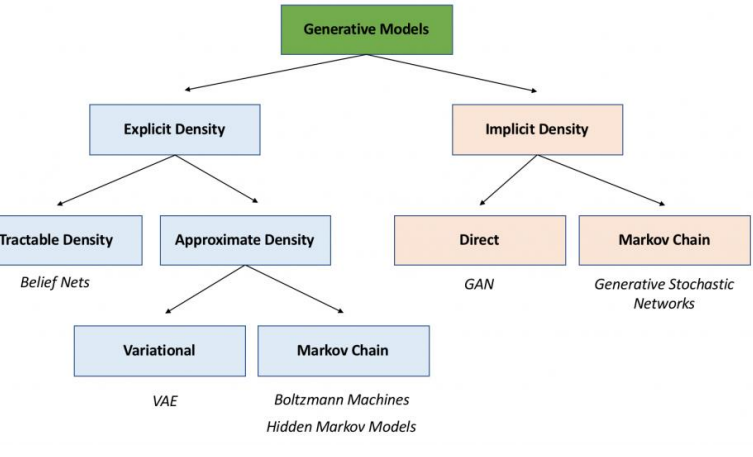
What are the types of generative models?
Explicit Desnity Models
Explicity define PDF (compute likelihood of data points and generate samples from them)
Ex: PixelCNN, Autoregresive models → put together pixel by pixel
Implicity Density Models
Do not define PDF (generate samples directly and learn to approximate data distribution in a non-parametric way)
GANs
What are GANs?
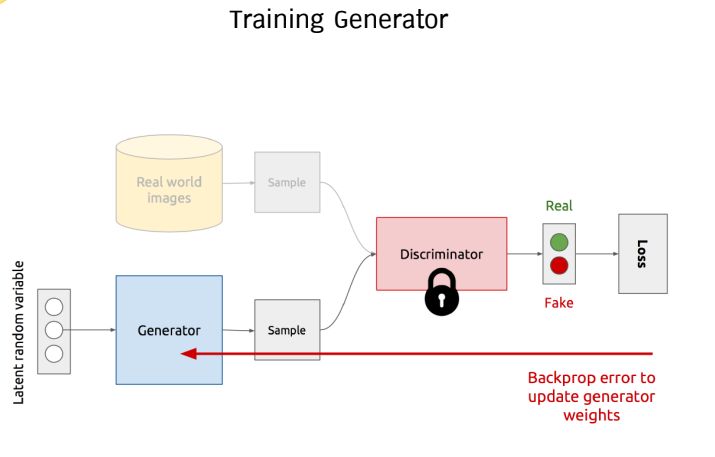
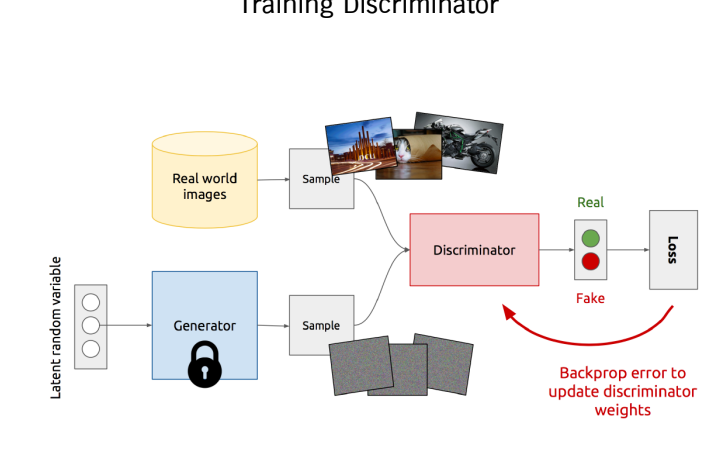
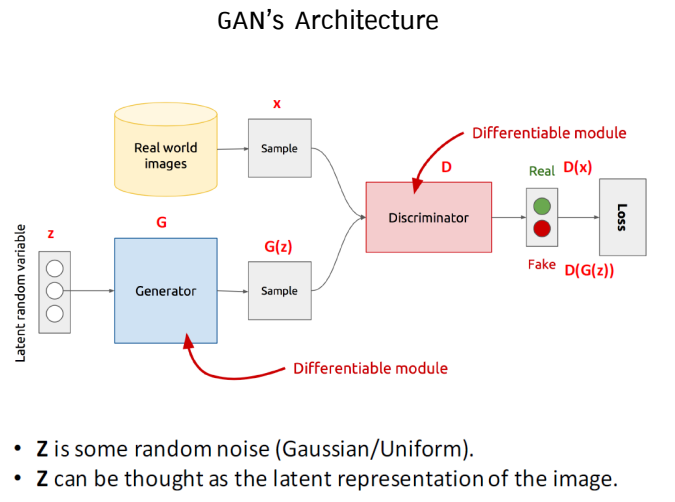
Generative Adversial Networks: 2 part model
Genrator: creates data
Trains by backpropagating to the generator
Discriminator: evaluates authenticity (generated vs. real)
Trains by backpropagating weights from the real and generated image to adjust
What are the steps to training GANs?
Collect and preprocess dataset
train generator and discriminator iteratively
evaluate and fine-tune model
What are deepfakes?
synthetic media where a person’s likeliness, action ,voice is replaced with another using models like GANs
Ex: Entertainment: movies, dubbing, Education: re-enactments, Creative Arts
What are some ethical issues concerning deepfakes?
privacy
fraud
damage to reputation
misinformation
manipulation
copyright
How are deepfakes made?
Training: collecting image and vids
AI techniques: GANs
Tools: software like DeepFaceLab
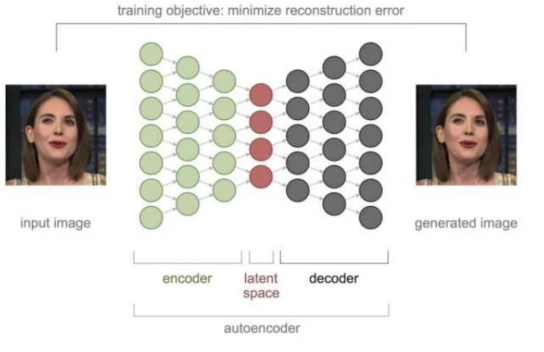
What are autoencoders?
DNN used for generating deepfakes
Encoder: maps input data to lower dimension (captures only details)
Decoder: creates the OG as close as possible
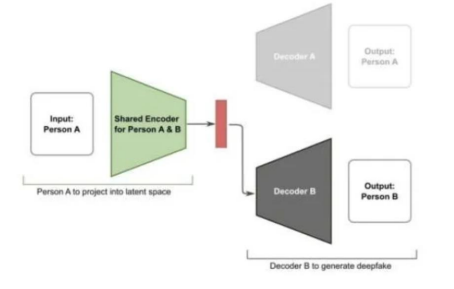
How do shared encoders help in deepfakes?
using shared encoders will produce overlapping latent space
can exhibit same emotion, head posture
What is deep learning?
uses neural networks to mimic the way the brain works
effective for complex tasks
What is computer vision?
allows computers to enable dericing info from images, videos, visual inputs
What are some things we can see in the future with AI?
Customized Chatbots: create their own mini chatbots catering to specific needs
Science: researchers can analyze mass data, discover complex relationships, and uncover patterns
Foreign Policy: accelerate AI development to maintain competitiveness
Climate Crisis: optimizing energy consumption, predicting natural disasters