Metabolism
Chapter 15 Metabolism
Terms
catabolism
fuel → cellular energy
anabolism
require energy
amphibolic pathway
pathway that can be either catabolic or anabolic
oxidation-reduction reaction
electron transfer
group-transfer reaction
transfer of a functional group from one molecule to another
hydrolytic reaction
cleavage of bonds by the addition of water
cleavage of carbon bonds by means other than hydrolysis or oxidation
2 substrates yielding one product or vice versa
when H2O or CO2 are a product, a double bond is formed
isomerixation reaction
rearrangement of atoms to form isomers
ligation reaction
formation of covalent bonds
Chapter 16 Glycolysis
Pathway
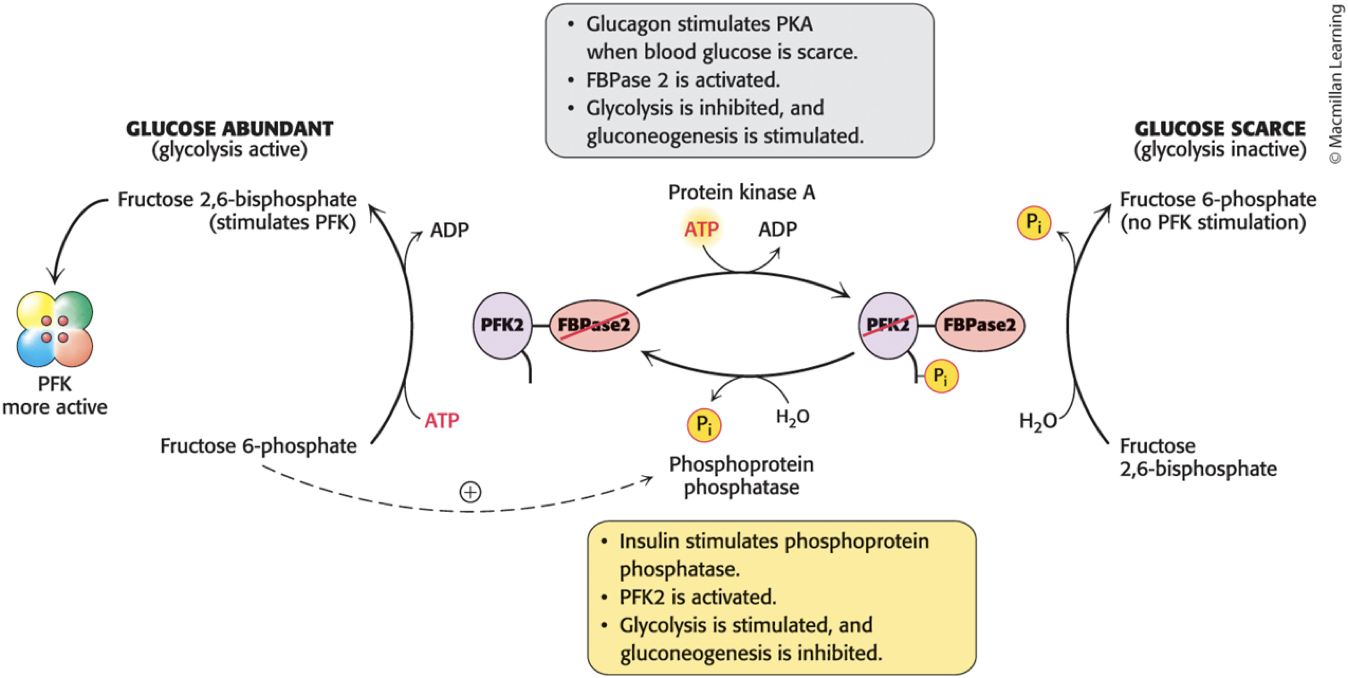
Regulation
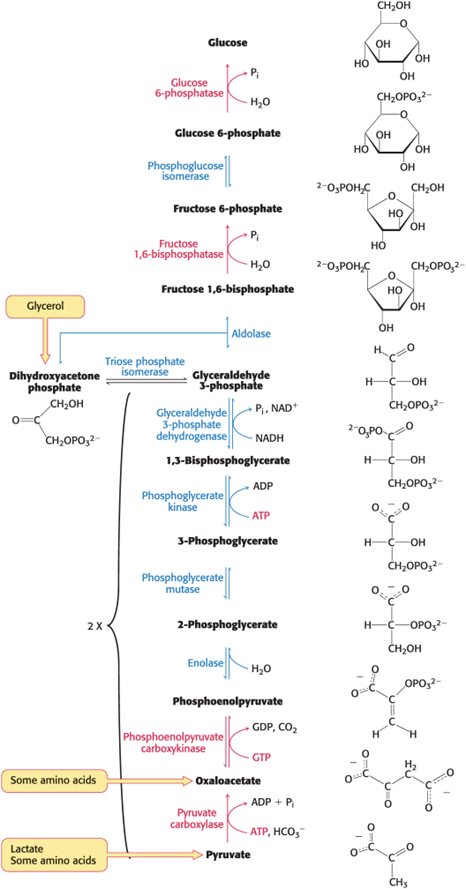
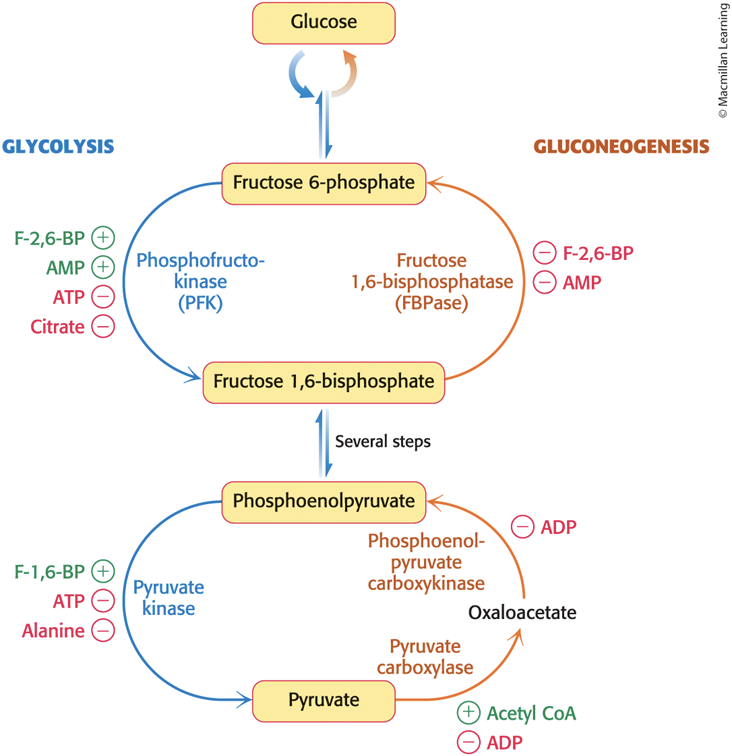
glycolysis predominates when energy or glycolytic intermediates are needed
gluconeogenesis predominates when there is a surpluss of energy and glucose precursors
energy needed → AMP inhibits fructose 1,6-biphosphatase, stimulates phosphofructokinase
high ATP levels → ATP and citrate inhibit phosphofructokinase, decrease in AMP relieves fructose 1,6-biphosphatase inhibition
pyruvate kinase inhibited by allosteric effectors ATP and alanine
pyruvate carboxylase and phosphoenolpyruvate carboxykinase inhibited by ADP
pyruvate carboxylase activated by acetyl CoA
Chapter 17 Citric Acid Cycle
Pathway
Regulation
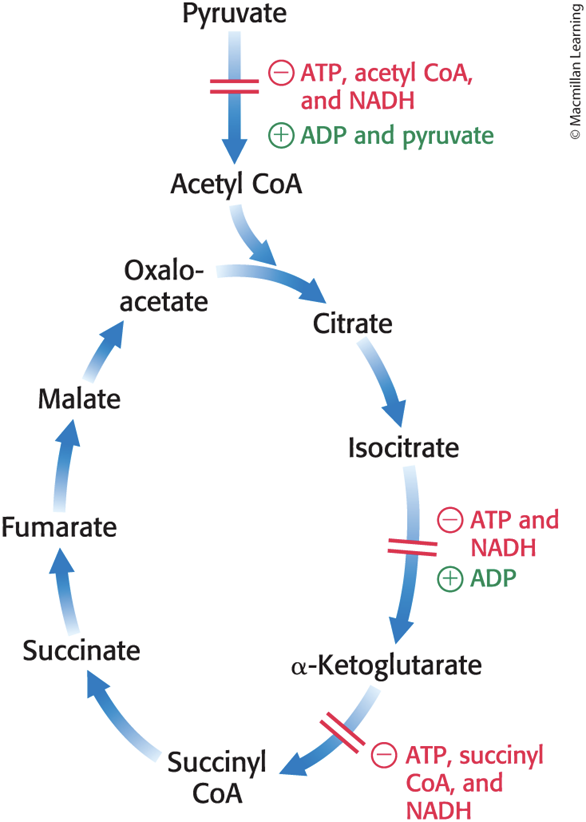
Pyruvate dehydrogenase kinase (PDK) phosphorylates (turns off) E1
Pyruvate dehydrogenase phosphatase (PDP) dephosphorylates E1
PDK and PDP associated with E2-E3-BP core complex
high NADH, acetyl CoA, and ATP activates PDK
high ADP and pyruvate inhibit PDK
Ca2+ stimulates PDP
Chapter 18 Oxidative Phosphorylation
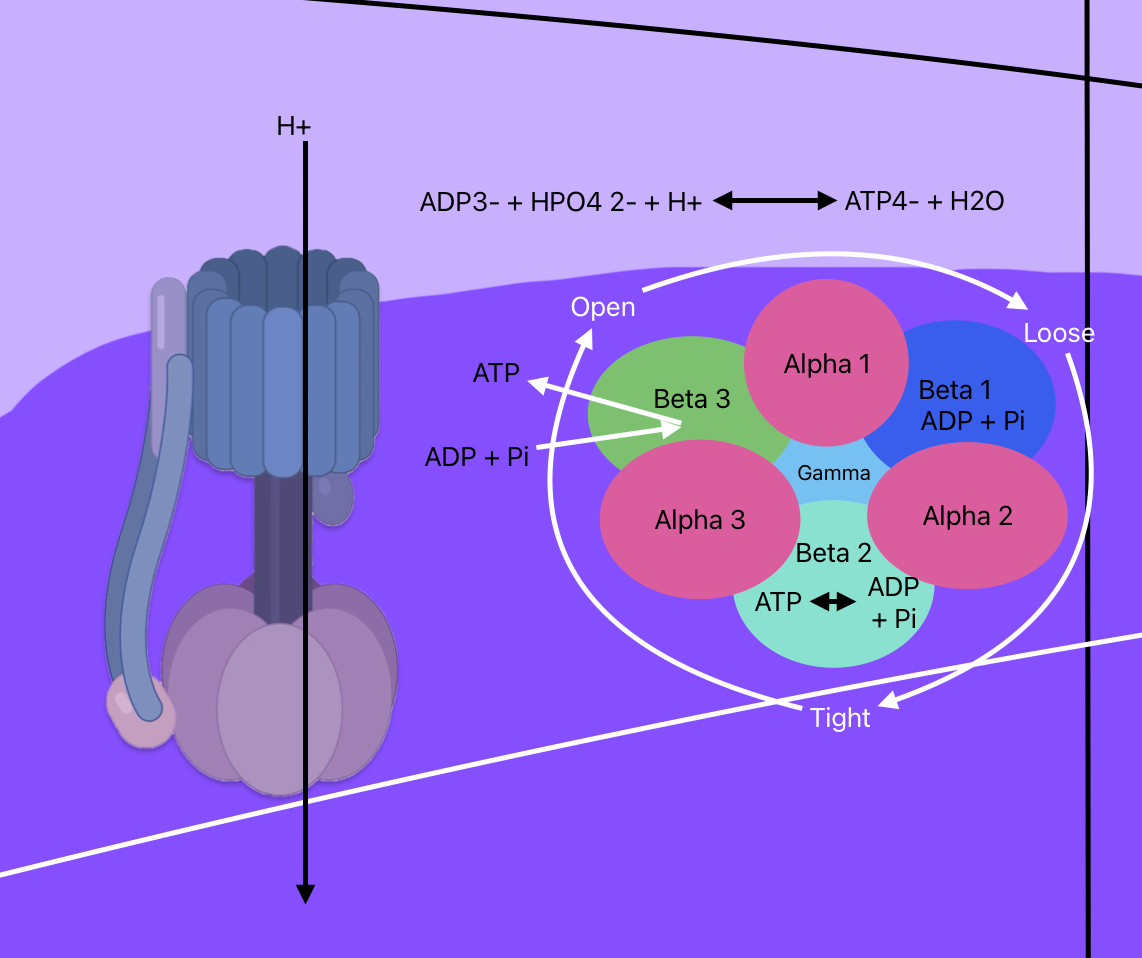
Chapter 20 Pentose Phosphate Pathway
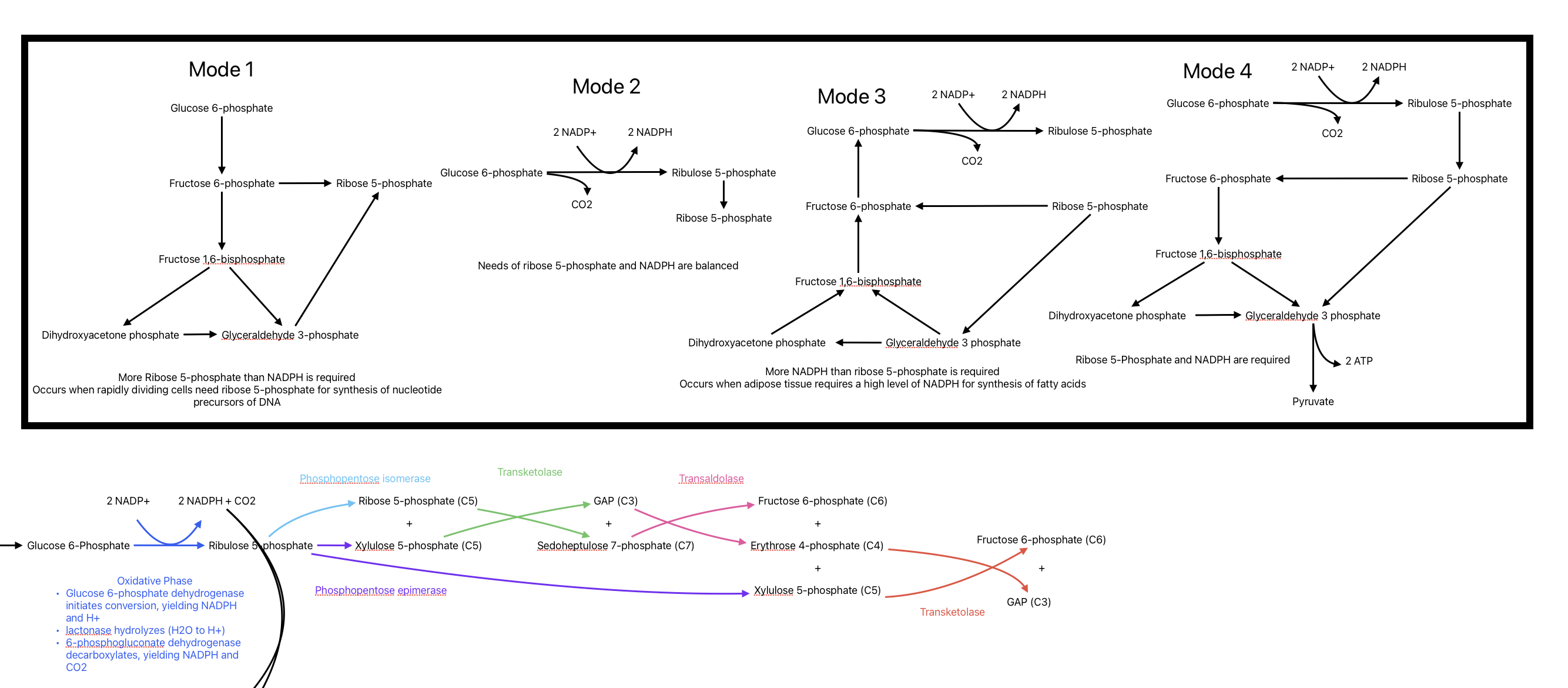
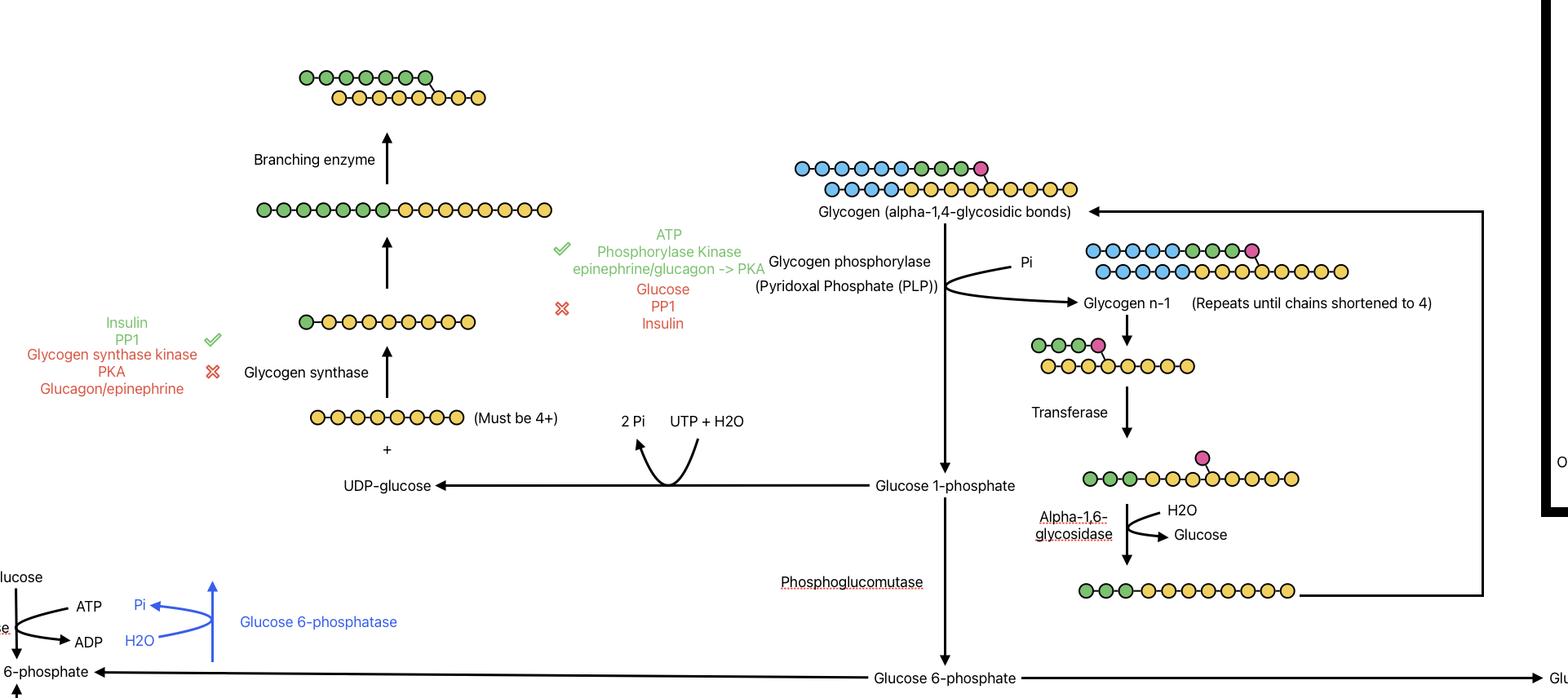
Chapter 21 Glycogen Metabolism
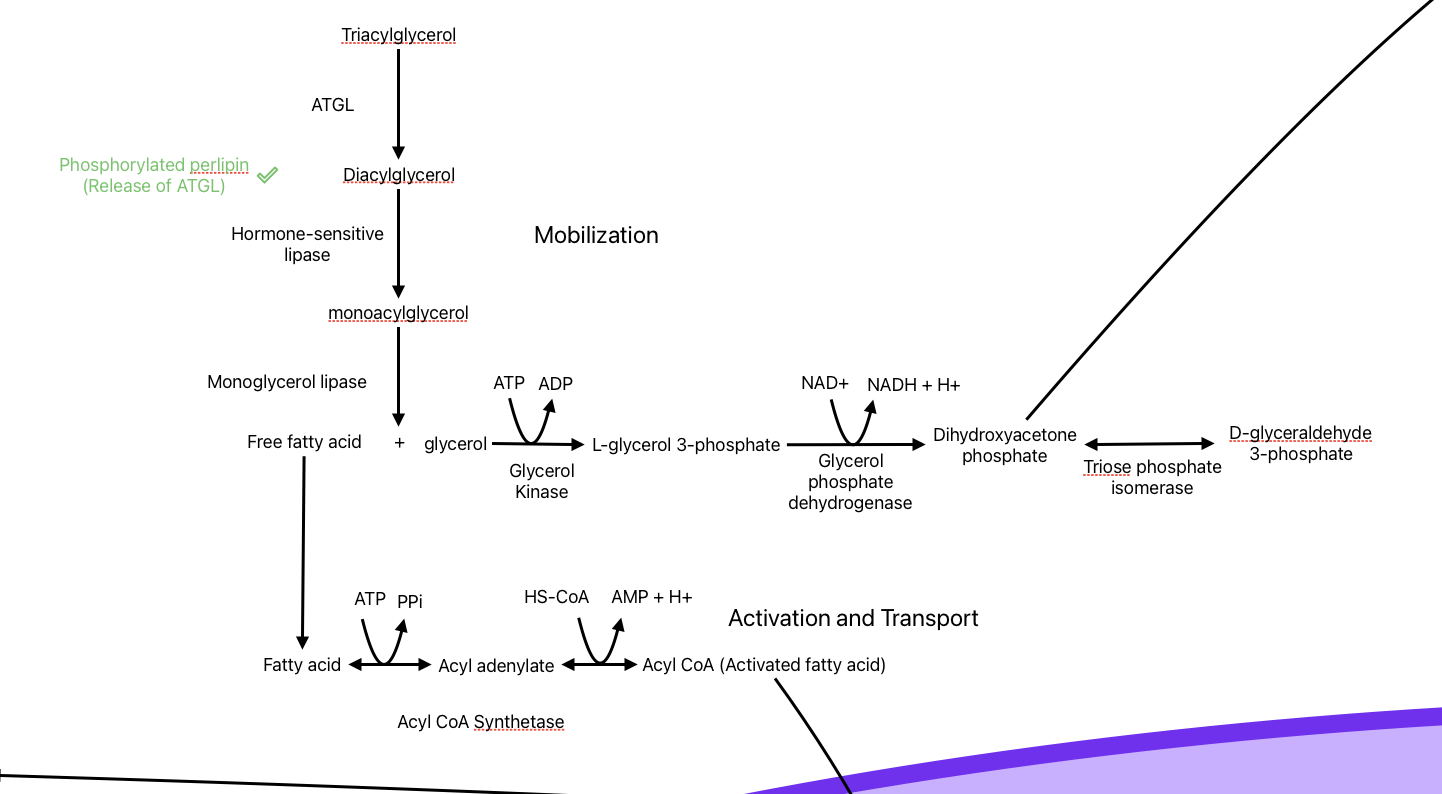
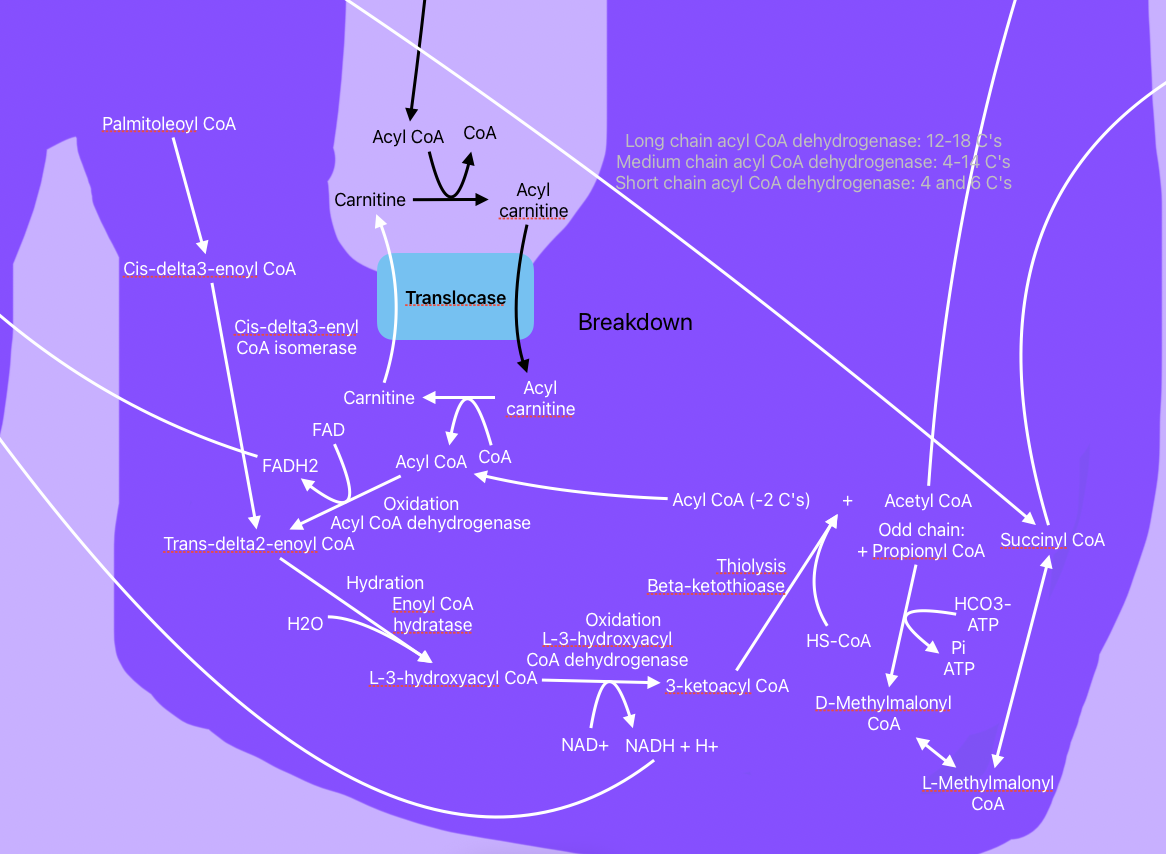
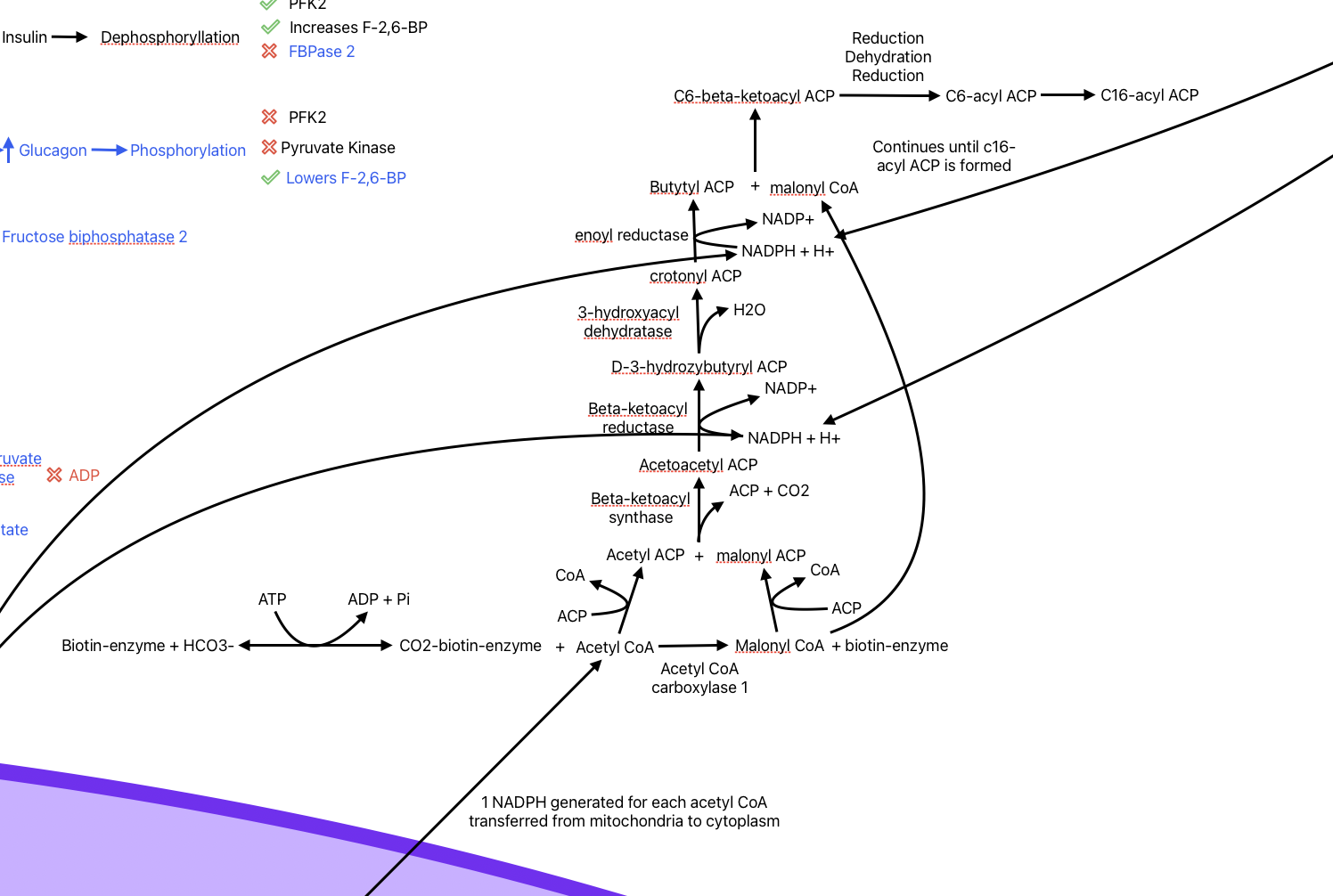
Chapter 22 Fatty Acid and Triacylglycerol Metabolism
Chapter 23 Protein Turnover and Amino Acid Catabolism
Essential Amino acids
Histidine
Isoleucine
Leucine
Lysine
Methionine
Phenylalanine
Threonine
Tryptophan
Valine
serine → pyruvate + NH4+
cysteine → pyruvate + H2S, SCN-, or SO3 2-
glycine → serine → pyruvate + NH4+
threonine → pyruvate
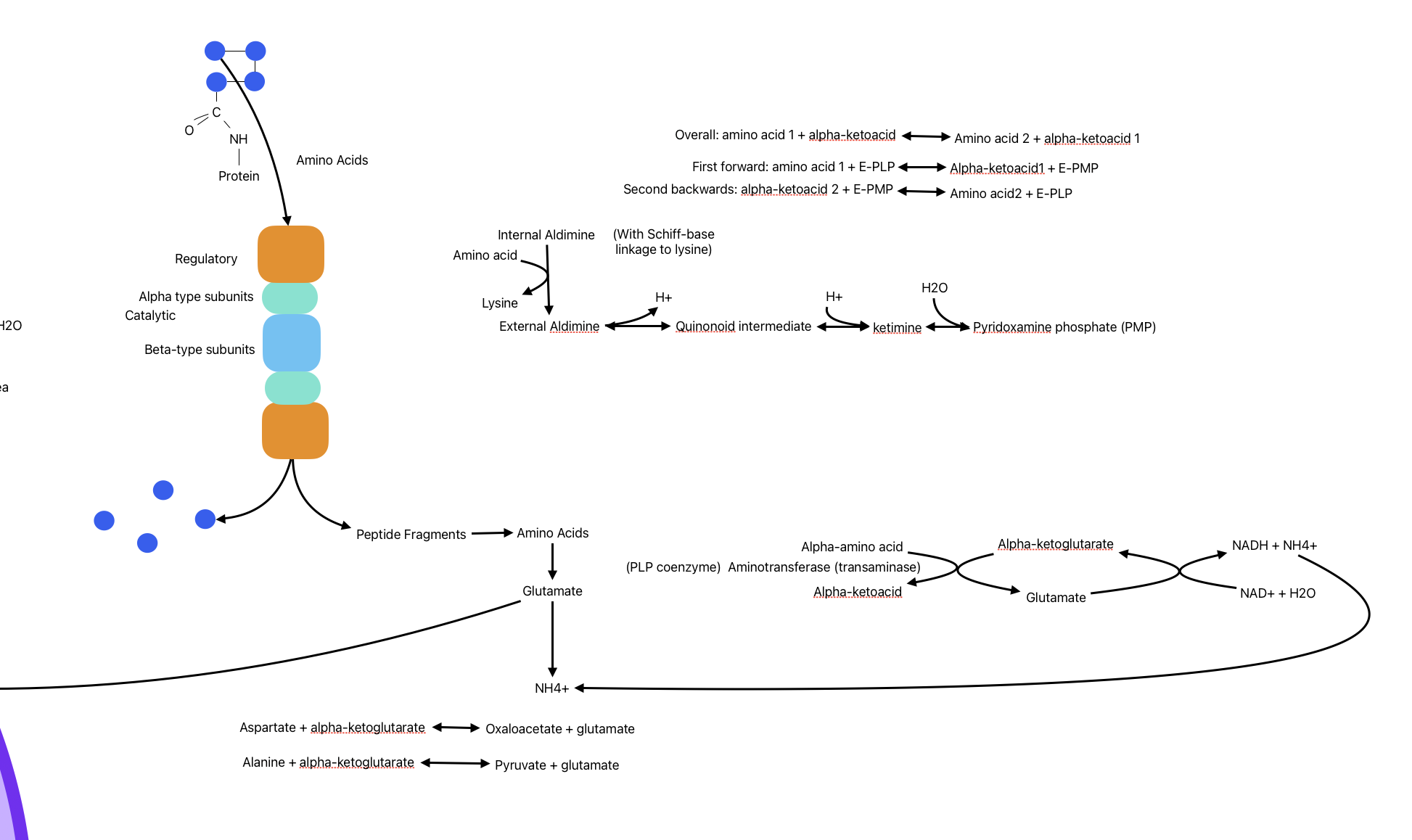
alanine → pyruvate + glutamate
tryptophan → alanine → pyruvate
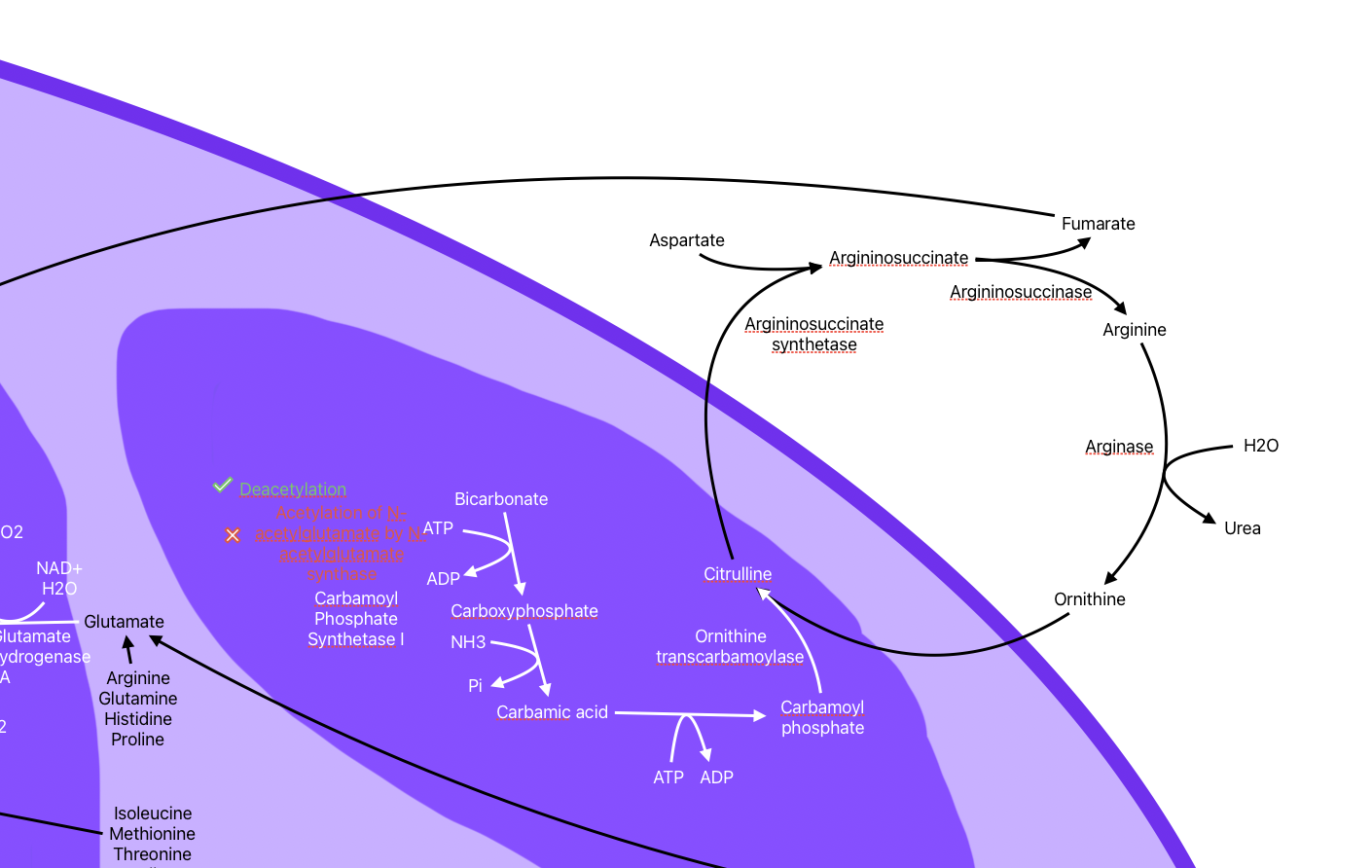
aspartate → oxaloacetate + glutamate (or fumarate → urea)
asparagine → aspartate + NH4 → oxaloacetate + glutamate
glutamine → glutamate → alpha-ketoglutarate
proline → glutamate → alpha-ketoglutarate
arginine → glutamate → alpha-ketoglutarate
histidine → glutamate → alpha-ketoglutarate
methionine → propionyl CoA → succinyl CoA
isoleucine → propionyl CoA → succinyl CoA
threonine → propionyl CoA → succinyl CoA
valine → propionyl CoA → succinyl CoA
leucine → acetyl CoA + acetoacetate
tyrosine → fumarate + acetoacetate
phenylalanine → tyrosine → fumarate + acetoacetate
glutamate → alpha-ketoglutatarate
lysine → acetyl CoA