Biogeochemical Cycles
Definition: Biogeochemical cycles describe the continuous movement of elements like carbon, nitrogen, and water through living organisms and the physical environment.
Key Cycles:
Water Cycle: Involves processes like evaporation, condensation, precipitation, and transpiration. Maintains water balance in ecosystems.
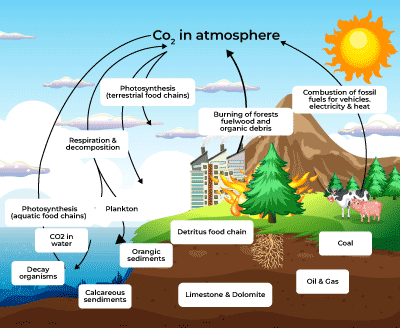
Carbon Cycle: Carbon moves between the atmosphere, organisms, oceans, and sediments. Key processes include photosynthesis, respiration, and fossil fuel combustion.
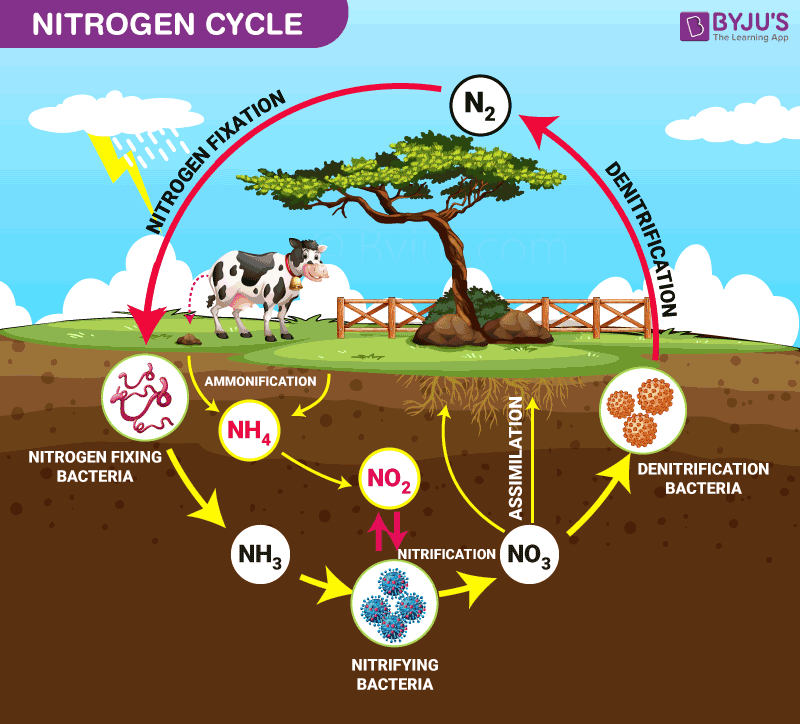
Nitrogen Cycle: Nitrogen is converted between atmospheric nitrogen, nitrates, nitrites, and ammonium through nitrogen fixation, nitrification, and denitrification.
Diagram Examples:
Carbon Cycle: Depicts movement of carbon through photosynthesis, respiration, decomposition, and combustion.
Nitrogen Cycle: Shows nitrogen fixation by bacteria, nitrification, uptake by plants, and eventual return to the atmosphere.