Pathophysiology of Fever
Outline of Topics (wrong order)
Outline the physiological processes of thermoregulation.
Describe the pathophysiological mechanisms of fever.
Describe the production and characteristics of febrile response.
Identify stages, classifications, types, and symptoms of fever.
Define pathophysiology of heat-related disorders.
List the pathological consequences of fever.
Discuss the core and shell concept.
Explain the physiological variation in body temperature.
Core Temperature
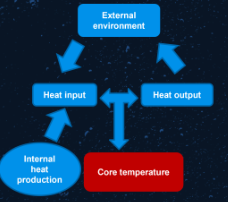
Definition: Core body temperature is one of the most closely regulated human physiological parameters.
Balance Between Heat Production and Loss:
Body temperature is maintained by balancing heat production and heat loss.
Influenced by:
External environment factors
Internal inputs (most important source is the metabolic cost of living).
Core and Shell Concept
Variation Among Organs:
Internal temperature varies across different organs, leading to the concept of core (internal organs) and shell (skin and limbs) temperatures.
Internal Core Temperature:
Variation is constant among abdominal, thoracic organs, skull, and central nervous system (CNS).
Shell Temperature:
Variation is substantial among skin, subcutaneous fat, and limbs.
Peripheral & Central Regulators
Peripheral Regulators (skin):
Thermal receptors:
Sweat glands
Skeletal muscles
Brown adipose tissue
Blood vessels
Central Regulator (hypothalamus):
The preoptic area in the anterior hypothalamus plays a key regulatory role.
Universal Involvement of the Hypothalamus
Regions and Functions:
Posterior Hypothalamus:
Dorsomedial nucleus (gl stimulation)
Increased blood pressure
Preoptic & Anterior Hypothalamus:
Body temperature regulation (e.g., panting, sweating, thyrotropin inhibition)
Other Functions:
Hunger and thirst regulation, neuroendocrine control (oxytocin release, vasopressin release).
Homeostasis of Thermoregulation
Mechanism of Cooling the Body:
Skin blood vessels dilate, allowing warm blood to radiate heat from the skin surface.
Sweat glands secrete perspiration, which vaporizes at body heat, promoting cooling.
Body temperature decreases once blood is cooled and the hypothalamic heat-loss center shuts off.
Mechanism of Heat Retention:
Skin blood vessels constrict, diverting blood from surface capillaries to deeper tissues, minimizing heat loss.
If body temperature needs to increase, the hypothalamus activates the heat-promoting center, activating skeletal muscles (shivering).
Physiological Variations
Menstrual Cycle:
Higher temperature after ovulation to menstruation, possibly due to progesterone.
Circadian Influence:
Temperature varies throughout the day (low in the morning, high by evening).
Strenuous Exercise:
Body temperature can rise significantly, sometimes up to in hot environments.
Age Factor:
Older individuals tend to have lower core temperatures (around ).
Exposure to Extremes:
Extreme high temperatures will impact body temperature regulation.
Pathophysiology of Heat-related Disorders
Heat Exhaustion
Symptoms:
State of collapse, manifested as fainting.
Reduced blood pressure due to exhaustion of heat loss mechanisms.
Excessive sweating leads to decreased plasma volume, impacting cardiac output.
Skin vasodilation and decreased peripheral resistance observed.
Described as overactivity, serving as a safety valve to prevent more serious complications.
Heat Stroke
Description:
More severe condition involving a breakdown of hypothalamic thermoregulatory systems.
Compensatory processes (like sweating) do not initiate even at significantly elevated body temperatures (hyperthermia).
As body temperature rises, metabolic rate increases due to positive feedback, leading to high mortality and risk of permanent disability.
Fever as Regulated Hyperthermia
Definition:
Fever is a regulated elevation of core temperature initiated by the hypothalamic thermoregulatory system.
Etiology of Fever:
Infections (e.g., tuberculosis, Q fever, brucellosis).
Malignancies (e.g., lymphoma, renal cell carcinoma, leukemia).
Systemic rheumatic diseases (e.g., rheumatoid arthritis, systemic lupus erythematosus).
Miscellaneous causes (e.g., drug fever, thyroiditis, Crohn disease).
Pyrogens and Types
Definitions and Mechanisms
Pyrogens:
Exogenous Pyrogens: Foreign agents like bacteria, viruses, and toxins.
Endogenous Pyrogens: Including interleukins (IL-1, IL-6), tumor necrosis factors, and interferons, produced by the body's immune response.
Process:
Immune cells (macrophages, lymphocytes) respond to exogenous pyrogens by producing endogenous pyrogens that elevate hypothalamic temperature setpoint, decrease heat loss, and increase heat production leading to fever.
Infections & Inflammatory Stimuli
Immune Response Stages
1st Immune Response:
Host defense activation, stimulating T-lymphocytes, natural killer cells, and antibody production.
2nd Acute Phase Response:
A diffuse reaction that leads to fever production.
3rd Cytokine Release:
Cytokines act as endogenous pyrogens.
Production of Febrile Response
Mechanism Details
Exogenous pyrogens phagocytized by immune cells release cytokines, notably IL-1, which can induce fever in nanogram amounts rapidly.
Interleukins prompt the production of prostaglandins (PGE2) in the liver and CNS.
OVLT Role:
The organum vasculosum lamina terminalis (OVLT) is a highly vascular region in the wall of the 3rd ventricle where interleukins trigger endothelial cells to release central PGE2.
Impact of PGE2:
Inhibits warm-sensory neurons, stimulates heat retention (cutaneous vasoconstriction), and heat production (chemical thermogenesis and shivering), leading to the febrile response.
Characteristics of Febrile Response
Sudden Increase in Hypothalamic Setpoint:
Caused by tissue destruction or pyrogenic substances leading to an overall elevation of body temperature.
Patient Experience:
Patients may experience chills and feel extremely cold despite a body temperature above normal levels, continuing until the setpoint is reached.
Response After Causative Factor Removal:
Hypothalamic set point reduces but the body temperature remains high, resulting in physiological efforts to cool down (e.g., crisis/flush associated with vasodilation and sweating).
Fever Stages and Classifications
Physiological Stages
1st Stage/Prodromal Stage:
Temperature: Subfebrile (37-38 °C)
Symptoms: Low-grade headaches, thirst, low appetite, achy or tired eyes.
2nd Stage/Chills:
Temperature: Moderate (38-39 °C)
Symptoms: High grade chills, dizziness, muscle cramps, fatigue, nausea, weakness.
3rd Stage/Flush:
Temperature: High (39-41 °C)
Symptoms: Cool, moist, pale skin; confusion; decreased urine output; contracted pupils; vomiting.
4th Stage/Hyper-pyretic Stage:
Temperature: Over 41 °C
Symptoms: Extreme confusion, weak and fast heartbeat, dilated pupils, seizures, rapid breathing, loss of consciousness, potential hallucinations.
Fever Types and Characteristics
Continuous Fever:
Temperature remains above normal without remission; seen in typhoid fever, some cancers, and meningitis.
Intermittent Fever:
Fever present for a period, returns to normal; exemplified by malaria.
Remittent Fever:
Fluctuations in temperature without returning to normal levels; common in viral upper respiratory infections.
Relapsing/Pel-Ebstein Fever:
Episodes of fever lasting several days, followed by a period of normal temperature; seen in Hodgkin's lymphoma.
Neutropenic Fever:
Occurs in febrile neutropenia, characterized by the absence of normal immune function due to immunosuppressive chemotherapy.
Additional Types of Fever
Drug-induced Fever: Caused by pharmacological agents interfering with normal physiological mechanisms of heat loss and central regulation.
Endocrine Fever: Related to thyroid function abnormalities affecting metabolic processes.
Central Fever: Large impact by traumatic brain injury (TBI), stroke, or damage affecting central thermoregulation.
Pathological Consequences of Fever
Patient Recovery: Most patients fully recover after reasonable time.
High Temperatures: Prolonged exposure to very high temperatures without treatment can lead to multi-organ failure and possibly death.
Specific Organ Impact:
Gastrointestinal: Increased permeability, rate of bacteria translocation, oxidative stress.
Renal: Decreased glomerular filtration and increased plasma creatinine concentration.
Cardiovascular System: Cardiac dysfunction and pulmonary edema.
Brain: Potential cognitive dysfunction, compromised blood-brain barrier (BBB), and entrance of toxins into cerebral circulation.
References
Guyton and Hall Textbook of Medical Physiology Thirteenth Edition, John E. Hall.
Physiology by Linda S. Costanzo, Lauralee Sherwood, Human Physiology, From Cells to Systems, Eighth Edition.
Medical Physiology Third Edition by Walter F. Boron and Emile L. Boulpaep.
Thank You!
Any Questions?