Functional Neurologic Disorder / Conversion Disorder Notes
Definition of Functional Neurologic Disorder/Conversion Disorder
A condition where physically healthy individuals exhibit sensory or motor symptoms suggesting neurological damage.
Despite these symptoms, medical examinations reveal that the body organs and nervous system are functioning normally.
Common Symptoms
Examples of symptoms experienced by individuals include:
Sudden loss of vision
Paralysis of limbs (arms or legs)
Seizures and disturbances in coordination
Abnormal sensations such as prickling, tingling, or a creeping feeling on the skin
Insensitivity to pain
Anesthesias: Loss or impairment of sensations
Aphonia: Loss of voice, speaking only in whispers
Anosmia: Loss or impairment of the sense of smell
Symptoms often manifest suddenly, particularly in stressful situations.
Hysteria, Conversion, and Functional Neurological Disorder
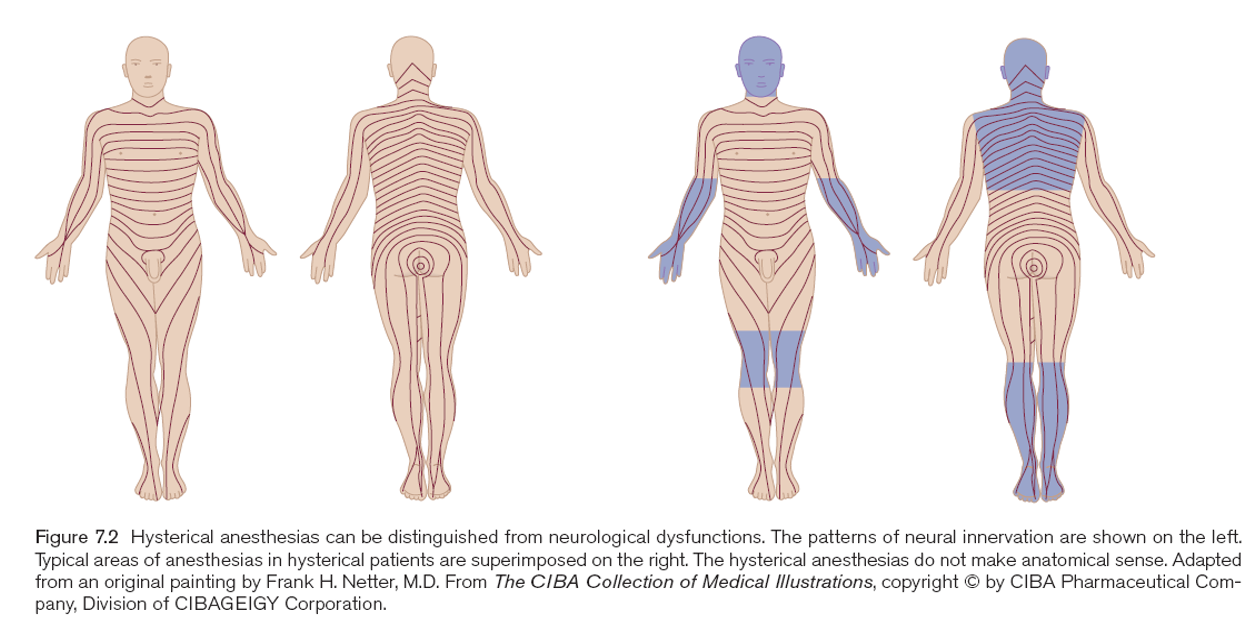
Hysterical anesthesias differ from genuine neurological dysfunctions.
Illustrations show that these hysterical symptoms do not correspond to known anatomical pathways.
Typical patterns of hysterical anesthesias demonstrate this disparity.
Differentiating Seizures
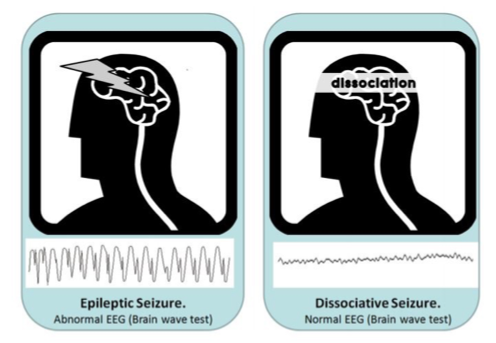
Brain waves during epileptic seizure, everything in the brain is acting out.
During a dissociative seizure, normal EEG readings
Epileptic Seizure:
EEG Test: Shows abnormalities in brain wave activity.
Dissociative Seizure:
EEG Test: Appears normal, suggesting a non-epileptic cause.
Relationship Between Conversion Disorder and Dissociation
Both disorders are associated with a lack of integration in specific neurological functions, frequently occurring in individuals with trauma backgrounds.
Approximately 47% of patients with conversion disorder also have a diagnosed dissociative disorder.
Types of Dissociative Symptoms
Negative Psychoform Dissociative Symptoms
Memory loss (e.g., amnesia)
Emotional numbing (symptoms that impact affect)
Impairments in critical thinking or loss of skills
Negative Somatoform Dissociative Symptoms
Loss of motor functions, movement, or sensation (e.g., analgesia, loss of vision or smell)
Positive Psychoform Dissociative Symptoms
Mental intrusions such as hearing voices, different from psychotic experiences in schizophrenia
Positive Somatoform Dissociative Symptoms
Behaviors and experiences that occur within a specific dissociative part, which may not be experienced by other parts, including:
Pain
Non-volitional behaviors (e.g., tics, tremors)
Varied sensory perceptions (vision, hearing, sensations)
Malingering vs. Factitious Disorder
Functional neurologic disorder can often be confused with malingering, defined as deliberately faking an incapacity to evade responsibilities.
Might be said - there is no neurological reason for this, so people might be faking it (malingering) - so how do we tell if they are faking or not?
When people fake these things, it is typically for some sort of gain
When people ACTUALLY have the functional neurological disorder, people express la belle indifférrence (they don’t care that much about the symptoms), whereas those who are faking it might act more worried about the symptoms
La Belle Indifférence:
Characterized by a lack of concern or a blasé attitude towards symptoms. Commonly found in individuals with Functional Neurologic Disorder/Conversion Disorder, possibly aiding in diagnosis.