Psychology 1 Notes
The superego represents our conscience and is influenced by the morals and values taught by parents, friends, and society.
It can make conscious and unconscious judgments, and a weak superego may result in breaking rules, while a strong superego can lead to constant guilt.
id (kid)- wants
ego- sense of self
superego- expectations- id to unconcious
The ego acts as a mediator between the id and superego.
It listens to both and employs the reality principle to find compromises that satisfy the id's desires without violating the superego's rules.
The ego is mostly in the conscious and preconsciou1.1- Roots of Psychology
Psychology is a diverse field that encompasses various interests and topics.
It involves studying psychological disorders, learning processes, memory, personality traits, and understanding oneself.
The field aims to answer the question of "Who are you?"
Advancements in psychology have shaped the field and its current state.
Psychology Defined and the History of Psychology
Psychology involves the scientific study of behavior and mental processes.
Behavior includes observable actions, such as walking and talking, while mental processes encompass thoughts, beliefs, and emotions.
The field of psychology helps us understand and evaluate behaviors and mental processes to enhance our relationships and predict reactions.
It also aids in identifying and treating behavioral and mental problems.
The study of behavior and mental processes has a rich history, originating with ancient philosophers like Socrates, Plato, and Aristotle.
Pyschology as a Science
Psychology transitioned from philosophical discussions to a scientific field in the 19th century.
Wilhelm Wundt is credited with conducting the first official psychological experiment in 1879.
Wundt's experiment aimed to measure the time it took for individuals to hear and respond to a sound.
Wundt is often referred to as "the father of psychology."
Edward Titchener, a student of Wundt, introduced the practice of introspection, where subjects described their thoughts and feelings after an experience.
Titchener's approach, called structuralism, focused on exploring the structure and basic elements of consciousness.
Structuralism v. Fundamentalism
Not everyone agreed with the use of introspection as a reliable approach to studying the mind.
Some scientists shifted their focus to studying the purpose of consciousness and behavior.
William James, an American professor, advocated for functionalism, which emphasized understanding how behavior and consciousness functioned in adapting to the world.
Functionalism led to research on topics such as child development, gender differences, and intelligence measurement.
Gestalt psychologists disagreed with the structuralist approach and believed in studying the complete experience rather than isolated elements.
They emphasized that the whole experience is different from the sum of its parts.
Gestalt psychologists highlighted the idea that individual experiences combine to form each person's unique story.
Their perspective focused on how people cannot be fully understood by looking at isolated experiences alone.
The Gestalt approach emphasized the importance of the overall organization and perception of stimuli.
They studied phenomena such as perception, problem-solving, and human cognition.
Sigmund Freud, an Austrian neurologist, developed the psychoanalytic theory, which focused on the role of the unconscious mind and the influence of childhood experiences on behavior and personality.
Behaviorism, led by psychologists such as John B. Watson and B.F. Skinner, emphasized the study of observable behavior and the role of environmental stimuli in shaping behavior through conditioning.
Humanistic psychology, championed by psychologists like Carl Rogers and Abraham Maslow, emphasized the importance of personal growth, self-actualization, and subjective experiences in understanding human behavior and motivation.
Cognitive psychology emerged as a dominant approach in the mid-20th century, focusing on mental processes such as perception, memory, thinking, and problem-solving.
Contemporary approaches in psychology include evolutionary psychology, social psychology, neuroscience, positive psychology, and cultural psychology, among others, each exploring different aspects of human behavior and mental processes.
Moving Towards the Unconcieous Mind
Freudian slip: A mistake in speech or action that reflects hidden thoughts or feelings.
Sigmund Freud: Psychologist who introduced the concept of the unconscious mind.
Freud's interest: Treating psychological disorders through introspection and self-reflection.
Psychoanalysis: The process of exploring one's thoughts, conflicts, and desires.
Unconscious mind: Freud's theory that people have thoughts and desires beyond their conscious awareness.
Shift to unconscious influences: Freud's belief that unconscious thoughts impact behavior.
Debate and attention: Freud's theories on the unconscious mind sparked controversy and gained significant interest.
Study of personality, emotions, and motivation: Focus on the unconscious led to the exploration of these aspects of human psychology.
Rejecting Conceiousness and Not Just Animals’
Ivan Pavlov: Russian scientist who conducted research on animal digestion.
Pavlov's experiment: He discovered that dogs could be trained to salivate in response to a stimulus (bell) that normally wouldn't elicit this response.
John B. Watson: Psychologist who developed the behaviorist perspective.
Behaviorism: Focuses on observable behaviors rather than studying consciousness.
B.F. Skinner: Behaviorist who emphasized the role of rewards and reinforcement in influencing behavior.
Skinner's concept: Rejects the idea of free will and suggests that individuals are controlled by their environment.
Rejection of consciousness: Behaviorists believed studying consciousness was not scientifically feasible.
Humanistic psychology: Emerged in the 1960s as a rejection of behaviorism and psychoanalysis.
Carl Rogers and Abraham Maslow: Leaders of humanistic psychology.
Humanistic psychology: Focuses on the unique qualities and self-perception of individuals.
Emphasis on personal growth: Humanistic psychology acknowledges the need for personal development and the desire to reach one's full potential.
Pavlov's research: Ivan Pavlov's experiments with dogs demonstrated the concept of classical conditioning, where an initially neutral stimulus (such as a bell) becomes associated with a reflex response (such as salivation) through repeated pairing with an unconditioned stimulus (such as food).
Behaviorist perspective: John B. Watson, influenced by Pavlov's work, developed behaviorism, which focused on studying observable behavior rather than introspection or consciousness.
Skinner's operant conditioning: B.F. Skinner expanded on behaviorism with the concept of operant conditioning, which emphasized the role of rewards and punishments in shaping behavior. He used experiments with animals to demonstrate how behavior can be controlled through reinforcement.
Rejection of free will: Behaviorists like Watson and Skinner argued that behavior is determined by environmental factors and that free will is an illusion.
Psychoanalysis: Behaviorists also rejected psychoanalysis, the approach developed by Sigmund Freud, which focused on the unconscious mind and its influence on behavior.
Humanistic psychology: A response to behaviorism, humanistic psychology, led by Carl Rogers and Abraham Maslow, emphasized the unique qualities and potential for personal growth in individuals.
Self-perception and behavior: Humanistic psychology emphasized the role of self-concept and self-actualization in shaping behavior, emphasizing the importance of personal experiences, emotions, and motivations.
Rejection of animalistic behaviors: Humanistic psychology argued that humans possess qualities beyond simple animalistic behaviors governed by rewards and reinforcement.
Need for love and acceptance: According to humanistic psychology, healthy individuals have a fundamental need for love, acceptance, and positive relationships.
Fulfillment of potential: Humanistic psychology emphasized the drive for self-fulfillment and reaching one's full potential as essential aspects of human behavior and motivation.
Back to Conceiousness and Many Perspectives
ix Modern Psychological Perspectives | |
|---|---|
Behavioral | Only observable behaviors can be studied scientifically. Focuses on how we are affected by our environment. |
Psychodynamic | Unconscious motivations, thoughts, and desires influence our behavior. Previously known as the psychoanalytic perspective. |
Humanistic | Humans are different than animals. They have freedom to make their own choices and desire personal growth. |
Social - Cultural | The society or culture a person interacts with influences thoughts and behaviors. |
Cognitive | Behaviors are understood only by studying mental processes such as gathering, storing, and processing information. |
Biological | The body's physical structures and chemical processes explain and affect behavior. |
Jean Piaget: Cognitive psychologist who focused on how children develop their thinking abilities.
Cognitive perspective: Emphasizes the study of mental processes, such as cognition, to understand behavior fully.
Importance of mental processes: Cognitivists argue that studying behavior alone provides an incomplete picture and that changes in thinking greatly impact actions.
Integration of cognitive and biological perspectives: Advancements in technology allow for studying how the body and brain change in response to mental processes.
Example of Noam Chomsky: Used the cognitive perspective to investigate language development by studying the brain areas involved in speech.
Six modern psychological perspectives:
Behavioral: Focuses on observable behaviors influenced by the environment.
Psychodynamic: Emphasizes the influence of unconscious motivations, thoughts, and desires on behavior.
Humanistic: Recognizes human uniqueness, freedom of choice, and the desire for personal growth.
Social-Cultural: Considers how society and culture impact thoughts and behaviors.
Cognitive: Examines mental processes, including gathering, storing, and processing information.
Biological: Considers the influence of the body's physical structures and chemical processes on behavior.
Eclecticism approach: Many psychologists today use an eclectic approach, drawing from multiple perspectives to address different psychological questions.
Eclectic application: Different perspectives may be used in various contexts, such as behaviorist strategies for classroom management and humanistic strategies for individual goal attainment.
Consciousness and cognition: Jean Piaget's cognitive approach focused on studying consciousness and mental processes in order to understand behavior fully.
Importance of thinking: Piaget emphasized that changes in a person's thinking significantly affect their actions and behaviors.
Integration of cognitive and biological perspectives: Advancements in technology have allowed researchers to study how mental processes influence changes in the body and brain.
Noam Chomsky: Chomsky utilized the cognitive perspective to investigate the development of language by studying the brain areas involved in speech.
Six modern psychological perspectives:
Behavioral: Focuses on observable behaviors influenced by the environment.
Psychodynamic: Emphasizes the influence of unconscious motivations, thoughts, and desires on behavior.
Humanistic: Recognizes human uniqueness, freedom of choice, and the desire for personal growth.
Social-Cultural: Considers how society and culture impact thoughts and behaviors.
Cognitive: Examines mental processes, including gathering, storing, and processing information.
Biological: Considers the influence of the body's physical structures and chemical processes on behavior.
Eclecticism approach: Many psychologists today use an eclectic approach, combining multiple perspectives to gain a comprehensive understanding of psychological phenomena.
Practical applications: Different perspectives may be employed in various contexts, such as using behaviorist strategies for classroom management and humanistic approaches for individual goal attainment.
Eclecticism and flexibility: Utilizing multiple perspectives allows psychologists to adapt their approach to different situations and questions, enhancing the breadth and depth of their understanding.
1.02- Principles of Psychological Research
How are Psychology Applied?
Academic psychologists in the early 20th century focused on teaching and basic research at universities.
World War II led to psychologists being involved in military service and clinical work.
Clinicians found clinical work rewarding and continued in that field after the war, leading to the emergence of applied psychology.
Applied psychology applies psychological knowledge to solve real-world problems and improve people's lives.
Most psychologists today work outside of universities in various applied settings.
Health psychology focuses on how biological, social, and psychological factors influence health and illness.
Health psychologists aim to prevent illness, treat illness, and promote good health.
Educational psychology focuses on researching theories about teaching and learning.
The goal of educational psychology is to improve teaching strategies and maximize student learning.
Positive psychology, developed by Martin E. Seligman in 1998, emphasizes strengths, success, and happiness.
Positive psychology aims to understand and promote happiness and well-being.
Positive psychology focuses on examining positive individuals to help others achieve happiness.
Applied psychologists use their knowledge and research to develop interventions and programs.
They work in various settings such as healthcare, education, business, and community organizations.
Applied psychologists apply psychological principles to solve practical problems.
They help individuals, groups, and communities improve their mental well-being and functioning.
Applied psychology contributes to the development of evidence-based practices.
It involves collaboration with other professionals such as healthcare providers, educators, and policymakers.
Applied psychologists utilize research methods to gather and analyze data relevant to their field.
They often work in interdisciplinary teams to address complex issues.
Applied psychology has a practical and problem-solving focus.
It incorporates knowledge from various subfields of psychology, including clinical, counseling, social, and cognitive psychology.
Applied psychologists work with diverse populations, including children, adults, and specific groups like athletes or patients with mental health disorders.
They apply psychological principles to areas such as therapy, education, organizational behavior, sports, and public health.
Applied psychology has a broad impact on society, influencing policies, programs, and practices that enhance well-being and quality of life.
It continues to evolve and adapt to address emerging challenges and societal needs.
Subfields of Psychology
Biopsychology: Study the relationship between biology and psychology to understand how it influences behavior.
Clinical Psychology: Evaluate and treat individuals with psychological disorders, while also conducting research on new treatments.
Developmental Psychology: Study how individuals grow and change physically, mentally, and emotionally throughout their lives.
Forensic Psychology: Apply psychological principles to legal issues, such as advising legal experts and assisting in jury selection.
Industrial-Organizational Psychology: Apply psychological principles and research to benefit businesses and organizations, such as conducting personality tests for job suitability.
Personality Psychology: Examine the set of characteristics that influence a person's thoughts, motivations, and behaviors.
Social Psychology: Focus on the study of social behaviors and how individuals behave in groups, considering the impact of the social environment.
School Psychology: Apply psychology principles to diagnose and treat behavior and learning problems in children and teenagers, working with educators and families to address concerns at school.
Got a Question?
Psychologists seek answers to questions about human thoughts, feelings, and behaviors.
They use the scientific method, which involves developing operational definitions.
Operational definitions are statements of the procedures used to measure behaviors or qualities.
Descriptive methods are used to describe behaviors and provide insights.
Examples of descriptive methods include naturalistic observations, case studies, and surveys.
Descriptive methods cannot establish causation but are often a starting point for research.
Naturalistic observation: Observing subjects in their natural environment without manipulation by the researcher.
Case studies: In-depth research of an individual or group, providing detailed information but limited generalizability.
Surveys: Collecting data through questionnaires or interviews to gather opinions and insights.
Correlation: Statistical measure of the relationship between two variables, predicting how they influence each other.
Causation: To establish causation, psychologists go beyond descriptive methods and conduct experiments.
1.03- Pyschodynamic Principles
Observing people's behavior gives us insights into their personality and helps us form impressions of them.
Personality is complex and unique to each individual, shaped by biological characteristics, cultural influences, and life experiences.
The study of personality involves understanding how these factors interact and influence the development and changes in a person's personality over time.
There are different approaches to studying personality, and in this lesson, the focus is on the psychodynamic approach.
Psychoalantics and View of the Mind
Sigmund Freud developed the psychoanalytic perspective, the first and most well-known theory of personality.
Freud's focus was on individuals with psychological disorders, and he observed that many of their issues had no physical cause.
Freud used a technique called free association, where patients would share their thoughts without censoring them, to access their unconscious mind.
According to Freud, personality is shaped by past childhood events and basic drives that are partially controlled by the unconscious mind.
Freud used the analogy of an iceberg to describe the mind, with the conscious mind representing the tip of the iceberg above the water, the preconscious mind just below the surface, and the largest region being the unconscious mind, which holds hidden thoughts, desires, and memories that influence us without our awareness.
Personality Structures
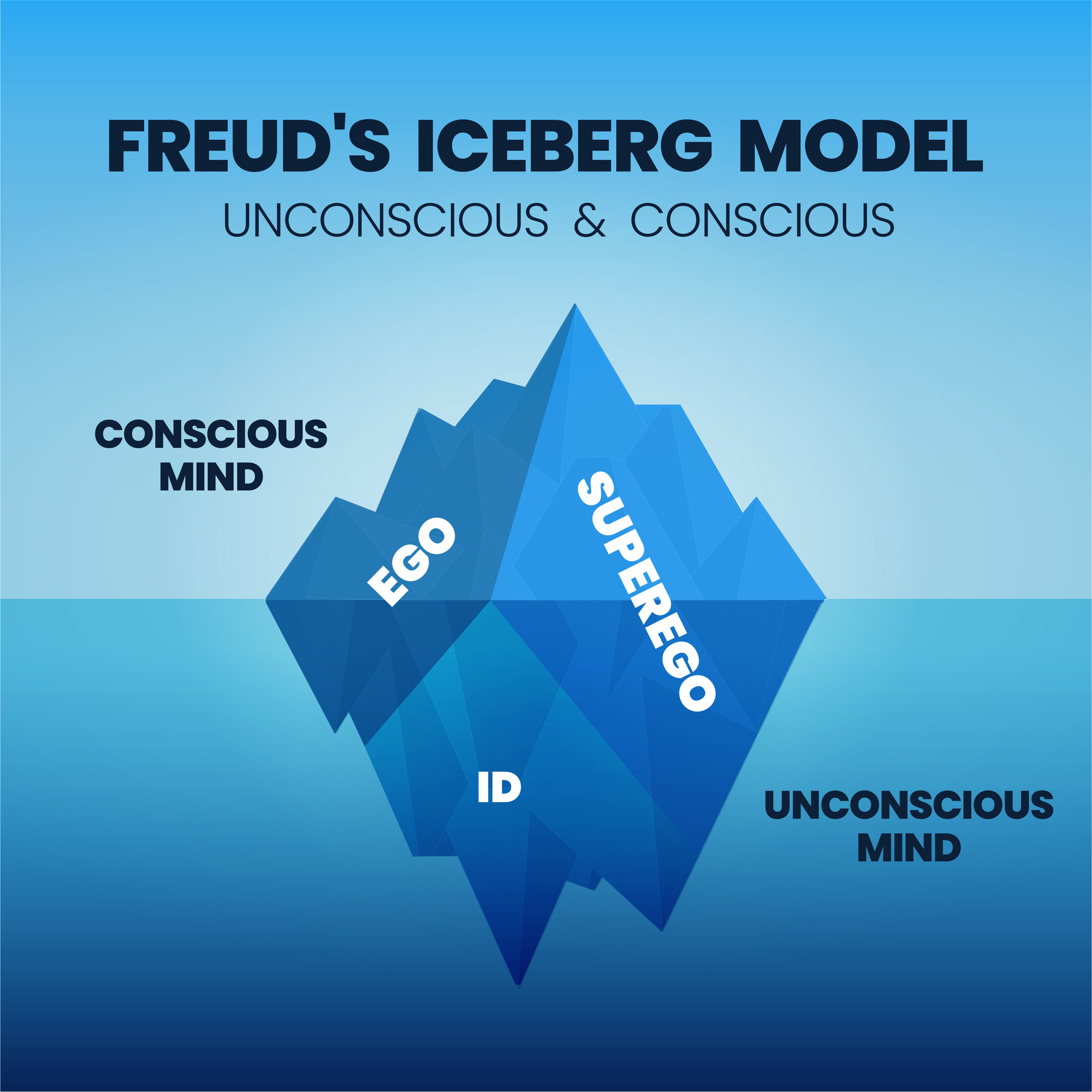
According to Freud (Frod), we are born with basic biological instincts that shape our personality.
The conflict between these instincts is a reflection of our personality.
The three components of personality are the id, superego, and ego.
The id is found completely within the unconscious mind and consists of basic drives, such as aggression and sexual desire.
The id operates on the pleasure principle, seeking instant satisfaction for wants and needs.
The goal of the id is to survive and reproduce.
s mind.
It focuses on reality and finding practical ways to fulfill desires in the real world.
The id, superego, and ego together shape a person's personality and influence their behavior.
Freud's theory emphasizes the importance of unconscious processes and early childhood experiences in personality development.
The id and superego are in constant conflict, with the ego working to balance their demands.
The id seeks immediate gratification, while the superego follows moral principles.
The ego's role is to find compromises and navigate between the two.
The id represents our primal instincts, while the superego represents our internalized societal rules.
The id is impulsive and seeks pleasure, while the superego imposes guilt and inhibitions.
The ego serves as the mediator between the id and superego, finding ways to satisfy both within the constraints of reality.
Freud's theory suggests that personality is shaped by the interaction between these three components.
The id operates on unconscious desires, the superego is influenced by socialization, and the ego operates in conscious and preconscious awareness.
The ego's task is to find a balance between the conflicting demands of the id and superego.
Freud's theory has been influential in understanding human behavior and continues to be a subject of debate and analysis in psychology.
It highlights the importance of the unconscious mind and early experiences in shaping personality.
The id, superego, and ego are dynamic forces that interact and shape behavior.
Freud's theory has been criticized for its lack of empirical evidence and overemphasis on unconscious processes.
However, it has contributed to our understanding of personality and the complexities of human behavior.
The id, superego, and ego provide a framework for understanding the internal conflicts and motivations that drive human actions.
Personality development involves the resolution of conflicts between the id, superego, and ego.
Defense Mechanisms
Defense mechanisms are unconscious strategies used by the ego to cope with the tension between the conflicting id and superego.
These mechanisms help individuals handle anxiety but can also hinder their ability to address underlying issues.
Denial involves refusing to admit that something is wrong.
Repression is the unconscious pushing of memories, thoughts, and emotions out of conscious awareness.
Displacement entails redirecting emotional feelings, often anger, onto something safer than the original cause.
Sublimation allows someone to express unacceptable emotions in socially acceptable ways.
Projection involves attributing one's own unacceptable characteristics to someone else.
Intellectualization focuses on facts and tasks rather than experiencing the emotional impact of a situation.
Rationalization uses logic and reasoning to explain away unacceptable behavior.
Regression is a return to a safer, less threatening time in one's life, often childhood.
Reaction formation causes individuals to feel the opposite emotion to a stressful stimulus or event.
Compensation involves expressing high levels of achievement in one area to overcome failures in another.
These defense mechanisms serve to protect the individual from anxiety and maintain psychological equilibrium.
Psychoanalysis aims to uncover and address these mechanisms to resolve underlying issues.
Overreliance on defense mechanisms can limit personal growth and hinder effective problem-solving.
Understanding and recognizing these defense mechanisms can provide insights into one's behavior and help promote self-awareness.
Personality Devlopment
Personality development, according to Freud, occurs during early childhood and involves progressing through psychosexual stages.
The stages include the oral stage (birth to 18 months), anal stage (18 months to 3 years), phallic stage (3-6 years), latency stage (6 years to puberty), and genital stage (puberty onward).
In the oral stage, pleasure focus is on the mouth, and conflicts during weaning may lead to fixation in this area.
The anal stage involves pleasure focus on the anus, with potty training struggles potentially causing fixation and control issues in adulthood.
The phallic stage centers around pleasure focus on the genitals and involves the Oedipus complex for boys and penis envy for girls. Fixation in this stage can lead to relationship and authority issues in adulthood.
During the latency stage, pleasure desires become dormant as children identify with their same-sex peers and learn gender roles.
The genital stage marks the return of pleasure focus to the genitals during adolescence, with sexual impulses playing a significant role throughout adulthood for reproduction.
Unresolved conflicts or fixation in any of these stages may influence personality traits and behaviors in adulthood.
Freud's psychosexual stages provide a framework for understanding the influence of early experiences on personality development.
Neo-Fredueans and Evaluating Frued
Neo-Freudians developed new theories based on Freud's ideas and are known as psychodynamic theorists.
Alfred Adler emphasized the influence of childhood experiences on personality and disagreed with Freud's focus on sexual conflicts. He believed that social needs, such as the desire for acceptance and success, had a significant impact on personality.
Carl Jung proposed the concept of a collective unconscious, influenced by the experiences of our ancestors. He believed that we are born with shared memories that shape our reactions to events.
Karen Horney challenged Freud's theories on female personality development, rejecting the idea of penis envy and introducing the concept of womb envy. She emphasized social factors rather than biological factors in shaping personality.
Freud's psychoanalytic theories have had a lasting impact on psychology and Western thinking but also face criticisms, such as lack of explanation for personality development beyond childhood, overemphasis on parental influence, limited sample diversity, bias toward male development, and lack of scientific testing.
While Freud's ideas still exist in popular psychology, other personality theories have gained more acceptance and influence in contemporary psychology.
01.04 HUMANISTIC PERSPECTIVES
Your Whole Self and Essential Features
Humanistic psychology takes a holistic approach, considering the whole person in understanding their identity and potential.
Key psychologists in this approach include Carl Rogers, Fritz Perls, and Abraham Maslow.
Humanistic psychologists emphasize the importance of acceptance and personal growth.
They believe that various dimensions, including social, biological, developmental, psychological, and spiritual aspects, contribute to our well-being.
The concept of self-actualization is central to humanistic psychology, representing the process of reaching one's full potential.
Humanistic therapy focuses on the client-therapist relationship, with the therapist providing unconditional positive regard.
Clients are seen as the experts of their own lives, and therapy aims to empower and facilitate their progress.
Carl Rogers developed client-centered therapy, where the client directs the conversation and the therapist engages in active listening.
Positive relationships, whether with a therapist or others, are believed to support self-actualization.
Fritz Perls developed Gestalt therapy, viewing individuals as wholes and using the metaphor of peeling away layers to reveal the true inner-self.
Gestalt therapy explores observable behaviors, emotions, and the client's desires and aversions in life.
The humanistic approach emphasizes the uniqueness of individuals and their subjective experiences.
It encourages personal responsibility and self-awareness.
Humanistic psychology challenges reductionistic perspectives that focus on limited factors like behavior or childhood experiences.
It considers the individual within their larger context, recognizing the influence of social and cultural factors on their well-being.
Humanistic psychologists emphasize the importance of free will and the individual's capacity to make choices.
The therapeutic process in humanistic psychology aims to facilitate self-discovery, personal growth, and the development of a positive self-concept.
It values empathy, understanding, and non-judgmental attitudes in therapeutic interactions.
Humanistic theories and therapies have influenced various fields, including counseling, education, and personal development.
The humanistic approach encourages individuals to live authentically and in alignment with their values and beliefs.
It promotes the idea that everyone has the potential for growth and self-improvement.
Humanistic psychology acknowledges the significance of meaning, purpose, and fulfillment in human lives.
It recognizes the importance of subjective experiences, emotions, and personal narratives.
Humanistic psychologists advocate for a supportive and nurturing environment that fosters individuals' well-being.
The approach emphasizes the uniqueness and individuality of each person's journey.
Humanistic theories have contributed to the understanding of human motivation and the pursuit of happiness.
Self-actualization is seen as an ongoing process rather than a fixed endpoint.
Humanistic psychology values personal agency and the ability to make choices that align with one's values and goals.
The approach acknowledges the potential for personal growth and transformation throughout the lifespan.
Humanistic psychology recognizes the interconnectedness of mind, body, and spirit in shaping human experiences.
It emphasizes the importance of self-care, self-compassion, and self-acceptance.
Humanistic psychologists encourage individuals to explore and express their emotions authentically.
The approach promotes a positive and optimistic view of human nature and potential.
Humanistic psychology has influenced other areas of psychology, such as positive psychology and existential psychology.
It challenges deterministic perspectives and emphasizes the role of personal agency in shaping one's life.
The humanistic approach values the richness and complexity of human experiences.
It acknowledges the influence of cultural and societal factors on individuals' self-concept and well-being.
Humanistic psychology supports the idea that individuals have the capacity for personal growth and self-transcendence.
The approach emphasizes the importance of cultivating meaningful relationships and connections with others.
It encourages individuals to find purpose and meaning in their lives.
Humanistic psychology emphasizes the integration of different aspects of the self, including cognitive, emotional, and spiritual dimensions.
The approach values self-reflection and introspection as means of self-understanding and personal growth.
Humanistic theories and therapies have contributed to a more holistic and person-centered approach in psychology.
The humanistic perspective complements and expands upon other psychological theories and approaches.
It highlights the importance of subjective well-being and the pursuit of a fulfilling and authentic life.
Humanistic psychology promotes the idea that individuals have the potential to lead meaningful and satisfying lives.
The approach emphasizes the significance of personal values, goals, and aspirations in shaping one's identity and happiness.
Self-Esteem
Self-concept is a more specific self-judgment of personal abilities and is considered a valuable measure of how we view ourselves.
It helps us evaluate our strengths and weaknesses realistically.
Self-concept is less fragile than self-esteem and is less likely to be shattered by negative life experiences.
A well-developed self-concept allows individuals to recognize their limitations and areas for improvement.
It helps individuals understand that not everyone is good at everything.
Positive self-concept enables individuals to use their strengths effectively and take action to improve in areas of weakness.
Developing a well-rounded self-concept is more beneficial than solely focusing on high self-esteem.
School programs should prioritize the development of self-concept, as it equips individuals to navigate life transitions and learn from real-world experiences.
Individuals with a well-developed self-concept are better able to capitalize on their strengths and work on areas of improvement.
What do you really need and What Motivates You?
The humanistic perspective emphasizes that individuals are driven to achieve self-actualization, which is becoming what one is meant to be.
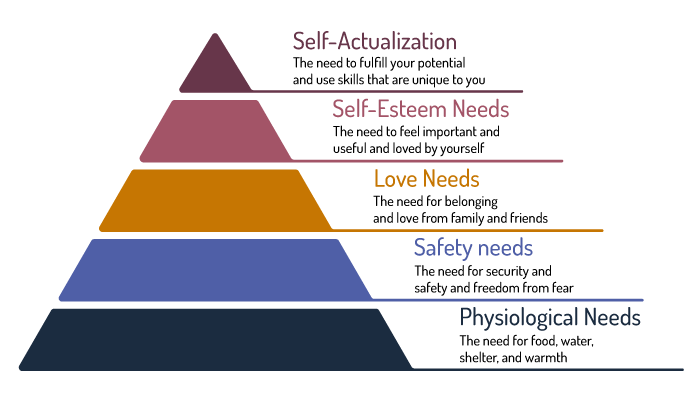
Self-actualization is the ultimate goal, but it can only be reached after satisfying lower-level needs in Maslow's hierarchy of needs.
Maslow's hierarchy of needs is a pyramid that includes physiological needs (food, water, shelter), safety needs (security, stability), social needs (belonging, love), esteem needs (recognition, self-worth), and self-actualization needs (reaching one's full potential).
Motivation is the driving force behind human productivity and innovation.
Biological responses, such as hunger and thirst, motivate our actions to fulfill physiological needs.
The need for love and acceptance from family and friends aligns with higher levels of Maslow's hierarchy.
Motivation can be classified as intrinsic (internal forces like curiosity and satisfaction) or extrinsic (external factors like recognition and rewards).
Intrinsic motivation is driven by personal fulfillment, while extrinsic motivation is provided by the environment, such as monetary rewards.
Motivation can come from a combination of both intrinsic and extrinsic factors.
Understanding and satisfying our various needs and motivations is crucial for personal growth and well-being.
Humanisitc Theory
Strengths | Criticisms |
|---|---|
Perspective takes into account various factors that make up the “self.”Perspective does not focus exclusively on behaviors or thoughts.Every individual “owns” his own health.Theory is based on acceptance and growth.Criticism of the client is absent.Theory promotes the development of meaningful relationships. | Perspective may seem unfocused—has a broad understanding of “self.”Professional judgment of the therapist is not used—instead, client is expert.Correcting negative behaviors may take a long time.Unconditional positive regard may be difficult to maintain.Some individuals may be unwilling to take responsibility for growth. |
Strengths of the Humanistic Perspective:
Takes into account various factors that contribute to the concept of self.
Does not solely focus on behaviors or thoughts, but emphasizes the holistic nature of individuals.
Recognizes that individuals have ownership of their own health and well-being.
Theory is based on acceptance and growth, promoting a positive and empowering approach.
Absence of criticism towards the client, fostering a non-judgmental therapeutic environment.
Emphasizes the importance of developing meaningful relationships.
Criticisms of the Humanistic Perspective:
May appear unfocused, as it encompasses a broad understanding of the self and personal growth.
Relies on the client's expertise rather than professional judgment from the therapist, which may not suit all clients or situations.
Correcting negative behaviors can be a lengthy process, as the focus is on personal growth and self-actualization.
Maintaining unconditional positive regard for clients may be challenging for some therapists.
Some individuals may be resistant to taking responsibility for their own personal growth.
Despite the criticisms, the humanistic perspective has gained popularity and acceptance. Many therapists integrate elements of unconditional positive regard into their practice while incorporating aspects from other theoretical perspectives. Therapists who can foster acceptance and facilitate personal growth find the humanistic perspective to be effective and personally rewarding. Further research addressing the criticisms can help refine and strengthen the application of humanistic theories in psychology.
1.05-
The Big Five is a framework for understanding personality that categorizes individuals based on five broad dimensions:
Openness: This dimension reflects a person's openness to new experiences and willingness to explore unfamiliar ideas. Those with lower scores tend to prefer routine and familiarity, while those with higher scores are more open to novelty and variety.
Conscientiousness: Conscientiousness describes how organized, responsible, and disciplined a person is. Individuals with high conscientiousness are generally reliable, goal-oriented, and self-disciplined, while those with low conscientiousness may be more spontaneous and less focused on structure.
Extraversion: Extraversion refers to a person's level of sociability, assertiveness, and preference for external stimulation. Highly extraverted individuals enjoy social interactions and are energized by being around others, while introverted individuals are more reserved and prefer solitary activities.
Agreeableness: Agreeableness reflects a person's tendency to be cooperative, compassionate, and considerate towards others. Individuals high in agreeableness are generally empathetic and value harmonious relationships, while those low in agreeableness may be more competitive or skeptical of others' intentions.
Neuroticism: Neuroticism measures emotional stability and sensitivity to negative emotions. People high in neuroticism are more prone to experiencing anxiety, depression, and mood swings, while those low in neuroticism tend to be more emotionally resilient and stable.
The Big Five has been criticized for its broad categories and potential loss of predictive value. Some researchers argue for more specific trait dimensions, but these can still be understood within the framework of the Big Five. One limitation of the Big Five and other trait theories is that they do not explain how individuals initially develop these traits, lacking a comprehensive account of biological influences on personality.
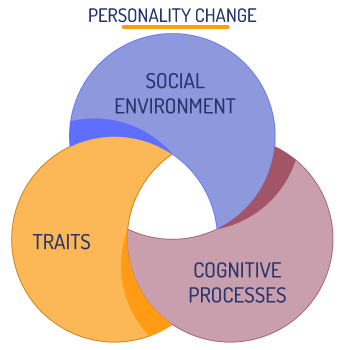
Personality change is influenced by traits, the social environment, and cognitive processes.
Social-cognitive theorists argue that changes in behavior indicate changes in personality.
Individuals are active agents in their own lives, organizing events and regulating their behavior.
Cognitive activities such as organization, reflection, and self-regulation play a role in shaping behavior and responses.
Existing personality traits influence the cognitive interpretation of events and can lead to different responses.
The theory suggests that identifying and regulating responses to life events can lead to new behaviors and changes in personality.
The social-cognitive perspective has limitations in explaining the origins of specific traits and predicting personality outcomes.
Self-reflection is an important aspect of utilizing social-cognitive theory to make positive changes in one's personality.
| Criticisms | |
|---|---|---|
Trait Theories | Broad categoriesCommon languageProvides a stable description | Big Five may be too broadDoes not explain how personality changesDoes not explain how traits developed |
Social-Cognitive Theories | Considers the impact of the environmentProvides a way to explain individual differences based on cognitive processesAssumes the individual is conscious, rather than passive | Assumes change in response to the environmentUses change in behavior as evidence of change in personalityIs not predictive |
Trait Theories:
Strengths: Provide broad categories and a common language to describe personality, offer stable descriptions.
Criticisms: Big Five traits may be too broad, do not explain how personality changes or how traits develop.
Social-Cognitive Theories:
Strengths: Consider the impact of the environment, explain individual differences based on cognitive processes, view individuals as active agents in their own lives.
Criticisms: Not predictive, assumes change in response to the environment without accounting for all cases.
Biology and Personality:
Personality is influenced by both biology and the environment.
Different psychological perspectives emphasize different aspects of personality.
Including biological processes is important to have a complete understanding of personality.
Certain personality traits can be linked to health problems, and biology may predispose individuals to certain behaviors. Ongoing research explores these predispositions.
Test | Reliability | Validity | Other Considerations |
|---|---|---|---|
Rorschach Test | UnknownRespondents can fake results, especially in retestsRespondents may or may not be given the same images | Inconsistent association between test score and personalityOpen to individual psychoanalysts’ interpretation | Requires a trained professional to administer and interpret the results |
Thematic Apperception Test (TAT) | Image cards represent different situations, so they can have many different responses. This makes results low in reliability. | Open to individual psychoanalyst’s interpretationIncludes knowledge of the respondents’ background and experiences, which may skew the interpretation | Requires a trained professional to administer and interpret the results |
Minnesota Multiphasic Personality Inventory (MMPI-2) | While considered very reliable, there can be discrepancies in scoring based on race and ethnicity.Does not take into consideration cultural values, conceptions, or expectations | “Validity scales” are built in and cross-reference answers for inconsistency, resulting in a higher level of validityDepending on its use, can reflect respondents’ interest in the task being tested, resulting in lower validity | Computerized version available567 true-false items |
Myers-Briggs Type Indicator (MBTI) | Designed to measure personality preferences rather than deep-rooted traitsRetesting can be difficult due to a person’s potential preference changes | “Validity scales” are built in and answers are cross referenced for inconsistency, resulting in a higher level of validity | Computerized version available96 yes-no items |
Projective Tests:
The Rorschach Test and Thematic Apperception Test (TAT) are projective tests used in psychoanalysis.
They involve interpreting a client's responses to nonspecific images to reveal unconscious aspects of personality.
Reliability and validity concerns have been raised regarding these tests, as interpretation is subjective and dependent on the psychoanalyst.
Despite concerns, they may still be valuable in therapeutic settings to stimulate discussion.
Minnesota Multiphasic Personality Inventory (MMPI-2):
The MMPI-2 is a comprehensive test developed to assess psychological disorders.
It consists of 567 true-false items and provides information on symptoms, self-esteem, and emotions.
The test is considered reliable, but its validity may vary depending on the context or purpose of assessment.
Myers-Briggs Type Indicator (MBTI):
The MBTI was developed to measure personality types and preferences based on Carl Jung's theories.
It aims to help individuals find satisfaction in personal and professional settings.
The MBTI has been extensively tested and is considered reliable and valid in measuring preferences along four dimensions.
It does not assess traits based on the Big Five or explain personality changes.