CH10: Muscular System Gross Anatomy
Facts About the Skeletal Muscles
Most skeletal muscles extend from one bone to another & cross at least one joint
Muscles contract —> pull on one of the bones toward the other bones across a moveable joint —> movement
Muscle Attachment
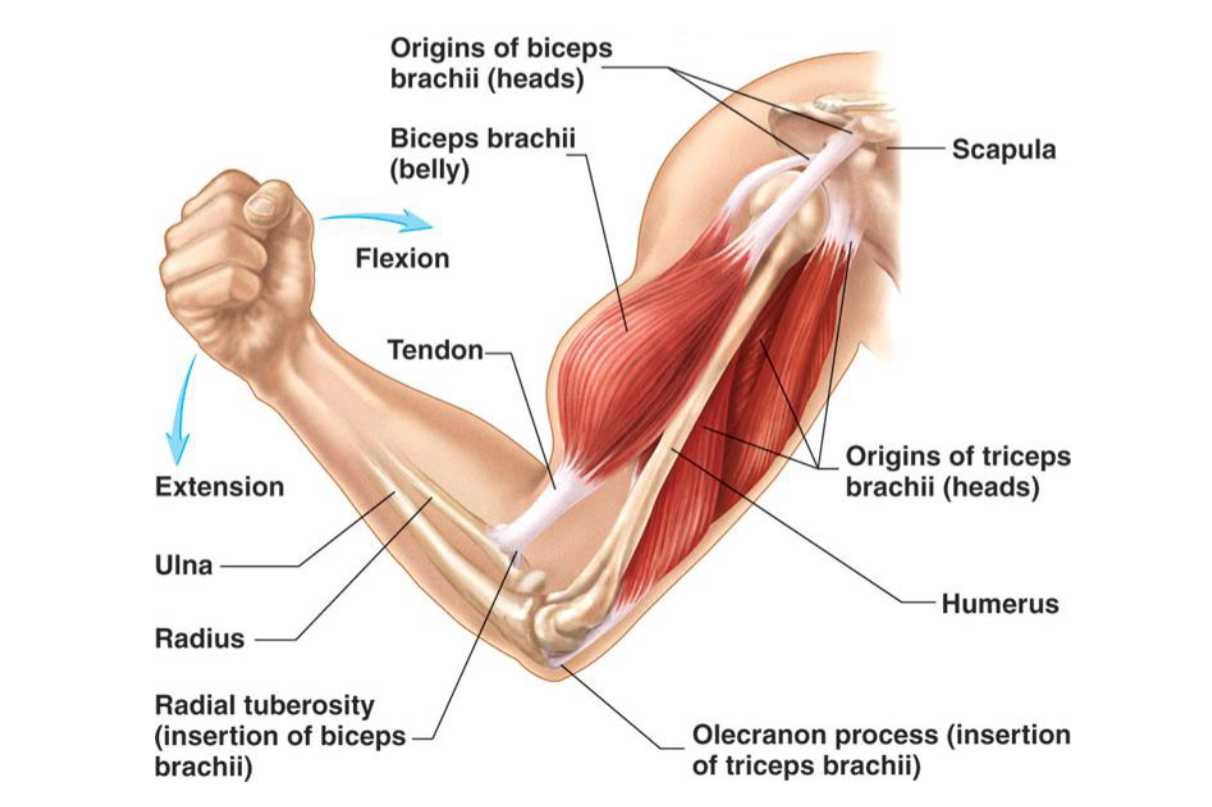
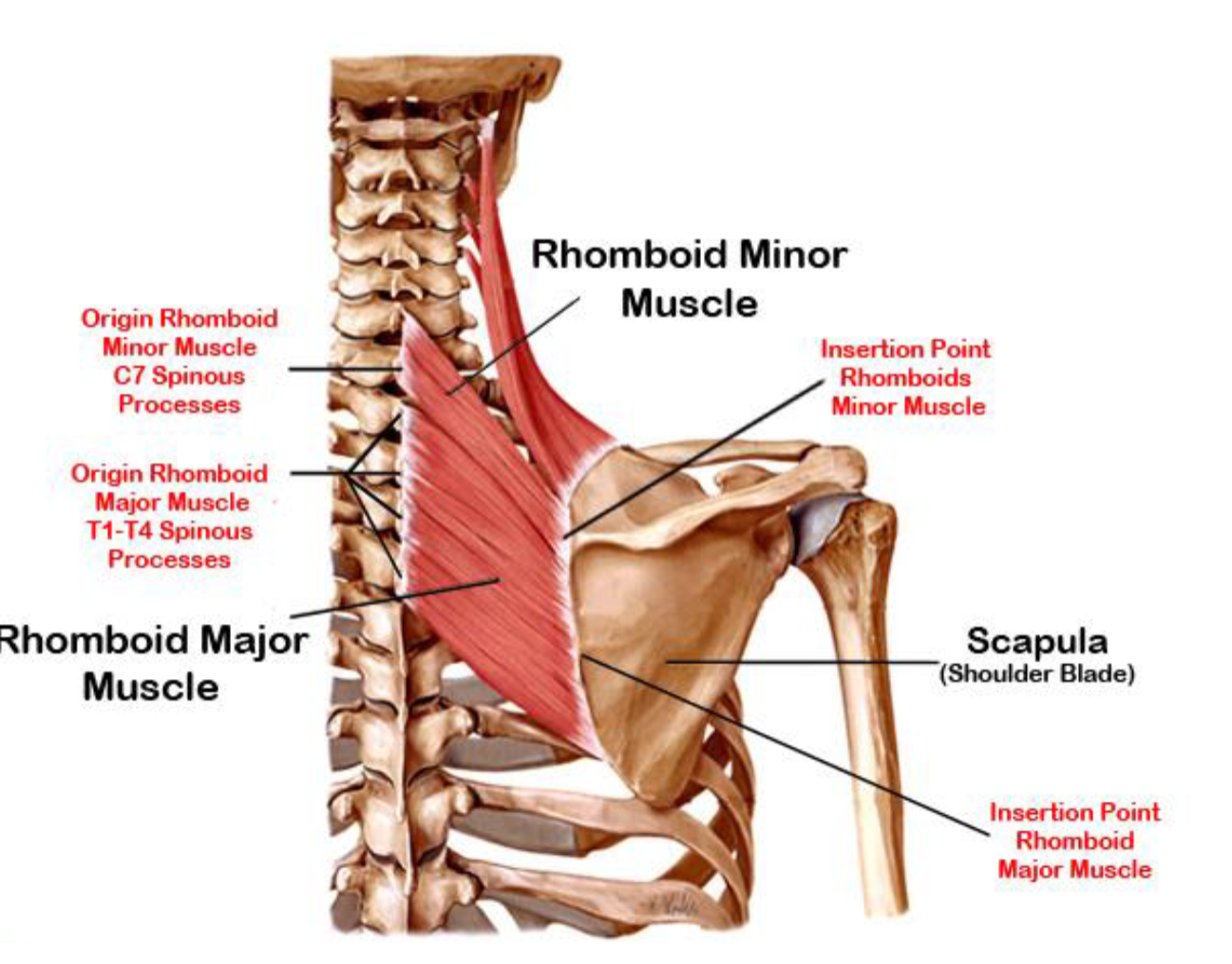
a) Origin (head):
the stationary end of the muscle
some muscles have multiple origins
e.g. biceps & triceps brachii
b) Insertion:
the end of the muscle attached to the moveable bone
c) Belly:
bulging part of the muscle between the origin & insertion
Agonist and Antagonist
Muscles typically come in antagonistic pairs (do opposite things)
a) Agonist (“contest”):
a muscle that accomplishes a certain movement
e.g. biceps brachii —> flexes elbow
b) Antagonist:
a muscle acting in OPPOSITION to an agonist
e.g. triceps brachii —> extends elbow
Functional Grouping
a) Synergists:
muscles working together to produce a movement
Prime mover:
the muscle (among a group of synergists) that’s mainly responsible for a movement
b) Fixators:
muscles that stabilize the actions of the prime movers
stabilize by holding the bone in place while another bone is moved
Muscle Types
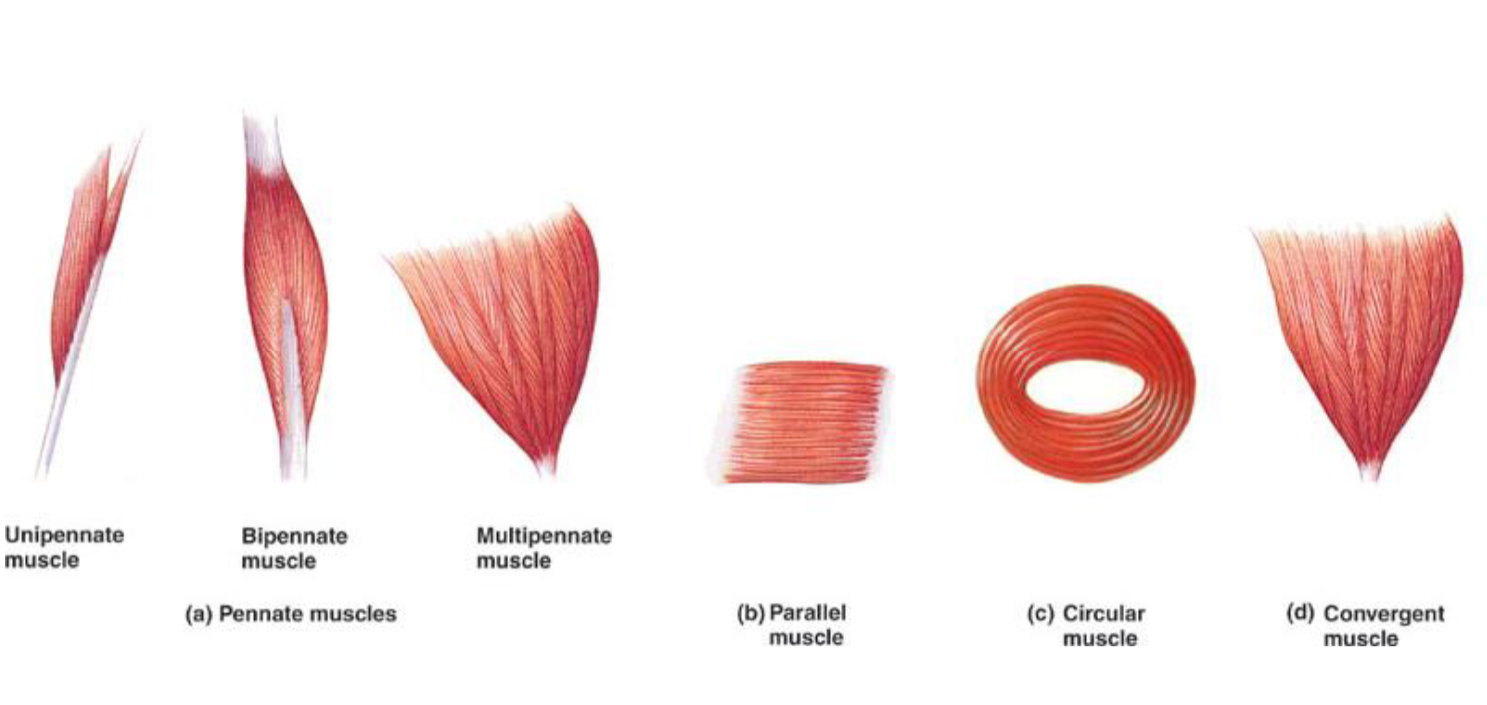
- Unipennate Muscle
Muscle fibers arranged on 1 side of a central tendon
Resembles a feather
Ability to pack more fibers into a smaller space
generates greater force
Ex: Extensor digitorum longus (lateral, lower leg), flexor pollicis longus
- Bipennate Muscle
Muscle fibers are arranged on both sides of a central tendon (oblique pattern)
designed for strength and power
increased muscle cross-sectional area
Resembles a feather
Ex: Rectus femoris (quadriceps muscles), Gastrocnemius (calf muscle), and Deltoid (shoulder muscle)
- Multipennate Muscle
Multiple rows of muscle fibers with each row inserted into a separate tendon
tendons then converge to form a single, larger tendon
helps distribute force evenly across the tendon
reduces stress
improves efficiency
Ex: Deltoid muscle (shoulder), Triceps brachii muscle (arm), and Rectus femoris muscle (thigh)
Generates high force production due to increased physiological cross-sectional area
- Parallel Muscle
Has fascicles (bundles of fibers) that run parallel to the long axis of the muscle
allows for a wide range of motion & speed
less force compared to pennate muscles
Strap-like
long, thin muscles with constant diameter
Fusiform
spindle-shaped
larger diameter in the middle, tapering to tendons at each end
Fan-shaped
broad base that tapers to narrow tendon
Ex: Biceps brachii, Rectus abdominis, Sartorius
- Circular Muscle
Contracts to narrow or close a passage, and relaxes to widen or open it
this regulates the flow of substances through the body
Crucial in forming sphincters (circular muscle thickening)
rings of muscles
controls the movement of substances like food, urine, and feces
Ex: Gastrointestinal Tract, Urinary Tract, Blood Vessels, the Iris
- Convergent Muscle
Fascicles converge toward a single attachment point
meets at a central tendon or aponeurosis
Fan-shaped or triangular appearance
Generates powerful contractions over a wide range of motion
produces force in multiple directions
Ex: Pectoralis major (chest muscle), Gluteus Maximus (buttock muscle), Rectoris femoris (quadriceps muscle)
*Note: Pennate muscles typically have a lower range of motion and shortened speed compared to parallel muscles