IIZ - Chapter 2: Ethics & Multicultural Competence (Stress and Trauma, Building Resilience) pg. 51 - 81
Ethics & the Counseling & Psychotherapy Process
Ethics is a system of moral principles that we apply through our commitment to excellence, reverence for others, and willingness to take action to improve life for ourselves and others
typically prescribed by social systems
Ethical codes are thoughtful professional lists of do’s and don’ts for our profession.
morals are individual principles we live by that define our beliefs about right and wrong
Ethics & Responsibility Summary
confidentiality
need trust in the relationship
recognize limitations
equal atmosphere with clients, share constraints, inform them they are free to stop the process at any time, talk to supervisor if you don’t feel prepared
seek consultation
constantly obtain supervision and consultation in your work
be aware of individual & cultural differences
remember both the golden rule and platinum rule
treat client how you would like to be treated
treat clients the way they want to be treated
give special attention to ethical treatment of children & their rights
importance of early childhood experiences
right of survival, developing to the fullest, being protected and being heard
Multicultural Humility & Social Justice Competencies
early history of interviewing populated primarily by white men - minor attention to cultural difference to women or BIPOC
the rise of the multicultural movement in the United States can be traced to the Civil Rights Act, followed by the growth of awareness in activists from groups such as African Americans, those who are of mixed race, women, the disabled, war veterans, and individuals who may identify as lesbian, gay, bisexual, transgender, queer, intersex, or asexual
impact of politics enacted in personal decisions and relationships with friends and family
your competence in multiculturalism is based on your level of awareness, knowledge, skills, and action
self and other awareness and knowledge are critical, but one must also have the skills and the ability to act.
awareness of our clients’ backgrounds and social contexts enables us to understand their uniqueness more fully.
approaching clients with humility help us deepen our understanding by directly hearing their stories in a caring and an ever-learning relationship
RESPECTFUL Interviewing & Counseling
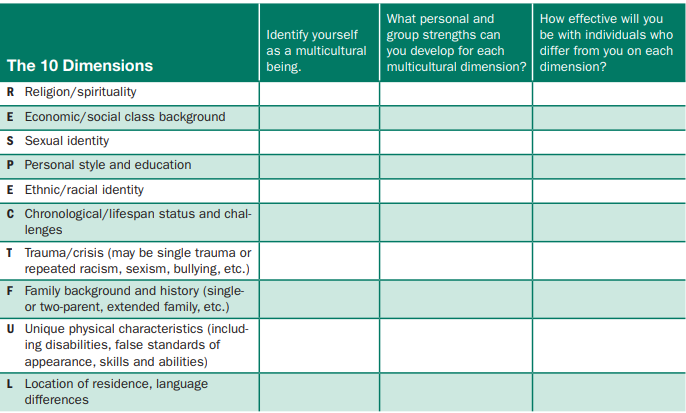
RESPECTFUL Model - listed multiple groups and communities which impact our lives & represent some of the multiple voices that clients bring to us
identify past and present voices & communities that affect your own thoughts, feelings, and behaviors
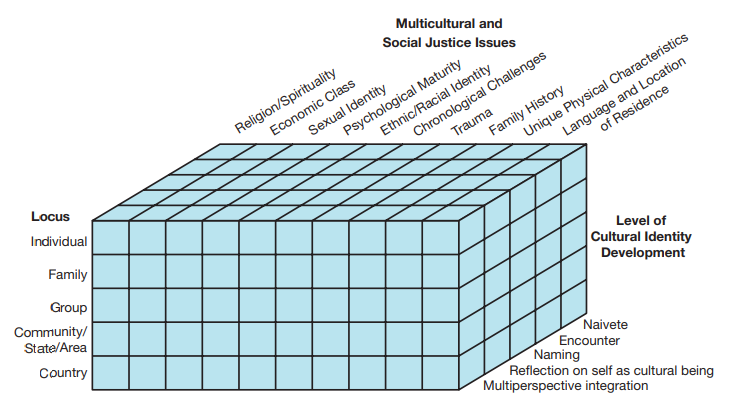
Individualism and/or Community
we all are members of multiple communities, many of which influenced our life path and may even become our main identity today
the giants of psychology looked at the person primarily as an individual - with little attention to our communities and their meaning to us
Without context you only know part of the person
Community (Merriam-Weber) - A group of people living in the same place or having a particular characteristic in common. A feeling of fellowship with others, as a result of sharing common attitudes, interests, and goals
Community-based research seeks to empower communities and effect policy changes. It seeks to democratize knowledge by recognizing and valuing the unique strengths and perspectives of all members involved in the research process.
there is also the possibility of cultural and historical trauma in each of the RESPECTFUL dimensions.
e.g., slavery → daily microaggressions → personal & group trauma, frustration, anger, hopelessness, depression
intersections among multicultural factors are important
e.g., biracial family
You can add the RESPECTFUL model to your skills and action by helping clients extend their understanding of themselves as cultural beings and building resilience and cultural health
remember that each client that visits you has a long historical culture that is still carried within
Privilege as a Multicultural Counseling Issue
privilege - power given to people through cultural assumptions and stereotypes, as well as unawareness and disinterest in past oppression
“invisibility of Whiteness” - European Americans tend to be unaware of the advantages they have because of the color of their skin
Counseling and therapy have too often focused on privileged people and failed to advocate for those in need
all your skills in empathy, understanding, and advocacy will be needed as mental health issues and disagreements increase, as they did during 2020–2021 during the depth of the pandemic
moving from one social class to another is quite challenging
Stress & Trauma
A national mental health crisis has been identified by the American Psychological Association (2020, 2021) and stress has become a major and defining issue in virtually all counseling and therapy.
mental and physical health declining due to inability to cope in healthy ways with stressors recently experienced
the most affected groups are parents, essential workers, young people, and people of color
Individual Stress
Krupnik (2020) conceptualizes the stress response on a continuum
normative stress responses (recuperate quickly) → pathological stress responses (recuperation partial) → traumatic stress responses (disrupt mental & physical functioning)
Holmes-Rahe Life Stress Inventory (Holmes & Rahe, 1967) is still one of the most used tools in our field
it is an instrument with 43 items, each of which is assigned a number of units, called Life Change Units (LCUs)
the more events a person has experienced in the prior year, the higher the score
scores between 150 and 300 points imply a person has about a 50% chance of a major stress-induced health disorder in the next 2 years
scores of 300 points or above indicates an 80% chance of a major illness within the next 2 years
events that elicit a traumatic stress response may be relational, environmental, or cultural
the effects of these stressors are many, such as neurobiological changes in the brain; weakening of immune defenses; and interpersonal and intrapersonal difficulties, parenting issues, and mental disorders
ACEs
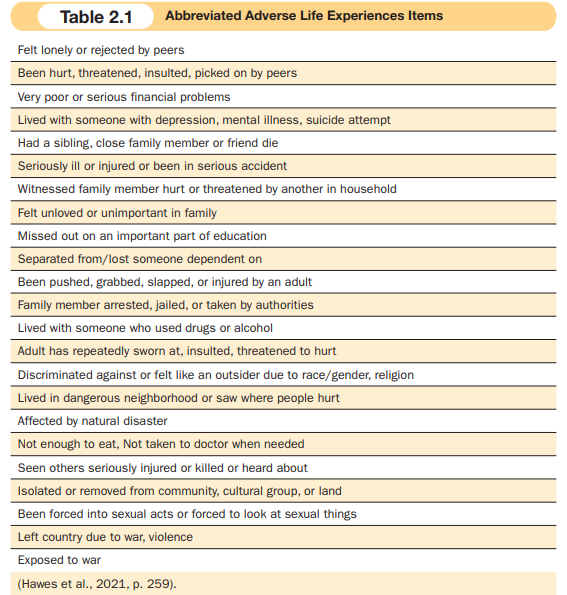
The Soul Wound & Historical Trauma
soul wound - occurs with and from historical trauma
Indigenous Americans over the generations
result: poverty, racism, poor medical attention shorter life span, loss of awareness of cultural heritage and spirituality over the centuries
Psychological liberation from historical trauma occurs when clients discover that what they saw as a personal issue is not just “their problem.”
see external and historical racism, sexism, heterosexism, other forms of oppression
The helping professions have all too often failed to see that the issues that clients bring to us are deeply involved with societal dysfunction, harassment, and oppression
The trauma of severe abusive treatment can persist over generations. Furthermore, there is now clear neurobiological evidence that changes in the genome can be transferred from one generation to the next (epigenetics)—and onward from that point to future generations
Awareness, Knowledge, Skills, and Action for Multicultural & Social Justice Competence
Be Aware of Your Own Assumptions, Values, and Biases
Unless you see yourself as a cultural being, you will have difficulty developing awareness of others
contextual issues beyond a person’s control affect the way the person discusses issues and difficulties
Oppression, discrimination, sexism, racism, and failure to recognize and take disability into account may deeply affect clients without their conscious awareness.
Microaggressions
Microintervention Strategies: What You Can Do to Disarm and Dismantle Individual and Systemic Oppression**
basic text and resource for issues involving racism, discrimination, and effective treatment
It is best that you be prepared to watch for instances of microaggressions, help clients name them for what they are, and provide counseling for emotional support, cognitive understanding, and deciding when and how to respond to these painful events
Social justice in counseling recognizes that oppression negatively affects the well-being and health and mental health of clients, families, organizations, and communities
indicates ways to dismantle systems of oppression, policies, structures, and practices
Advocacy, taking action on the part of a client and/or collaborating with a client toward systems change, is an essential part of multicultural competence.
Racial Battle Fatigue
developed by william smith
negative & racially charged experiences of all POC in America
physical, mental, emotional stress of coping with the constant stream of microaggressions & overt racism for POC
consequences of constantly facing racially dismissive, demeaning, insensitive, hostile racial environments and individuals produces a public health crisis → increased mental health disorders
causes mental, emotional, and physical strain that can produce psycho-physiological symptoms
suppressed immunity
increased sickness
tension headaches
trembling and jumpiness, chronic pain in healed injuries
elevated blood pressure
pounding heart beat
constant stress & anxiety
insomnia
ulcers
difficulty thinking or speaking coherently
emotional & social withdrawal
symptoms above can lead to long-term health issues & mental, physical, emotional exhaustion → left untreated, can become chronic & lethal
helpful things to buffer these effects:
reflective coping style
active problem-solving
cognitive restructuring
expression of emotion
social support seeking approaches
Skills and Action to Cope with Discrimination & Build Resilience
cultural health - faith, trust, and pride in family’s cultural background
attentional network - how we attend to the world and then integrate internal &n external perceptions
brain map in memory - solid memories of strength enable coping with microaggressions, though they still hurt
good input generally + good output → experience good things, brain map has positive turn
garbage in, garbage out → if people fed garbage of life, then people will have negative mindsets
damaging output from being raised in a family, community, region in which only provided prejudiced info
negative beliefs about self or others can be embodied and hard to change
difficult life experiences → interpret daily life in negative terms
What do we do with instances of microaggressions and harassment in counseling?
move the perceptual frame and interpretations of life issues and concerns
build resilience and build strength through skilled use of communication skills
watch for signs and stories that represent microaggressions
be willing to self-disclose and share your support appropriately
Often just sitting with a client is not enough
Watch for teachers and other influential persons who may be problematic
Seek help from community leaders.
Look for stories of heroes in the culture, in family members who have survived, and in personal models for growth
Help clients name the issue and identify contextual/environmental factor
Educate clients to understand their goals, expectations, and legal rights—and provide tools
must not impose our beliefs on clients → client needs to be ready to act
Neuroscience & Neurobiology: The Results of Trauma & Possible Treatment
when trauma occurs, typically:
the thinking center is under activated (PFC)
emotion regulation is under activated (anterior cingulate cortex, ACC)
the fear center is over activated (amygdala)
difficulty in concentration, making decisions, lack fo control of emotional outbursts
Post Traumatic Stress Disorder
Trauma-focused cognitive behavioral therapy (TFCBT) is recognized as a form of CBT for individuals and families
often integrates other theories and strategies
listening skills are essential in CBT and virtually all methods
children of trauma survivors are
more likely to develop traumatic, mood, and anxiety disorders
suffer endocrine and molecular alterations.
children who suffer trauma
“Exposure to adversity in childhood is a powerful predictor of health outcomes later in life—not only mental health outcomes such as depression and anxiety, but also physical health outcomes such as cardiovascular disease, diabetes, and cancer.”
show biological signs of aging faster than children who have never experienced adversity
early puberty, cellular aging, and changes in brain structure
Resilience & Positive Psychology
Resilience is the ability to bounce back from normal daily setbacks, temporary failure, and early or late trauma of many types.
Search for positive stories of strength
help the client remember the resources they have in family and friends
identify what the client has done right
therapeutic lifestyle changes (TLCs) provide a number of strength-focused actions that clients can take to improve wellness and mental health
exercise
spiritual and religious resources
building cultural identity
relaxation & meditation training
Positive Psychology and Therapeutic Lifestyle Changes: Building Client Resilience
Positive psychology’s central aim is to encourage and develop optimism and resilience
Optimism is defined in various dictionaries with many affirmative words—among them, hope, confidence, and cheerfulness.
trust that things will work out and get better, a sense of personal power, and a belief in the future
Revised Life Orientation Test (LOT-R) an effective scale to measure optimism
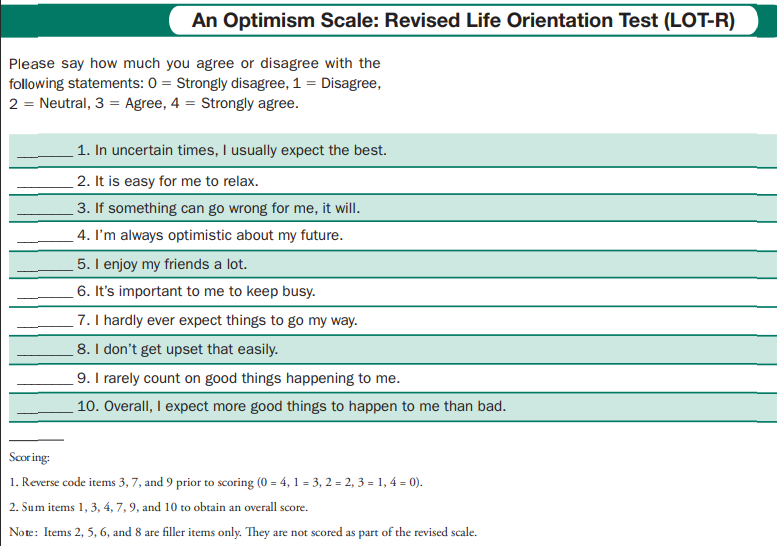

field of counseling has developed an extensive body of knowledge and research supporting the importance of positive psychology, a strength-based approach
positive psychology movement is well aware that happiness is not possible in the midst of excessive stress
Encouraging and teaching clients to becoming fully engaged in life is basic to positive psychology
Advocacy
Advocacy-oriented professionals, educators, and students recognize the influence of social, political, economic, and cultural factors on human development → living in context
ACA Advocacy Competencies
2 dimensions
extent of client involvement
level of advocacy intervention
6 domains
client/student empowerment
client/student advocacy
community collaboration
systems advocacy
collective action (formerly public information)
social/political advocacy
TLCs for Stress Management, Building Mental & Physical Health, Brain Reserve, and Resilience
therapeutic lifestyle changes
exercise
largest study, conducted on 104,046 individuals, found that more leisure time physical activity was associated with reduced major adverse cardiovascular events and all-cause mortality risk, whereas more occupational physical activity was associated with increased risks
Key to stress management and behavioral health is getting blood flowing to the brain and body
nutrition, weight, supplements
avoid the whites (pasta, sugar, salt) and snack only on healthy food
vegan, vegetarian, and Mediterranean diets have proven to be effective
obesity facilitates diabetes and other illnesses, including cancer, and it encourages the development of Alzheimer’s disease
supplements can be helpful but make sure they talk to their doctor before taking them
can be an area of sensitivity for some clients, issues of eating need to be approached with care
social relations
We want our clients to engage socially as fully as possible, as this not only builds mental health but also builds the brain and body
People with negative or ambivalent relationships have been found to have shorter protective telomeres, thus predicting age-related disease
careful listening skills become essential → need to search for the positive stories and strengths that can lead to better relationships
cognitive challenge
Take a course, learn a language, learn to play an instrument—basically do something different for growth and the creation of new neural networks
adult learners should “jiggle their synapses a bit” by confronting thoughts that are contrary to their own
sleep
A full rest is critical for brain functioning and development of new neural networks.
Lack of sleep is one of the indications for depression or anxiety
questions during intake, follow through to learn more, make contact with them and follow their sleep patterns
counseling around sleep issues belongs primarily to experts and medical professionals. If you sense serious problems, such as sleep apnea or continued inability to sleep, referral to medical professionals
meditation & relaxation
meditation makes a positive difference in your well-being and brain, even increasing gray matter.
help immune system, increase optimism & positive mood, negate some effects of stress
assess what areas of stress management, meditation, and relaxation may be relevant to your client
multicultural pride & cultural identity
a positive psychology/wellness approach recognizes that multiple forms of oppression do exist, but finding personal and cultural strengths can increase one’s self-respect and strengthen identity
RESPECTFUL Model with clients if they seem interested
helping others
stop use of drugs & alcohol
art, music, dance, literature
nature break
control screen time
no smoking