introduction to SMM pptx
what is social media
social media is:
a form of interactive electronic communication that allows users to create online communities and interact to share information, ideas, personal messages, texts, images, and video content
social: socializing or being social
media: a medium is a means of doing something. media is the plural term for medium
social media refers to the means for being social
growth of social media
more than half of the worlds population use social media
the average daily time spent using social media is around 2.5 hours each day
men > women
more than 70% of americans use social media
why is social media a marketing disruptor?
interactivity: both sides of the communication are active and can have an effect on each other
instant feedback: which can be given 24/7
limitless: it is highly adopted and can be used for various purposes
shift of power: consumers gained a megaphone
co-creation: consumers became advocates of brands (UGC, influencers, community advocates, etc.)
made other methods leffe effective: took a bite of other types of marketing. they lost their effectiveness and reach
SMM has:
lower costs
greater reach
higher ROI
changed consumer behavior and ourchase journey
social selling, customer service, peer reviews happen on social media
social media marketing (SMM)
SMM is the strategic use of social media networks by marketers to increase brand awareness, identify key audiences, generate leads, and build meaningful relationships with customers
is social media good or bad?
is social media good or bad for (a) personal use and (b) for use by brands
what are the benefits/positive outcomes?
what are the drawbacks/negative?
advantages of social media marketing
it can increase brand awareness, reach, traffic to website, conversions and sales, long lasting relationships with customers (brand loyalty), immediate insights and tracking through analytics, more leads, establishment as an expert in the industry, SEO ranking
it can reduce costs and save time
disadvantages of social media marketing
requires additional resources
high competition
reduced control over outcomes
reputational damage
higher expectations
hard to measure ROI
exposure of staff/customers to bullying, harassment, etc.
social media metrics
social media metrics are data points used to assess the impact of social media activites
how do you measure social media success?
call to action (CTA):
not a metric but a term you should know
refers to the next step or action that a marketer wants a consumer to take
clicks: how many times a person clicked on your post or link
CPM or cost per millie: how much it costs to reach 1000 people
followers: total number of people who have followed, or liked your social media
mentions: number of times a business is mentioned on social media (this does not just mean being tagged in the form of @brand)
impressions: total number of times a content is delivered to someones feed or is displayed. impressions count repeat views so if someone watched the content 3 times, it counts it as 3 impressions
reach: number of unique people who have seen your content. (repeat views dont count so if someone watches it 3 times, it only counts as 1)
impressions are higher than reach. these are defined on each platform differently
engagements: how many times a person interacted with your content; includes likes, comments, shares, (and clicks)
engagement rate: (a ratio shown as a percentage) measures the number of engagements (reactions, comments, and shares) your content gets a percentage of your audience
(total engagements / total audience reach) * 100
return on investment (ROI): a measure of the value gained from social media marketing
usually discussed as a percentage.
a ratio of: (net profit / total investment) * 100
3 ways to use social media by marketers
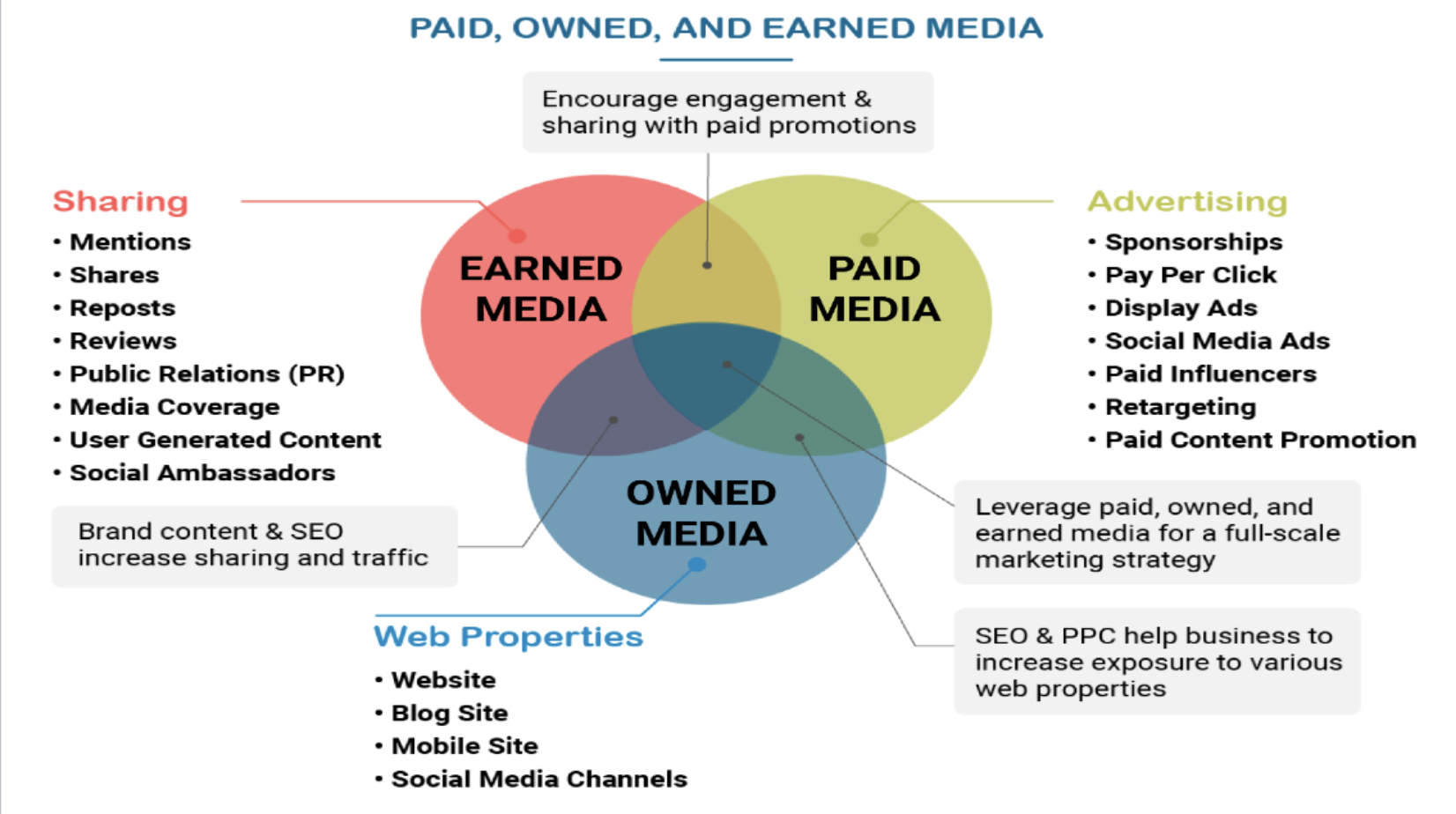
owned: the channels that the company has (website, blog, facebook page, etc.). these are created and managed by the brand
earned: what others share, tage, post about the brand (mentions, UGC, reposts, online reviews, media coverage, etc.)
most valuable type of media
paid: the brand pays for it (such as advertisement, influencer sponsorship, paid promotions, etc.)
brands need a mix of all three in their strategy
AI in marketing
AI can be used in all aspects of marketing
product: ideation, product development, and manufacturing
advertising: programmatic ads & targeting)
content creation & moderation: (writing blogs & editing captions, editing videos, generating images/video/sounds, preventing spam/harassment)
sales
customer service: chatbots, delivery robots, voice shopping
shortage of expert
there are lots of companies who need experts on SMM but there arent enough people who have the skills