Modes of Operation of All Wheel Drive System
All Wheel Drive
Most all wheel drive vehicles do not offer a two-wheel drive or four-wheel drive selection.
All wheel drive (AWD) systems enhance vehicle performance in poor traction conditions such as snowy roads, dry pavement, or emergency maneuvers.
Torque is automatically transferred to the axle that has the most traction.
AWD systems can be based on either front-wheel drive or rear-wheel drive platforms.
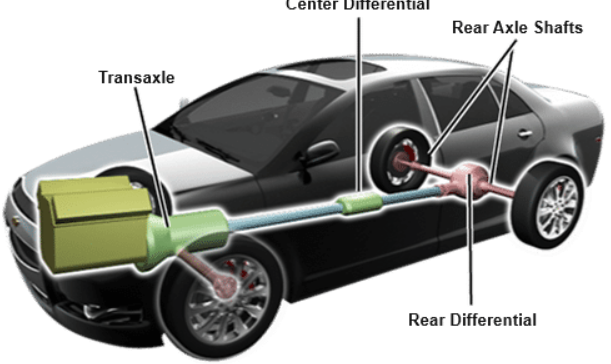
All Wheel Drive Systems
Center Differential
Splits torque between the front and rear axles
Prevents driveline windup, reducing tire wear and component damage
Is located in the transfer case between the front and rear driveshafts
Often includes a viscous clutch to maintain traction when one axle slips
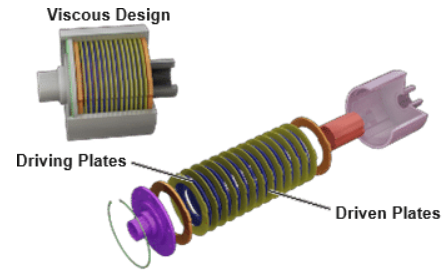
Viscous Clutch
Is a self-contained unit located inside the front transfer case housing
Contains thin steel clutch plates housed in a sealed drum
Has driving plates splined to the clutch hub and driven plates splined to the drum
Uses silicone fluid to transfer torque between plates
Splits engine torque based on the traction needs of the differential
Haldex Clutch
Acts as a coupler between the front and rear differentials
Is mounted in front of the rear differential
Receives torque from the front differential
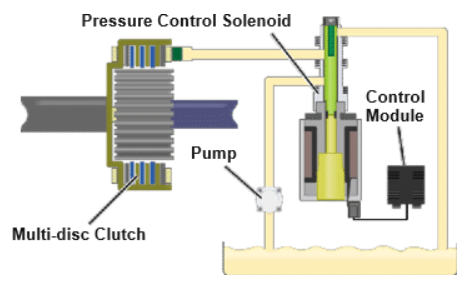
Consists of three main parts:
Hydraulic pump
Wet multi-disc clutch
Electronically controlled module (with solenoid, pressure, and temperature sensors)
Engages the rear differential when there is a predetermined speed difference between the front and rear wheels
Modes of Operation
Electronically Controlled Differential - Normal
Uses a Power Transfer Unit (PTU) driven by the transaxle differential carrier
The PTU transfers torque to the driveshaft connected to the rear differential
An electronically controlled clutch connects the driveshaft to the rear differential
During normal operation, the system functions as a front-wheel drive vehicle
Power flows from the front differential to the front wheels
The PTU drives the rear driveshaft, but no torque is sent to the rear differential
Slip
The control module monitors the difference between front and rear wheel speeds
When a speed difference is detected, the electromagnetic clutch in the PTU engages
The clutch transfers torque from the rear driveshaft to the rear differential
Once wheel speeds equalize, the clutch pack releases, returning the system to normal operation
Torsen Center Differential - Normal
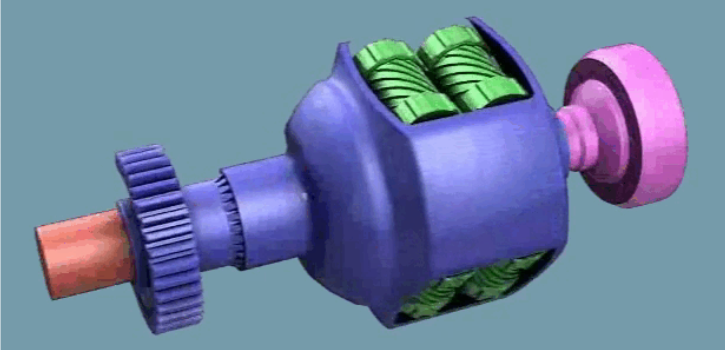
A mechanical, torque-sensing differential with no electronics, clutches, or viscous fluid
Uses a helical gearset to distribute torque
Located in the transfer case attached to the rear of the transmission
Transmits torque to both front and rear driveshafts
Under normal conditions, the vehicle operates as rear-wheel drive
Power splits automatically between the front and rear differentials
Slip
When rear wheels slip, internal helical gears react instantly
Torque is redirected to the axle with the most traction
Provides automatic torque distribution without electronics or fluid
Enhances traction and vehicle stability
Haldex Clutch - Normal
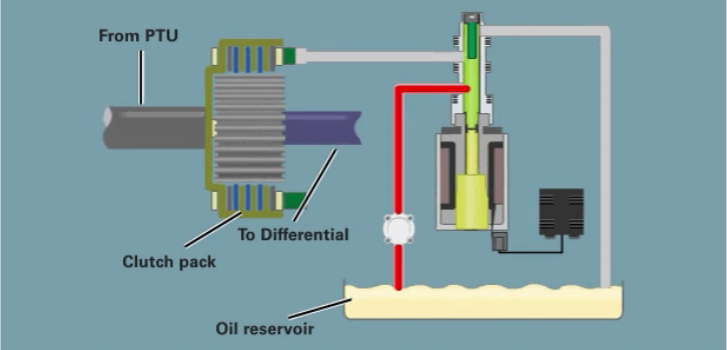
Consists of a hydraulic pump, wet multi-disc clutch, and electronic control module
Under normal conditions, vehicle operates in front-wheel drive
Power transfers from the front differential to the front wheels
The PTU drives the rear driveshaft, but no torque is transferred to the rear differential
Slip
When front wheels slip, the input shaft spins faster than the output shaft
The pump generates oil flow, activating the multi-disc clutch
Oil pressure engages the clutch pack, transferring torque to the rear wheels
Oil returns to the sump through a controllable valve that regulates pressure
In high slip conditions, the pump delivers higher pressure for stronger clutch engagement
Viscous Clutch - Normal
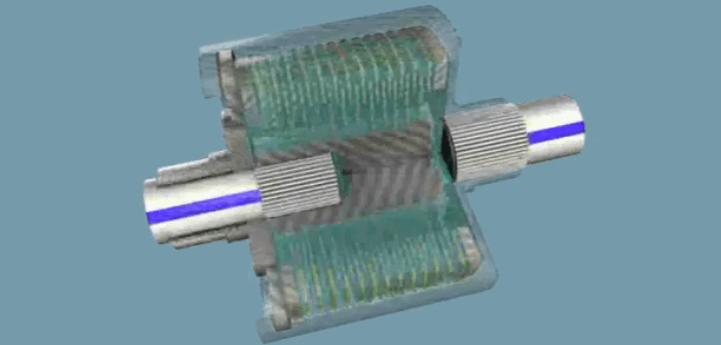
Sealed assembly containing two sets of steel plates immersed in silicone fluid
Under normal conditions, both sets of plates rotate at the same speed
Torque splits between front and rear wheels (typically 35% front / 65% rear)
Provides continuous torque transfer while allowing minor speed differences between axles
Slip
Speed difference between front and rear driveshafts creates friction between the steel plates
Friction heats the silicone fluid, causing it to expand
Expansion locks the plates together, transferring torque to the axle with less traction
When wheel speeds equalize, the fluid cools, allowing the driveshafts to rotate at different speeds again
Provides automatic torque redistribution during slip conditions