Africa
Ghana
Three cultural zones
1) Pan-Arabic zone in the north
2) The Sahel Zone—includes the Sahara Desert
Countries (put in order of population: Nigeria, Sudan, Senegal, Mauritania, Mali, BurkinaFaso, Niger, Chad, Ethiopia, Somalia
The name Sahel accurately describes the location because it is an Arabic word meaning “border” or “margin”. The southern border of the region is the Sahara Desert (an Arabic word meaning “desert”). It is a transition zone between the arid Sahara to the north and the wetter, more tropical area to the south
3Sub-Saharanan Africa
We’ll focus on some areas in this region
Music is vital in daily lives in Sub-Saharan Africa
Mundane tasks put into the rhythm of music
Dance and singing are equally essential—music, dance, and singing are considered inseparable—the same.
Ghana (West Africa)
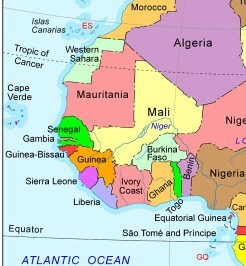
The bulk of enslaved people taken from this region, cultural traditions were disseminated throughout the Caribbean and the Americas.
Dance, Singing, Instruments - inseparable
Idea of collective community – important
The importance of the collective community is shown in the three main musical activities.
Communal dance
Call and response singing
Polyrhythm – multiple independent rhythmic parts
Dance
Informal dance—large groups—an individual may step out from the crowd, but briefly, and soon steps back with the group
A person may step out from the crowd, but soon steps back with the group
More traditional – Adowa Music and Dance
Formal dance activities performed with some social function in mind also emphasize some group participation.
Designated space for singers/drummers/dancers with a crowd around the outside
Formal observances include – funeral, communicating with ancestors, holidays, and community events.
Vocal music – Singing
Used in rituals, religious ceremonies, storytelling/history, royal functions, dance, entertainment, communication
The majority of performance involves group singing.
Most often call-response form – an individual sings a call and the group responds (or question-answer)
The leader calls out with a phrase of music
.Group sings a response
Majority are drums – many kinds
Usually have bell-type – often plays main pattern
Some rattles
May have one or two aerophones
Main organization is polyrhythm – Polyrhythm=multiple rhythmic layers
Each drum/player has own rhythmic pattern – Each participant plays a rhythmic pattern that follows its own time
Each play their rhythm around main beat/pattern
g.—two against three cross-rhythm—try one hand doing duple, and other doing triple division of beat at same time
Polyrhythmic ensembles are much more complicated and each musician must interlock their pattern with the other musicians’ patterns
Usually there is one central rhythm and the others play their parts in relation to it
Cultural consideration
“recreational bands” play at wakes, funerals, annual festivals, social clubs, weddings, community events, entertainment
Ensembles often have a master drummer who oversees all aspects of a permance
Most learn their craft in an informal manner
Talking drums
Surrogate speech
Drums mimic rise and fall of speech
Imitate rhythms of spoken language
Natives who know spoken and drum language can communicate
Talking-drum-demonstration]
Drums give words more power to be heard by living and dead (ancestral spirits)
Drums used a speech surrogate to give the words more power and to be heard by ancestral spirits along with living
Also used for storytelling, to honor a person of royal lineage or praise an ancestral spirit
Imitating speech rhythms
South Africa
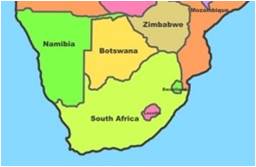
Mbube Vocal Choir
Cultural Background
Roots of mbube originated during the lifetime of the Zulu ruler Shaka (1787-1828)
Shaka regarded as powerful warrior, great dancer, strong singer
Much of Zulu traditional repertoire attributed to Shaka, said to have composed many songs to keep morale high among his soldiers
Zulu choral singing existed prior to the colonial period
Powerful sound
It had no harmony or instruments – sung a cappella
Current harmonies and strong cadences (closing phrases) show European musical influence
Traditionally all male (warriors) – now women also sing
Mbube in the Modern Era
Traceable to 1920’s when migrant workers held evening singing competitions as form of entertainment after long day of work
Earliest recordings come from 1939 – by Solomon Linda and his Evening Birds (probably named after the idea of songbirds and the evening singing competitions)
Musical Characteristics
Most mbube war originally performed by all-male vocal groups (stemming from migrant worker and earlier warrior tradition), though some female vocal groups exist now
Started a cappella – instruments added later
Distinctive feature of mbube sound is emphasis on lower vocal range—considered to be characteristic of Zulu choral performance predating the colonial period
Rich full timbre (not nasal)
Mainly call-response organization
A lead singer/solo voice (“the controller”) leads with a call (usually higher pitch range – maybe falsetto)
The group (the “chord”) responds
The response group may also do backup harmonies to the solo/lead singer
Varying interaction between lead and group creates tempo and mood changes
Mbube style also distinctive for frequent changes in tempo
Mbube Inspired Pop Hits
Solomon Linda’s recordings inspired some American hits including
“Wimoweh” by the Weavers (1951) – more folk music oriented – notice banjo, guitar, bass instruments
Isicathamiya
Derivative of mbube style is iscathamiya
A softer style of mbube
Iscathamiya means “to walk like a cat”
Named for the tiptoeing dance steps that accompanies the singing
The tiptoeing choreography contrasts with traditional Zulu dancing of hard stamping and vigorous “warrior” movements.