Unit 3 Review: Land-Based Empires and State Building (c. 1450–1750)
Unit 3 Overview: Comparison and Context in Land-Based Empires
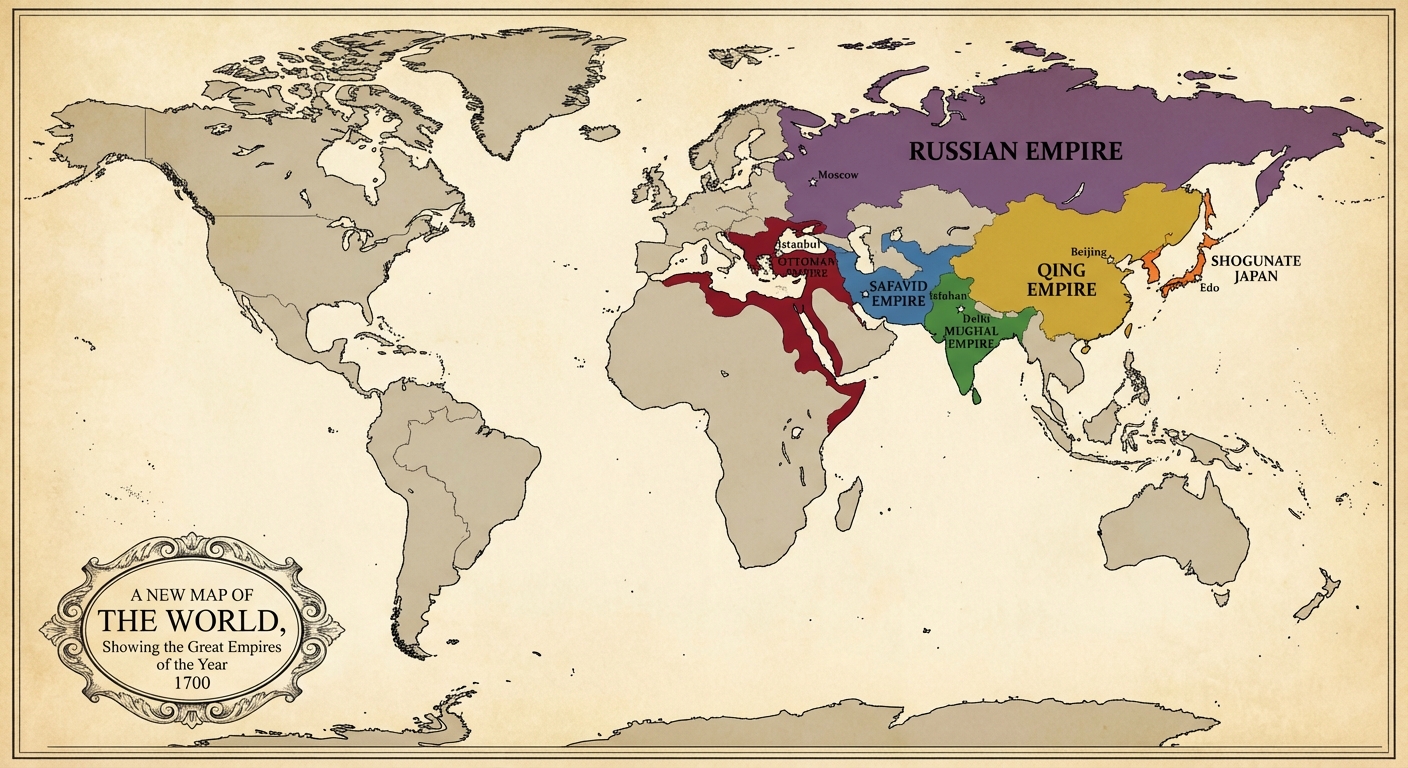
During the period c. 1450–1750, the global balance of power shifted significantly as large, land-based empires expanded their borders through the use of gunpowder technology and consolidated power through sophisticated bureaucracies. While often referred to as Gunpowder Empires (specifically the Islamic empires of the Ottomans, Safavids, and Mughals), this era also includes the Manchu (Qing Dynasty) in China, the Tokugawa Shogunate in Japan, Imperial Russia, and France under absolute monarchy.
In this section, we compare how these states developed, how they utilized technology, and how they legitimized their rule.
Comparative State-Building and Expansion
The primary learning objective for this unit is to compare the methods by which various empires increased their influence. While the specific cultures differed, the mechanisms of state-building followed nearly identical patterns across Eurasia.
1. Centralization of Power
Almost all major land-based empires moved away from feudal/decentralized systems toward Absolutism (centralized control under a single monarch).
- Europe: Monarchs like Louis XIV of France reduced the power of the nobility (the breakdown of feudalism). Louis XIV famously declared, "L'État, c'est moi" (I am the state) and forced nobles to reside at Versailles to monitor them.
- Russia: Peter the Great centralized authority by modernizing the military and forcing the nobility (Boyars) to serve the state, famously forcing them to shave their beards to align with Western standards.
- Japan: The Tokugawa Shogunate ended the Sengoku (Warring States) period by forcing the Daimyo (feudal lords) to maintain dual residence in their home domain and the capital, Edo (Alternate Attendance Policy), keeping them financially and politically subservient.
2. Recruitment of Bureaucratic Elites
To maintain control over vast territories, rulers bypassed traditional nobility by recruiting administrative and military professionals loyal only to the ruler.
| Empire | System | Description |
|---|---|---|
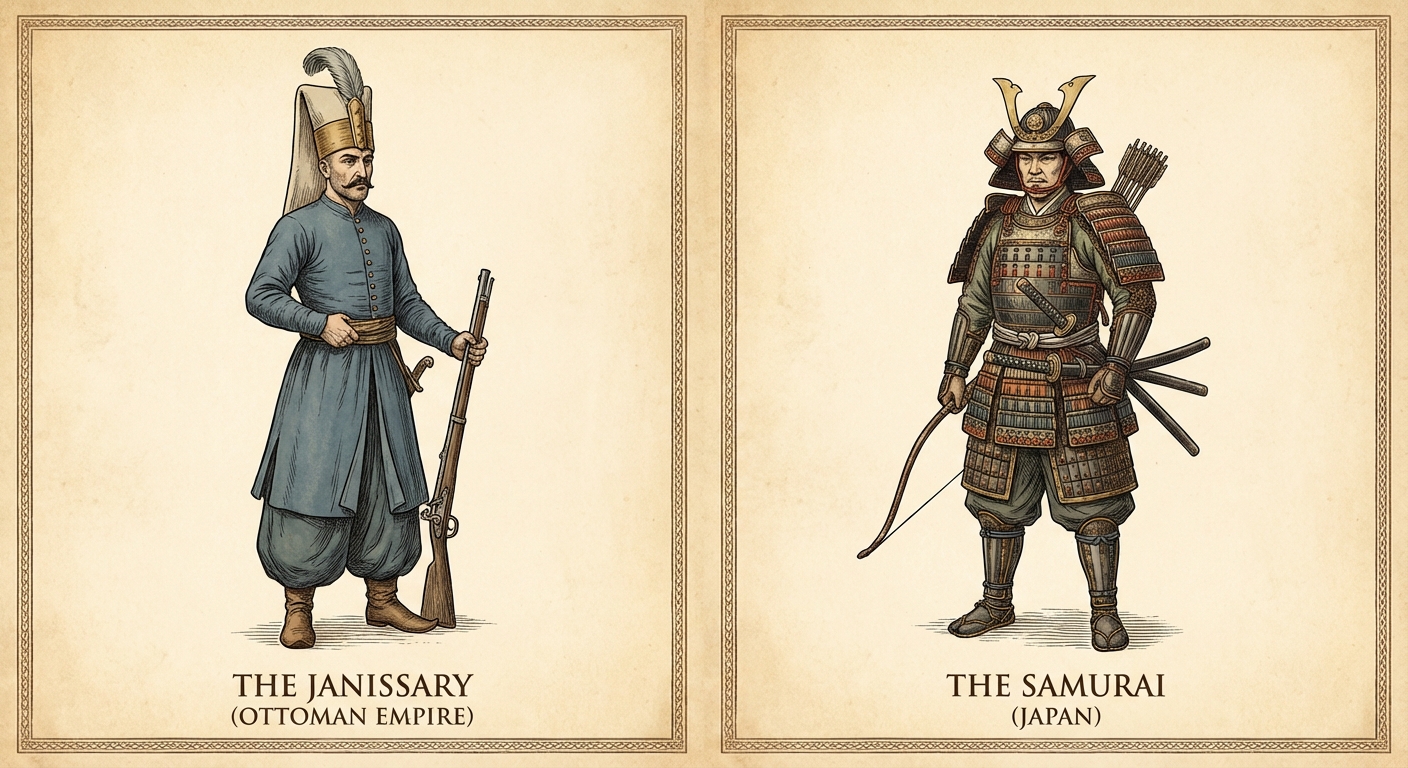
| Ottoman Empire | Devshirme | Christian boys from the Balkans were enslaved, converted to Islam, and trained to serve in the civil administration or distinct military units (Janissaries). |
| China (Qing) | Civil Service Exam | The Manchu maintained the Ming era examination system to recruit Han Chinese bureaucrats, ensuring governance by merit rather than just heredity. |
| Japan | Salaried Samurai | As civil conflict ended, Samurai transitioned from warriors to paid bureaucrats responsible for extensive record-keeping and administration. |
3. Economic Systems and Tribute
Rulers needed vast amounts of revenue to fund standing armies and monumental architecture.
- Tax Farming: Used by the Ottomans and Mughals. The government auctioned the right to collect taxes to private individuals (tax farmers). These farmers paid the state a fixed sum and kept the excess collected from the peasantry. This often led to corruption and peasant over-exploitation.
- Zamindars: In the Mughal Empire, these were local intermediaries who collected taxes. Under Akbar the Great, the system was fair; under later rulers, it became corrupt.
- Tribute Systems: China continued to demand tribute from neighboring states (and even European traders) as a recognition of Chinese superiority.
Technology and Innovation
While Unit 4 focuses on maritime technology, Unit 3 focuses on military and administrative technologies that allowed land-based empires to dominate.
Gunpowder Weaponry
The defining technology of this era was the adaptation of gunpowder (originally from China) into high-powered weaponry.
- Cannons: Crucial for siege warfare. In 1453, Mehmed II of the Ottoman Empire used massive cannons to breach the Theodosian Walls of Constantinople, ending the Byzantine Empire.
- Small Arms (Arquebus/Musket): Allowed infantry to penetrate plate armor, reducing the dominance of traditional mounted cavalry (like the Knights in Europe or nomadic steppe warriors).
- Example: The Safavids originally rejected gunpowder as "unmanly" compared to cavalry charges but were crushed by the Ottomans at the Battle of Chaldiran (1514). They subsequently adopted gunpowder rapidly.
Administrative Innovation
Technology was not just physical; it was also systemic.
- Census and Surveying: Empires like the Mughals and Qing China used detailed land surveys to calculate tax burdens accurately.
- Hard Currency Taxation: The Ming and Qing Dynasties shifted to the Single Whip Law, requiring taxes to be paid in silver rather than goods. This integrated China into the global silver trade (connecting to Unit 4).
Legitmizing Rule: Religion, Art, and Architecture
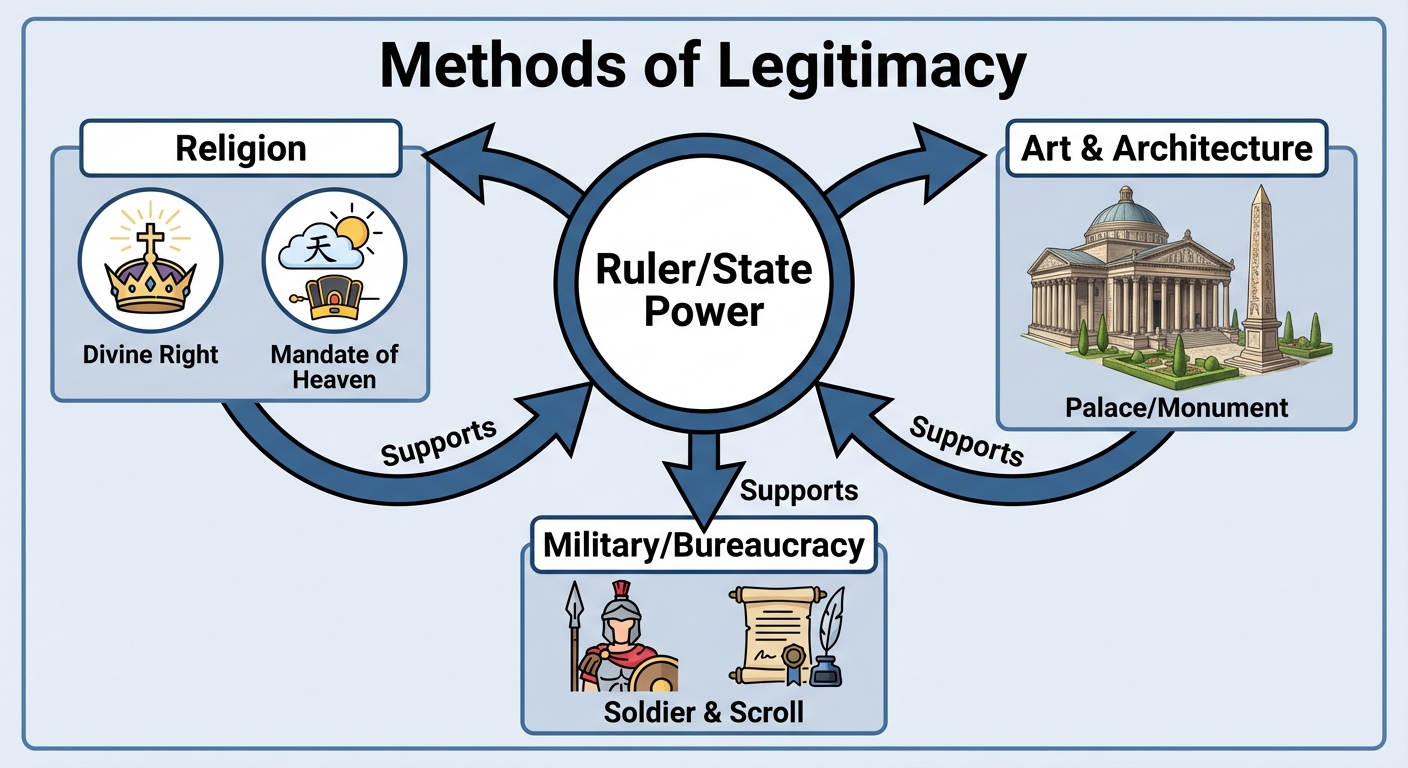
Rulers used cultural aspects to justify their centralization. If a ruler is seen as divinely appointed or the protector of the faith, rebellion becomes a sin as well as a crime.
1. Religion as Legitimacy
- Divine Right of Kings (Europe): The belief that the King answers only to God.
- Shi'a Islam (Safavids): The Safavid Shahs claimed to be descendants of the prophet Muhammad and made Shi'a Islam the state religion to unify their Persian subjects and distinguish themselves from the Sunni Ottomans.
- Ancestor Veneration (China): The Qing emperors (who were ethnic Manchu, not Han) performed public Confucian rituals to validate their Mandate of Heaven.
- Human Sacrifice (Aztecs): (Contextual) Used to demonstrate the power of the ruler and the debt owed to the gods, terrifying subject peoples into submission.
2. Monumental Architecture
Building "big things" sends a message of power, wealth, and permanence.
- Taj Mahal (Mughal): Built by Shah Jahan. Blended Persian and Indian styles (Syncretism) to show the grandeur of the Mughal court.
- Palace of Versailles (France): A symbol of Louis XIV's absolute power and wealth.
- St. Basil's Cathedral (Russia): Commissioned by Ivan the Terrible to commemorate victories; symbolized the union of church and state.
Common Misconceptions & Contextual Pitfalls
1. Consolidating vs. Legitimizing
Students often confuse these two terms in essay prompts.
- Consolidating Power: The mechanics of taking control. (e.g., bureaucracy, tax gathering, military conquest, killing rivals).
- Legitimizing Power: The justification for that control. (e.g., religion, art, architecture, titles).
2. The "Gunpowder Empire" Definition
Do not assume "Gunpowder Empire" refers to every empire with guns. It specifically refers to the Islamic empires (Ottoman, Safavid, Mughal) where the state formation was strictly tied to the monopolization of artillery. However, the concept applies to Russia and Japan as well.
3. Religious Toleration vs. Uniformity
Not all land-based empires handled religious diversity the same way.
- Tolerant: Akbar the Great (Mughal) created the "Divine Faith" to blend Islam, Hinduism, and others. The Ottomans used the Millet System, allowing Christians and Jews to rule themselves under their own religious laws.
- Intolerant: The Catholic Inquisition in Spain or the revocation of rights for Huguenots (Protestants) in France.
Global Context: The Decline
By 1750, many of these land-based empires began to stagnate compared to the Maritime Empires (Unit 4). They generally failed to modernize their navies and became insular, while European powers grew wealthy through colonization. This sets the stage for the shifting balance of power in Unit 5 (1750–1900).