Junior Cycle 3rd-Year Science Notes: Strand Two — Earth and Space
Junior Cycle 3rd-Year Science Notes: Strand Two — Earth and Space
Water and Carbon Cycles
Water Cycle:
Processes: Evaporation, Condensation, Precipitation, Runoff, Infiltration.
Importance: Distributes water, supports ecosystems, and regulates Earth’s climate.

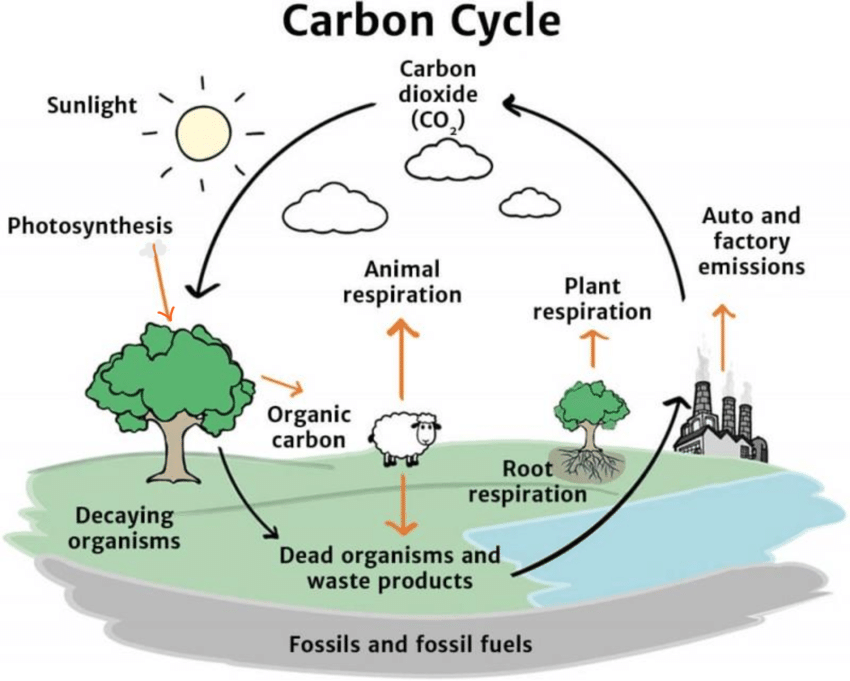
Carbon Cycle:
Processes:
Photosynthesis: Plants take in carbon dioxide (CO₂) and convert it into glucose using sunlight.
Respiration: Animals and plants release CO₂ back into the atmosphere by breaking down glucose for energy.
Decomposition: Dead organisms are broken down by decomposers, releasing CO₂ and methane into the atmosphere.
Combustion: Burning fossil fuels and biomass releases stored carbon as CO₂.
Ocean Uptake: Oceans absorb CO₂, where it can form carbonates used by marine organisms or remain dissolved.
Importance: Regulates Earth’s temperature, supports life through its role in ecosystems, and balances carbon between the atmosphere, oceans, and biosphere.
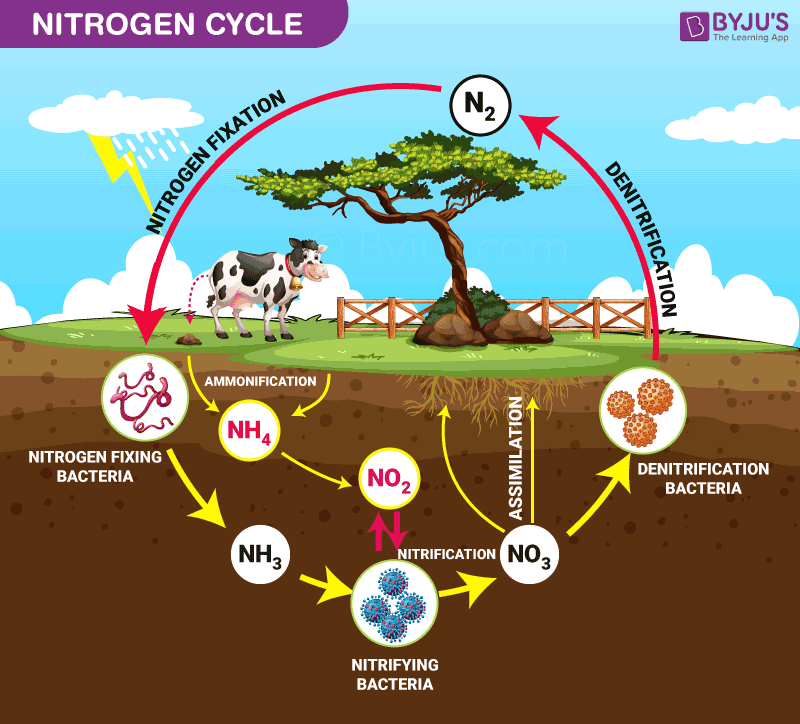
Nitrogen Cycle:
Processes:
Nitrogen Fixation: Atmospheric nitrogen (N₂) is converted into ammonia (NH₃) by bacteria or lightning.
Nitrification: Ammonia is converted into nitrites (NO₂⁻) and then nitrates (NO₃⁻) by soil bacteria.
Assimilation: Plants absorb nitrates and use them to build proteins and DNA.
Ammonification: Decomposers convert organic nitrogen from dead organisms back into ammonia.
Denitrification: Bacteria convert nitrates back into atmospheric nitrogen (N₂).
Importance: Provides essential nutrients for plants, supports food chains, and recycles nitrogen through ecosystems.
Energy and Energy Conservation
Types of Energy: Kinetic, Potential, Thermal, Chemical, Electrical, Nuclear.
Law of Conservation of Energy: Energy cannot be created or destroyed, only transferred or transformed.
Examples: Solar energy transforming into chemical energy in plants.
Renewable vs Non-renewable Energy:
Renewable: Solar, wind, hydropower.
Non-renewable: Fossil fuels (coal, oil, gas).
Climate Change
Causes:
Natural: Volcanic eruptions, solar variations.
Human: Burning fossil fuels, deforestation, industrial emissions.
Effects:
Rising global temperatures, melting ice caps, sea-level rise, extreme weather events.
Solutions:
Reducing emissions, renewable energy use, reforestation, sustainable practices.
Food Chains
Definition: A sequence showing how energy and nutrients flow through an ecosystem.
Example: Grass → Rabbit → Fox.
Trophic Levels:
Producers: Plants and algae that make their own food through photosynthesis.
Primary Consumers: Herbivores that eat producers.
Secondary Consumers: Carnivores that eat herbivores.
Tertiary Consumers: Top predators that eat other carnivores.
Decomposers: Break down dead material, returning nutrients to the soil.
Importance: Shows energy flow, maintains ecosystem balance, and highlights interdependence among organisms.
Galaxies, Stars, Solar System, and Celestial Objects
Galaxies:
Types: Spiral (e.g., Milky Way), Elliptical, Irregular.
Stars:
Life Cycle: Nebula → Protostar → Main Sequence → Red Giant/Supergiant → White Dwarf/Neutron Star/Black Hole.
Solar System:
Components: Sun, 8 planets, moons, asteroids, comets, meteoroids.
Celestial Objects: Includes planets, stars, asteroids, comets, and moons.
The Big Bang Theory
Definition: Theory that the universe began as a single, dense point around 13.8 billion years ago and has been expanding ever since.
Evidence:
Cosmic Microwave Background Radiation: Leftover heat from the Big Bang, detected as faint radiation in the universe.
Redshift of Galaxies: Light from distant galaxies shifts toward the red end of the spectrum, indicating they are moving away, consistent with an expanding universe.
Abundance of Light Elements: Predicted proportions of hydrogen and helium match observations.
Importance: Explains the origin of the universe and sets the foundation for understanding cosmic evolution.
Eclipses
Solar Eclipse: Moon blocks the Sun (occurs during a New Moon).
Lunar Eclipse: Earth blocks sunlight from reaching the Moon (occurs during a Full Moon).
Comparing Planetary Data
Key Characteristics:
Size, mass, distance from the Sun, composition (rocky or gaseous), number of moons, atmospheric conditions.
Example: Earth vs Mars (size, atmosphere, habitability).
Space Technology, Travel, and Hazards
Technology:
Satellites, telescopes, space probes, rovers.
Space Travel:
Achievements: Moon landings, Mars rovers, International Space Station.
Hazards: Microgravity effects, cosmic radiation, psychological challenges, spacecraft malfunctions.
Media-Based Arguments
Evaluating media claims about space and climate change:
Check sources, scientific evidence, and bias.
Example: Separating fact from misinformation in climate change debates or space exploration feasibility.
Earth-Sun-Moon System
Earth’s Rotation and Revolution:
Causes day/night and seasons.
Moon’s Orbit:
Takes ~27.3 days to orbit Earth.
The Moon and Lunar Phases
Phases:
New Moon, Crescent, First Quarter, Gibbous, Full Moon, Last Quarter.
Caused by the Moon’s position relative to Earth and Sun.
Tides:
Spring Tides: During Full and New Moons.
Neap Tides: During Quarter Moons.
mnemonics
Here are some mnemonics to help you remember key concepts in Earth and Space Science:
The Water Cycle
EPCR (Every Penguin Can Run)
Evaporation
Precipitation
Condensation
Runoff
The Carbon Cycle
PRO DOC (like a professional doctor)
Photosynthesis
Respiration
Ocean uptake
Decomposition
Organic matter
Combustion
The Nitrogen Cycle
FANAD (Fans of nitrogen!)
Fixation
Ammonification
Nitrification
Assimilation
Denitrification
Phases of the Moon
New Cows First Get Full Last, Then Wane
New Moon
Crescent
First Quarter
Gibbous
Full Moon
Last Quarter
Waning Moon
Order of the Planets in the Solar System
My Very Educated Mother Just Served Us Nachos
Mercury
Venus
Earth
Mars
Jupiter
Saturn
Uranus
Neptune
Life Cycle of a Star
Never Play Monopoly With Rich Winners
Nebula
Protostar
Main Sequence
Red Giant
White Dwarf (or Neutron Star/Black Hole)
Eclipses
Solar Starts with Sun, Lunar with Light
Solar Eclipse: Moon blocks the Sun.
Lunar Eclipse: Earth blocks the light to the Moon.
Let me know if you'd like more or if there are specific topics you need help with