B4.1 Adaptation to environment Notes
B4.1.1 habitat as the place in which a community, species, population or organism lives
Habitat as the Place Where Organisms Live
Definition
HabitatA habitat is the specific place where an organism, population, species, or community lives. The word comes from the Latin habitare, meaning "to live."A
There are two main elements of habitats:
Geographical Location: The physical area an organism inhabits.
Physical Conditions: Environmental factors like temperature, light, soil type, and water availability.
Haitats can be as large as a tropical rainforest or as small as the underside of a leaf.
They includes all biotic (living) and abiotic (non-living) factors affecting an organism's survival, reproduction, and behavior.
Example
The habitat of Ranunculus glacialis is high-altitude mountainous regions in Europe.
These areas experience snow cover in winter, acidic and well-drained soils, and intense sunlight during the short summer.
Who Lives in a Habitat?
Levels of Biological Organization:
Individual Organism: A single polar bear on Arctic sea ice.
Population: A group of polar bears in a specific region.
Species: All polar bears worldwide.
Community: All organisms in the Arctic (e.g., polar bears, seals, algae, fish).
Each level relies on the habitat for resources (food, shelter, breeding sites) and environmental conditions (temperature, salinity, etc.).
Tip
When describing a habitat, always consider both the physical environment (e.g., soil type, temperature) and the ecosystem type (e.g., desert, forest, wetland).
Components of a Habitat
Biotic Factors:
Living elements (plants, animals, fungi, microorganisms).
Include predation, competition, mutualism, and other interactions.
Abiotic Factors:
Non-living elements (temperature, light, water, soil, air).
Often define habitat boundaries and which organisms can survive there.
Example
In a mangrove habitat, biotic factors include crabs and fish, while abiotic factors like high salt levels and waterlogged soils shape which species can live there.
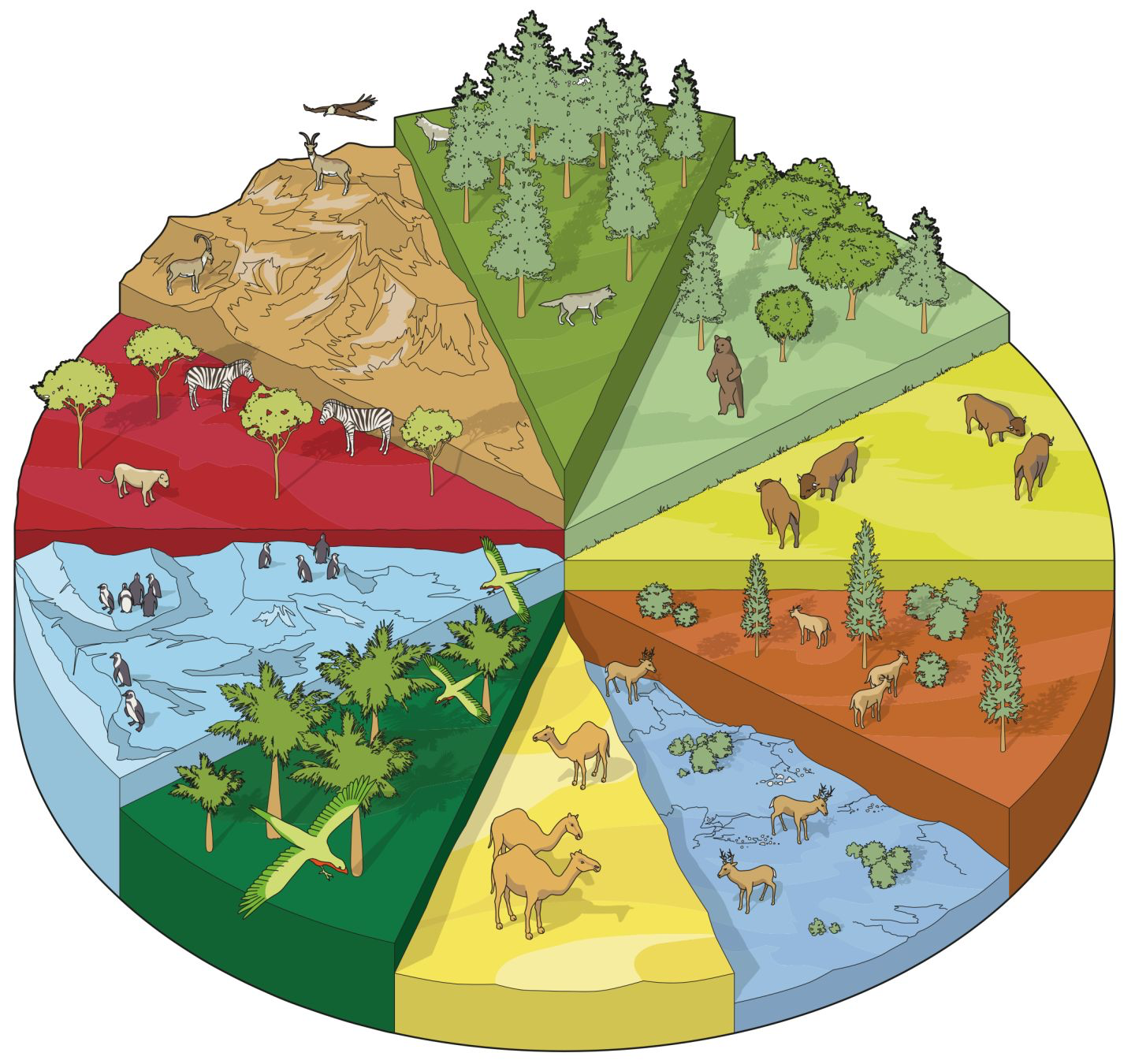
Types of Habitats
Desert Low rainfall, extreme temperatures, sandy soils. Organisms like cacti and fennec foxes adapt to water conservation and heat tolerance.
Tropical Rainforest High rainfall, warm temperatures, dense vegetation. Species like spider monkeys and yellow meranti trees compete for light and thrive in humidconditions.
Alpine Found at high altitudes with cold temps, strong winds, short growing seasons. Plants like Ranunculus glacialis cope with acidic soils and intense sunlight.
Analogy
Think of a habitat as a house.
Just as a house provides shelter, food, and a place to rest, a habitat provides the resources and conditions organisms need to survive.
Just like people live in different types of houses (e.g., apartments, cabins, or mansions), different species require specific habitats to meet their needs.
Habitat vs. Niche
Habitat: The "address" where an organism lives.
Niche: The "role" or "job" an organism plays in its ecosystem (e.g., what it eats, how it reproduces, how it interacts with others).
Example
In a mangrove swamp, a crab's habitat is the muddy shoreline, but its niche is scavenging and recycling nutrients.
Warning
Don't confuse habitat with niche. A habitat is the physical location, while a niche refers to the organism's role in the ecosystem, including its interactions with other species and the environment.
Why Are Habitats Important?
Support Biodiversity: A variety of habitats allows a wide range of species to coexist, maintaining ecosystem stability.
Provide Resources: Supply organisms with food, water, shelter, and breeding sites.
Enable Adaptation: Over time, organisms evolve traits to survive in specific habitats (e.g., thick fur of a musk ox for Arctic cold).
Tok
How does the concept of habitat connect to the Theory of Knowledge? Reflect on how human actions, such as deforestation or urbanization, alter habitats. To what extent should ethical considerations guide our decisions about habitat conservation?
Challenges to Habitats
Habitat Loss: One of the greatest threats to biodiversity.
Deforestation removes forest habitats.
Urbanization converts natural landscapes into cities and roads.
Climate Change alters temperatures and weather patterns, making some habitats uninhabitable.
Example
Rising sea levels threaten mangrove ecosystems.
Warming temperatures shrink Arctic sea ice, endangering polar bears.
Self Review
Can you describe the habitat of a species you are familiar with?
What are the key biotic and abiotic factors?
B4.1.2 adaptations of organisms to the abiotic environment of their habitat
The Role of Abiotic Factors in Shaping Adaptations
Definition
Abiotic factors Abiotic factors are non-living components like temperature, water availability, salinity, and soil type.
Key challenges abiotic factors pose can be illustrated by:
Sand Dunes: Dry, nutrient-poor, shifting sands with high salinity.
Mangrove Swamps: Waterlogged, oxygen-poor soils with high salinity and unstable substrates.
The kinds of adaptations that then arise include:
Structural: Physical traits (e.g., specialized roots, leaves).
Physiological: Internal processes (e.g., salt excretion, water retention).
Behavioral: Actions or patterns (e.g., nocturnal activity to avoid heat).
Lyme Grass: A Survivor of the Shifting Sands
Habitat: Sand dunes in coastal areas or deserts (dry, salty, constantly shifting).
Key Adaptations:
Thick Waxy Cuticle: Minimizes water loss via transpiration.
Sunken Stomata: Stomata in furrows help retain humid air, reducing evaporation.
Leaf Rolling: Leaves roll up to reduce exposed surface area in drought conditions.
Tough Sclerenchyma: Provides support and prevents wilting.
Rhizomes: Underground stems grow vertically as sand accumulates, keeping the plant anchored and reaching deeper water sources.
Fructan Storage: Stores carbohydrates that boost osmotic potential, aiding water uptake in salty soils.
Analogy
Think of lyme grass as a desert camper equipped with tools to survive harsh conditions: a water bottle (, a tent (), and sturdy boots ().
Warning
Students often assume that all plants on sand dunes have shallow roots.
In fact, lyme grass develops deep rhizomes to access water stored far below the surface.
Mangrove Trees Thrive In Muddy Swamps
Habitat: Tropical and subtropical coastal swamps (waterlogged, high salinity, low oxygen).
Key Adaptations:
Salt Management:
Salt Glands excrete excess salt from leaves.
Suberin-Coated Roots reduce salt uptake through root tissues.
Oxygen Acquisition:
Pneumatophores project above water to absorb oxygen directly.
Cable Roots stay near the soil surface, where oxygen is more abundant.
Structural Support:
Stilt Roots anchor trees in soft mud.
Buttress Roots provide broad, flared support at the trunk base.
Seed Dispersal: Buoyant Seeds float on currents to colonize new areas.
Osmotic Balance: Mannitol Accumulation raises osmotic potential, aiding water absorption in saline conditions.
Note
Mangrove trees are vital to coastal ecosystems.
They prevent soil erosion, provide habitats for diverse species, and act as natural barriers against storm surges and tsunamis.
Why Do These Adaptations Matter?
Survival in Extreme Environments: Traits like waxy cuticles, salt glands, or rhizomes enable species to thrive where others fail.
Principles of Evolution:
Natural Selection: Favorable traits become more common over generations.
Convergent Evolution: Unrelated species may develop similar adaptations to cope with similar abiotic pressures (e.g., cacti and euphorbias in deserts).
Ecosystem Stability: Species adapted to harsh conditions can stabilize dunes or protect coastlines, supporting broader ecological health.
Tok
How do the adaptations of organisms challenge the idea of a "perfect" design in nature?
Consider the trade-offs involved in traits like salt excretion or deep roots.
How might these adaptations limit the species in other environments?
Self Review
What are two structural adaptations of lyme grass that help it survive on sand dunes?
How do mangrove trees obtain oxygen in waterlogged soils?
Why might buoyant seeds be advantageous for mangrove trees?
Can you think of another example of convergent evolution in plants or animals?
Exam_technique
Master Key Examples
Xerophytes (Desert Plants)
E.g., cacti with spines (reducing water loss) and CAM photosynthesis (stomata open at night).
Exam Tip: Distinguish between structural (spines, thick cuticle) and physiological (CAM photosynthesis).
Halophytes (Salt-Tolerant Plants)
Mechanisms like salt glands, specialized root structures.
Relate to active transport of salt and osmotic balance.
Arctic/Antarctic Organisms
Thick fur/blubber, changes in fur color (summer/winter), behavioral changes (huddling).
Relate morphological and behavioral adaptations to extreme cold.
Desert Animals
Camel's hump (fat storage), concentrated urine, large surface area to volume ratio in some small desert animals.
Always connect the feature to how it helps overcome high temperature and water scarcity.
Aquatic Organisms
Gills for gas exchange, streamlined bodies, swim bladders for buoyancy.
Show how these adaptations deal with density/viscosity of water and gas exchange challenges.
B4.1.3 abiotic variables affecting species distribution
What Are Abiotic Variables?
Definition
Abiotic factors Abiotic factors are non-living components like temperature, water availability, salinity, and soil type.
Tip
Think of abiotic variables as environmental "filters" that determine which species can pass through and inhabit a particular area.
Definition
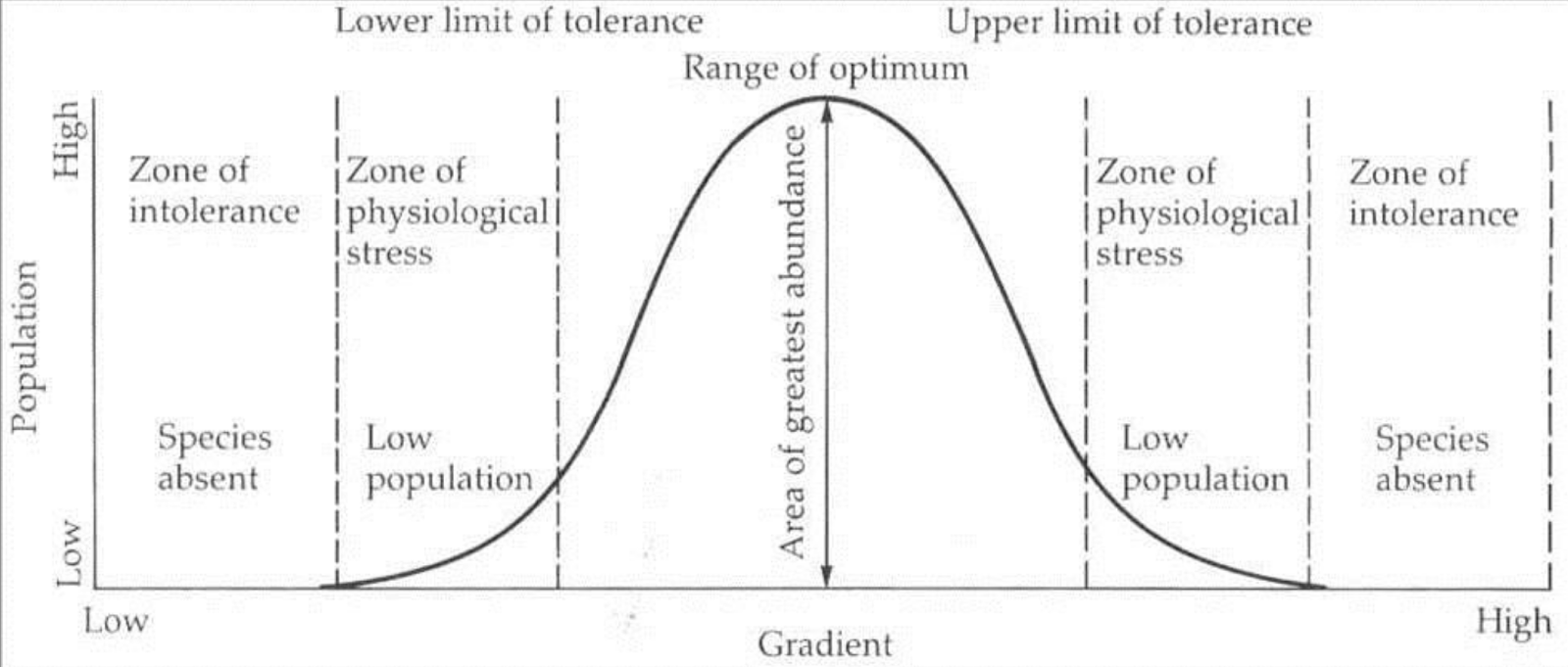
Range of Tolerance
Each species has an optimal range of abiotic factors within which it can thrive.
Conditions outside this range lead to stress or intolerance, making survival or reproduction impossible.
Abiotic Factors Affecting Plant Distribution
Temperature
Tropical Plants (e.g., banana trees) cannot withstand frost.
Alpine Species like Ranunculus glacialis have "antifreeze" compounds for high-altitude, coldenvironments.
Example
grows in high-altitude areas with intense sunlight and short growing seasons.
Its adaptations, such as tolerance to frost and acidic soils, allow it to survive where few other plants can.
Self Review
Can you think of another plant species adapted to extreme temperatures? What are its key adaptations?
Water Availability
Cacti store water in stems and use spines instead of leaves to reduce water loss in deserts.
Mangroves tolerate waterlogging and salinity by excreting excess salt via specialized glands.
Note
Water availability often interacts with other abiotic factors, such as temperature, to create unique challenges for plant survival.
Light Intensity
Rainforest Trees (e.g., yellow meranti) grow tall to reach canopy light.
Shade-Tolerant Plants (e.g., mosses) thrive on the forest floor, where light is scarce.
Warning
Many students think that all plants need high light intensity to grow.
However, shade-tolerant plants are adapted to low light conditions and may even be harmed by excessive sunlight.
Soil pH and Nutrients
Acidic Soils: Support species like blueberries, adapted to low pH.
Alkaline Soils: Favor plants like lavender, which require high pH conditions.
Analogy
Think of soil pH as a recipe for plant growth.
Just as certain ingredients are needed for specific dishes, plants require specific pH levels to access the nutrients they need.
Abiotic Factors Affecting Animal Distribution
Temperature
Polar Bears have thick fur and blubber to retain heat.
Elephants dissipate heat via large ears with dense blood vessels in hot climates.
Water Availability
Desert Rats possess long loops of Henle, producing highly concentrated urine to conserve water.
Salmon need specific freshwater conditions for spawning (e.g., pH range of 5.5-8.0).
Analogy
Think of an elephant's ears as built-in radiators that help cool its body in the sweltering heat.
Self Review
How do the adaptations of polar bears and elephants illustrate the importance of temperature as an abiotic factor?
Range of Tolerance and Limiting Factors
Three Zones
Optimal Zone: Ideal for growth and reproduction.
Stress Zone: Survival possible, but reproduction is limited.
Intolerance Zone: Conditions are lethal, the species cannot survive.
Example
Salmon require a water pH between 5.5 and 8.0, outside this range, spawning fails.
Tok
How can understanding a species' range of tolerance inform conservation strategies in changing environments?
Linking Abiotic Variables and Adaptations
Environmental Filters: Abiotic factors act as filters, determining which organisms can establish and flourish in a given habitat.
Evolution of Adaptations: Species evolve specific traits to cope with prevailing abiotic conditions (e.g., desert or polar adaptations).
Future Considerations
Interactions with biotic factors (competition, predation) further refine distributionpatterns.
Changes in abiotic variables (e.g., climate change) drive the emergence of newadaptations or range shiftsin species.
B4.1.4 range of tolerance of a limiting factor
Limiting Factors Have Ranges of Tolerance
Definition
Range of toleranceEach species survives within specific minimum and maximum values of certain abioticfactors, its range of tolerance. Outside this range, survival is impossible.
Within the tolerance range lies an optimal zone for growth, reproduction, and overall success.
Example
Temperature: Polar bears thrive in Arctic cold but perish in tropics, tropical frogs die in freezingconditions.
Soil pH: Blueberries prefer acidic soils (pH 4-5) and struggle in neutral/alkaline soils.
Light Intensity: Shade-loving ferns wilt under intense sunlight, whereas sunflowers require bright, directlight.
Limiting Factors and Their Role in Distribution
Definition
Limiting factorA limiting factor is any abiotic or biotic variable that restricts a species' growth, reproduction, or distribution if it goes beyond the species' tolerance range.
Key Abiotic Limiting Factors
Temperature: Influences enzyme activity and metabolism.
Water Availability: Too little or too much can hamper survival.
Light Intensity: Critical for photosynthesis and animal visibility.
Soil pH/Salinity: Affects nutrient availability and water uptake.
Oxygen Levels: Essential in aquatic habitats, where oxygen solubility changes with temperature.
Tip
When analyzing species distributions, focus on the limiting factor that most deviates from the species' tolerance range.
Investigating Tolerance Using Transects
Purpose: Transects help ecologists study how species distributions correlate with abiotic factors over an environmental gradient.
Types of Transects
Line Transect: A tape is laid out, organisms touching the line are recorded.
Belt Transect: A wider strip is assessed, often using quadrats to estimate abundance.
Observational Transect: An observer walks a defined route noting target species.
Example: Correlating Plant Distribution with Soil pH
Lay a belt transect along a slope transitioning from acidic to neutral soil.
Place quadrats at regular intervals, record plant species and abundance.
Measure soil pH at each quadrat, analyze correlations between soil pH and plant distribution
Using Sensors to Measure Abiotic Variables
Advantages
Accuracy: Minimizes human error.
Continuous Data Logging: Records long-term trends (e.g., temperature, light).
Portability: Sensor devices are easy to transport and use in the field.
Example
A light intensity sensor can quantify how much sunlight penetrates a forest canopy, explaining the distribution of shade-tolerant plants on the forest floor.
Warning
A common mistake when using sensors is neglecting to calibrate them before use. Always ensure sensors are properly calibrated to obtain accurate readings.
Real-World Applications of Tolerance Ranges
Conservation Biology
Predicting how species migrate or adapt under climate change.
Identifying when a habitat's conditions exceed a species' tolerance range.
Agriculture: Selecting crop varieties suited to local soil pH or climate, improving yield.
Disease Control: Targeting vectors (e.g., mosquitoes) within their optimal conditions to reduce disease spread.
Tok
How might the concept of tolerance ranges challenge the idea of fixed species distributions?
Consider how human activities, such as urbanization or climate change, might alter the abiotic factors that define these ranges.
Investigating Tolerance in Semi-Natural Habitats
Transect Studies
Use soil pH or light sensors to measure environmental gradients across meadows, forest edges, or pond margins.
Correlate species distribution with data to see how limiting factors shape community composition.
Insight: Field work reveals how environmental filters determine which species flourish, survive at the margins, or fail beyond their tolerance limits.
Self Review
What abiotic variable would you expect to have the greatest influence on plant distribution in a coastal dune ecosystem? Why?
B4.1.5 conditions required for coral reef formation
Conditions Required for Coral Reef Formation
Coral reefs are built by hard corals that form calcium carbonate skeletons.
These corals live in mutualistic partnership with zooxanthellae, microscopic algae performing photosynthesis.
Because light, temperature, water clarity, salinity, and pH are crucial for both corals and their symbiotic algae, reefs are highly dependent on specific abiotic conditions.
Depth Is Essential For Light Penetration
Zooxanthellae need sunlight to produce energy. Without enough light, corals cannotgrow or maintain their skeletons.
Optimal Depth
Corals typically inhabit waters less than 50 meters deep.
Beyond this depth, light diminishes too much for effective photosynthesis.
Tip
Corals are often found in regions with clear water because turbidity (cloudiness) reduces the amount of light that can penetrate the water column.
Water Clarity Enables A Clear View for Photosynthesis
Clarity Requirements
Low turbidity ensures sunlight reaches zooxanthellae.
Minimal sediment and pollutants are vital.
Challenges
Coastal development and deforestation increase sediment runoff.
Turbid water can smother corals and block sunlight.
Warning
A common misconception is that corals can adapt to turbid conditions. In reality, prolonged turbidity can lead to coral bleaching and eventual death.
Self Review
Why does water clarity play such a critical role in coral reef survival? How might human activities impact this factor?
Temperature Must Be In The Goldilocks Zone
Optimal Range
Coral reefs thrive in temperatures of about 23°C to 29°C.
Temperatures outside this range stress corals.
Coral Bleaching
Heat stress can lead to bleaching, where corals expel zooxanthellae.
Corals often die if temperatures remain unfavorable.
Example
For example, during recent marine heatwaves, sea surface temperatures in the Great Barrier Reef exceeded 29°C, causing widespread coral bleaching events.
Note
Coral reefs are typically found between 35° north and 35° south of the equator, where water temperatures remain within the ideal range.
Salinity Needs To Be Balanced
Optimal Salinity
Corals require 32-42 ppt (parts per thousand).
Stable salinity is necessary for osmotic balance.
Why It Matters
Fluctuations in salinity can disrupt ion exchange, causing stress or mortality.
Analogy
Think of salinity like the "sweet spot" for corals, much like how humans need a specific range of oxygen in the air to survive.
Warning
Don't confuse salinity tolerance with freshwater tolerance.
Corals cannot survive in freshwater or areas where salinity drops significantly, such as near river mouths.
Self Review
If salinity levels were to drop near a coral reef, what might happen to the corals? Why?
pH Enables Skeleton Formation
Optimal pH
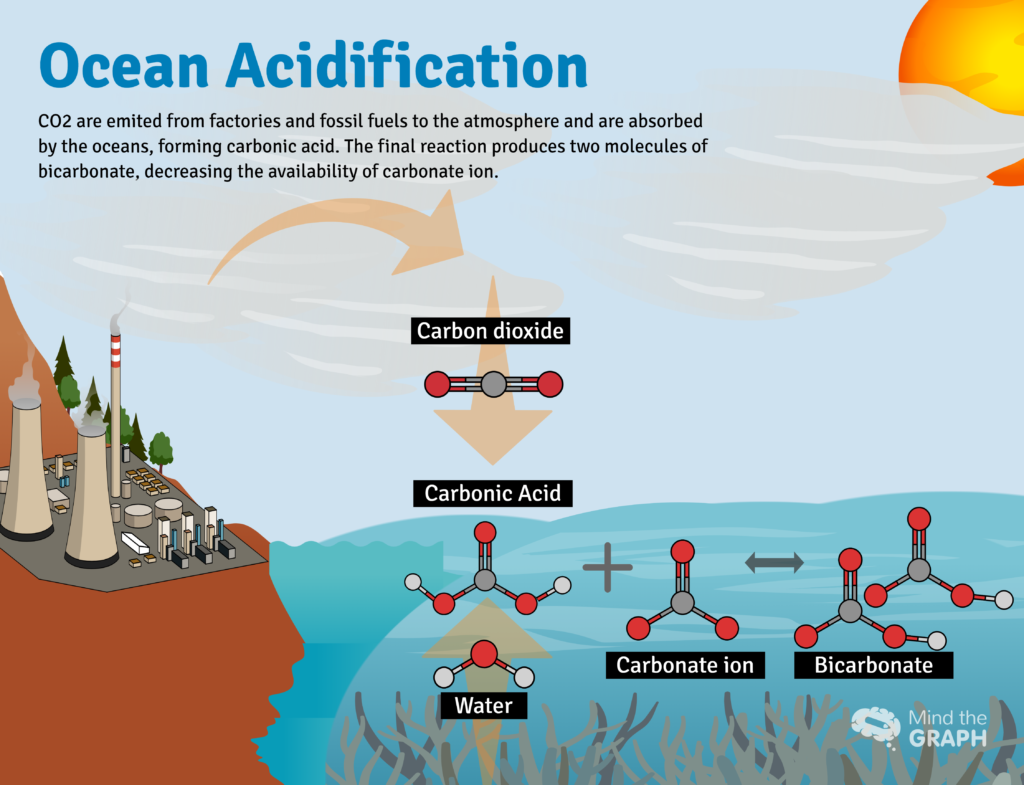
Reefs need a pH above 7.8 to deposit calcium carbonate effectively.
Ocean Acidification
Excess CO₂ lowers pH, reducing carbonate ions.
Acidic conditions slow coral growth and weaken reef structures.
Tok
How might the ongoing issue of ocean acidification challenge global efforts to preserve coral reefs?
What ethical considerations arise when balancing industrial activities with marine conservation?
B4.1.6 abiotic factors as the determinants of terrestrial biome distribution
Abiotic Factors Are Determinants of Terrestrial Biome Distribution
Definition
Biome
Large-scale groupings of ecosystems sharing similar abiotic factors (e.g., temperature, precipitation).
Despite being geographically distant, biomes of the same type (e.g., deserts) share comparable abiotic conditions.
Two primary abiotic factors, temperature and rainfall, govern the development of these distinct ecosystems.
1. Temperature: The Energy Factor
Influence on Metabolism and Growth
Warm regions (e.g., tropics) foster rapid plant growth and high biodiversity due to abundant energy.
Cold regions (e.g., tundra) limit plant growth and species diversity because metabolic activities slow in low-temperature environments.
Impact on Ecosystem Productivity
Higher temperatures generally boost photosynthesis and nutrient cycling, resulting in lush vegetation.
Lower temperatures restrict these processes, often yielding more sparse and specialized communities.
Tip
Temperature affects not only the survival of plants and animals but also their behavior and reproduction. For example, many species in colder biomes hibernate or migrate to cope with seasonal changes.
2. Rainfall: The Water Factor
Essential Resource
Water is vital for all living organisms; varying levels of rainfall create gradients of vegetation density.
High rainfall supports tropical rainforests, while low rainfall leads to desertconditions.
Seasonality
The timing of rainfall influences growing seasons and the life cycles of organisms.
Regions with unpredictable or seasonal rainfall patterns (e.g., savannas) exhibit adapted species that survive fluctuating water availability.
Example
Consider the stark differences between deserts and tropical rainforests.
Deserts, with their high temperatures and very low rainfall, are home to drought-resistant plants like cacti and animals adapted to conserve water.
On the other hand, tropical rainforests, characterized by high temperatures and abundant rainfall, support dense vegetation and a wide array of animal species.
Visualizing Biome Distribution: Temperature-Rainfall Graph
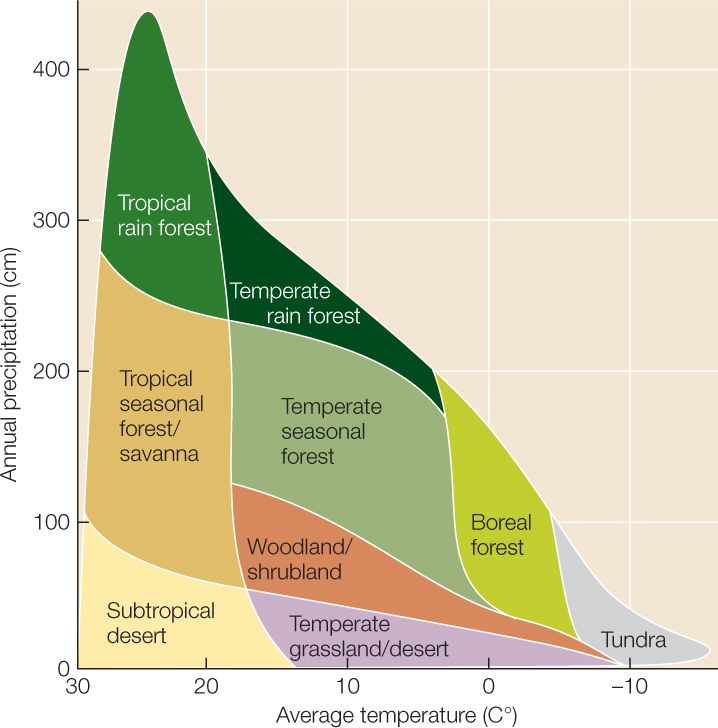
Mean Annual Temperature (x-axis) vs. Mean Annual Precipitation (y-axis)
Each biome occupies a distinct zone on this graph.
Examples:
Tropical Rainforests: High temperature, high rainfall.
Deserts: High temperature, very low rainfall.
Grasslands: Moderate temperature, moderate rainfall.
Tundra: Low temperature, low to moderate rainfall.
Convergent Evolution
Similar abiotic pressures (e.g., low moisture) cause unrelated species to develop analogous traits.
Explains why grasslands on different continents share ecosystem structures despite distinct species.
Exam_technique
Key patterns on the graph
Tropical Rainforests: Found in regions with high temperatures and high rainfall, these areas support dense vegetation and high biodiversity.
Deserts: Located in areas with high temperatures and very low rainfall, deserts feature sparse vegetation and highly specialized organisms.
Grasslands: Found in regions with moderate temperatures and medium rainfall, grasslands support grasses and herbivores but lack sufficient water for dense forests.
Tundra: Found in regions with very low temperatures and low to moderate rainfall, tundras are characterized by limited vegetation, such as mosses and small shrubs.
Note
The boundaries between biomes on the temperature-rainfall graph are not fixed.
They can shift due to changes in climate, human activity, or natural events.
B4.1.7 biomes as groups of ecosystems with similar communities
Convergent Evolution in Biomes
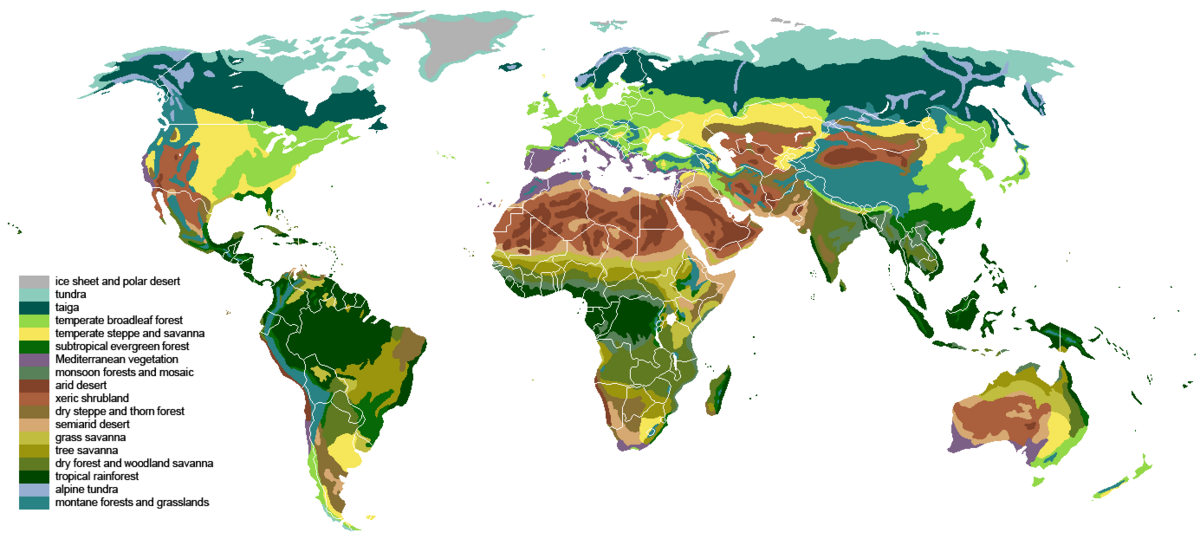
Biomes are large groups of ecosystems that share similar abiotic factors, such as climate, precipitation, and temperature, and contain organisms with comparable adaptations.
Despite being geographically separated, these ecosystems often resemble each other due to their shared environmental challenges.
Organisms in similar biomes demonstrate convergent evolution, where unrelated species develop similar adaptations to thrive in analogous conditions.
Natural Selection and Solutions
Organisms face the same environmental pressures and evolve similar traits as solutions.
Example
Desert plants have evolved adaptations for water conservation and storage.
Cacti vs. Euphorbias
In the deserts of the Americas, cacti store water in their swollen stems.
In African deserts, euphorbias show the same adaptations, even though they are not closely related.
These species can often only be distinguished by their flowers, highlighting convergent evolution.
Hint
The swollen stems essentially act as reservoirs.
Key Climatic Characteristics of Major Biomes
Biomes are classified based on their climatic conditions, which shape the adaptations of the organisms living within them.
Biome | Temperature | Precipitation | Light Intensity | Seasonal Variation |
|---|---|---|---|---|
Tropical Forest | High | High | High | Minimal in rainforests |
Temperate Forest | Medium | High/Medium | Medium | Warm summers, colder winters |
Taiga | Low | High/Medium | Medium/Low | Short summers; long, cold winters |
Hot Desert | High | Very Low | High | Minimal variation |
Grassland | High/Medium | Medium | High/Medium | Variation with a dry season or cold season |
Tundra | Very Low | Medium/Low | Low | Very short summer; very cold winter |
B4.1.8 adaptations to life in hot deserts and tropical rainforest
Desert Adaptations
Hot deserts pose three main challenges: extreme heat, scarce water, and nutrient-poor soils.
lants and animals have evolved adaptations for water conservation, temperature regulation, and efficient use of limited resources.
Example
The Saguaro Cactus (Carnegiea gigantea)
Water Storage and Collection
Thick, fleshy stem can store large amounts of water from rare rains.
Wide-spreading root system plus a deep taproot ensure maximum water uptake.
Minimizing Water Loss
Thick waxy cuticle reduces transpiration.
Spines instead of leaves lower surface area and deter herbivores.
Temperature Regulation
Vertical stem orientation reduces midday sun exposure.
CAM photosynthesis: Stomata open at night to conserve water.
Structural Adaptations
Pleated stem expands for water storage and contracts in drought without damage.
Example
The Fennec Fox (Vulpes zerda)
Avoiding Heat
Nocturnal: Hides in cool dens by day, active at night.
Large ears radiate body heat, aiding cooling.
Insulation and Protection
Thick fur insulates against daytime heat and cold nights.
Pale coat reflects sunlight.
Adaptations for Movement
Hair-covered footpads protect from scorching sand.
Water Conservation
Gains most water from food, minimizing need for free water sources.
Minimizing Water Loss
The cactus has a covering its epidermis, reducing water loss through transpiration.
Its leaves are reduced to , minimizing surface area for water loss and deterring herbivores.
Tip
Large surface areas, such as the fennec fox's ears, are common adaptations for heat dissipation in desert animals.
Tropical Rainforest Adaptations
Tropical rainforests have high temperatures, heavy rainfall, and dense canopies, creating intense competition for light.
Organisms adapt to nutrient-poor soils, abundant rainfall, and limited light on the forest floor.
Example
The Yellow Meranti (Shorea faguetiana)
Competition for Sunlight
Grows over 100 meters tall to outcompete neighbors for light.
Support Structures
Buttressed trunk stabilizes in shallow, rainforest soils.
Smooth bark sheds rainwater quickly, preventing fungal growth.
Efficient Water Management
Broad leaves with drip tips shed excess rainwater, reducing rot or mildew.
Evergreen foliage capitalizes on year-round photosynthesis.
Note
The yellow meranti is one of the tallest tree species in the world, reaching heights comparable to a 30-story building.
Example
The Spider Monkey (Ateles geoffroyi)
Mobility in the Canopy
Long arms and legs allow agile climbing.
Prehensile tail serves as a fifth limb for balance and gripping.
Adaptations for Feeding
Hook-like hands (no thumbs) efficiently grasp branches and fruit.
Flexible feet function like extra hands, freeing arms during feeding.
Communication and Social Behavior
Wide vocal range aids social coordination in dense canopy.
Diet
Feeds primarily on fruit and seeds, plentiful in the tropical rainforest canopy.
Analogy
Think of the spider monkey's tail as a built-in climbing rope that provides extra support and mobility in the treetops.
Why Do These Adaptations Matter?
Evolutionary Success: These specialized features result from millions of years of evolutionary pressures.
Environmental Resilience: They illustrate how life finds ways to thrive under extremeconditions (high heat vs. constant moisture).
Human Relevance: Studying such adaptations can inspire innovative solutions for water conservation, sustainable design, and ecosystem management.
Tok
How might the adaptations of desert and rainforest organisms influence human designs, such as water conservation systems or climbing equipment?
Self Review
Can you identify at least three adaptations of the saguaro cactus and explain how they help the plant survive in a desert environment?