V. Settlements (Rural & Urban) and Service Provision
I. Settlement Patterns
I. Dispersed | II. Linear | III. Nucleated |
 | 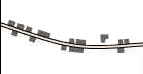 | 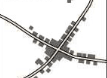 |
An isolated, building or a group of two or three buildings, separated from the next by 2 or 3 km. | Buildings are strung along a line of communication, for example, a main road, a river valley, or a canal. | Buildings are grouped, initially for defence or a common resource. |
Site: describes the physical nature of where a settlement is located - the actual piece of land
Situation: describes settlement about other settlements and physical feature around it - this determines whether the situation will grow into a larger city or remain a small town or village.
II. Factors influencing settlements:
Wet point site: this has a good water supply
Drypoint site: this has less risk of flooding
Building material: availability of stone, wood, clay, etc.
Defensive site: in a river meander or on a hill with steep-sided and commanding views
Fuel supply: for heating and cooking
Food supply: land suitable for farming
Nodal points: where routes converge
Bridging point: river shallow enough to build a bridge
Aspect: settlements often on the sunny side of a valley
Shelter: from cold prevailing winds and rain
Climate: a good climate attracts more people
Fertile land: brings in more farmers
Location: access to trade and raw materials
III. Hierarch of Settlements
A hierarchy is when settlements are ordered and classified based on:
Population size
Several services were provided
Number of settlements
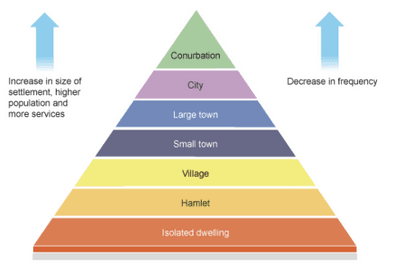
Determining the order of importance:
The population size
The range and number of services
The sphere of influence
Keywords
Sphere of Influence: an area served by a settlement
Services: Facilities that are offered to people, e.g. supermarkets. Services have a threshold population, which helps explain why bigger settlements have more services.
Range: The distance that people are prepared to travel to use a service
High-Order Goods (Comparison): Goods that people buy less frequently.
→ They tend to be more expensive, and people will normally compare quality and price before purchasing e.g. a car.
Low-Order Goods (Convenience): Goods that people buy every day.
→They don’t usually cost much money, and people would not normally travel far to buy them e.g. bread and milk.
Threshold Population: The minimum amount of people required for a service to be offered and remain open.
Functions of settlements:
Rural Areas: have a lot of fewer functions than urban areas.
The primary purpose of settlements in rural areas usually is agriculture & low-order services. This is because rural areas have fewer people, poorer transport, poorer communication, less technology & the land is better used for other purposes.
Urban Areas: tend to have many more functions ranging from shopping to educational, transport, administrative, and residential functions; and more middle and high-order services.
Urban Sprawl: The spread or growth of an urban area into the rural-urban fringe; provides mainly middle–order services