Plant Bio Exam 1
How old is the earth? 4.5 billion years old
When did life first appear on earth? about 4 billion years ago
What was the Miller-Urey experiment? What did it show?
simulated the conditions of early earth
see if organic compounds can be formed from inorganic compounds
used methane, ammonia, hydrogen, and water
created all 20 amino acids (the building blocks of life) - suggests it is possible for life to have formed from abiotic materials (abiogenesis)
When did oxygen begin to appear in the atmosphere and what organisms were responsible for this? What evidence supports this?
about 2.33 billion years ago
cyanobacteria
banded iron formation, red beds- oxidized iron
What organelles are derived from endosymbionts(cyanobacteria) in a plant cell? Explain the steps of the endosymbiotic theory.
aerobic bacteria = mitochondria
photosynthetic bacterium = chloroplast
bacteria gets engulfed by cell, functions for the cell instead of being metabolized
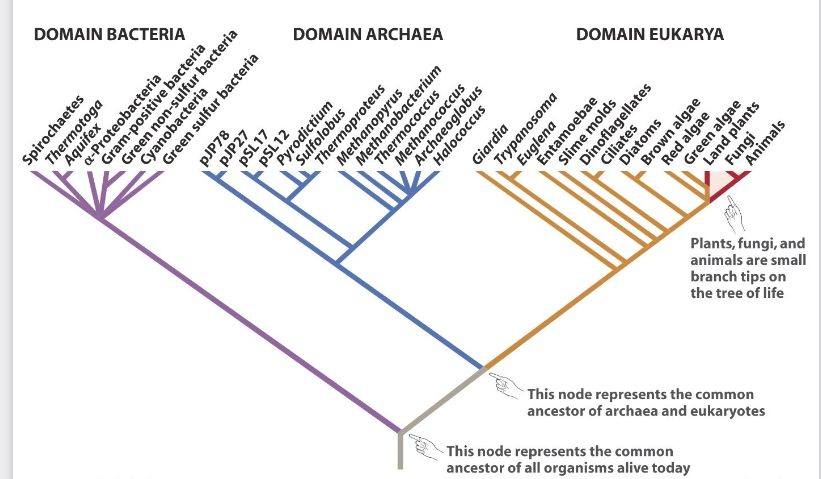
How does the traditional 5 kingdom classification of life compare to modern phylogenies of life using DNA sequences?
The 5 kingdom scheme has 2 groups that contain the vast majority of life on earth and in some ways incorrectly group them. The other 3 groups represent an extremely small section of the 3 domain tree of life
What are the challenges that organisms have to face to live on land?
drying out, getting nutrients, gravity
What structures in plants deal with these changes?
cuticle- retains moisture stoma- let cell breathe
leaves photosynthesis
stems- support
roots- anchor plant, collect water and nutrients
vascular tissue- xylem and phloem to move water and nutrients
When did land plants appear? about 500-460 million years ago
What are the three main cell structures that plants contain that animals lack?
chloroplasts, vacuoles, cell walls
What are the functions of the plant cell wall? What are plant cell walls made of?
structural support and protection
cellulose
How do plants communicate and pass material through their cell walls? plasmodesmata
What are the functions of vacuoles?
store water to maintain hydrostatic pressure and pH, manage waste
Where did plastids/chloroplasts come from?
They were bacteria that were engulfed by a eukaryotic cell - endosymbiosis
What are the functions of chloroplasts and how does their structure reflect this function?
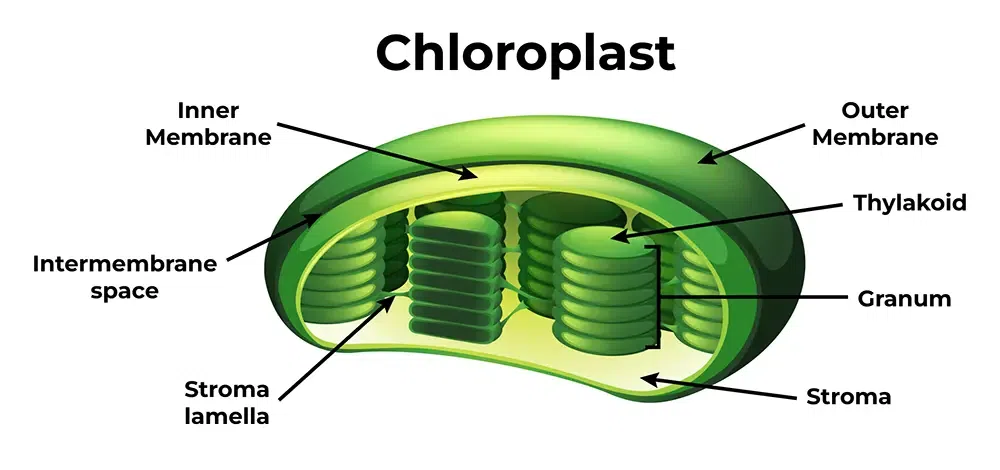
photosynthetic organelles, structure includes layers of thylakoid membrane that carries out photosynthesis, produces energy (ATP) from light
Be able to name various parts of a chloroplast.
How can plastids be modified in plants? name 2 organelles that are modified chloroplasts
plastids formed from a proplastid found in meristematic cells- can change driven by environmental signals
chromoplasts- plastids with pigments other than chlorophyll
leucoplasts/amyloplasts-plastids that lack pigment and are used for storage
Be able to label the various parts of a plant cell
Be familiar with mitosis and meiosis, especially the products of each.
mitosis- makes two diploid cells identical to the parent cell
meiosis- reduction division - results in four haploid cells with genetic recombination/variability
What is a meristem? Why are meristems important for plant growth?
meristem- a group of undifferentiated plant cells that serves as the center for plant growth
meristems are important because they can divide into any type of plant cell and do things such as growing back branches that have been cut off
How does the plant life cycle differ from animals? How are they similar?
gametic meiosis is found in animals- meiosis occurs at the same time as gamete production
sporic meiosis is found in plants, meiosis from a spore which grows and ultimately makes the gamete
animals have a single celled gametophyte stage (haploid) while plants have a multicellular gametophyte stage (haploid)
animal- meiosis makes the haploid sex cells, form zygote, zygote grows into baby, mitosis for growth
plant- zygote inside haploid archegonium, grows into embryo- young sporophyte grows on old haploid gametophyte, mature sporophyte leaf has spores, spores grow
What happens if there is nondisjunction during meiosis?
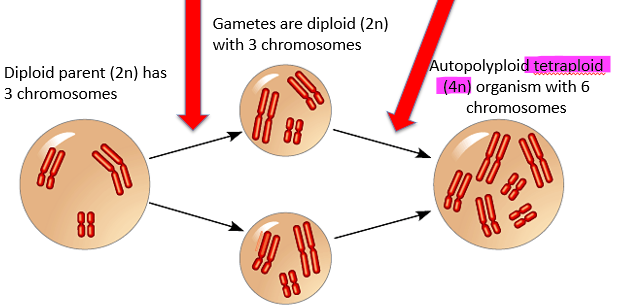
nondisjunction- chromosomes do not separate during meiosis, a diploid (or more) gamete forms
=
autopolyploid (self) 4n
allopolyploid ( 2 different species) causes sterile hybrid, bit nondisjunction can occur again, creating a fertile hybrid
What is a polyploid species?
hybrid, example. wheat
What is meant by the “struggle for life” that Darwin discussed
overproduction causes a “struggle for life”
more offspring are produced than can possibly survive, so what determines which ones live?
What is “differential reproductive success”
individuals are variable, some with beneficial traits will pass them on more frequently so if traits have a genetic basis the success of reproduction will vary = evolution
One of Darwin’s insights was that all organisms share a common ancestor. Be familiar with this concept and be able to identify ancestors on a phylogeny
How does variability in populations influence evolution?
populations need variability so that there can be “better” and “worse” traits. if all the traits are the same there are no changes to move towards and no genes to select for
What is systematics?
groups species based on their evolutionary history and avoids converging traits
How does modern systematics differ from systematics 100 years ago?
used to be based almost entirely on morphology/ physical appearance
now other factors like DNA are used
What are the various “species concepts'“ that systematics use to define species
biological- a group of natural populations that can interbreed but cannot interbreed with members of other groups
morphological- different species are designated based on anatomical and morphological differences
phylogenetic- organisms are a species if they have a unique set of characters or if it is part of a given lineage
What is the ancestor of land plants? What characteristics do the land plants (embryophytes) share?
green algae, they both have chloroplasts
What characteristics differentiate the bryophytes from the rest of the land plants?
no vascular tissue (xylem and phloem)
dominant gametophyte (haploid) stage vs dominant sporophyte stage
unbranched single sporangium
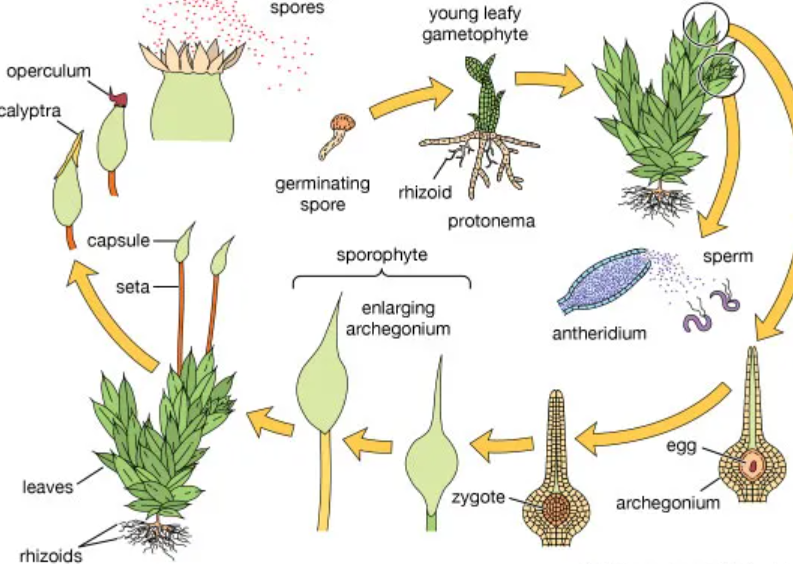
Be able to draw the life cycles of Marchantia and mosses and understand all the various structures
Marchantia:
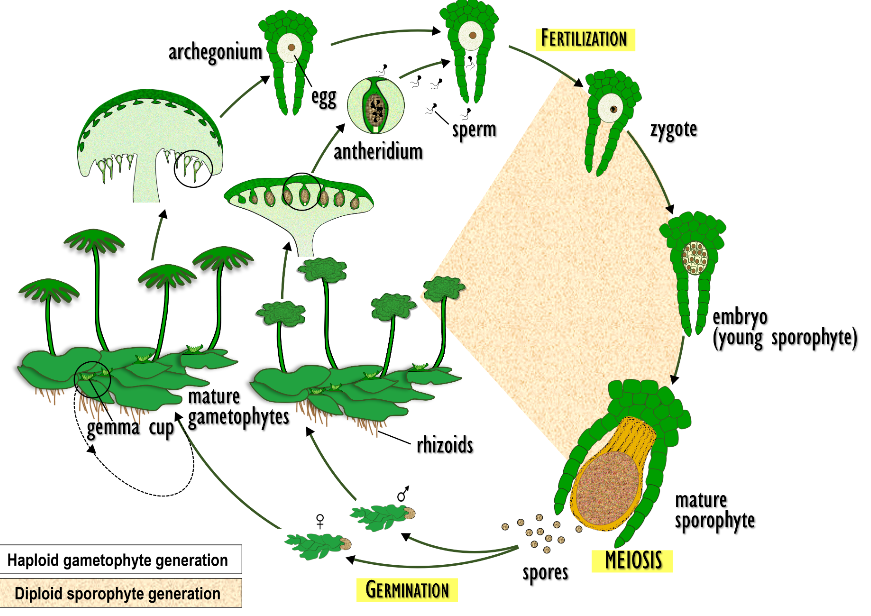
Moss:
How are the bryophytes ecologically significant?
dominant in higher latitudes like Antarctica
important component of cryptobiotic soils
peat moss
bogs cover more than 1% of earth’s surface and hold 550 gigatons of carbon
can be used as a biofuel
poikilohydry- water content fluctuates the the environment