Network Fundamentals and Characteristics
Introduction to Networks
Overview of network systems and their importance in modern technology.
Key Concepts in Networking
Function: Networks allow interconnected computers to communicate, share resources, and access data.
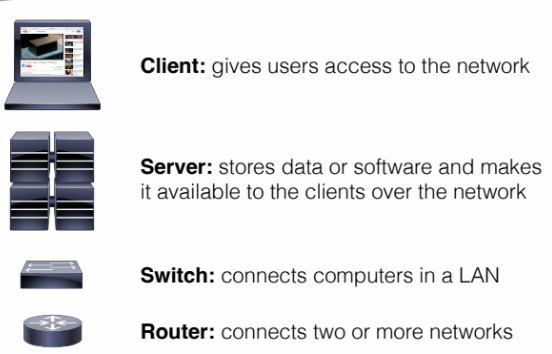
Components of a Network:
Types of Networks
Local Area Network (LAN): Limited to a room or building, connecting clients and servers.
Backbone Network (BN): High-speed connections between LANs with a few kilometers of reach.
Metropolitan Area Network (MAN): Connects multiple LANs across larger geographical areas.
Wide Area Network (WAN): Similar to MAN but spans vastly greater distances.
Data Transmission Rates
Fundamentals: Measure of how many bits per second a network can transmit.
Typical Rates:
Home to ISP: 1 Mbps (upload), 10-20 Mbps (download)
WLAN: 50-500 Mbps
LAN: 1 Gbps
Backbone Networks: 10 Gbps
Optical Fiber Networks: Up to several Tbps.
Practical Example of Upload Times
Scenario: Sending a 4K movie (50 GByte) using different connection types:
ADSL (1 Mbps): Approx. 4 days, 15 hours.
NBN (50 Mbps): Approx. 2 hours, 13 minutes.
Monash Network (1 Gbps): About 6 minutes, 40 seconds.
Summary of Network Characteristics
Networks consist of these essential components: clients, servers, switches, routers, and circuit hardware (e.g., cables).
The Internet itself is considered a "network of networks”, connecting many networks and devices based on a common, standard set of protocols
A crucial measurement in networking is the overall data transmission rate, determining the efficiency and speed of data flow within and between networks.