Depression Essential Reading
The diagnosis and prevalence of major depression
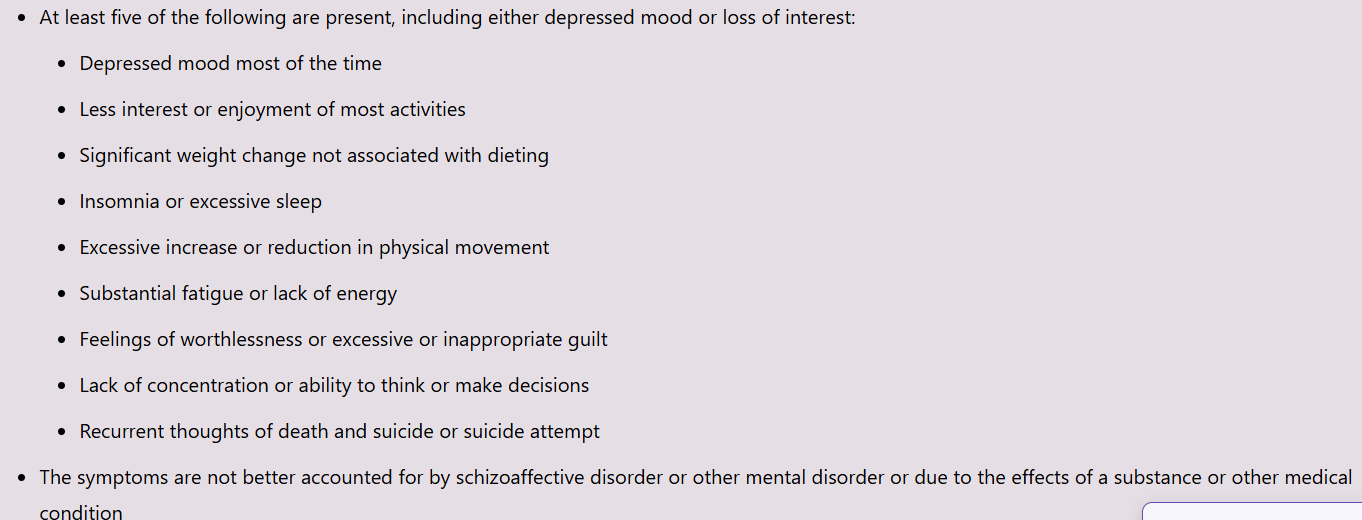
The DSM specifies the criteria for a major depressive episode (which is not a codable disorder), which can be found in Table 7.1, and then defines two main types of depressive disorder based on the criteria for a major depressive episode. These disorders are major depressive disorder, single episode and major depressive disorder, recurrent.. However, depression is often a normal reaction to a number of life events (such as bereavement, financial problems, natural disasters, etc.), and for depression to become clinically problematic a diagnosis of major depressive disorder requires the presence of dysfunctional symptoms such as feelings of worthlessness, suicidal ideation, and impairment of daily functioning. In addition, there has been much discussion about whether depression in response to bereavement should be included as one of the criteria contributing to a diagnosis of major depressive disorder and bereavement symptoms had been excluded prior to DSM‐5. However, recent research has indicated that bereavement‐related depression is not significantly different from major depressive disorder that presents in other contexts, it is most likely to occur in individuals with past histories of major depressive disorder, and is also likely to be chronic and recurrent (Zisook et al., 2012). For these reasons, bereavement‐related symptoms are now no longer excluded from the diagnostic criteria.
Chronic mood disturbances primarily characterised by depressive symptoms can also be diagnosed, although these conditions must have been apparent for at least 2 years, and would normally not be severe enough to disrupt normal social and occupational functioning and warrant a diagnosis of major depression. The most significant of these is dysthymic disorder, in which the sufferer has experienced at least 2 years of depressed mood for more days than not. Individuals diagnosed with this disorder experience many of the behavioural and cognitive characteristics of major depression, but these are less severe (meeting only two or more of the symptom criteria for major depression)
However, diagnosing depression is a controversial issue for a number of reasons. First, DSM‐5 requires the identification of five symptoms for a period of 2 weeks for a diagnosis of major depression. But are such people any different in their experiences and their functioning from someone who exhibits only three symptoms? Yet studies have suggested that individuals with three symptoms exhibit similar levels of distress and problems with day‐to‐day living as individuals with five symptoms (Gotlib, Lewinsohn, & Seeley, 1995).
Second, depression is one of the most prevalent of all psychological problems and is experienced in some form or other by almost everyone at some time in their life. Indeed, experiencing depression is the third most common reason for consulting a doctor or general practitioner (GP) in the UK (Singleton, Bumpstead, O'Brien, Lee, & Meltzer, 2001). In order for doctors to be able to provide treatment for such individuals, there is a tendency for them to over diagnose mild or moderate depression (Middleton, Shaw, Hull, & Feder, 2005). This raises a number of issues, including the possible stigmatisation that such a label might incur for the patient. In addition, lay beliefs about depression suggest that many people already view depression as a ‘disease’ that is a consequence of everyday life stress (Lauber, Falcato, Nordt, & Rossler, 2003). If lay people already view depression as a ‘disease’ or biological illness, and medical doctors are more than willing to diagnose it, then we run the risk of the ‘medicalisation’ of normal everyday negative emotions such as mild distress or even unhappiness (Shaw & Woodward, 2004).
Third, depression occurs in a variety of different guises within psychopathology and is commonly comorbid with other important disorders (Kessler et al., 1996) (Table 7.4). This has given rise to a range of different diagnosable disorders that have depression as a central feature within them. As a result, major depression is a relatively ‘pure’ diagnosis where the cause of depression cannot be attributed either to some other diagnosable disorder (such as the consequences of substance abuse) or to specific biological, environmental factors or other life events (for example, such as postnatal depression). Prominent examples of diagnosable problems which have depression as a significant core element include premenstrual dysphoric disorder(PMDD), seasonal affective disorder(SAD), and chronic fatigue syndrome (CFS or myalgic encephalomyelitis, ME)

Finally, depression is highly comorbid with anxiety problems and around 60% of people with depression will also experience an anxiety disorder (Moffitt et al., 2007). Mixed anxiety/depressive disorder is used to describe a significant number of people who experience this mix of anxiety and depression. It is associated with diagnosable levels of distress, impairment of daily living skills, and reduced health‐related quality of life, but neither the depression nor the anxiety is clearly the predominant feature (Möller et al., 2016). (around 8% of people with either depression or anxiety symptoms meet the criteria for mixed/anxiety depressive disorder) (Zinbarg et al., 1994). This has led some researchers to suggest that depression and anxiety are not truly independent disorders but represent subcategories of a larger group of emotional disorders with symptoms that can often intermix (e.g., Watson, 2005; see also Chapter 2, Section 2.1.4, Figure 2.2).
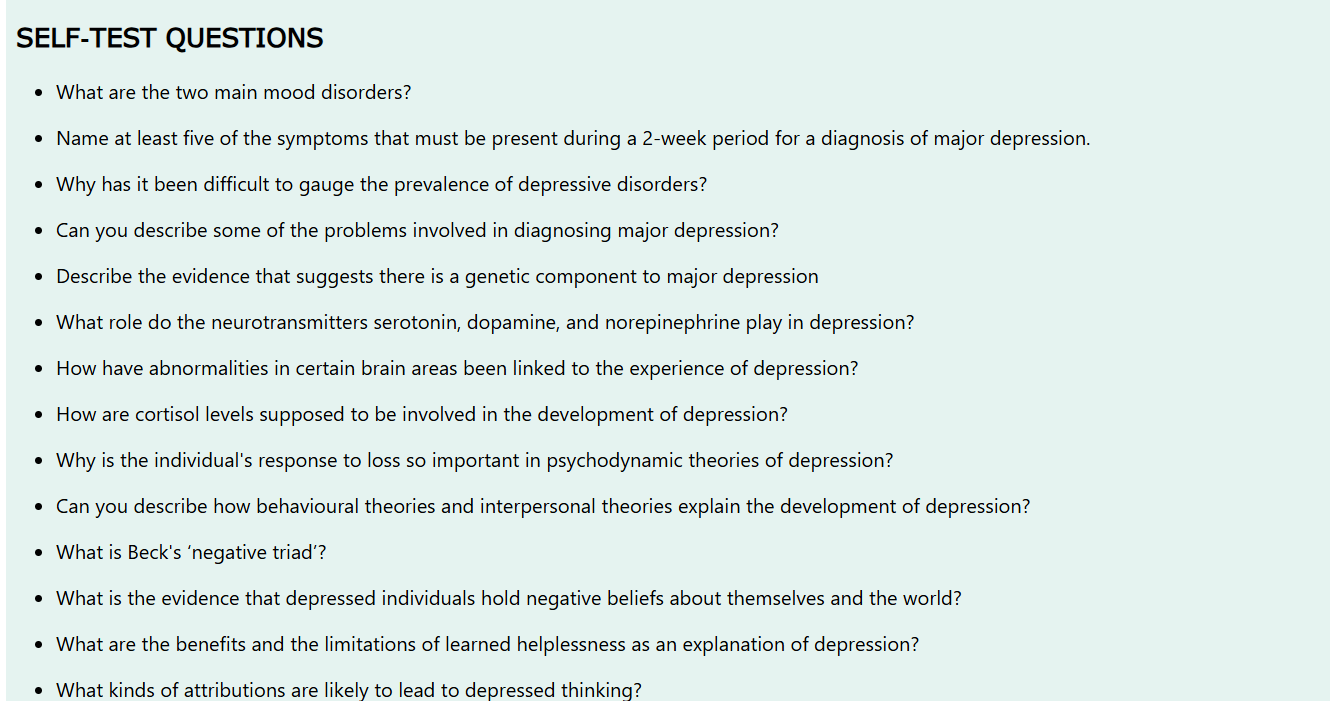
Depression is arguably the most prevalent of the psychopathologies that are covered in this book. Estimates of lifetime prevalence rates for major depression in American community samples range from 5.2% to as high as 20.6% in recent epidemiological surveys (Hasin et al., 2018; Kessler et al., 1994; Weissman et al., 1996), with studies showing the prevalence of diagnosable levels of depression increasing significantly in the US between 2005 and 2015 especially for those in the youngest and oldest age groups (Weinberger et al., 2017, see Figure 7.1). Similarly, in 2014 19.7% of people in the UK aged 16 or over showed symptoms of depression or anxiety—a 1.5% increase from 2013 (Evans, Macrory, & Randall, 2016).
The lifetime risk for major depression may be as high as 20% for men and 30% for women (Kruijshaar et al., 2005), and the World Health Organization (WHO) estimates that more than 264 million people worldwide of all ages suffer from depression (WHO, 2020). However, gauging the prevalence of depressive symptoms has been difficult because (a) prevalence rates appear to differ significantly across different cultures (Kessler & Bromet, 2013), (b) the incidence of the diagnosis of depression has increased steadily over the last 90 years, and (c) different studies have tended to use different diagnostic tools when assessing prevalence. For example, studies conducted by the Crossnational Collaborative Group reported very large cultural variations in the prevalence of major depression. These ranged from 1.5% in Taiwan to 19.0% in Lebanon. Lifetime prevalence rates for Puerto Rico and Korea were relatively low at 4.3% and 2.9% respectively compared to 10.2% for the US (Weissman et al., 1996). Even in high‐income countries, prevalence rates can vary considerably, from 6.6% in Japan to 21.0% in France (Kessler & Bromet, 2013). There appear to be a number of reasons for these large international variations in lifetime prevalence rates. These include (a) the stigmatising of psychopathology in many non‐Western societies, indicating that many individuals in those societies will be unwilling to report symptoms of major depression (Compton et al., 1991), (b) higher levels of somatisation (the expression of psychological distress in physical terms) in non‐Western countries (Simon, VonKorff, Piccinelli, Fullerton, & Ormel, 1999), (c) the fact that—unlike many other psychopathologies (such as obesity and hypertension)—depression cannot be observed or measured directly, so there will always be an element of subjectivity in the way the symptoms are measured and recorded (Patten, 2003a), and (d) lifetime prevalence rates will always be affected by recall problems, and recall failure with age appears to account for the fact that lifetime prevalence rates often appear to decrease with increasing age cohorts (Patten, 2003b).
The incidence of major depression has steadily increased since 1915 and median age of onset has decreased to around 27 years in the US (Kessler, 2002). Most strikingly, women are almost twice as vulnerable to periods of major depression as men (Nolen‐Hoeksema, 2002), and this is independent of cultural background. Some of the factors that might contribute to this gender difference in vulnerability to depression are discussed in Activity Box 7.1 on the book’s website.
The Aetiology of Depression and Mood Disorders
Risk factors for depression
We begin this section on aetiology by taking a very general look at the factors that put people at risk for developing major depression. It is worth remembering that we experience depression because it has probably evolved as an adaptive emotion that bestows survival benefits. For example, depression helps to curb activity during periods of harsh weather such as winter (e.g., SAD) (Eagles, 2004) and is associated with key immune responses to infection that are likely to enhance survival (Raison & Miller, 2013). In this respect, the fact that periods of depression often follow experiences associated with loss (e.g., bereavement) and failure (resulting in loss of self‐esteem and confidence) can be viewed as a perfectly normal and adaptive reaction to life's challenges, giving us time to regroup and recover to eventually face the world again.
However, against this background of potential adaptive benefits of periodic depression, it can also become a chronic distressing and disabling condition that in some cases may lead to an individual taking their own lives. Bearing this in mind, it is important to determine whether there are significant differences between the risk factors that lead to periods of depression (which may be part of a naturally occurring process), and risk factors that lead to chronic, lifelong depression, and even suicide (see Section 7.5.1). Challenging life experiences are frequently identified as risk factors for depression (see Hammen, 2018). These include childhood maltreatment, especially in the form of emotional abuse and neglect (Nelson, Klumparendt, Doebler, & Ehring, 2017); adverse psychosocial working conditions characterised as job strain (Madsen et al., 2017); chronic stress occurring as a result of marital, parental, financial, and occupational functioning (Hammen, 2016); and interpersonal difficulties such as dysfunctional family functioning and difficulties socialising in childhood and adolescence (Conway, Hamman, & Brennan, 2012). But some other risk factors appear to be independent of life challenges generally, and these may represent examples of biologically, genetically, or psychologically mediated risks, and these risk factors include being the offspring of a depressed mother (Goodman et al., 2011), possessing negative information‐processing biases (Beck, 1967, see Negative Cognitions and Self‐Schemas in Section 7.1.2), or being female (Kuehner, 2016). However, risk factors are important when it comes to helping to identify people who may possibly be at risk for depression, but they tell us relatively little about the actual causes of depression, and discovering the mechanisms that underlie the development of depression is the purpose of more detailed research.
Biological theories
Genetic factors
There is good evidence that depressive symptoms run in families, and this suggests the possible existence of an inherited or genetic component to major depression, and first‐degree relatives of major depression sufferers are around two to three times more likely to develop depressive symptoms than are individuals who are not first‐degree relatives of sufferers (Gershon et al., 1982; Maier et al., 1992). Heritability based on twin studies can often vary considerably between studies, but meta‐analyses and genome studies generally estimate heritability to be between 30% and 40% (Sullivan, Neale, & Kendler, 2000; Lubke et al., 2012), with adoption studies suggesting that the inherited component arises from genetic factors with rearing experiences contributing to approximately an equal extent (Kendler, Ohlsson, Sundquist, & Sundquist, 2017).
However, after 2 decades of genetic research the specific genes contributing to this inherited component appear to be diverse—not least because major depression is a heterogeneous condition with a broad range of symptoms. A recent genome‐wide meta‐analysis of depression identified 102 independent gene variants and 269 genes associated with depression, including genes and gene pathways associated with synaptic structure in the brain and factors associated with brain neurotransmitters (Howard et al., 2019)
Candidate genes that may be important include the serotonin transporter gene (SLC6A4) that can enhance or terminate the action of the brain neurotransmitter serotonin (see next section on Neurochemical Factors) (Clarke, Flint, Attwood, & Munafò, 2010; Levinson, 2006). However, there is growing evidence that a gene such as the serotonin transporter gene may increase the risk of depression only when it interacts with certain environmental risk factors, and risk factors that have been identified include childhood maltreatment and serious interpersonal stressors (i.e., major events that primarily affect the quality or quantity of one's interpersonal relationships) (Vrshek‐Schallhorn et al., 2014; Caspi et al., 2003). So, just as with psychotic symptoms (see Chapter 8), there may be a diathesis–stress relationship in depression between inherited genes and experienced stressors, such that severe depression symptoms only develop when there is an interaction between a high‐risk inherited gene and certain stressful life events.
Neurochemical factors
Depression and mood disorders have been shown to be reliably associated with abnormalities in the levels of certain brain neurotransmitters, and three neurotransmitters are particularly significant—namely the monoamines serotonin, norepinephrine and dopamine (Delgado & Moreno, 2000), and major depression is often associated with low levels of these neurotransmitters. For example, depression is associated with decreased serotonin transporter binding in the midbrain and amygdala (Gryglewski, Lanzenberger, Kranz, & Cumming, 2014), and decreased 5‐HT1A receptor binding in frontal, temporal, and limbic regions (Sargent et al., 2000), all suggesting that depression is associated with some form of monoaminergic dysfunction. However, impaired monoamine pathway activity alone is unlikely to be sufficient to cause depression, and studies that have experimentally manipulated monoaminergic pathway activity have shown that this induces depression only in those people with either a family history of depression or have suffered previous episodes of depression (Ruhé, Mason, & Schene, 2007).
A number of factors led to findings about the importance of monoamines such as serotonin and norepinephrine. First, in the 1950s it was noticed that many medications for high blood pressure also caused depression (Ayd, 1956), and this effect was found to be the result of such medications decreasing brain serotonin levels. The 1950s also saw the development of drugs that significantly alleviated the symptoms of depression. The main ones were tricyclic drugs (such as imipramine) and monoamine oxidase(MAO) inhibitors (such as trancylcypromine). Both of these drugs have their effects by increasing levels of both serotonin and norepinephrine in the brain. These findings led to the development of neurochemical theories of depression that argued that depression was caused by either low norepinephrine activity (Bunney & Davis, 1965) or low serotonin activity (Golden & Gilmore, 1990). Because these neurotransmitters are necessary for the successful transmission of impulses between neurones, their abnormally low levels in depressed individuals may account for the cognitive, behavioural, and motivational deficits found in major depression. In addition to abnormalities in serotonin and norepinephrine levels, it is also believed that low levels of the neurotransmitter dopamine might be involved in major depression (Naranjo, Tremblay, & Busto, 2001). Dopamine is significantly involved in the reward systems in the brain, and so depleted dopamine levels may be responsible for deficits in this system in depression giving rise to a lack of motivation, initiative, and pleasure (Treadway & Zald, 2011).
The medications that are often prescribed for people suffering major depression are assumed to have their beneficial effects by preventing the reuptake by the presynaptic neurone of neurotransmitters serotonin and norepinephrine. This results in higher levels of these neurotransmitters in the synapse, and this facilitates the transmission of impulses to the postsynaptic neurone—thus facilitating brain activity. More recently, the development of selective serotonin reuptake inhibitors (SSRIs) (such as fluoxetine) and serotonin‐noradrenaline reuptake inhibitors (such as Duloxetine) has allowed researchers to assess the specific roles of serotonin and noradrenaline in depression, and researchers now believe that serotonin levels in particular play a central role in major depression (Figure 7.2).
However, this picture is relatively simplistic, and more recent neurochemical theories of mood disorders suggest that interactions between different neurotransmitters may be important. Some researchers suggest that depression is associated more with an imbalance in neurotransmitters than with deficits in specific neurotransmitters (Rampello, Nicoletti, & Nicoletti, 2000; Ressler & Nemeroff, 1999). Other theorists have suggested that low levels of serotonin interact with levels of norepinephrine in rather complex ways, such that combinations of low levels of both serotonin and norepinephrine produce depression, but low levels of serotonin and high levels of norepinephrine result in mania (Mandell & Knapp, 1979) (see also Chapter 4, Section 4.1.1 for a fuller discussion of how antidepressant medications may have their effect on depression symptoms).
Brain abnormalities and depression
Recent developments in cognitive neuroscience together with the evolution of new technologies for scanning and photographing the brain (e.g., magnetic resonance imaging, MRI, see Chapter 2, Section 2.2.4) have led to a greater understanding of the brain areas involved in depression and mood disorders (Davidson, Pizzagalli, Nitschke, & Putnam, 2002). Studies have identified dysfunction or abnormalities in a number of brain areas that appear to be associated with depression. These areas are the prefrontal cortex, the anterior cingulate cortex(ACC), the basal ganglia, the hippocampus, and the amygdala (e.g., Davidson et al., 2002; Disabato et al., 2016) (see Figure 7.3). This raises the question of the role that such areas may play in relation to depression, and Davidson et al. (2002) have attempted to address these issues. First, depression is associated with significantly lower levels of activation in the prefrontal cortex (Drevets, 1998), and this area is important in maintaining representations of goals and the means to achieve them. Decreased activation in this area may result in the failure to anticipate incentives that is a common feature of depression. Second, decreased ACC activation is also reported in major depression (Beauregard et al., 1998). Evidence suggests that ACC activation is present when effortful emotional regulation is required in situations where behaviour is failing to achieve a desired outcome (Ochsner & Barrett, 2001), and Davidson et al. suggest that this may reflect a deficit in the ‘will‐to‐change’ that is also characteristic of depressed individuals. Third, individuals with depression and mood disorders also show signs of dysfunction in the hippocampus (Mervaala et al., 2000). The hippocampus is important in adrenocorticotropic hormone secretion and is also critical in learning about the context of affective reactions (Fanselow, 2000). Thus, deficits in hippocampal function in depression may result in the individual dissociating affective responses from their relevant contexts. In depression, this may manifest itself as feelings of sadness occurring independently of contexts in which we would normally expect such emotions (i.e., sadness is experienced in all contexts, not just following relevant life events such as a bereavement). Finally, major depression has also been found to be associated with structural and functional abnormalities in the amygdala, and especially with increased amygdala activation (Abercrombie et al., 1998). A role of the amygdala is in directing attention to affectively salient stimuli and prioritising the processing of such stimuli. The effect of raised levels of activation in the amygdala may therefore result in the depressed individual prioritising threatening information for processing and interpreting such information negatively.
In addition, structural anatomical abnormalities in depressed individuals have been found for grey matter and white matter in the brain. Decreased grey matter levels are found in the prefrontal cortex, the orbitofrontal cortex, the ACC, and the basal ganglia (Kaltenboeck & Harmer, 2018). White matter lesions are frequently found in late‐life depression and may cause symptoms by affecting the limbic projections to the prefrontal cortex that are important in mood regulation (Disabato et al., 2016).
Neuroendocrine factors
Depression is regularly associated with problems in the regulation of body cortisol levels—a hormone that is secreted in times of stress. We mentioned earlier that the hippocampus is important in adrenocorticotropic hormone secretion, and that depressed individuals frequently exhibit hippocampal abnormalities (Mervaala et al., 2000). These hippocampal abnormalities are regularly linked with high levels of cortisol (an adrenocortical hormone)—especially high cortisol levels at the time of wakening (Vrshek‐Schallhorn et al., 2013)—and patients receiving chronic corticosteroid therapy for endocrine problems have smaller hippocampal volumes and higher depression ratings than non‐patient controls (Brown et al., 2004). The hypothalamic‐pituitary‐adrenocortical (HPA) network is the biological system that manages and reacts to stress, and triggers the secretion of cortisol in response to stress. It is the lack of inhibitory control over cortisol secretion that is linked with depression, and around 80% of individuals who are hospitalised because of their depressive symptoms show poor regulation of the HPA network (Heuser, Yassourides, & Holsboer, 1994) and are more likely to be prone to future bouts of depression (Aubry et al., 2007). Furthermore, increased early life stress (a known risk factor for depression) has been shown to cause hyperactivity of the HPA network that persists into adulthood (Pariante & Lightman, 2008).
Depression has also been associated with abnormalities in the immune system and in particular with increases in inflammation, and this may lead to symptoms of depression by inducing a tryptophan‐metabolising enzyme that decreases the availability of serotonin in the brain (Cowen, 2015).
Summary of biological theories
The preceding evidence suggests that biological factors may play an important role in the development and maintenance of mood disorders such as major depression. There is clearly an inherited component (which accounts for around a third of the variance in measures of depression), and imbalances in specific brain neurotransmitters such as serotonin, norepinephrine, and dopamine have been linked to symptoms of depression. Recent developments in brain scanning technology have also allowed researchers to identify abnormalities in specific areas of the human brain that are associated with depression. These are all impressive and important findings, but we must remember that depression and mood disorders almost certainly do not stem solely from biological dysfunction. As we shall see in the next section, psychological and cognitive factors are equally important in the aetiology and maintenance of mood disorders and supplement our knowledge of biological factors. Biological and psychological explanations are not mutually exclusive and they attempt to explain phenomena at different levels of description. Indeed, it is still not clear whether many of the biological factors we have described in Section 7.1.2 are truly causal factors in depression, or whether they simply represent biological changes that reflect the experience of depression. That is, biological factors may give rise to many of the symptoms of depression, but psychological processes may in turn trigger these biological factors.
Psychological theories
Psychodynamic explanations
There are a number of different psychodynamic views of depression (see Blatt & Homann, 1992), but the most well established is the psychoanalytic account pioneered by Freud (1917/1963) and Abraham (1916/1960). This view argues that depression is a response to loss, and, in particular, a response to the loss of a loved one such as a parent. Because, according to psychoanalytic theory, such losses return the individual to the oral stage of development, psychoanalysis argues that depression has a functional role to play, in that it returns the person to a period in their life when they were dependent on others (their parents). During their depressed state, this regression to the oral stage allows the individual to become dependent on their relationships with others in order to utilise the support that this will offer.
One problem with this psychoanalytic interpretation is that not everyone who experiences depression has lost a loved one, and this led Freud to propose the concept of symbolic loss in which other kinds of losses within one's life (e.g., losing a job) are viewed as equivalent to losing a loved one. These losses then cause the individual to regress to the oral stage of development and may trigger memories of inadequate parental support during childhood. In addition, parental loss is no longer seen as a necessary condition for the development of depression, and poor parenting is a more significant risk factor (Lara & Klein, 1999). Support for this view comes from studies that have shown a relationship between risk for depression in adulthood and having experienced a particular kind of parenting style known as affectionless control (Garber & Flynn, 2001). This type of parenting is characterised by high levels of overprotection combined with a lack of warmth and care.

There is some empirical support for this psychoanalytic view of depression. For example, individuals who report that their childhood needs were not adequately met by their parents are more likely to become depressed after experiencing a loss (Goodman, 2002). Nevertheless, there are a number of difficulties with the psychoanalytic view. First, much of the empirical evidence that is consistent with this view is also consistent with many other theories of depression, so the evidence does not help to differentiate between theoretical approaches. Second, many individuals who do experience parental loss or poor parenting do not go on to develop depression. Psychoanalytic approaches do not clearly explain why this is the case. Finally, because of the way that psychodynamic theories are formulated, many of the key aspects of the theory are difficult to test. Psychodynamic concepts used to explain depression, such as introjection, fixation at the oral stage of development, and symbolic loss are all difficult to operationalise and measure, and so verify empirically. This difficulty is compounded by the Freudian belief that such processes are thought to operate at the unconscious level.
Behavioural theories
The most obvious characteristics of depressed individuals include a lack of motivation and initiative, a considerably diminished behavioural repertoire, and a view of the future that lacks positive and fulfilling experiences. Some theorists have suggested that these characteristics provide evidence that depression results from a lack of appropriate reinforcement for positive and constructive behaviours (Lewinsohn, 1974). This leads to the extinction of existing behaviours, and to a ‘behavioural vacuum’ in which the person becomes inactive and withdrawn. It is certainly the case that periods of depression follow life ‘losses’ such as bereavement, retirement, or redundancy, and each of these events represent the loss of important sources of reward and reinforcement for social and occupational behaviours (see also Figure 7.7 showing how suicide rates increase during a financial recession). In support of this account, it has been shown that depressed individuals report fewer rewards in their life than nondepressed individuals, and introducing rewards into the lives of depressed individuals helps to elevate their mood and forms the central feature of behavioural activation(BA) therapy which encourages depressed individuals to approach activities they may have been avoiding (Lewinsohn, Youngren, & Grosscup, 1979; Jacobson et al., 1996
The fact that life ‘losses’ are likely to result in the reduction of reinforcing events for the depressed individual also leads to a vicious cycle that can establish depression as a chronic condition. For example, once a person becomes depressed, then their lack of initiative and withdrawal is unlikely to lead to the development of other alternative sources of reinforcement. Unfortunately, the negative disposition of the depressed individual is likely to be an active contributor to a lack of reinforcement—especially social reinforcement. For example, depressed individuals are less skilled at interacting with others than nondepressed individuals (Joiner, 2000; Segrin, 2000), and a chronically depressed individual will often communicate negative attitudes, appear withdrawn and unresponsive, and tend to seek excessive reassurances about themselves and their future. As a consequence, studies suggest that when interacting with depressed individuals, nondepressed control participants exhibit less positive social behaviour, are less verbal, and are less positive than when interacting with a nondepressed individual (Gotlib & Robinson, 1982).
The frequent failure of depressed individuals to elicit reinforcing reactions from individuals with whom they are communicating has led to interpersonal theories of depression. These theories argue that depression is maintained by a cycle of excessive reassurance seeking from depressed individuals that is subsequently rejected by family and friends because of the negative and repetitive way in which depression leads the individual to talk about their problems (Joiner, 1995). Excessive reassurance seeking is defined as ‘the relatively stable tendency to excessively and persistently seek reassurances from others that one is lovable and worthy, regardless of whether such assurance has already been provided’ (Joiner, Metalsky, Katz, & Beach, 1999, p. 270), and the negative beliefs about themselves, their world and their future leads depressed individuals to doubt any reassurances they are given by friends and family, and this continual doubting can have a negative impact on relationships with partners (Fowler & Gasiorek, 2016). Excessive reassurance seeking in depressed individuals predicts future depressive symptoms (Haeffel, Voelz, & Joiner, 2007; Joiner et al., 1999) and can be associated with motivation to obtain self‐confirming negative feedback, which is another risk factor for depressive symptoms and interpersonal rejection that creates a vicious cycle of rejection and depression (Davila et al., 2009), and in turn can exacerbate the symptoms of depression (Evraire & Dozois, 2011).
However, we must be cautious about how we interpret this evidence as a causal factor in depression. First, much of the research on the link between lack of reinforcement and depression has been retrospective in nature, and it is quite reasonable to suppose that depressed individuals may underestimate the extent of the actual rewards in their life. Second, we need to understand whether excessive reassurance seeking and seeking negative feedback are dispositional factors that create a risk for depressive symptoms or whether depressive symptoms themselves elicit these characteristics (Evraire & Dozois, 2011).
Negative cognitions and self‐schema
One of the most influential of all the theories of depression is Beck's Cognitive Theory (1967, 1987, see Strauss, 2019, for a review of Beck's theory of depression and its influence on modern‐day clinical psychology). This theory introduced the idea that depression could be caused by biases in ways of thinking and processing information. We know that depressed individuals indulge in a good deal of ‘negative thinking’, and that they experience more negative intrusive thoughts than non‐depressed individuals (Reynolds & Salkovskis, 1992). Facts such as this have led Beck (1987) to claim that depressed individuals have developed a broad‐ranging negative schema that tends them towards viewing the world and themselves in a negative way. In turn, these negative schema influence the selection, encoding, categorisation, and evaluation of stimuli and events in the world in a way that leads to a vicious cycle of depressive affect and symptomatology. Beck argued that these negative schema are relatively stable characteristic of the depressed individual's personality and develop as a result of early adverse childhood experiences—especially concerning loss (such as the loss of a parent figure). In later life, a stressful experience will reactivate this negative schema and give rise to the biased thinking that generates depressive symptoms such as deficits in motivational, affective, cognitive, and behavioural functioning.
Beck argued that the depressed individual's negative schema maintained some interrelated aspects of negative thinking that Beck called the negative triad. In particular, depressed people hold negative views of themselves (e.g., ‘I am unattractive’), negative views of their future (e.g., ‘I will never achieve anything’), and of the world (e.g., ‘the world is a dangerous and unsupportive place’). This set of negative beliefs eventually generates self‐fulfilling prophecies. That is, the depressed individual interprets events negatively, fails to take the initiative, and then inevitably experiences failure (Figure 7.4). The negative triad of beliefs leads to a number of systematic biases in thinking, including arbitrary inference, selective abstraction, overgeneralisation, magnification and minimisation, personalisation, and all‐or‐none thinking
There is considerable evidence that depressed individuals do show the negative cognitive biases that Beck's theory predicts. First, some studies have shown attentional biases to negative information in depressed individuals that results in them prioritising that negative information. In the emotional Stroop procedure, depressed individuals are slower at naming the colour of negative words than positive words, suggesting that their attention is drawn towards the meaning of such words (Gotlib & Cane, 1987; Epp, Dobson, Dozois, & Frewen, 2012). Also, in a dichotic listening procedure, depressed individuals have greater difficulty ignoring negative words that are presented as distractors than do nondepressed participants (Ingram, Burnett, & McLaughlin, 1994). The exact nature of this attentional bias is unclear, and some studies have failed to replicate these experimental effects (e.g., Mogg, Bradley, Williams, & Mathews, 1993). Nevertheless, there is sufficient evidence to suggest that there is a bias towards processing negative information in depression—especially if it is information that is specifically relevant to depression (rather than more general negative information) (Gotlib, Gilboa, & Sommerfeld, 2000). Most recently, there is emerging evidence that depressed individuals may explicitly have problems disengaging attention from negative information that has captured their attention, and this lack of cognitive control may also cause difficulties when it comes to emotion regulation (Joorman & Stanton, 2016; LeMoult & Gotlib, 2019, see Figure 7.5).

Second, important memory biases are also apparent in depression, with depressed individuals able to recall more negative words than positive words in explicit memory tests (Mathews & MacLeod, 1994), but this again seems to apply predominantly to depression‐relevant material rather than threat‐relevant material generally (Watkins, Mathews, Williamson, & Fuller, 1992). Furthermore, studies have indicated that depressed individuals will remember more negative than positive information about themselves (Alloy, Abramson, Murray, Whitehouse, & Hogan, 1997), and of particular interest is the biased recall of autobiographical memories by depressed individuals. Depressed individuals tend to favour recalling negative autobiographical events, recall fewer positive autobiographical experiences than nondepressed individuals, recall overgeneral and less detailed autobiographical memories than nondepressed individuals, and are more likely to either avoid or ruminate about events from their past (Kohler et al., 2015; Raes, Hermans, Williams, & Eelen, 2005; Williams & Scott, 1988). Subsequent studies have suggested that there may be an association between experiencing early life trauma (such as childhood abuse) and reduced autobiographical memory specificity (Raes, Hermans, Williams, & Eelen, 2005),and that poorly detailed autobiographical memories may be linked to the deficits in problem‐solving ability that are characteristic of depressed individuals (Pollock & Williams, 2001).
Third, there is experimental evidence that depressed individuals exhibit the interpretational bias that would lead them to interpreting ambiguous events negatively or to judge events more negatively (Everaert, Podina, & Koster, 2017). There is considerable evidence, for example, that depressed affect is associated with more critical self‐judgement and a raising of personal performance standards (Forgas, Bower, & Krantz, 1984; Scott & Cervone, 2002). Cognitive bias modification (CBM) studies designed to alter negative interpretation biases have demonstrated that this can be achieved in depressed individuals (LeMoult et al., 2017), although to date, evidence that the effects of this training can be sustained has been inconsistent (Joormann, Waugh, & Gotlib, 2015).
More recent theories suggest that the combination of biases in attention, interpretation, memory and cognitive control and their interaction may be a better predictor of depressive symptoms than any of these biases alone (Everaert, Koster, & Derakshan, 2012; Hirsch, Clark, & Mathews, 2006), and this is a potentially fruitful direction for future research in this area (Research Methods in Clinical Psychology 7.1).
Finally, we tend to associate depression, and Beck's cognitive theory of depression in particular, with pessimistic thinking caused by negative self‐schemas. However, evidence suggests that what depressed individuals may actually lack is the positive interpretation bias possessed by nondepressed individuals. It turns out that depressed individuals are much more accurate in experimental studies at evaluating (a) how much control they may have over a situation (Alloy & Abrahamson, 1979), and (b) the impression they made on others in a social situation (Lewinsohn, Sullivan, & Grosscup, 1980). In contrast, nondepressed individuals are unduly optimistic in their estimates. This suggests that depressed individuals may be much more objective about the judgements they make, and it is nondepressed individuals who possess a positive bias that may act to ‘make them feel good about themselves’ (Lewinsohn et al., 1980).
In summary, Beck's cognitive theory of depression has been significantly influential in determining the way we conceptualise, research, and treat depression. It has generated a range of research on cognitive biases in depression and has contributed substantially to cognitive‐based treatments of depression (see Section 7.3). However, it is still unclear whether the negative cognitive biases defined by Beck's theory actually cause depression, or whether these biases are simply a consequence of experienced depression. Further research will be needed to clarify issues such as this.
Learned helplessness and attribution
During a person's lifetime they may experience a number of unavoidable and uncontrollable negative life events. These may include the sudden death of a close friend or relative, or being made redundant from a job. Seligman (1975) proposed that depression could be linked specifically to these kinds of experiences, and that they give rise to a ‘cognitive set’ that makes the individual learn to become ‘helpless’, lethargic, and depressed. It is the perceived uncontrollability of these negative life events that is important and leads the individual to the pessimistic belief that negative life events will happen whatever they do. Seligman (1974) first derived this hypothesis from animal learning experiments in which dogs were first given unavoidable electric shocks and subsequently taught to learn a simple avoidance response that would avoid the shocks. He found that dogs that were given prior unavoidable electric shocks were subsequently unable to learn the avoidance response and simply lay down in the apparatus and ‘quietly whined’. One example of how learned helplessness theory has been applied to depression is in the case of women who have suffered domestic abuse. Walker (2000) has suggested that a pattern of repeated partner abuse leads women to believe that they are powerless to change their situation. As a result, such women come to exhibit all the symptoms of depression and display the ‘passivity’ often found in what is known as battered woman syndrome.
However, while animal experiments on learned helplessness do appear to have a formalistic similarity to human depression, there are a number of reasons for believing that it is not a full or comprehensive account of depression. First, some studies with humans have suggested that prior experience with uncontrollable negative events may actually facilitate subsequent performance (Wortman & Brehm, 1975). Second, many depressed individuals see themselves as being responsible for their failures and losses—yet someone who perceives himself or herself as helpless should not blame themselves for these events. Third, in the specific case of battered women syndrome, passivity may not be the result of the woman learning that she is helpless, but it may be a learned adaptive response to abuse. This may take the form of the woman thinking, ‘If I do not make requests and acquiesce to his demands, he is less likely to hit me’ (Peterson, Maier, & Seligman, 1993).
These difficulties and inconsistencies in the original learned helplessness theory led to the development of a revised theory that included the important concept of attribution (Abramson, Seligman, & Teasdale, 1978; see Watkins, 2019, for a discussion of the original Abramson et al., 1978, study and a critique of the attributional style approach to understanding depression). Attributional theories of depression argue that people learn to become helpless, or more specifically ‘hopeless’, because they possess certain attributional styles that generate pessimistic thinking. Attributions are the explanations that individuals have for their behaviour and the events that happen to them. In particular, Abramson et al. (1978) argue that people become depressed when they attribute negative life events primarily to factors that either cannot easily be manipulated or are unlikely to change. In particular, people who are likely to become depressed attribute negative life events to (a) internal rather than external factors (e.g., to personal traits rather than outside events), (b) stable rather than unstable factors (e.g., things that are unlikely to change in the near future), and (c) global rather than specific factors (e.g., causes that have an effect over many areas of their life rather than being specific to one area of functioning). Table 7.6 provides an example of the range of attributions that someone might make in relation to failing a maths exam. In this case, the global, stable, and internal attribution is ‘I lack intelligence’, and this attribution is likely to have a number of negative consequences. First, it is the kind of cause that is not easily changed so that future failures might be avoided. Second, it reflects negatively on the individual's self‐concept, and so is likely to reduce self‐esteem. Third, it is a global attribution, and so the individual is likely to believe that they will fail at many other things, and not just a maths exam, and this is likely to lead to the kinds of pessimistic thinking typical of depression. In contrast, if the student had attributed their failure to specific, unstable factors, such as ‘I am fed up with maths’ or ‘my maths test was numbered 13’, they would have been less likely to experience helplessness or reduced self esteem (because these are factors that could change quite easily)
In order to test the attributional account of depression, Peterson et al. (1982) developed the Attributional Style Questionnaire (ASQ) which measures tendencies to make the particular kinds of causal inference that are hypothesised to play a causal role in depression. A number of studies have subsequently found that use of the global‐stable attributional style is a vulnerability factor for future depression (Butters, McClure, Siegert, & Ward, 1997; Chaney et al., 2004)—especially following negative life events (Hankin & Abramson, 2002). A study by Metalsky, Joiner, Hardin, and Abramson (1993) gave students the ASQ prior to a midterm exam and then measured depressive symptoms over the subsequent 5 days. They found that the students' enduring depressive reactions during this period were predicted by a global‐stable attributional style together with low self‐esteem and exam failure. This suggests that the global‐stable attributional style in the context of a negative life event (e.g., exam failure) is a good predictor of subsequent depression. Finally, a computer‐based attention bias modification task (see Focus Point 6.4, Chapter 6) can be used to create either negative or positive attributional styles, and individuals in whom the positive attributional style is induced subsequently report less depressed mood in response to a stressor than individuals in whom a negative attributional style is induced (Peters, Constans, & Mathews, 2011). Experimental studies such as this suggest a direct causal link between attributional style and depressed mood.
Hopelessness theory
The attributional/helplessness account of depression has been further refined to account for the fact that attributional style appears to interact with a number of other factors to cause depression. Abramson, Metalsky, and Alloy (1989) suggested that the tendency to attribute negative events to global/stable causes represents a diathesis which, in the presence of negative life events, increases vulnerability to a group of depressive symptoms, including retarded initiation of voluntary responses, apathy, lack of energy, and psychomotor retardation. This cluster of symptoms is known as hopelessness, which is an expectation that positive outcomes will not occur, negative outcomes will occur, and the individual has no responses available that will change this state of affairs. Hopelessness theory is very similar to attributional/helplessness accounts in that negative life events are viewed as interacting with a global/stable attributional style to generate depressed symptomatology. However, hopelessness theory also predicts that other factors, such as low self‐esteem, may also be involved as vulnerability factors (Metalsky et al., 1993). Many studies have supported the hopelessness theory by confirming that depression can be predicted by a combination of negative attributional style, negative life events, and low self‐esteem (Alloy, Lipman, & Abrahamson, 1992; Bohon, Stice, Burton, Fudell, & Nolen‐Hoeksema, 2008; Metalsky et al., 1993; Metalsky & Joiner, 1992), and that the negative attributional style is significantly more related to hopelessness depression symptoms (e.g., lethargy, hopelessness, difficulty making decisions) than endogenous depression symptoms (e.g., loss of interest in sex, loss of appetite, loss of weight) (Joiner, 2001). In addition to predicting many symptoms of depression, hopelessness is also a construct that has been shown to predict suicidal tendencies and, in particular, suicidal ideation and completed suicide (Conner, Duberstein, Conwell, Seidlitz, & Caine, 2001; Wolfe et al., 2019).
Nevertheless, despite the enhanced ability of the evolved model to predict depressive episodes, there are still a number of limitations to hopelessness theory: (a) many of the studies claiming to support hopelessness theory have been carried out on healthy or only mildly depressed participants who are not representative of individuals who are clinically depressed (Coyne, 1994), (b) a majority of studies testing the model are correlational in nature, and so cannot provide any evidence on the possible causal role of hopelessness cognitions in generating depression (Henkel, Bussfield, Moller, & Hegerl, 2002), (c) the model does not explain all of the depressive symptoms required for a DSM‐5 diagnosis, only those related to hopelessness, and (d) there is some evidence that the negative attributional style disappears during remission or recovery from depression (Hamilton & Abramson, 1983), and this suggests that it may not be a universal or enduring feature of individuals who experience depression. This latter fact raises the question of what comes first, the negative attributional style or symptoms of depression.
Rumination theory
Depressed individuals spend a good deal of time indulging in ruminative activities which may either increase the risk of depression or increase the probability of relapse following recovery from depression. Rumination is a tendency to repetitively dwell on the experience of depression or its possible causes, either in a repetitive or ‘brooding’ fashion (Crane, Barnhofer, & Williams, 2007) or in an analytical way which attempts to seek explanations for the experience (Watkins, 2008), and is a maladaptive form of emotion regulation that has been linked to periods of stress and an inability to deploy more adaptive forms of emotion regulation (such as reappraising emotional events) (Vanderhasselt, Brose, Koster, & De Raedt, 2016). Tendency to ruminate has been shown to predict the onset of depressive episodes (Morrow & Nolen‐Hoeksema, 1990; Nolen‐Hoeksema, 2000), and relapse back into bouts of depression (Michalak, Holz, & Teismann, 2011). Rumination in depressed individuals appears to be driven by meta‐cognitive beliefs that rumination is a necessary process to undertake in order to resolve depression (Papageorgiou & Wells, 2001), and these beliefs appear to contribute to the repetitive or perseverative nature of depressive rumination (Chan, Davey, & Brewin, 2013; Hawksley & Davey, 2010). Other studies have indicated that rumination is associated with overgeneral autobiographical memory (Sumner, 2012)—which is a common characteristic of depressed individuals. Rumination is also a vulnerability factor for depression during the transition from early to middle adolescence (Abela & Hankin, 2011), and is higher in women than men—possibly contributing to the significantly higher depression rates in women than men (Nolen‐Hoeksema, 2000).


THE TREATMENT OF DEPRESSION
The previous sections illustrate the broad range of theories addressing the aetiology of mood disorders, and these theories have each given rise to a variety of different treatments for these disorders. These include a number of biological‐based treatments such as antidepressant drug therapy and electroconvulsive therapy(ECT) which are based on addressing neurotransmitter imbalances known to be a correlate of depression. In addition, there are a wide range of psychological therapies including psychodynamic, behavioural, and cognitive behavioural therapies. Stepped‐care models for the treatment of depression are often adopted (see Table 7.12), and these models advise that the type of treatment provided for depression should be tailored to the severity of the symptoms and the personal and social circumstances of the sufferer. An example of a stepped‐care model would be one where (a) GPs and physicians—who are normally the first port of call for many people experiencing depression—are advised to ensure that proper assessment is made of individuals who might present with symptoms of depression, and they should not simply respond by providing medication; (b) medication would not normally be recommended for the initial treatment of depression but should mainly be reserved for the treatment of moderate to severe depression; and (c) mild depression should be treated primarily with low intensity brief behavioural and cognitive interventions, and these include structured exercise (e.g., three sessions per week of moderate duration for 10–12 weeks), guided self‐help, and computerised CBT programmes (see Chapter 4, Section 4.1.2 for discussion of Improving Access to Psychological Therapies low intensity interventions and computerised CBT).

Antidepressant medications
The three main types of medication for depression are (a) trycyclic drugs (such as imipramine), (b) MAO inhibitors (such as tranylcypromine), and (c) SSRIs (such as Prozac) and serotonin and norepinephrine reuptake inhibitors (SNRIs). The first two types of drug increase levels of both serotonin and norepinephrine in the brain, while SSRIs and SNRIs act selectively on serotonin and prevent its reuptake by the presynaptic neurone (see Figure 7.2). Treatment outcome studies have generally indicated that depressed individuals given these forms of medication benefit when compared with individuals taking placebos (Cipriani et al., 2018), and around 50–65% of individuals taking trycyclic drugs show improvement (Gitlin, 2002) along with around 50% taking MAO inhibitors (Thase, Trivedi, & Rush, 1995). Although these forms of drug treatment can be effective for some people, they often have significant physical and psychological side effects (see Chapter 4, Table 4.1), and the most recently developed of these drugs, SSRIs and SNRIs, do have some benefits over trycyclic drugs and MAO inhibitors in that they produce fewer side effects (Enserink, 1999) and it is harder to overdose on them (Isbister, Bowe, Dawson, & Whyte, 2004). However, SSRIs such as fluoxetine (Prozac) take around 2 weeks to begin to have an effect on symptoms (which is roughly the same as trycyclics) and also have their own side effects such as headache, gastric disorders, and sexual dysfunction (Rosen, Lane, & Menza, 1999) (see Chapter 4, Section 4.1.1 for a fuller discussion of antidepressant drugs, their effectiveness, and how they might work when they are effective).
There is also controversy about whether SSRIs such as Prozac increase the risk of suicide. Recent meta‐analyses suggest that increased risk of suicide with the use of SSRIs cannot be ruled out, but these risks should be balanced against the relative effectiveness of SSRIs in treating depression (Gunnell, Saperia, & Ashby, 2005). Nevertheless, despite these cautions, the drugs that have been developed to treat depression do help to alleviate symptoms in a majority of cases, they provide relatively rapid relief from symptoms in around half of those treated, and they are effective not only with bouts of major depression but also with chronic depressive disorders such as dysthymic disorder (Hellerstein, Kocsis, Chapman, Stewart, & Harrison, 2000). However, relapse is a common occurrence after drug treatment for depression has been withdrawn (Reimherr et al., 2001), and a more effective treatment may be to combine drug therapy with psychological therapies such as CBT (Kupfer & Frank, 2001).
In contrast to those drugs prescribed for major depression, the drug therapies of choice for bipolar disorder are rather different. The traditional treatment for bipolar disorder has been lithium carbonate. Around 80% of bipolar disorder sufferers who take lithium benefit from it, and the drug can provide relief from symptoms of both manic and depressive episodes (Curran & Ravindran, 2014; Won & Kim, 2017). There is some debate about how lithium actually moderates the symptoms of bipolar disorder. Early views suggested that lithium stabilises the activity of sodium and potassium ions in the membranes of neurones, and it is the instability of these ions that gives rise to the symptoms of bipolar disorder (Swonger & Constantine, 1983). Other accounts argue that it changes synaptic activity in neurons in such a way as to help neurotransmitters bind to a receiving neuron, thus helping to increase neuronal plasticity (Ghaemi, Boiman, & Goodwin, 1999; Won & Kim, 2017). However, treatment of bipolar symptoms with lithium carbonate does have some disadvantages. First, discontinuation often increases the risk of relapse (Suppes, Baldessarini, Faedda, & Tohen, 1991), and second, an added disadvantage of lithium treatment is the difficulty in prescribing a suitable dosage on an individual basis. Lithium is a toxic substance, and the effective dose for alleviating symptoms is often close to the toxic level. As a consequence, an overdose can cause delirium, convulsions and, in rare cases, can be fatal. More recently, combinations of antipsychotic drugs and SSRIs have been used successfully to address symptoms of bipolar disorder (e.g., a combination of the antipsychotic drug olanzapine and the antidepressant SSRI drug fluoxetine), and this combination has been shown to have significant effects on both mania and depression symptoms (Deeks & Keating, 2008).
Transcranial magnetic stimulation (rTMS)
In 2015 the National Institute for Health and Care Excellence (NICE) published guidelines for the use of repetitive transcranial magnetic stimulation for depression (NICE, 2015). In this procedure, an electromagnetic coil is placed on the scalp and pulses of magnetic energy are used to increase activity in the left dorsolateral prefrontal cortex. A treatment session would normally last for 30–60 minutes, with daily doses lasting for between 2 and 6 weeks. Randomised controlled trials have indicated that rTMS can be more effective than sham control treatments in relieving depression symptoms in clients who have failed to respond to antidepressant medications (Berlim, van den Eynde, Tovar‐Perdomo, & Daskalakis, 2014)
Electroconvulsive therapy (ECT)
This method of treatment was first discovered in the 1930s (Cerletti & Bini, 1938) and involves passing an electric current of around 70–130 V through the head of the patient for around half a second. It was first used as an experimental means of inducing brain seizures but was subsequently found to have beneficial effects on symptoms of severe depression. Today, ECT is used primarily with individuals suffering severe depression who have not responded well to other forms of treatment (Cohen et al., 2000). While it can provide effective short‐term relief from symptoms of severe depression, it also has a number of controversial features. First, it has a number of side effects, the most common of which is memory loss that affects the ability to learn new material (anterograde amnesia) and the ability to recall material learned before the treatment (retrograde amnesia). These effects can last for up to 7 months following ECT (Lisanby, Maddox, Prudic, Devanand, & Sackeim, 2000; Sackeim et al., 2007). Second, many people find the idea of having a strong electric current passed through their brain frightening and will be resistant to the use of this kind of therapy. Indeed, many view the physical nature of ECT as a form of ‘assault’ on the patient, and a means of managing unruly in‐patients rather than a form of therapy. This was a view that was strikingly portrayed in the 1975 film One Flew over the Cuckoo's Nest starring Jack Nicholson (Photo 7.1). Third, no one is clear how ECT does work in alleviating the symptoms of severe depression, but it has been suggested that shock affects the levels of serotonin and norepinephrine in the brain (Mann & Kapur, 1994). However, this beneficial effect may be short term and limited to as little as 4 weeks (Breggin, 1997), and the relapse rate is around 50% by 12‐months after successful initial ECT treatment (Jelovac, Kolshus, & McLoughlin, 2013). Other researchers have argued that the short‐term beneficial effects of ECT are nothing more than would be expected following any trauma to the brain—with immediate symptoms being confusion, headache, and nausea followed by a period of emotional shallowness, denial, and artificial euphoria that may last for a few weeks (Breggin, 1997).
Nevertheless, despite these criticisms, ECT may still have a role to play in the treatment of severe depression in both major and bipolar depression when symptoms are resistant to pharmacological treatment (Medda, Perugi, Zanello, Ciuffa, & Cassano, 2009), and the almost immediate beneficial effects of ECT may be helpful in alleviating depression when suicide is a real possibility.
Psychological Treatments
Psychoanalysis
In Section 7.1.2 we discussed some of the psychodynamic explanations of depression. Central to these accounts is the view that depression is a response to loss (perhaps of a loved one) and may manifest as symbolic loss, in which other kinds of losses (such as losing a job) are seen as equivalent to losing a loved one. Psychodynamic theories (such as those developed by Freud and Abraham) argue that the individual's response to loss is to turn their anger at the loss inwards, and this in turn can develop into self‐hate resulting in low self‐esteem (Frosh, 2012, chapter 13). The aim of psychodynamic therapy, therefore, is to help the depressed individual achieve insight into this repressed conflict and to help release the inwardly directed anger. Psychodynamic therapy will do this by using various techniques to help people explore the long‐term sources of their depression (see Chapter 4, Section 4.1.1), and this will involve exploring conflicts and problematic relationships with attachment figures—such as parents—and discussing long‐standing defensive patterns. For example, the psychodynamic therapist may use free association or dream interpretation to help the individual recall early experiences of loss that may have contributed to repressed conflicts and symptoms of depression. In this way, psychodynamic therapies attempt to bring meaning to the symptoms of depression and help the individual understand how early experiences may have contributed to their symptoms and affected their current interpersonal relationships.
Evidence for the therapeutic efficacy of psychodynamic therapies in the treatment of depression is meagre. This is in part because processes within psychodynamic therapies are difficult to objectify and study in a controlled way. Psychodynamic therapists also differ significantly in the way they interpret psychodynamic principles in practice. A controlled study by the American Psychiatric Association (APA, 1993) reported that there was no evidence for the long‐term efficacy of psychodynamic treatment of depression, although some more recent studies have indicated that short‐term psychodynamic interventions may be effective in significantly reducing some symptoms of depression (Leichsenring, 2001; Lemma, Target, & Fonagy, 2011).
Social skills training
It was Lewinsohn and his colleagues (e.g., Lewinsohn & Shaw, 1969) who first drew attention to the fact that depressed individuals (a) have deficits in the general social skills that are required for efficient and effective interactions, and (b) possess a demeanour that others (e.g., other family members) may find negative and off‐putting. These two features of the depressed individual will act to accentuate depression by reducing the frequency of social interactions and reducing the rewards that the individual might obtain from these interactions. The kinds of interpersonal social skills deficits possessed by depressed individuals range from negative self‐evaluation of their own skills to deficits in behavioural indicators of social skills such as eye contact, relevant facial expressions, and speed of response in conversations (Segrin, 2000).
In response to these deficits, social skills training therapy for depression was developed (Becker, Heimberg, & Bellack, 1987). Social skills training assumes that depression in part results from the individual's inability to communicate and socialise appropriately, and that addressing these skill deficits should help to alleviate many of the symptoms of depression. This may involve training assertion skills, conversational interaction skills, dating skills, and job‐interview skills, and can involve procedures such as modelling, rehearsal, role‐playing, and homework assignments out of the therapeutic setting (Becker et al., 1987; Jackson, Moss, & Solinski, 1985).
An example of one particular social skills training programme for depression is that designed by Herson, Bellack, and colleagues (Hersen, Bellack, & Himmelhoch, 1980; Thase, 2012). This involved 1‐hour sessions for 12 weeks and began by focussing on skills appropriate for interactions with family, friends, work colleagues, and strangers, respectively. Particular features of this programme included (a) role‐playing tasks, feedback, modelling, and positive reinforcement for appropriate behaviours, and (b) attention to the specific details of social interactions such as smiles, gestures, use of eye contact, etc. Clients were subsequently given homework tasks requiring them to practice their skills outside of the therapy situation. As a result of this programme, clients showed not only improvements in their social skills but also a decrease in symptoms of depression that were still apparent 6 months after the end of the programme. Studies evaluating the efficacy of social skills training for depression have shown that such programmes result in an improvement in a range of social skills and a decrease in reported symptoms of depression (Zeiss, Lewsinsohn, & Munoz, 1979). They also suggest that social skills training is equally as effective as many other psychological therapies commonly employed for depression (Fine, Forth, Gilbert, & Haley, 1991; Miller, Norman, Keitner, Bishop, & Dow, 1989).
Behavioural activation
Behavioural theories of depression emphasis that depression may be triggered by a life‐event loss (such as a bereavement), and this event may represent the loss of important sources of reward and reinforcement for the individual. This leads the depressed individual into a vicious cycle where this lack of reward generates depressive symptoms, and in turn, the individual's depressive behaviour may ultimately lead to aversive social consequences in the form of negative social reactions from friends and family (Coyne, 1976). This view has led to the development of behavioural activation (BA) therapies for depression that attempt to increase the client's access to pleasant events and rewards and decrease their experience of aversive events and consequences (Lewinsohn et al., 1980; Turner & Leach, 2012). Early BA programmes attempted to achieve these goals through daily monitoring of pleasant/unpleasant events and the use of behavioural interventions that developed activity scheduling (e.g., scheduling reinforcing activities so that they will reinforce less attractive activities). They also include social skills and time management training (Lewinsohn & Shaffer, 1971; Zeiss et al., 1979). The use of BA was given a further boost by the fact that a number of studies demonstrated that cognitive change is just as likely to occur following purely behavioural interventions as after cognitive interventions (Jacobson & Gortner, 2000; Simons, Garfield, & Murphy, 1984). That is, reductions in negative thinking and negative self‐statements in depression can be decreased by behavioural interventions that contain no explicit cognitive change components. Recent developments of BA include the self‐monitoring of pleasant/unpleasant experiences and the identification of behavioural goals within major life areas (e.g., relationships, education, etc.) that can be targeted for development and reinforcement, and BA has also been shown to be beneficial for individuals suffering chronic depression (Erickson & Hellerstein, 2011). Treatment in Practice 7.1 gives an example of how a brief BA programme for depression is structured and executed (Lejuez, Hopko, LePage, Hopko, & McNeil, 2001).
Cognitive therapy
As we saw in Section 7.1.2, dysfunctional cognitions appear to play an important part in the maintenance of depressive symptoms. Beck's Cognitive Theory of depression (Beck, 1967, 1987) argues that depression is maintained by a systematic set of dysfunctional negative beliefs that form a negative schema though which the depressed individual views themselves, their world, and their future. From this theory Beck developed one of the most successful and widely adopted therapeutic approaches for depression, and this has come to be known by various names including cognitive therapy, cognitive retraining, or cognitive restructuring. The thrust of this approach is (a) to help the depressed individual identify their negative beliefs and negative thoughts, (b) to challenge these thoughts as dysfunctional and irrational, and (c) to replace these negative beliefs with more adaptive or rational beliefs (see Strauss, 2019). For example, depressed individuals tend to hold beliefs and attributional styles that are overgeneralised. They will respond to a specific failure (such as failing their driving test) with statements such as ‘Everything I do ends in failure’ or ‘The world is against me’. The cognitive therapist will attempt to identify these overgeneralised beliefs and challenge them as irrational—using, if at all possible, relevant examples from the client's own experiences. In addition to this, the client will be asked to monitor the negative automatic thoughts that give rise to negative beliefs and depressive symptoms, often using a form which allows them to link the automatic thoughts to particular situations and outcomes, and to think through possible rational alternatives to the negative automatic thought (Table 7.13). The overall philosophy of cognitive therapy for depression is to correct the negative thinking bias possessed by depressed individuals, and in some cases this aim can be supplemented with the use of reattribution training (Beck, Rush, Shaw, & Emery, 1979). Reattribution training attempts to get the client to interpret their difficulties in more hopeful and constructive ways rather than in the negative, global, stable ways typical of depressed individuals.
CBT is significantly more effective at reducing depression symptoms than treatment‐as‐usual (López‐López et al., 2019), and works more quickly than interpersonal psychotherapy (Mulder, Boden, Carter, Luty, & Joyce, 2017), Outcome studies have shown that cognitive therapy is usually at least as effective as drug therapy in treating the symptoms of depression (Rush, Beck, Kovacs, & Hollon, 1977), and some have shown that it is superior to drug therapy at 1‐year follow‐up (Blackburn & Moorhead, 2000; Hollon, Shelton, & Davis, 1993). DeRubeis et al. (2005) compared cognitive therapy with drug therapy (paroxetine) and a placebo‐control condition. After 8 weeks they found improvement in 43% of the cognitive therapy group, 50% of the drug treatment group, against only 25% in the placebo group, and these levels of improvement were maintained at 16 weeks. Cognitive therapy also appears to have longer‐term beneficial effects by preventing relapse compared to medication (Dobson et al., 2008; Hensley, Nadiga, & Uhlenhuth, 2004), but a combination of cognitive therapy with drug treatment appears to be superior to either treatment alone (Kupfer & Frank, 2001).
Cognitive therapy has also been successfully adapted to treat individuals with bipolar disorder in conjunction with appropriate medication (Newman et al., 2002) in both individual (da Costa et al., 2010) and group (Gomes et al., 2011) settings. These interventions help the sufferer with medication compliance, mood monitoring, anticipating stressors, interpersonal functioning, and problem solving (Danielson, Feeny, Findling, & Youngstrom, 2004; Scott, Garland, & Moorhead, 2001).
While there is no doubt that cognitive therapy is successful in helping to treat depression, there is still some debate about how it achieves these effects. We have seen earlier that cognitive change is just as likely to occur following purely behavioural treatments as they are after cognitive treatments. Cognitive therapy contains both elements of cognitive restructuring which aims to change cognitions directly, and behavioural exercises designed to establish new cognitions—so is the cognitive restructuring element entirely necessary? In addition, there is evidence that cognitive therapy not only changes negative cognitions, but also results in improvements in abnormal biological processes (Blackburn & Moorhead, 2000). This raises the question of whether cognitive therapy has its effects by changing cognitions or biological processes. Nevertheless, regardless of how it works, cognitive therapy certainly does work, and recent evidence suggests that it not only reduces the occurrence of negative cognitions in depression, but it also helps to dissociate negative cognitions from the symptoms of depression better than other treatments (Beevers & Miller, 2005).
Mindfulness‐based cognitive therapy (MBCT)
A critical issue in the treatment of depression is how to predict and eliminate possible relapse after remission or successful treatment. In the case of major depression, it appears that the risk of relapse increases with every consecutive bout of depression, and this increased risk also means that depression can reoccur with less and less external provocation (such as a stressful life event) (Kendler, Thornton, & Gardner, 2000). This increased risk of relapse in recovered depressed individuals appears to be caused by periods of negative mood (dysphoria) activating patterns of negative or depressogenic thinking such as self‐devaluation and hopelessness (Ingram, Miranda, & Segal, 1998; Segal, Gemar, & Williams, 1999). That is, as soon as the recovered depressed individual begins to feel depressed again, this reactivates negative thinking that leads to a downward spiral to relapse. Mindfulness‐based cognitive therapy(MBCT) was developed in order to try to combat this linkage between periods of dysphoria and the onset of negative thinking, and it aims to get individuals to take a ‘decentred’ perspective by being aware of negative thinking patterns and viewing them purely as mental events rather than accurate reflections of reality (Teasdale, 1988; Teasdale, Segal, & Williams, 1995). MBCT is based on an integration of aspects of CBT and components of the mindfulness‐based stress reduction programme that contains elements of meditation and provides training in the deployment of attention (Kabat‐Zinn, 1990). Clients are taught to become more aware of, and relate differently to, their thoughts, feelings, and bodily sensations, and treat thoughts and feelings as passing events in the mind rather than identifying with them. It also teaches skills that allow individuals to disengage from habitual dysfunctional cognitive routines and depression‐related patterns of ruminative thought. Studies suggest that MBCT can (a) significantly reduce the probability of future relapse. Ma and Teasdale (2004) found that MBCT reduced relapse from 78% to 36%, and in participants who had experienced four or more bouts of depression only 38% of those receiving MBCT relapsed compared with 100% in the treatment‐as‐usual control group, and (b) significantly reduce symptoms of mood disorders generally (Hofmann, Sawyer, Witt, & Oh, 2010). More recently, some of the mechanisms of change that make MBCT effective have been identified, and these include reducing repetitive negative thinking (e.g., rumination), and facilitating self‐compassion and positive affect (Mackenzie, Abbott, & Kocovski, 2018). These findings suggest that teaching previously depressed individuals to adopt a detached, decentred relationship to their depression‐related thoughts and feelings can have significant therapeutic gains


