Chapter 6 (ECON 1001)
A tax on buyers causes a decrease in demand
What happens when buyers are taxed
The demand curve shifts the amount of the tax. Its measured on the Y-axis. The tax reduces the marginal benifits by the tax amount.
Equilibrium happens when the new demand curve meets the supply curve
The price buyers pay after tax rises by tax minus the amount saved since the price was lowered by sellers to copmpensate for tax
The price sellers recieve after tax falls the amount lost because they lowered the price
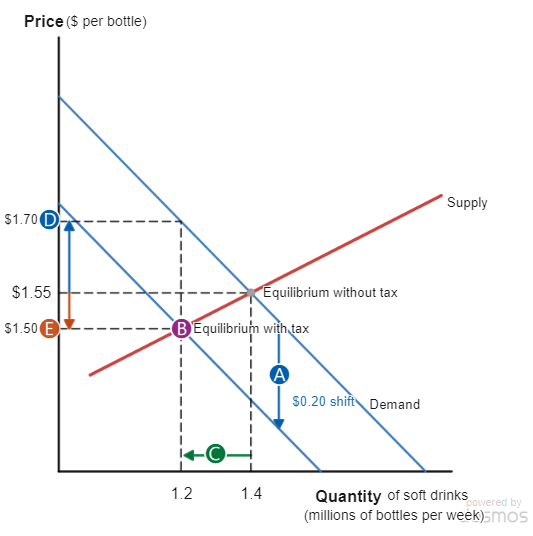 → Tax leads to a decline in the quantity sold
→ The price declines because due to increase in price due to tax, less people want to buy and they have a surplus, therefore they need to lower the price
Tax incidents: The division of the economic burden of a tax between buyers and sellers
What happens when sellers are taxed instead?
supply curves shift up the amount that the sellers are taxed. Since they are being taxed instead the marginal cost to make the product also increases
Equilibrium occurs when the new supply curve meets the demand curve
The quantity decreases
The price Buyers pay after tax rises by (amount with tax) - (amount without tax)
The price sellers recieve after taxes falls by (the lowered price without tax) - (The amount without tax)
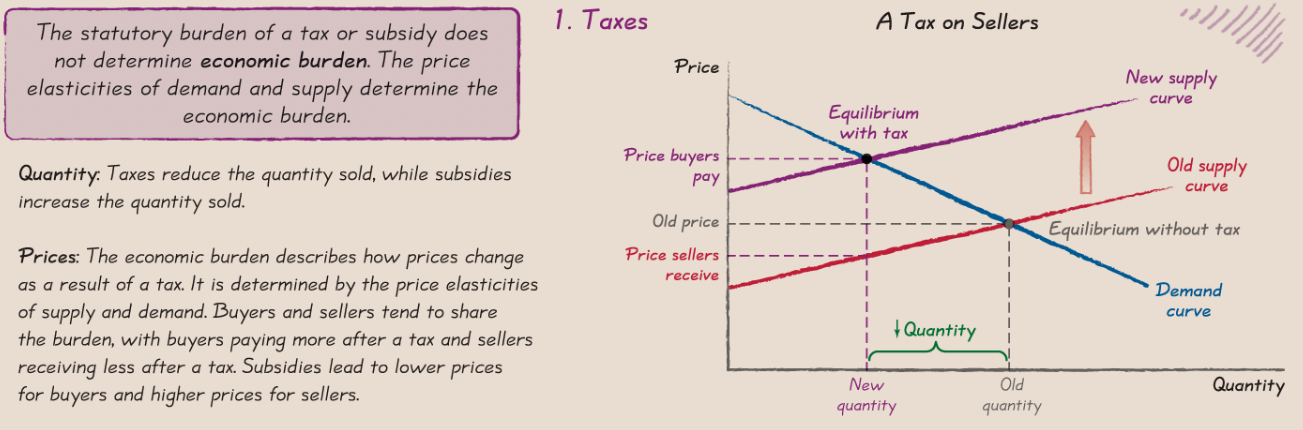 → The tax leads to a decline in the quantity sold
→ It doesn’t matter if the buyer pays the tax of the seller does, the outcome is the same
→ Sellers bear a smaller share of the economic burden when the supply is relatively elastic
_> The more elastic, the smaller the share of economic burden
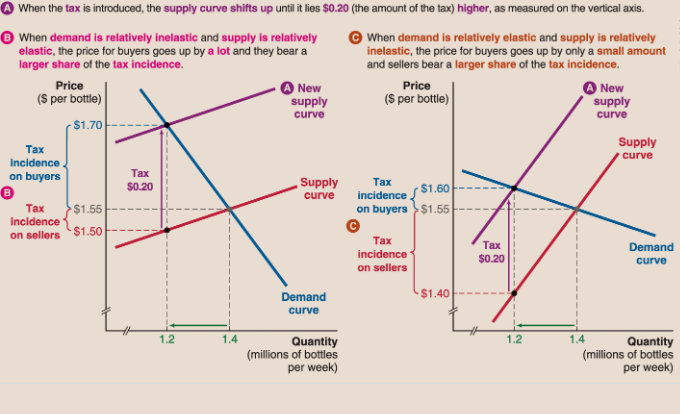 → Buyers bear a smaller share of the economic burden when demand is relatively elastic
Four-Step Recipe for Evaluating Taxes
Is the supply or demand curve shifting (Buyers = demand) (sellers = supply)
Increase in taxes( & marginal costs)/decrease in marginal benifits = shifting to the left, and decrease in taxes/increase in marginal benifits = shifting to the right
How do prices and quantity change the new equilibrium
If price elasticity of demand > price elasticity of supply then buyers bear smaller share of economic burden and vise-versa
Subsidy: A payment made by the government to those who make a specific choice (like a negative tax)
The effects of subsidizing:
subsidy shifts the demand curve to the right until it lies on the amount subsidized
Equilibrium happens when the point where the new demand curve meets the supply curve
Sellers recieve (New equilibrium price) - (standard price)
Parents now recieve the amount listed when you find the price listed when the you meet the original demand curve vertically alingned with the new equilibrium spot
→ The price elasticity between buyers and sellers determines the distribution of the subsidy between buyers and sellers
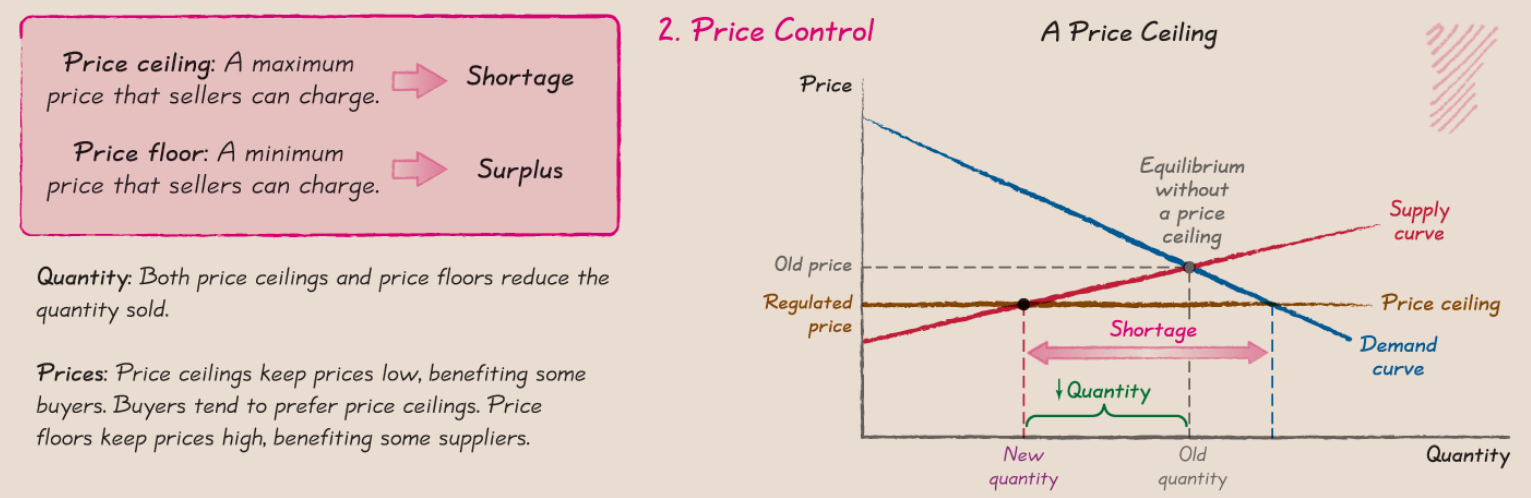
Price ceiling (shortage): The government sets a maximum price (pharmaceutical medicine)
→ they lower prices but cause shortages
Binding price ceilings: price ceiling that prevents the market from reaching the market equilibrium price (the highest price sellers can charge is below the equilibrium price)
Effects of price ceilings:
(Max quantity at price celling line) - (Min quantity at price celling line) = the amount of shortages in quantity
Price floor (surplus): The government sets the minimum price (minimum wage)
Binding price floor: A price floor that prevents the market from reaching the equilibrium price, meaning that the lowest price that sellers can charge is above the equilibrium price
Effects of price floor:
(Max quantity at price floor line) - (Min quantity at price floor line) = the amount of surplus in quantity
sellers will recieve a higher price and buyers will pay a high price
FOR TAX → suppliers sell less and the price they keep after taxes is lower
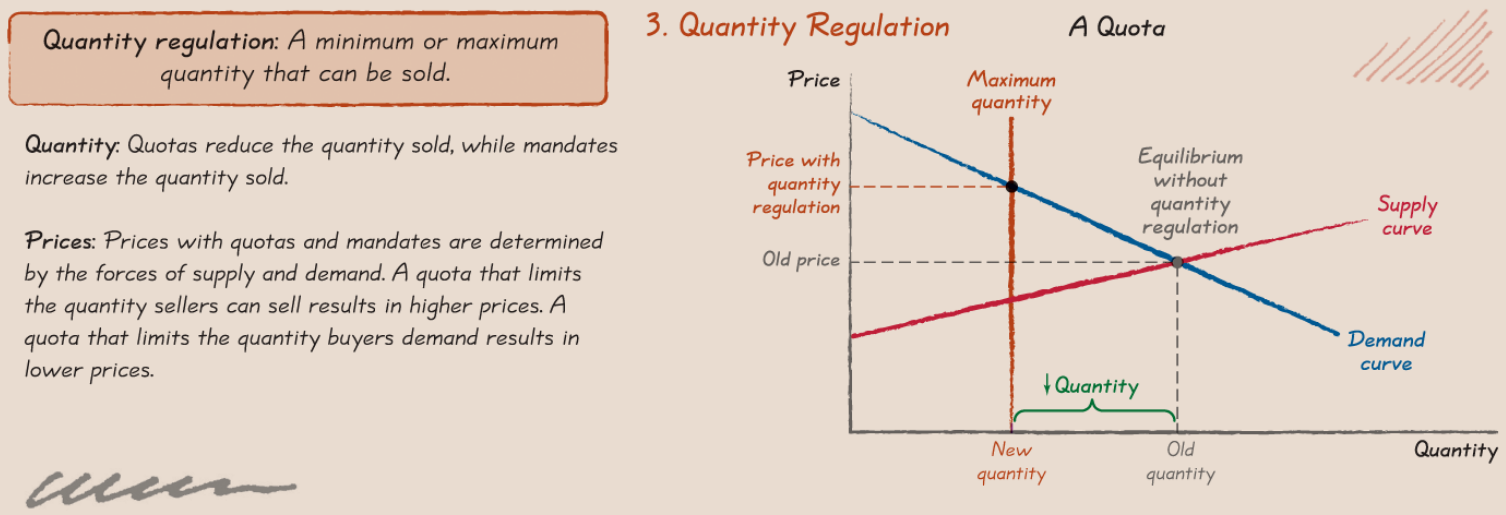
 Quotas: limit on the maximum quantity of goods that can be sold
Effects of Quotas:
they impose a max amount of a good
Suppliers are willing to sell quantity if the price is atleast the min equilibrium price at the max quantity
Buyers are willing to pay up to the max equilibrium price at the max quantity
if the quantity regulation is imposed on sellers then the competition among buyer will puh the price up to the max equilibrium price
Quantity regulation: max or min quantity that can be sold
 Mandate: Buy or sell a minimum amount of good
→ taxes raise the after-tax price for buyers while lowering the price sellers receive because they also raise revenue for the government to fund public services
Taxes, price controls, and quantity regulations can all achieve the same policy objective:
These 3 types of government intervention can achieve the same quantity reduction. The new quantity is the same across all three types. Distributional consenquances across buyers and sellers deffer.