1.6 Discharge
Discharge or stream flow - the amound of water flowing through a channel (known as runoff as well)
water flows perpendicular to a cross section (cross section is below)
the colors indicate the flow velocity
lowest near the bed and banks because there its slowed down by friction
highest in the middle of the surface - furthest away from the bed and banks you can get
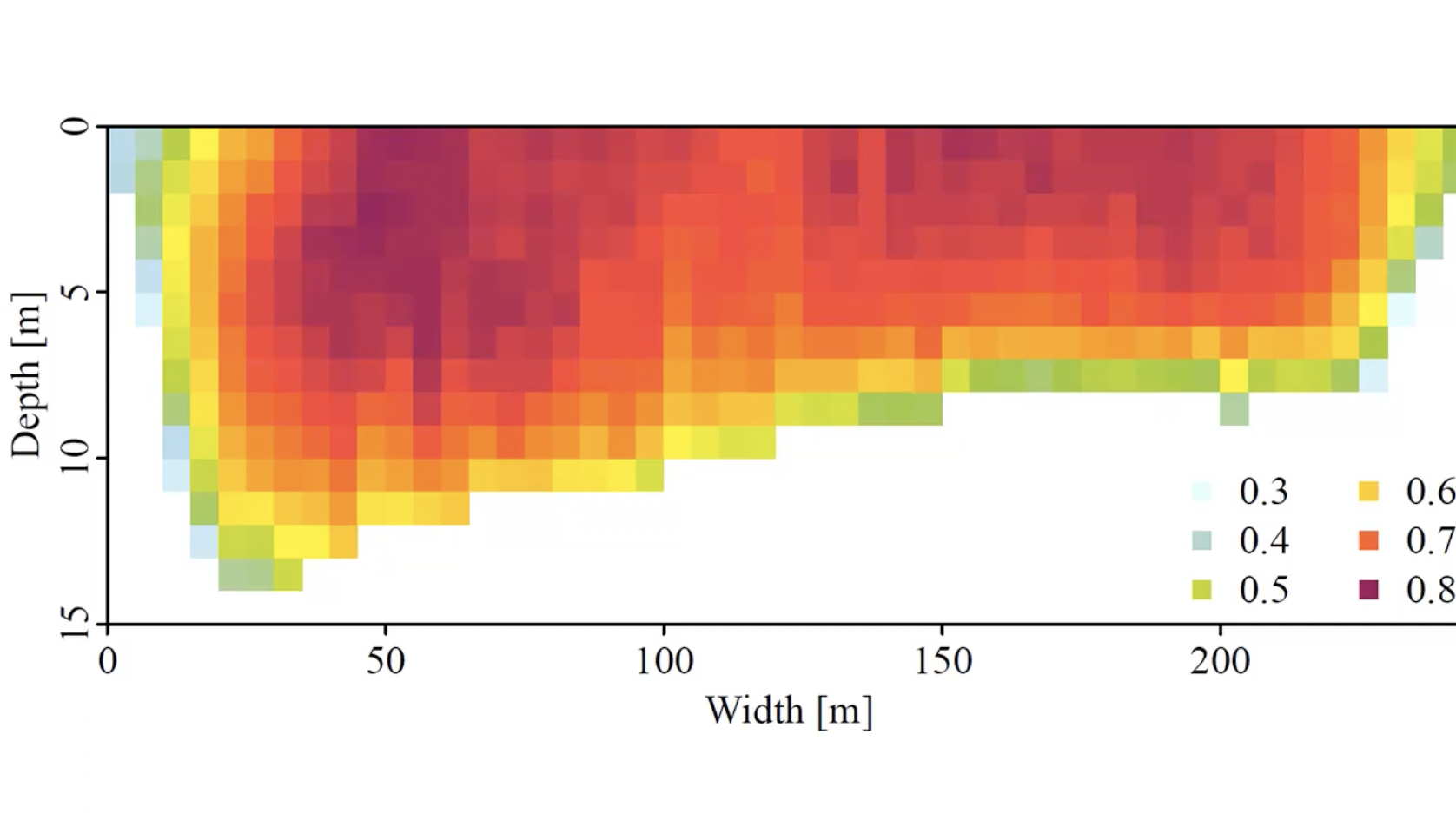
flow velocity - measured in meteres per second
discharge (in cubic meters/second) = flow velocity (average velocity in meters/s) x cross sectional area ( squared meters)
volume of water that passes this cross seciton in a certain amount of time
what happens when there is an obstruction and water slows down:
the discharge is determined by the catchment drainage (how much water flows into the channel)
if the discharge remains the same and velcotiy decreeases - the cross sectional area increases
the bed and banks are fixed - the cross sectional area has to rise
factors that determine how fast water flows
Chezy equation - steady uniform flow * discharge does not change in time and space
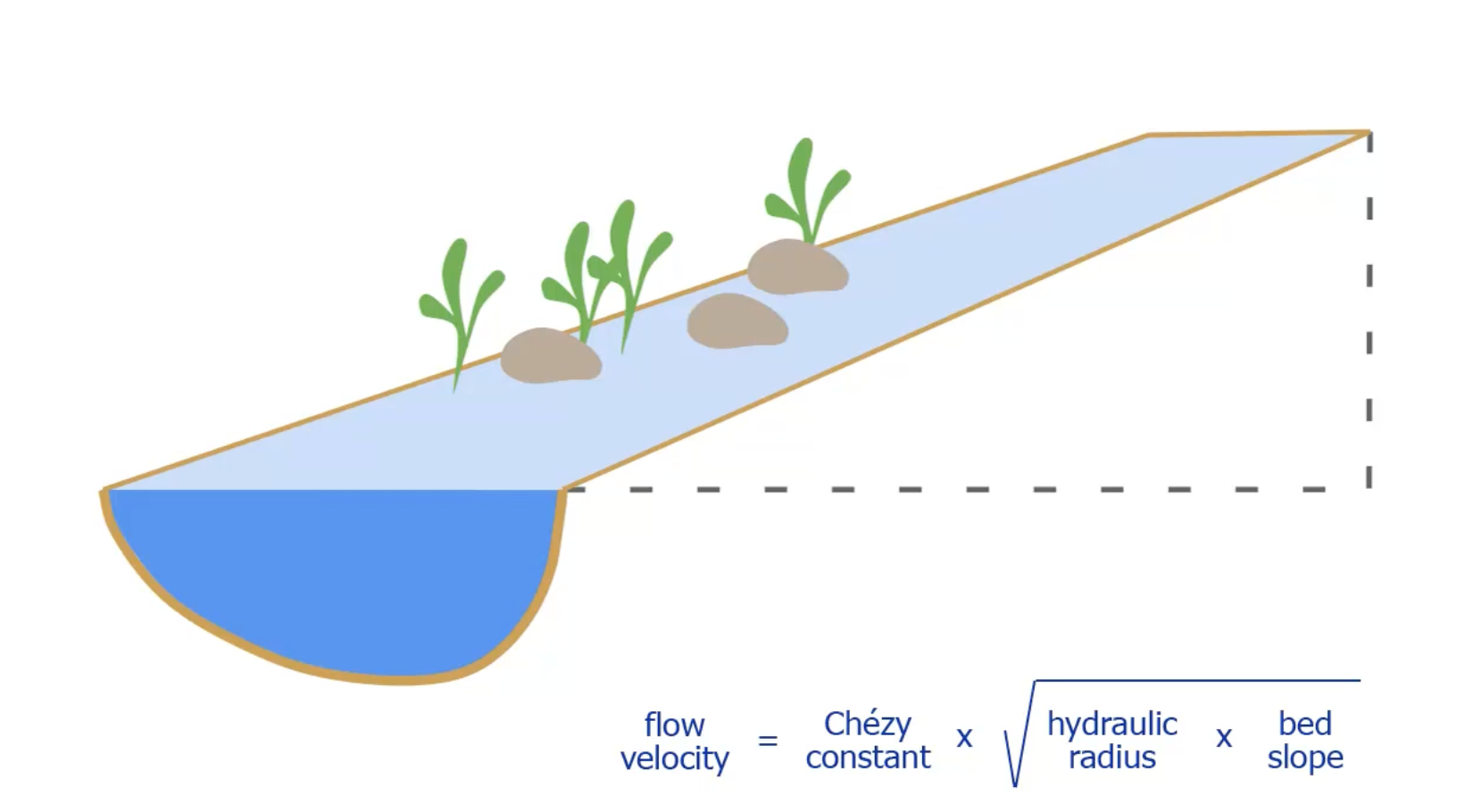
used as an approx in other situations as well
chezy’s constant - the smoothness of the bed and banks
whne there are large boulders or lots of aquatic vegetation - chezy’s constant is small and the flow velocity is small as well
the hydraulic radius = cross -sectional area/ wetted perimeter
wetted perimeter is the part of the circumference that touches the banks and bed ( where friction is encountered)
do not count the part of the water surface (as air does not slow the water down)
if the hydraulic radius is big then the average distance from a point in the cross section to the bed and banks is large
the friction of the vegetation and boulders has less effect and the flow velocity is higher
the flow velcoity is higher
the slope of the channel bed = the elevation drop/ horizontal distance
how much the bed drops over a certain horizontal distace
the slope of the water table - parallel to the channel bed
when the slope of the channel bed is steep - water flows fast beacuse gravity
helps to predict hte effect of measures
when a straightened channel is being remandered - the slope decreases beacuse the elevation drop remains the same and the length increase
the flow velcoity and the discharge capacity will decrease
discharge = velcoity x cross sectional area
estimate the discharge capatiy of a channel - how much a channel can transport before it overflows
can do it with a propeller current meter or other instruments
meaursing water elevesl is easier than measuring flow velocities
the measurment of water levels is done through a stilling well - a vertical tube connected to the surface water which dapens out the waves
inside the stilling well there is a device recording the water level continuously