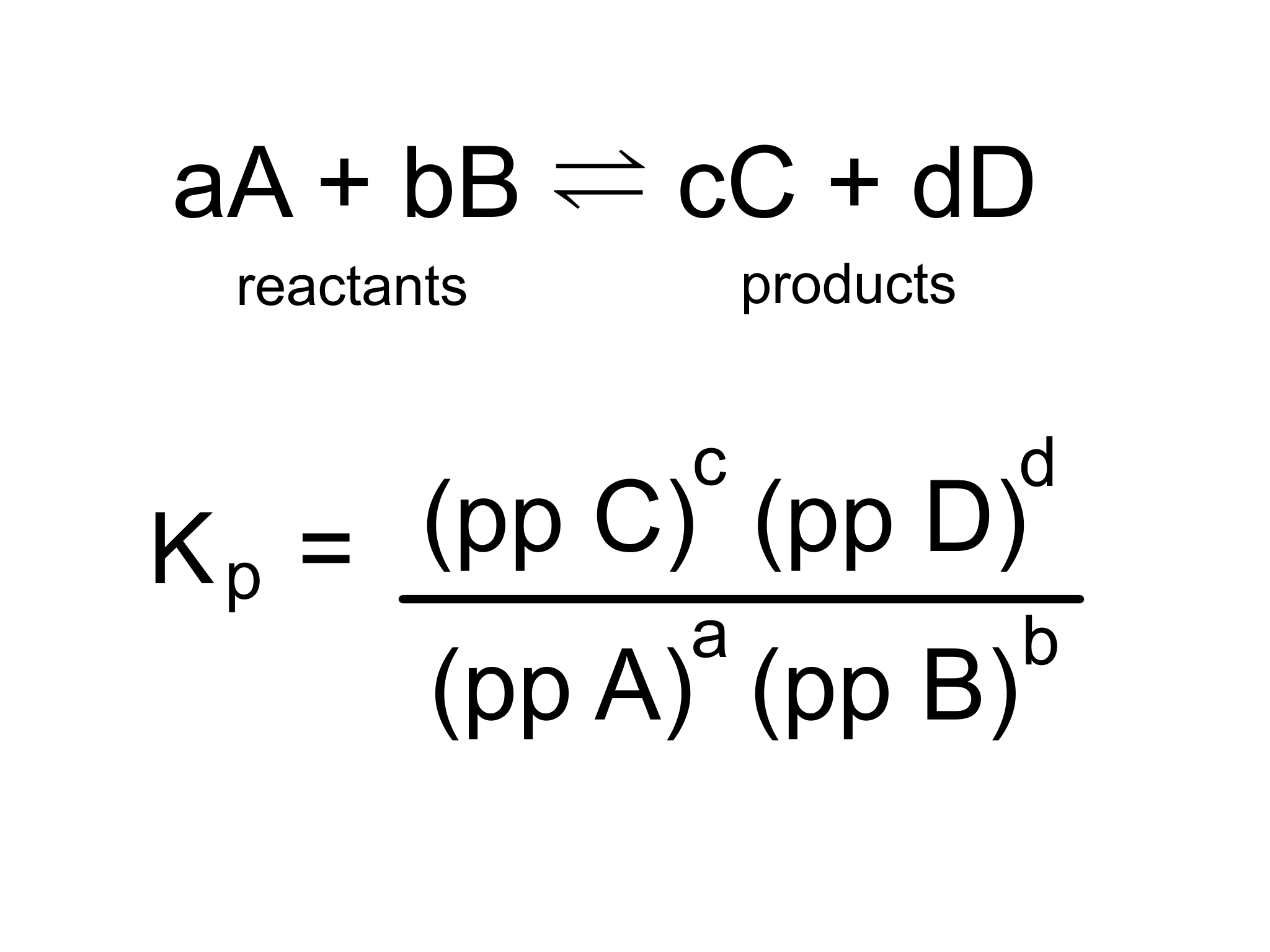
1.10 Kp for homogeneous systems
homogeneous equilibrium = reactants and products are in the same phase/state
heterogeneous equilibrium = reactants and products are in different phases/states
Kp is the equilibrium constant for a reversible reaction occuring in the gas phase at a constant temperature
gaseous homoegeneous equilibrium
Kp is greater than 1 = equilibrium lies towards the products
Kp is equal to 1 = equilibrium lies in the centre
Kp is less than 1 = equilibrium lies towards the reactants
Kp is only affected by changes in temperature
the equilibrium position change due to temperature change leads to different concentrations of reactants and products
changes in pressure shift the position of equilibrium to a new position that restores Kp so same Kp value
use of catalyst only causes reaction to reach equilibrium faster, but does not change value of Kp
the exact same reaction can have a different Kp value if a different temperature is used
(pp A) = partial pressure of A in kPa, must not use square brackets
ICE table to find equilibrium moles
mole fraction of A
= (equilibrium moles of A) / (total equilibrium moles in the system)
partial pressure of A in mixture
= (mole fraction of A) x (total pressure of the system)