Chapter 12: Water and Major Minerals
Water
WATER & BODILY FLUIDS
water → majority of body weight
influences body composition
females, obese, elderly have less water
children have more water
CELLULAR FLUIDS
intracellular fluid
extracellular fluid
interstitial & intravascular fluid
WATER FUNCTIONS
carries nutrients and waste
maintains structure of large molecules
participates in metabolic reactions
solvent
lubricant and cushion
aids in regulating body temp.
maintains blood volume
ACID-BASE BALANCE
3 systems defending body against fluctuating pH:
bicarbonate (base) and carbonic acid (acid) → buffers in blood
carbon dioxide → respiration in lungs
reabsorption or excretion of bicarbonate in kidneys
WATER INTAKE
thirst and satiety
mouth, hypothalamus, and nerves sense changes
thirst response lags behind body’s need for water
dehydration symptoms
water intoxication
symptoms → confusion, convulsion, death
caused by drinking 10-20 liters within few hours
WATER SOURCES
provides 1/3 total water intake in U.S.
beverages
food
metabolic water
generated during metabolism → oxidation of energy-yielding nutrients
WATER LOSSES
obligatory water excretion each day as urine
minimum 500 mL to carry away waster
vapor from lungs
sweat from skin
loss in feces
daily losses total 2500 mL average
RECOMMENDED WATER INTAKE
needs vary
AI (adequate intake) for total water:
2-3 L (8-12 cups) per day
1mL/kCal
health effects
physical and mental performance
proper functioning kidneys, heart, GI tract, etc.
ELECTRYLYTE BALANCE
electrolytes attract water
extracellular electrolytes → sodium, chloride, and calcium
intracellular electrolytes → potassium, magnesium, phosphate, and sulfate
Minerals
OVERVIEW
major vs. trace minerals → variation in amounts needed
inorganic elements
always retain chemical identity
cannot be destroyed by heat, air, acid, or mixing
SODIUM
roles in body:
principle cation of extracellular fluid
primary regulator of extracellular fluid volume
acid-base balance
sodium travels freely in the blood (without carrier)
kidneys filter out and return what is needed (depends on concentration of sodium in body)
SODIUM ROCOMMENDATIONS
diet rarely lack sodium
UL for adults
average intake in US exceeds UL
average intake → 3400mg
hypertension (HTN)
high sodium intake is primary cause of HTN
DASH diet → recommended diet for HTN patients
CHLORIDE
essential nutrient
roles in the body
major anion of extracellular fluids
moves passively across membranes
associates with sodium and potassium
helps maintain fluid and electrolyte balance
part of hydrochloric (HCI)
stomach acid
CHLORIDE INTAKE
abundant in processed foods
recommendations slightly higher, but still equivalent to those of sodium
deficiency and toxicity
diets rarely lack chloride
conditions leading to deficiency
toxicity due to water deficiency
POTASSIUM
principal intracellular cation
roles in the body
helps maintain fluid and electrolyte balance
aids in nerve impulse transmission and muscle contraction
POTASSIUM INTAKES
fresh foods are richest sources
Al for potassium → 4700mg/day
increase fruit and vegetable consumption
hypertension → diets low in potassium raise blood pressure
potassium toxicity → no UL
overconsumption of potassium salts or supplement (includes “energy fitness shakes”)
muscular weakness → vomiting if given into a vein, can stop heart
POTASSIUM & HTN
diets low in potassium, combined with high sodium intakes, raise blood pressure
high potassium intakes, combined with low sodium intakes, may prevent and correct hypertension
POTASSIUM FOOD SOURCES
squash and acorn
artichoke
broccoli, carrots, strawberry’s
CALCIUM
most abundant mineral in body
adequate intake:
grows healthy skeleton in early life
minimize bone loss in later life
majority of body’s calcium in bones & teeth
roles → bone structure and calcium bank
CALCIUM RECOMMENDATIONS
hormones maintain blood concentration regardless of dietary intake
when intake low, calcium resorption from bones increased
recommendations set high enough to accommodate 30% average absorption rate
1300mg per day for adolescents
1000mg per day for adults up to age 50
1200mg per day for women 50+ and everyone 70+
CALCIUM DEFICIENCY
bone mass peaks by late 20s
all adults lose bone mass with age
begins between 30-40 years old
osteopenia → lower-than-normal bone mineral density (BMD) before threshold of osteoporosis
osteoporosis → silent disease, structural deterioration of bone tissue (not detected in blood samples)
PHOSPHORUS
2nd most abundant mineral
hydroxyapatite crystals of bone and teeth
roles in body:
major part of buffer system
part of DNA & RNA
assisters in energy metabolism
helps transport lipids in blood
structural component of cell membrans
PHOSPHORUS INTAKES
deficiencies & toxicity unlikely
best sources → protein-rich foods
UL = 4000mg
PHOSPHORUS FOOD SOURCES
diary → milk, yogurt, cottage cheese
liver
tofu
MAGNESIUM
more than half in bones
reservoir to ensure normal blood concentrations
roles:
maintains bone health
energy metabolism and ATP production
inhibits muscle contraction and blood clotting (blood pressure)
supports normal function of immune system
MAGNESIUM INTAKES
sources → legumes, seeds, nuts, leafy greens
average U.S. intake below recommendations
exacerbate inflammation and chronic diseases
deficiency rarely occurs
deficiency impairs central nervous system activity
protective against hypertension
hard water contributions
UL applies to non-food sources
MAGNESIUM FOOD SOURCES
halibut
cashews
artichoke
SULFATE
sources → amino acids methionine and cysteine
food and beverages
no recommended intake → with normal protein intake
Osteoporosis & Calcium
INTRODUCTION
osteoporosis apparent later in life
develops much earlier, without symptoms
prevalent disease in the US ~53 million in US
hip fractures common symptom
~300,000 hospitalizations per year
hip replacement, death from complications
loss of independence
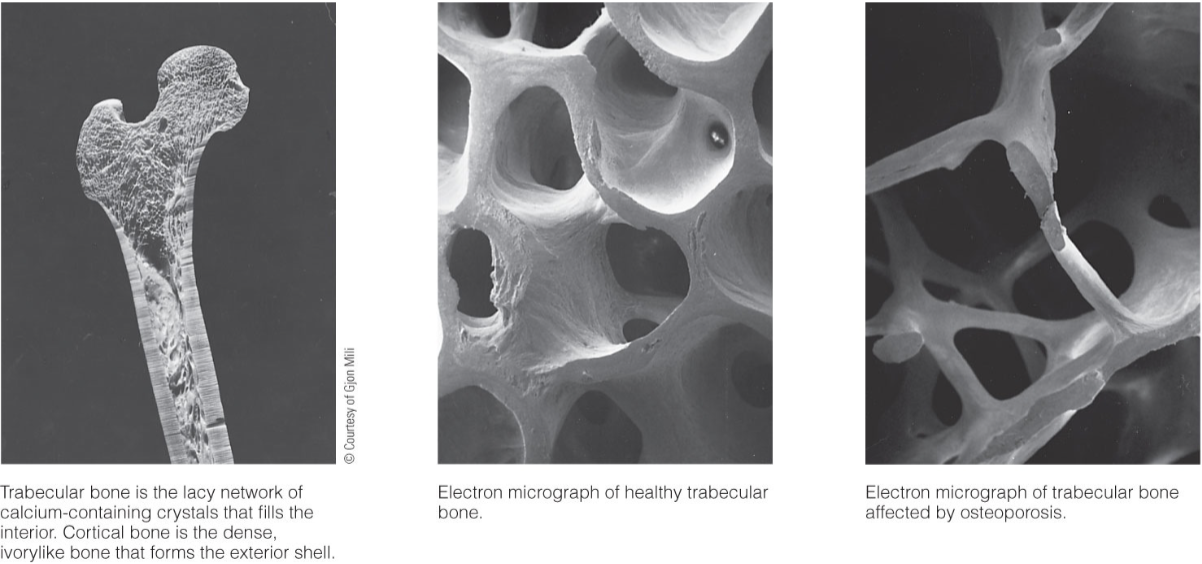
HEALTHY & OSTEOPOROTIC TRABECULAR BONE
cortical bone
hard outer shell
give up calcium to blood
slow and steady rate of remodeling (bone turnover)
trabecular bone
lacy matrix
gives up calcium when diet runs short
sensitive to hormones controlling day-to-day calcium needs
adequate intake → blood calcium normal → bone deposits calcium → strong dense bones
RISK FACTORS FOR OSTEOPOROSIS
non-modifiable:
female gender
older age (50+ years)
small frame
caucasian, asian, hispanic heritage
family history
history of fractures
estrogen deficiency in women
modifiable:
sedentary lifestyle
diet inadequate in calcium & vitamin D
diet excessive in protein, sodium, caffeine
cigarette smoking
alcohol abuse
low body weight
medications (e.g. glucocorticoids, aluminum-containing antacids, anti-seizure drugs)
DIETARY NUTRIENTS
calcium → adequate intake during growing years (recommended levels)
adequate protein
vitamins D, K, C, and A
Omega-3 fatty acids
overall diet adequacy
iron inhibits calcium absorption
diets high in soda, salt, and processed foods associated with low bone density