Changes in the AD/AS Model in the Short-Run
Shifts in AD: consumption, investment, government spending, and net exports
AD shocks
When you have a positive AD shock, there is an increase in price level and output, or real GDP (this can be inferred as a decrease in unemployment, as well).
a negative demand shock would be caused by a decrease in any of the shifts of AD. Price level, output (real GDP), and employment fall
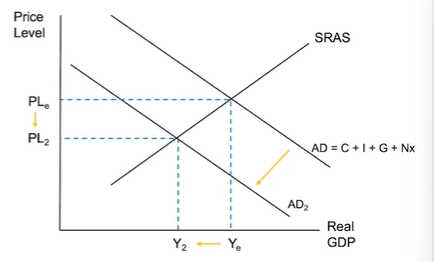
Shifters of SRAS
Input prices (resources)
Wages
inflationary expectations
technology
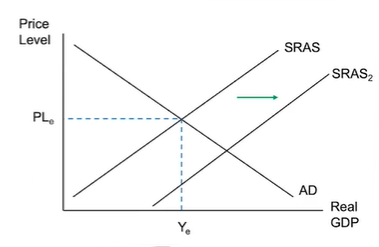
Positive shocks to SRAS
leads to an increase in the SRAS curve, which shifts to the right.
Price level decreases, and output increases
.
Negative shocks to SRAS
An increase in any of the aforementioned shifters, besides technology.
Demand-Pull inflation
caused by an increase in AD
Cost-Push inflation
Caused by a decrease in SRAS (increases in resource cost, wages, reduction in tech)
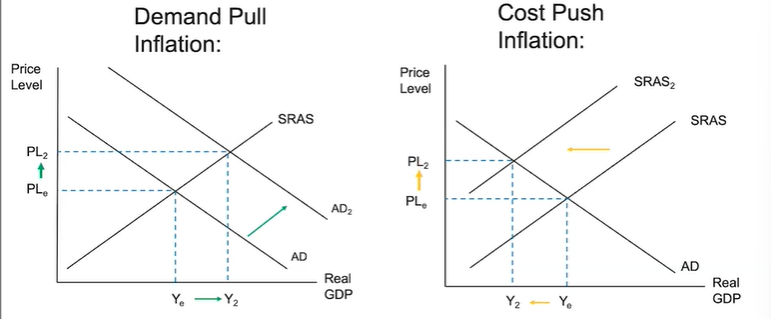
The cost push inflation graph is stagflation, and is really bad because it leads to a situation where the economy experiences stagnant growth combined with high inflation, resulting in decreased purchasing power and increased unemployment.