Manual Lab 1 Notes
Levels of Organization - Review
Atoms
Molecules
Macromolecules
Organelles
Cell
Tissue
Organ
System
Organism
The Cell
Basic unit of structure and function of the body
Highly organized molecular factories
Great diversity
Organ physiology derived from complex functions of the cell.
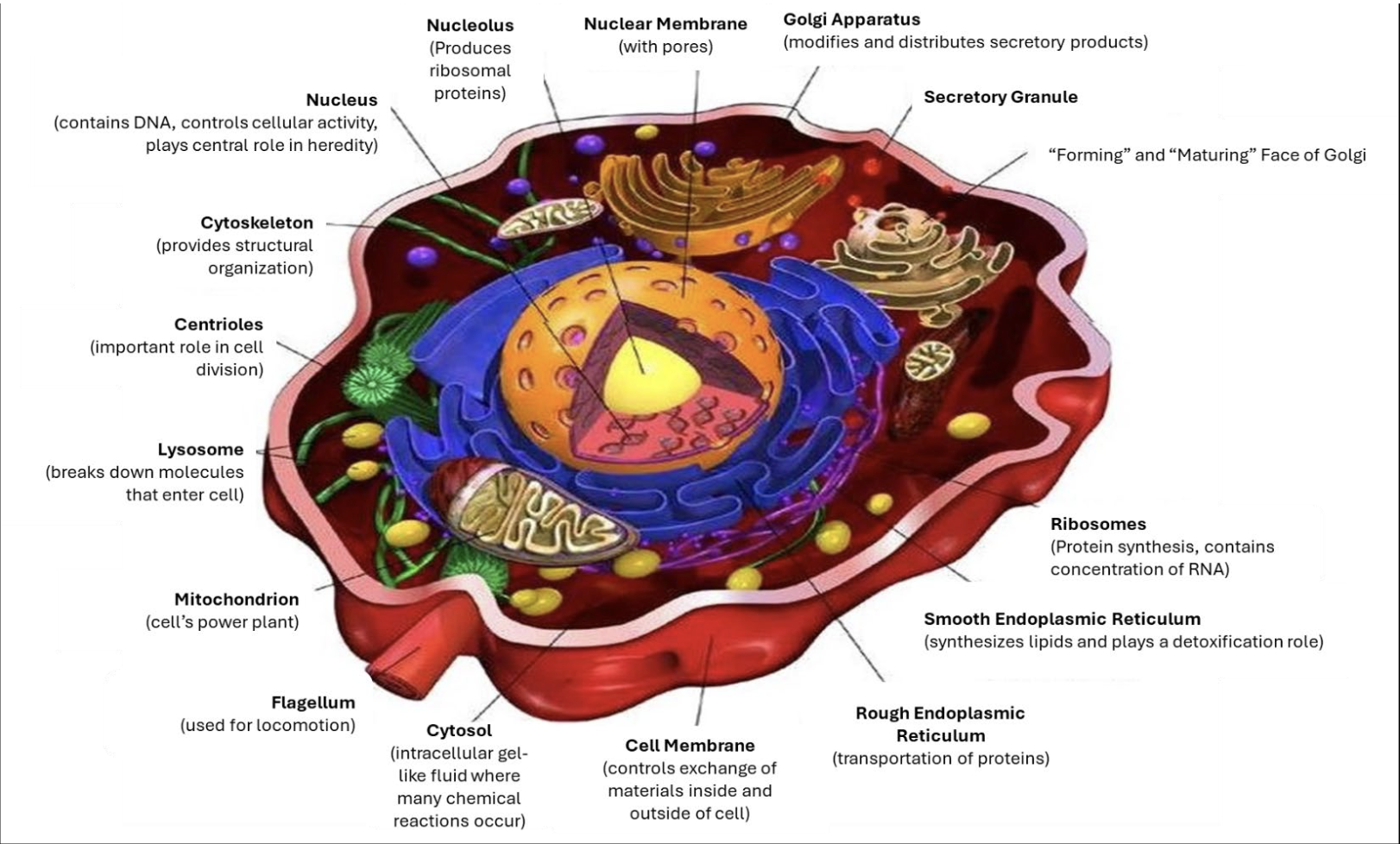
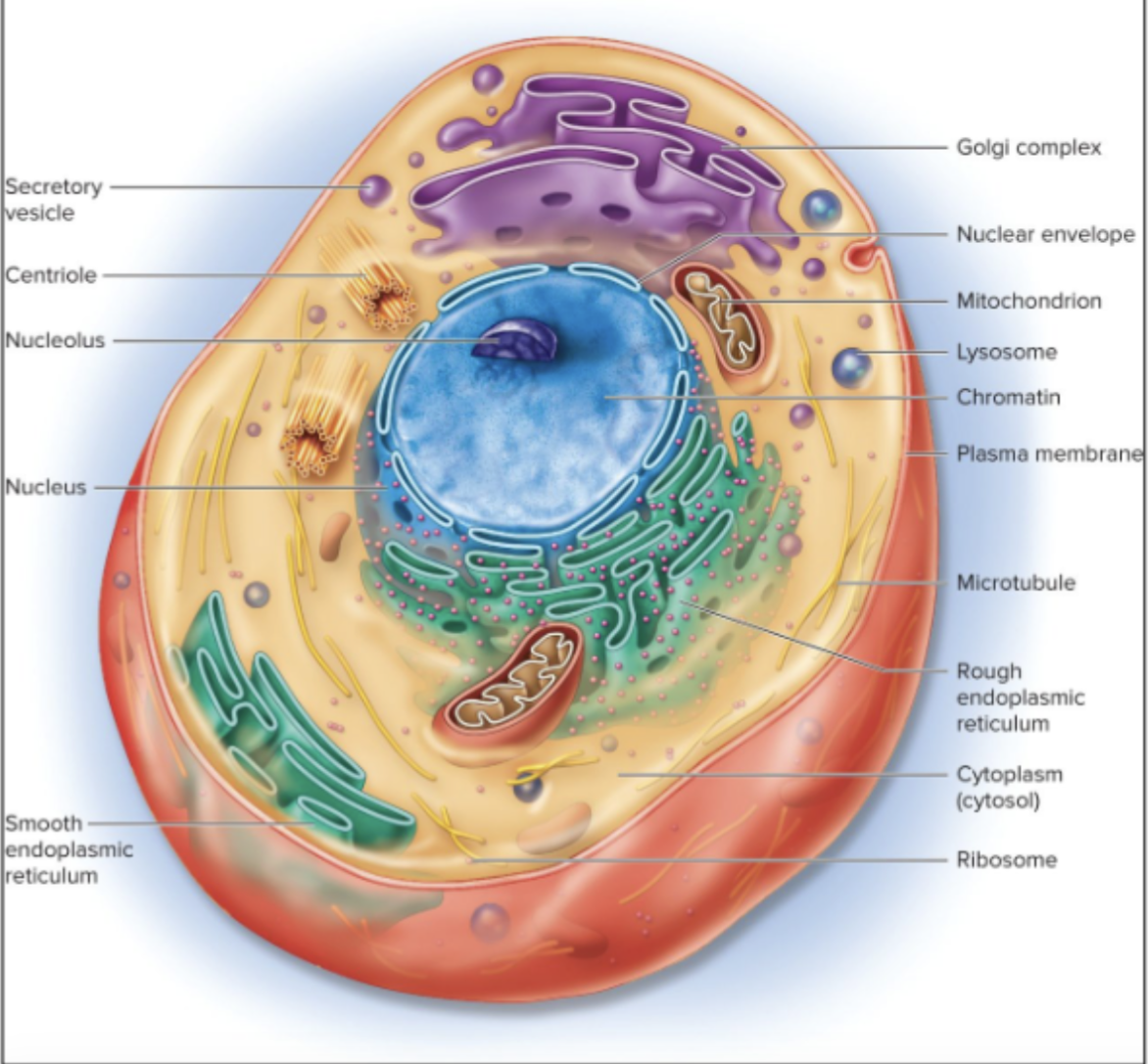
Hint hint, image like this
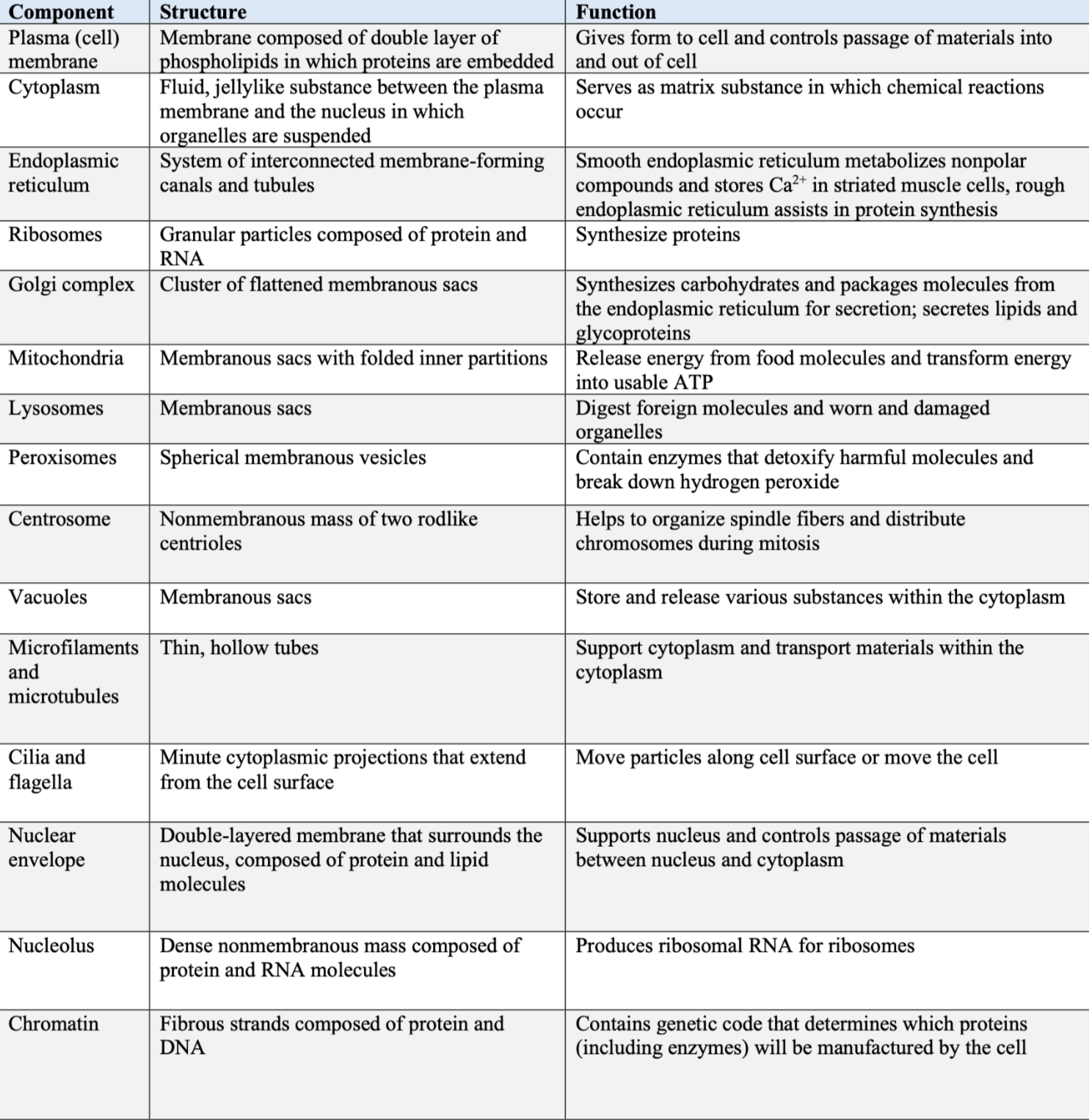
THREE principle parts of the cell
Cell (plasma) Membrane
Gives it form
Is selectively permeable
Separates cell’s internal structures from the extracellular fluid (ECF)
Participates in cellular communication
Cytoplasm
Watery content of the Cell
Chemistry Overview
Why is Chemistry important for learning physiology
Read:
Chemistry Overview
Textbook Chemistry Review
Homeostasis
Homeostasis is the constancy of internal environment
The main purpose of our physiological mechanisms is to maintain homeostasis.
This involves regulating variables such as temperature, pH, and electrolyte levels to ensure optimal functioning of cells and systems within the body.
Is often accomplished by negative feedback loops.