Chapter 3 Speaking with Confidence
Understanding Communication Apprehension
Defining Communication Apprehension
the first step in learning to deal with it
understand what it is and how it may affect & undermine your effectiveness as a speaker and citizen
Those experiencing high communication apprehension may perform less effectively in the classroom, on the job, and in the community
Most of us may not be affected by severe communication apprehension
we are all apt to suffer from it to some degree
Communication apprehension - Feelings of anxiety a speaker may experience before or during a public presentation
an individual’s level of fear or anxiety associated with either real or anticipated communication with another person or persons
not limited to acting or traditional public speaking
may extend anxiety about speaking up in meetings and other smaller, less public communication contexts
NOT the same as shyness
Communication apprehension is associated with these negative outcomes
avoiding interaction
learn less
earning lower grades
sitting in the back of the class so the lecturer won’t call on them
less likely to seek the assistance of tutors when they need help
performing less effectively in job interviews
less likely to be hired
problems with academic performance
reporting less job satisfactions
less likely to be selected as friends or turned to as opinion leaders
barriers to personal success
barriers to professional success
can rob you of your voice as a citizen
Factors that Contribute to Communication Apprehension
Describe underlying factors that contribute to communication apprehension
Most speakers who have experienced communication apprehension would prefer to feel more confident when they speak.
They don’t understand what is is they fear or why they feel anxious in some situations but can maintain calm, confidence, and composure in others
Understanding the Underlying causes of communication allow us to combat it effectively
Poor Preparation
ideas are poorly documented
thoughts disorganized
ill-prepared
failed to practice delivering speech aloud from their notes
These inhibitions are easily addressed by
stay relaxed
breath deeply
be careful about what you eat
don’t eat anything that could make you nauseous
start practicing the speech early
Trait Anxiety
Trait Anxiety - Internal anxiety that an individual brings to the speaking situation; not dependent on the specific situation
some speakers suffer from this affliction
they are generally apprehensive whenever they are called upon to speak
Hearts race
refuse requests to speak
do all they can to avoid speaking in public
even informal speeches make them nervous
speaking anxieties no matter the context, topic, or audience
State Anxiety
State Anxiety - Anxiety caused by worrisome factors in a specific speaking situation
may find a particular audience or speech setting as threatening
when faced with a larger audience than usual a typically calm speaker may become anxious
speaker may become anxious when asked to speak to an audience of important people or people who have higher status than the speaker
If there are high stakes the speaker may be anxious
Self-Expectations
some have unrealistic self-expectations
hoping for perfection
If they make the slightest mistake they feel like a failure
their own harshest critics
some may have extremely low self-expectations
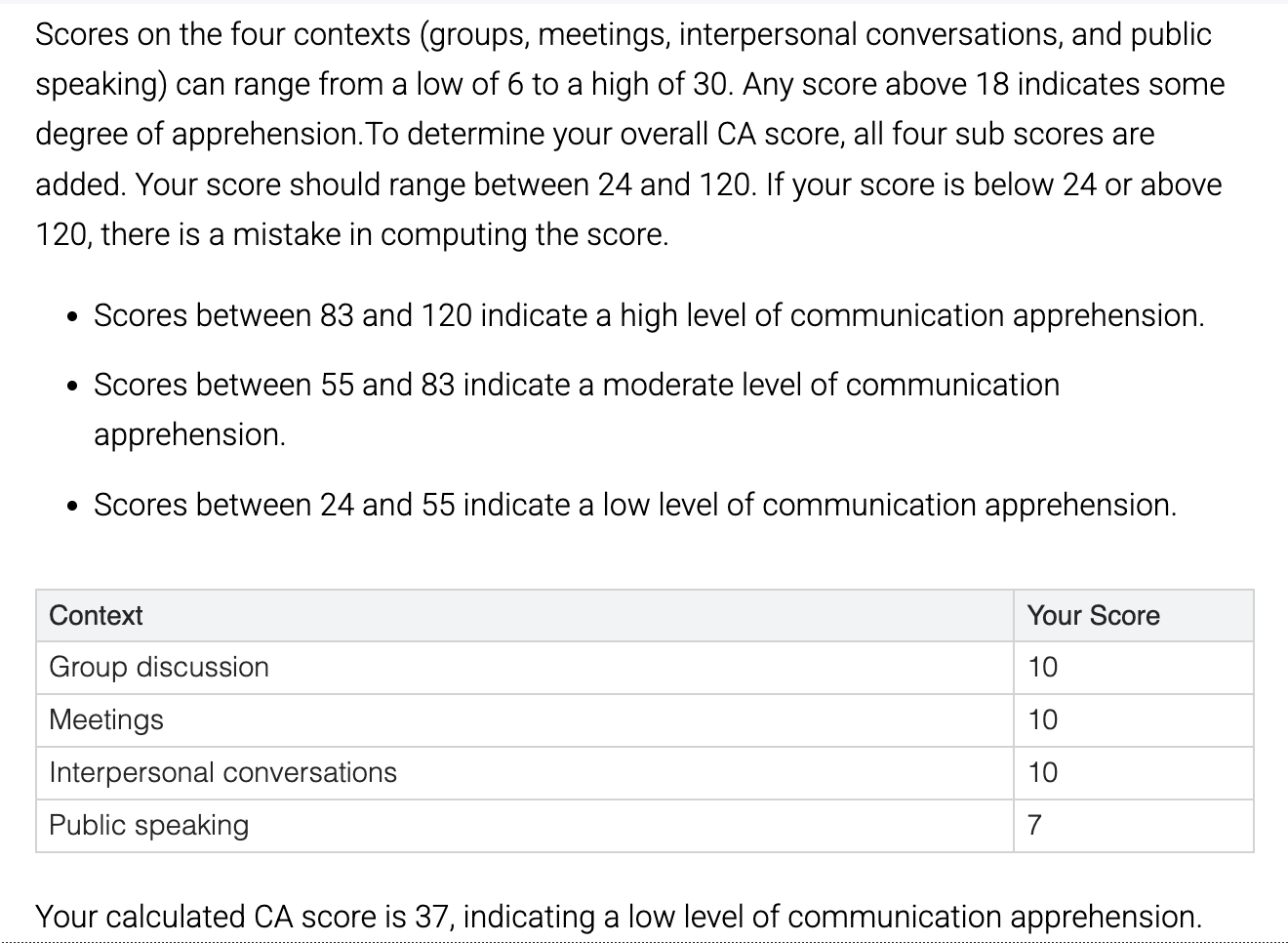
Personal Report of Communication Apprehension (PCRA-24)
Fear of Evaluation
basically fear of being perceived poorly
don’t want to be judged harshly
Fearing that Listeners Perceive Apprehension
fear listeners know that you know you’re nervous and it’s obvious
Fear of Failure
may feel isolated or fear of failure
can be perceived as confident while in actuality feeling extremely panicked
Assume confident speakers are more affective
although outstanding public speakers often suffer from communication apprehension
Feeling anxious about speaking does not necessarily lead to failure
Overreacting to the Body’s Physiological Responses
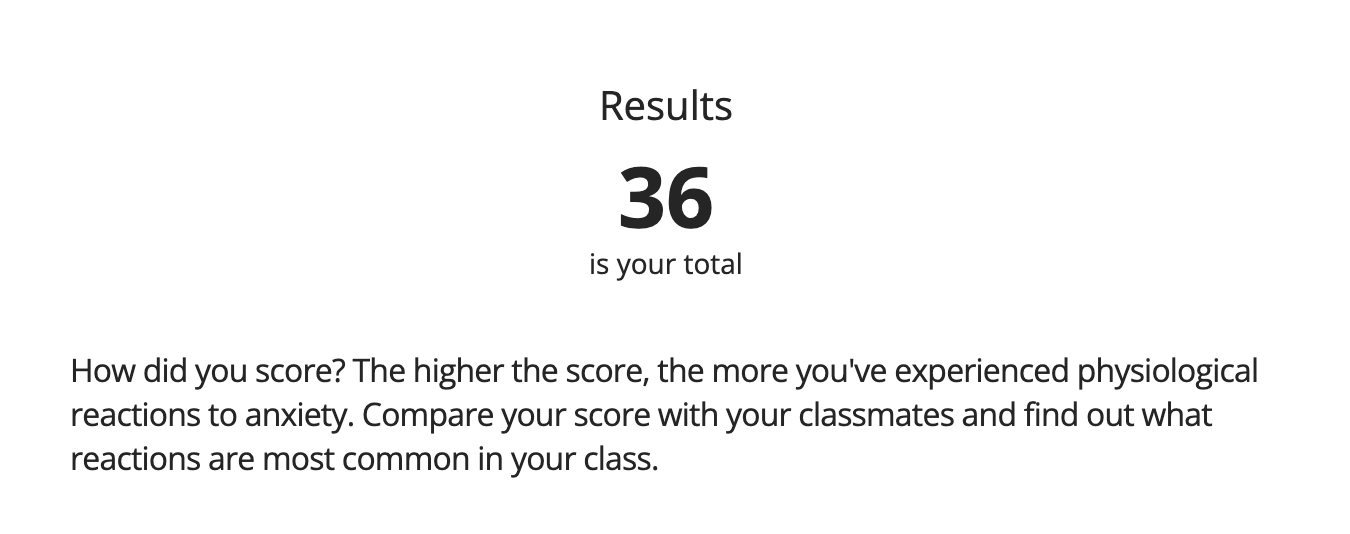
when faced with apprehension, the speaker may face adverse physiological reactions
trembling hands
dry mouths
Overreacting to these physical symptoms at the start of your speech can aggravate your anxiety
most symptoms subside after the first few seconds
Most people face only mild to moderate communication apprehension
for some it’s severe and they may avoid speaking at all
Managing Communication Apprehension
Employ strategies for managing communication apprehension while preparing yourself to speak
there’s a bunch of strategies used by people from all walks of life
prepare thoroughly
firmly believe in what you plan on saying
addressing substantive issues to which you are committed and being well prepared
Address Issues to Which You Are Committed
genuine commitment to your topic can help you overcome the anxiety you may have about speaking in public
Be Well Prepared
combat communication apprehension by being able to tell yourself you’re well prepared
Select a topic of interest and value to you and your audience
devote significant time and effort to gathering information and to broadening your understanding of the subject
Carefully organize your speech into a clear, coherent, and unified whole
Practice your speech over and over again
Have feedback
Feedback - Constructive criticism, comments, and other helpful information about your speech given to you by your instructor, your peers, or other members of your audience.
remind yourself of your careful preparation
this can be reassuring and potentially liberating as you grapple with your anxiety
your audience will sense that you have worked hard
If you meet your responsibilities as a speaker, your audience will do their responsibility as listeners
reduce anxiety by addressing topics that genuinely concern you
Develop a Positive Attitude
visualize your successful speech
positive thoughts reduce anxiety
anxious people have negative thoughts
NOFREAKINGDUH OFC PEOPLE WHO HAVE ANXIETY HAVE A NEGATIVE THOUGHT LOOP THATS THE WHOLE THING WITH ANXIETY
Practice Your Speech
practice over the period of a few days
Practice early and often
You’ll learn what works best for you with experience
Anticipate the Speech Situation
Effective speakers know their audiences
Gathering information about your audience and the speaking situation before you speak helps you focus on the audience right from the start
Try to scout as much information about your audience
Don’t make assumptions about the audience’s knowledge by overestimating or underestimating what they know
Don’t get lost or get there late
don’t ignore time limits or constraints
don’t violate listener norms or expectations
Practice Active Listening
Active listening is a powerful tool for managing communication apprehension
more thank likely your speech is part of a longer program, meeting, banquet, and may be part of a long list of back to back speakers
Listening to the speakers that precede you
focus on the importance of the issue and relax a bit as you prepare to share your own speech
Exercise for Relaxation
do some simple physical exercises to relax
Deep breathing - Expanding the diaphragm to increase one’s intake of air to assist with relaxation and enhance vocal delivery
breathe deeply before you speak and continue breathing deeply and regularly while delivering your speech for better vocal support and ongoing relaxation
Isometric exercise - Tensing a muscle and holding it for a short time, followed by complete relaxation of the muscle
one useful relaxation method is isometric exercise
Aerobic exercise - Physical activity that increases one’s heart rate and respiration and, as a result, lessens tension
another relaxation method is aerobic exercise
Acknowledge the Potential Benefits of Moderate Communication Apprehension
experienced speakers find ways to channel their nervous energy in positive directions
they’re able to do this because of techniques they’ve developed for themselves
meditation
prayer
two-mile run
quiet walk
comfortable clothing
etc
a little anxiety can be a good thing because that little spurt of adrenaline can energize your mind and body, keep you alert, and perhaps contribute to a more dynamic delivery
Maintain a Sense of Perspective
No matter how much you prep, things can still go awry
you will never have complete control over the situation
Unpredictability is what makes public speaking both challenging and interesting
Prepare will
Do your best
be flexible
pay attention to feedback from your listeners
View every aspect as a learning experience