NZQA Biology AS 91605: Evolution
Evolution: the change in allele frequencies within a population over time
Microevolution: small scale changes within gene pools over generations; changes in allele frequency within populations drive evolution
Macroevolution: evolutionary changes on a large scale involving whole groups of species and genera
Divergent evolution: species with a common ancestor that change to become increasingly different over time; homologous structure; occupy different ecological niches
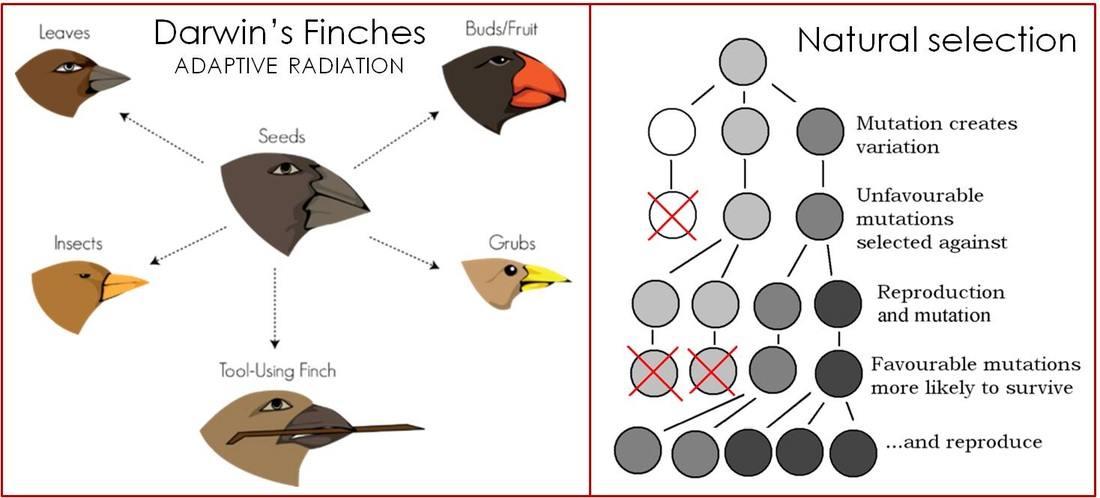
- adaptive radiation: the ancestral species diverges into a large number of species e.g the megazostrodon into various niches such as grazing niche, terrestrial predator niche, arboreal herbivore niche, etc.
Convergent evolution: unrelated species that develop similar characteristics over time; analogous structure/analogy
Coevolution: two (or more) species evolve in response to each other; become mutually depedent on each other
- pollination syndromes: coordinated traits which causes flower structure evolve in response to many types of animal pollinators to improve pollination efficiency
Phylogeny tree: evolutionary tree of a species that are believed to have a common ancestor
- mitochondrial DNA (mtDNA) have their own genome of about 16,500 base pairs long that exist outside of the cell nucleus. mtDNA doesn’t recombine making genetic history more linear. They are inherited only from the mother, hence, individuals within the same maternal lineage will possess the same mtDNA to allow tracing of a direct genetic line
Gene pool: the sum total of genes in a whole population
Evidence for evolution comes from a variety of sources:
- palaeontology — using fossils
- embryology — using embryos and studying embryonic development
- comparative anatomy — studying the structure of particular organs in different organisms
- biogeography — studying geographic distributions and their indication of where species may have originated
- biochemistry — similarities and differences of biochemical make-up
- molecular biology — DNA and protein sequencing
Evolution is affected by many things. One theory is the molecular clock theory where one believes the mutation rate is constant.
There is also the by Charles Darwin in 1859. Contributors to Darwin’s ideas were Jean Baptiste de Lamarck, Thomas Malthus, Charles Lyell, and Hebert Spenser. Spenser is noted to have introduced the concept of survival of the fittest.
The modern theory of evolution () consists of the following ideas:
- Darwin’s theory of the origin of species by
- with an understanding of genetics from Gregor Mendel (see Mendel’s peas experiment)
- and the chromosomal basis of heredity from August Weismann
There are two theories for the pace of evolution:
Punctuated equilibrium: species stay the same for long periods of time until short bursts of evolution cause new species evolve rapidly
Gradualism: species slowly diverge from one another in response to selection pressures
There are five reasons for evolution:
- mutation
- occurs at random without regard to whether they have a beneficial, neutral, or harmful effect
- mutations provide raw materials for evolution depending on the gene mutations occuring; they are usually neutral (silent) or harmful in their effects; only rarely are they beneficial
- the only source of new alleles in a species, but mutations alone are too slow to drive evolution
- gene flow
- makes separate populations more similar genetically
- genetic drift
- random fluctuation in allele frquency between generations
- the bottleneck effect — the allele frequency is altered due to a population crash
- the founder effect — members of a species move away and become reproductively isolated; only able to reproduce within their new population
- nonrandom mating
- a bias for or against mating with related individuals
- inbreeding is a common form of nonrandom mating and is preferntial mating with relatives
- it increases the frequency of homozygosity relative to random mating, elevating the frequency of recessive genetic disorders
- inbreeding includes matings of distant relatives
- natural selection
- an increase in the fitness of a population in a particular environment leads to adaptations which are more likely to survive and be passed down
Natural Selection
All organisms have a high reproductive rate, but food and other environmental factors are limiting. This means offspring struggle to survive.
Therefore, variation occurs in offspring; some are better adapted to the environment than others. Those organisms with favourable variations will live longer and will pass on favourable characteristics to offspring.
Over time, each successive generation will be better adapted to the environment — survival of the fittest. This leads to a change in the frequency of alleles within the population and may cause speciation over time.
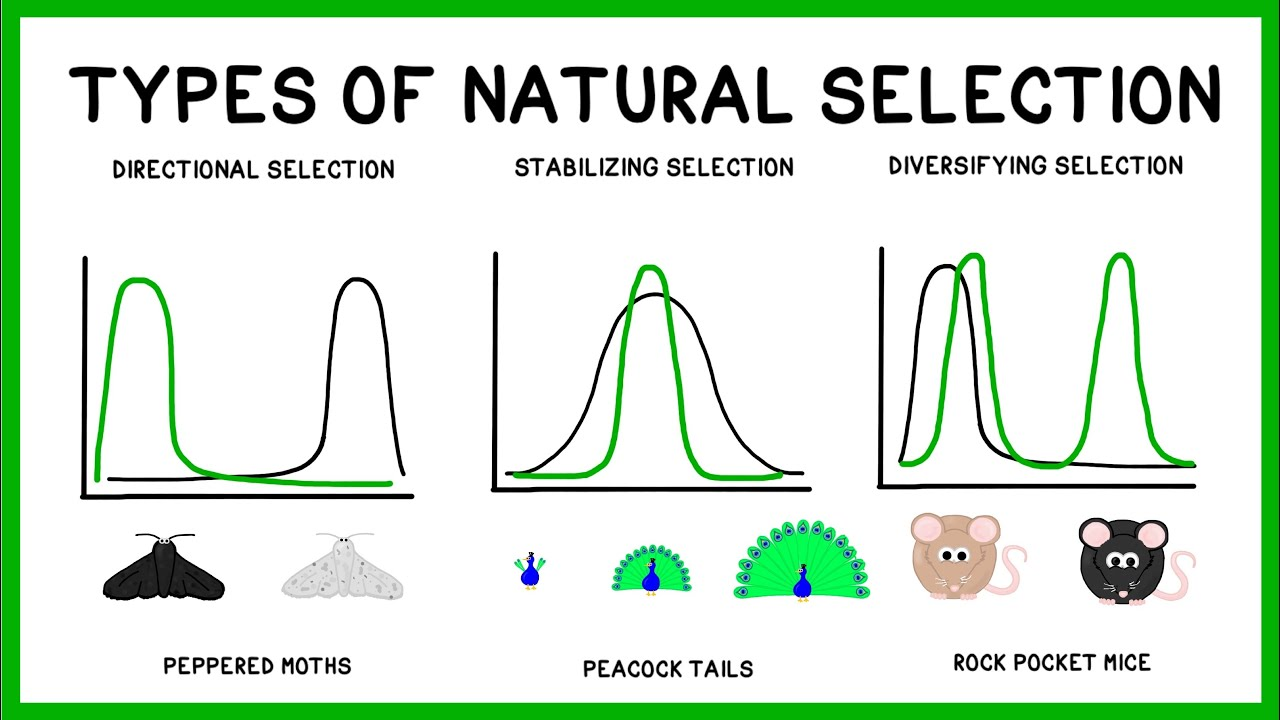
There are three forms of natural selection:
- Stabilizing selection: genetic diversity decreases as the population pushes toward the average, or median, trait
- Directional selection: the population pushes toward one particular characteristic
- Disruptive selection: the population pushes to the extremes of a phenotype, rather than the average trait
Extinction is a natural process in the life cycle of a species. It is an important process in evolution as it provides opportunities for new species to develop in the vacant free niches.
Radiation may follow extinctions but are rarely the cause.
Complex organisms are estimated to become extinct in a million years while simpler organisms are estimated to become extinct in around 10 to 20 years.
Mass Extinction Periods
- Late Devonian (360 MYA)
- 70% of species from this time are now extinct
- Permian-Triassic (250 MYA)
- 83% of species from this time are now extinct
- Triassic-Jurassic (200 MYA)
- 50% of species from this time are now extinct
- Cretaceous-Tertiary (65.6 MYA)
- 75% of species from this time are now extinct
- Holocene (modern day)
Speciation
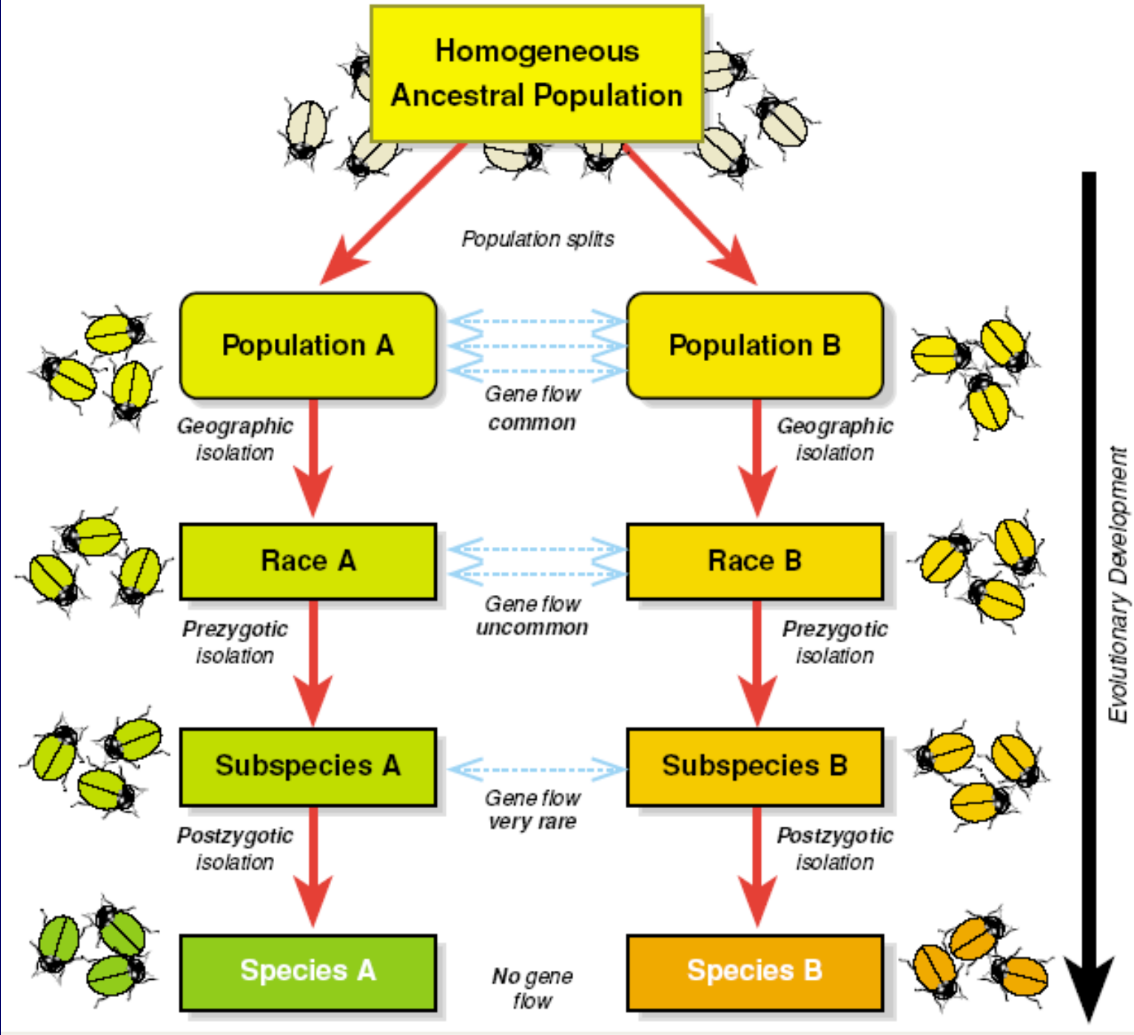
Species: consists of groups of similar individuals who can interbreed with each other to produce fertile offspring but do not naturally interbreed with members of other species
Population: a group of the same species living in the same area at the same time and who can interbreed
Allopatric speciation: a type of speciation where biological populations are physically isolated by an extrinsic barrier and involve intrinsic reproductive isolation
Sympatric speciation: the splitting of an ancestral species into two or more reproductively isolated groups without geographical isolation of those groups. Can lead to;
- niche differentiation; change in host preference, food preference, or habitat preference → disruptive selectiob
- polyploidy
- chromosome non-disjunction
- chromosome number doubles → self-fertilisation
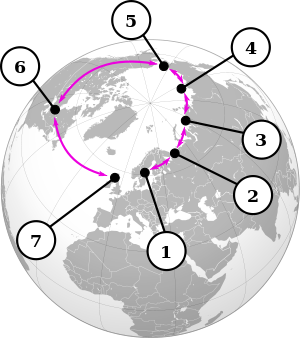
A species usually exists as distinct populations may be separated geographically. These local interbreeding populations are called demes.
Demes will often develop slightly different allele frequencies as populations of the demes are more likely to interbreed within the deme.
Clines are gradual changes in phenotype over a geographical area. This will often occur over the length of a country or continent.
Ring species are a special type of cline; demes 1 and 7 may be unable to breed when they meet, but their intermediate forms (sub-species) are able to interbreed, though this occurs less frequently.
By this point, Deme 1 and Deme 7 are different species.
Reproductive Isolation Methods
- Geographical barriers — rivers, mountains, oceans, and deserts prevent gene flow
- Prezygotic — prior to mating
- habitat preference — different species may occupy different habitats within the same region; they will not get the opportunity to meet
- timing of mating — different breeding seasons makes them sexually active at different times of the year
- behavioural incompatibility — different mating rituals; specific calls, postures, etc. enable them to recognise potential mates to ensure they are mating within the species
- structural incompatibility — must have compatible copulatory apparatuses, appearance, and chemical make-up
- gamete mortality — fertilisation will be unsuccessful; the sperm may not survive in the reproductive tract of another species
- Postzygotic — after fertilisation to prevent successful reproduction
- hybrid sterility — offspring may turn out to be sterile; caused by failure to produce normal gametes
- hybrid inviability — zygote is formed but fails to develop properly; sometimes fails to divide because of unmatched chromosome numbers from each gamete
- hybrid breakdown — offspring of hybrids have reduced viability or fertility; F1 is fertile but F2 is infertile