Animal Circulation and Gas Exchange
Exchange materials with the environment and transport material between sites of exchange in body
limited by animal size and shape→ Cnidarians, sponges have cells in direct contact w/ environment b/c don’t have a base circulatory system
instead, they have gastrovascular cavities which also is the same as digestive system
Circulatory Systems:
a circulatory fluid
a set of interconnecting tubes
a muscular pump/heart
Open (arthropods, mollusks)
fluids kept under pressure by animals w/ rigid body coverings
no distinction b/w hemolymph and interstitial fluid, open and move everywhere in body
lower pressure systems→ deflects fluid back towards the heart, less costly than closed circulatory systems
pressure used to generate force for movement
Closed (vertebrates, cephalopods, worms)
higher blood pressure
actual blood vs interstitial fluid
blood confined to vessels
at least 1 heart that pump blood into small vessels that infiltrate each organ
more effective at transporting fluid especially for larger/more active animals
exchange occurs at capillaries
Blood Vessels (Closed Systems)
Cardiovascular system in humans and vertebrates
arteries- blood from heart to capillaries (away from heart toward organs)
go to arterioles (in organs) to capillaries (small, exchange chemicals via diffusion)
Veins- blood from capillaries to heart
Capillaries→Venules→Veins
Portal veins carry blood b/w pairs of capillary beds outside of heart and lungs
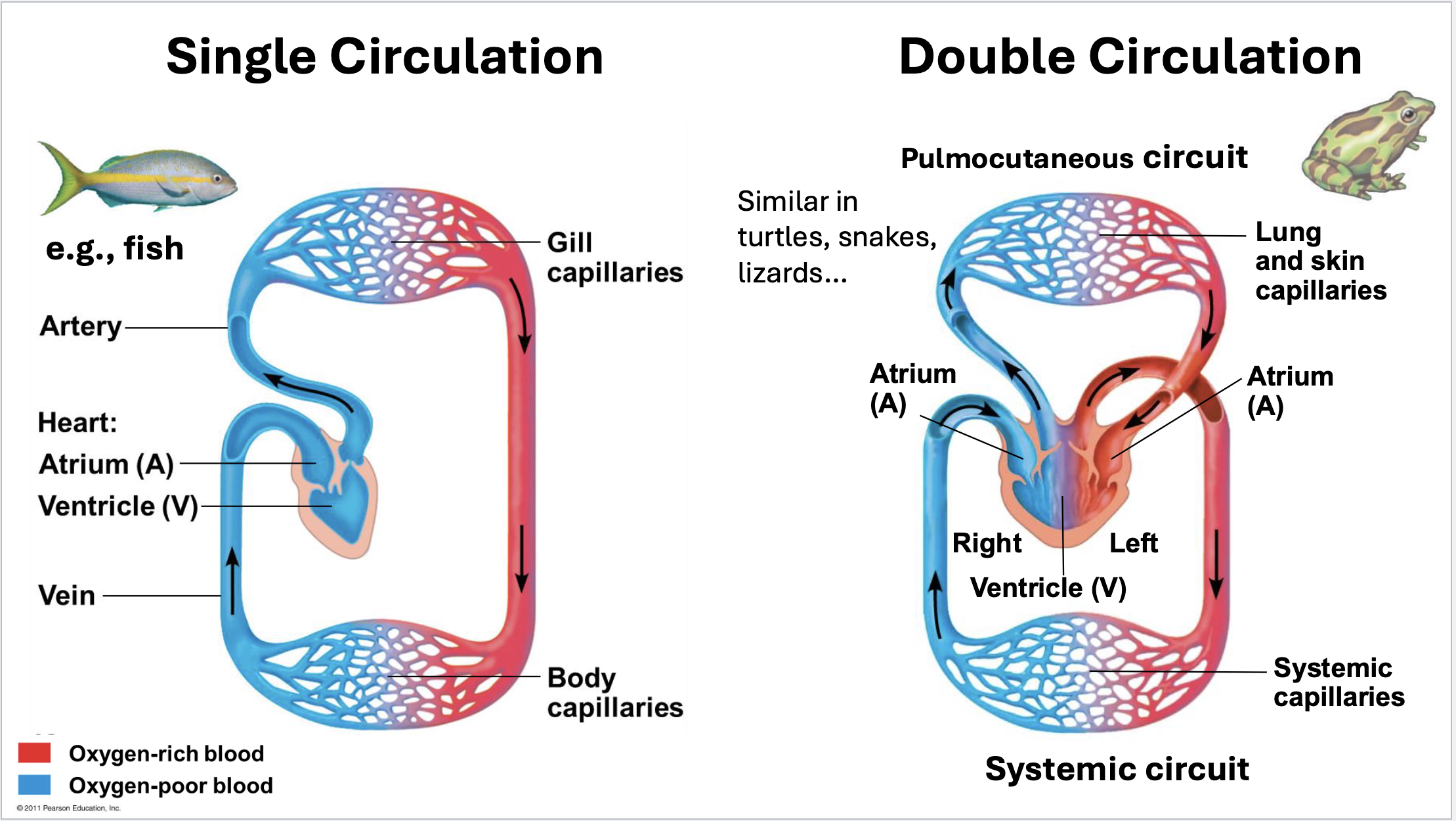
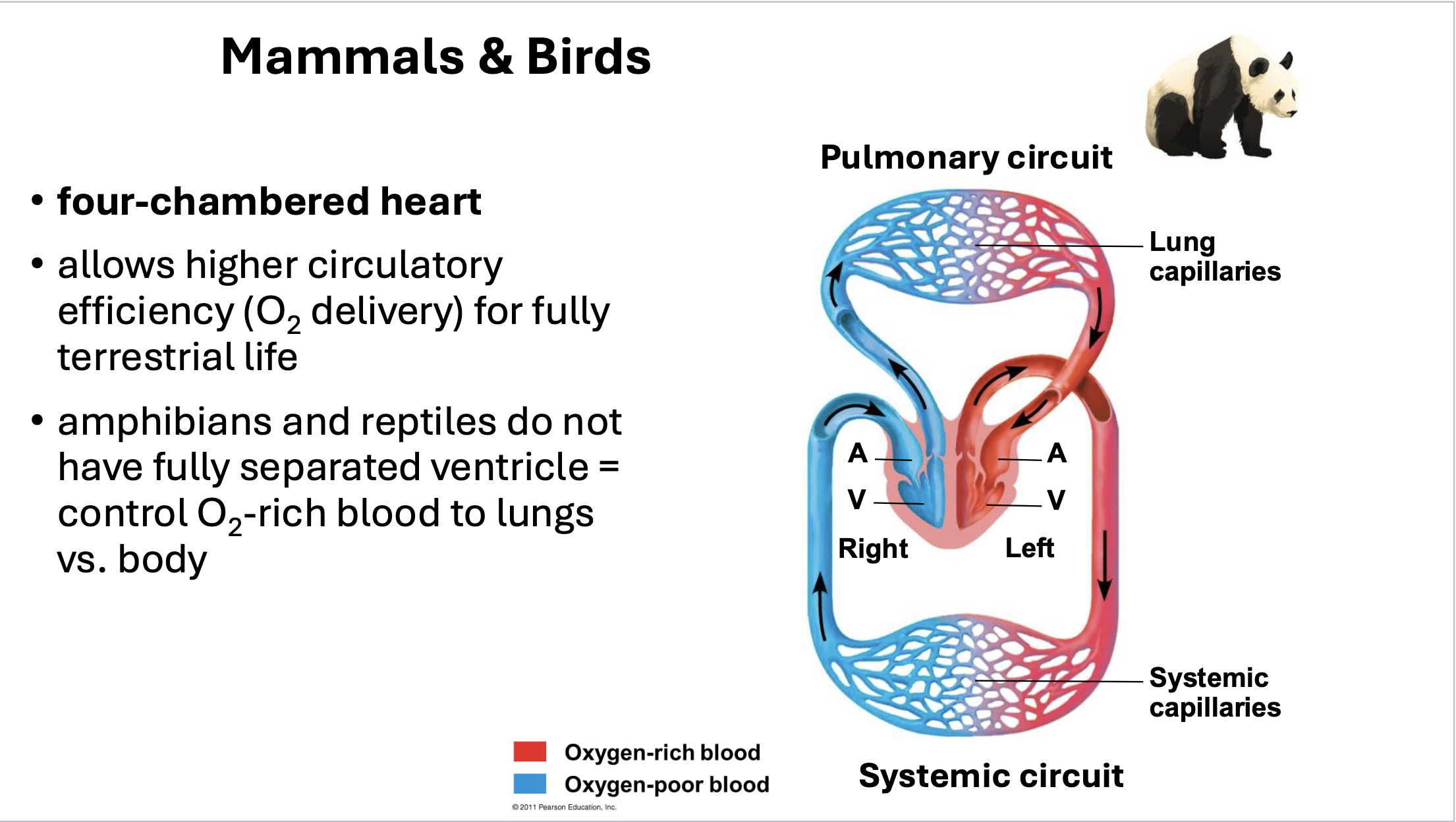
Double Circulation- more vigorous flow of blood
Fish- single circulation, gills more effective esp not on land
Mammals+Birds- Pulmonary circuit is where lungs are
right ventricle pumps blood to lungs using arteries→loads O, unloads carbon dioxide, have oxygen rich blood returning on left side…
Human Circulatory System:
Blood
Specialized connective tissue
Top layer = plasma, 55% blood volume, mostly water and dissolved ions
Middle layer = leukocytes/white blood cells, 1% blood volume, platelets+immune cells
white blood cells- resposible for immune responses, diff types perform different functions in the immune system, spend most time outside circulatory system, mainly in lymphatic system
Bottom layer = erythrocytes/ red blood cells, transport oxygen
Hemoglobin- 1 RBC can carry 4 oxygen molecules
Heart
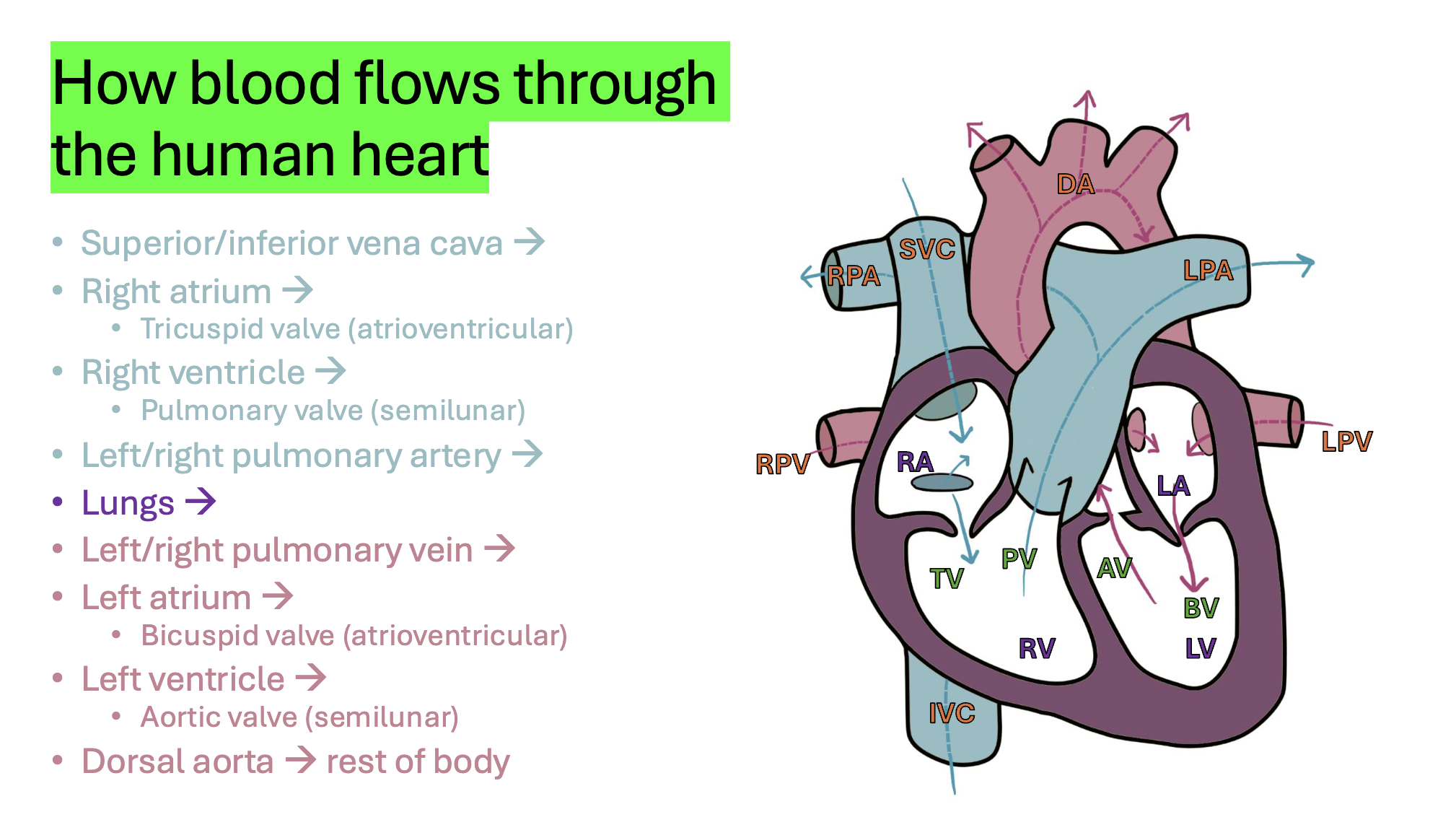
Sinoatrial Node = natural pacemaker, specialized muscle cells that do not contract on their own but depolarize to create an electrical signal to tell muscle cells in atria to contract (atrial kick), slowly transmitted to AV node, affects ventricular filling
Atrioventricular Node = stimulates contraction in ventricles, controls timing and coordination of ventricular contraction, contractions start at bottom and work anteriorly through purkinje fibers, slows down the system
Arteries
Veins
Connective Tissue allows stretch and recoil, maintain blood flow, provide tough outer coating
Smooth Muscle- alters vessel diameter
Vasoconstriction = make opening narrower
Vasodilation = make opening wider
Why are arteries wider? they carry blood away from pumping heart→have to withstand force of contraction→thicker
Veins have valves to prevent back flow
Capillaries- pressure differences allow materials to move in and out
Blood Vessels
Lymph Vascular system
structure and fluid movement similar to veins
fluid recovery and clean up→ collects excess interstitial fluid in capillaries→becomes lymph→returns to blood
no heart pumping→rely on body movement and valves
lymph passes through lymph nodes (filter and immune response)
maintains fluid balance and screen for pathogens→ swell sometimes when sick
Respiratory Surfaces- where gas exchange occurs
Gills, skin, tracheal systems (insects), lungs all have adapted to help diffusion
thin, moist, lots of surface area, concentration gradients, tied to circulation
All respiratory surfaces require moist exchange surfaces
gas density in air 40 times greater than that dissolved in water→respiratory systems must be larger or more efficient under water
Gas Exchange
Counter Current Exchange (fish) - water flowing through gills in one direction, blood in opposite directions
partial pressure of oxygen in blood always lower than partial pressure of oxygen in water→oxygen moves from water to blood
fish extract 80% of oxygen from water
Positive Pressure Pumps (amphibians + some reptiles) - folded inside body rather than exposed, don’t dry out
air not flowing in/out, have to move it out of body→ need ventilation system
inhalation = force air from mouth down the thorax and into lungs (like gulping)
exhalation = elastic recoil pushes air up
different from humans
Negative Pressure Breathing (humans)
inhalation = diaphragm contracts (moves down)→ increases volume of chest cavity→pressure goes down→ air rushes in
exhalation = diaphragm moves up→ ribcage gets smaller→ volume decreases→ pressure increases, moves back out through nostrils
Nasal Cavity - turbinates filter, warm, and moisten air