Week 12- Hallyu (The Korean Wave), Contemporary Korea
Hallyu (The Korean Wave): The Rise of Korean Popular Culture as a Global Phenomenon
Structure of Lecture
- An Introduction
- What is Hallyu (Korean Wave)?
- Hallyu 1.0- K-Dramas
- Hallyu 2.0- K-pop
- The Socioeconomic Impact of the Korean Wave
- Factors for the Success of the Korean Wave
- Factors for the Success of Hallyu
- Hallyu and Its Implications
- Conclusion: Rethinking (Popular) Culture
Introduction
- Korea has long suffered from a lack of groundbreaking cultural exports
- For decades the country’s reputation was largely defined by its cars, cellphones and TV from companies like Hyundai, Samsung and LG while its movies TV shows and music remained relatively unknown
- Also for a long time, Japanese popular culture outshone and overshadowed whatever Korea produced, be it movies, dramas or music
- Now Korean dramas and K-pop stars like BTS and Black Pink appear as ever-present as any Samsung smartphone in the global scene
- In the last few years alone, Korea shocked the world with Parasite, the first foreign language film to win the bets picture award at the 2019 Academy Awards
- More recently Squaid Fames became a global sensation when it became Netflix’s most watched series of all-time
The question is:
- What is Hallyu (The Korean Wave)?
- What have been the impacts of Hallyu on Korea and beyond?
- What are the factors which make the Korean Wave a global popular phenomenon?
- What are the implications of Hallyu on cultural diplomacy and “soft power”?
What is Hallyu?
- Hallyu (literally means ‘flow of Korea) or the Korean wave refers to the spread and popularity of Korean popular culture around the world, especially since the beginning of the 21st century
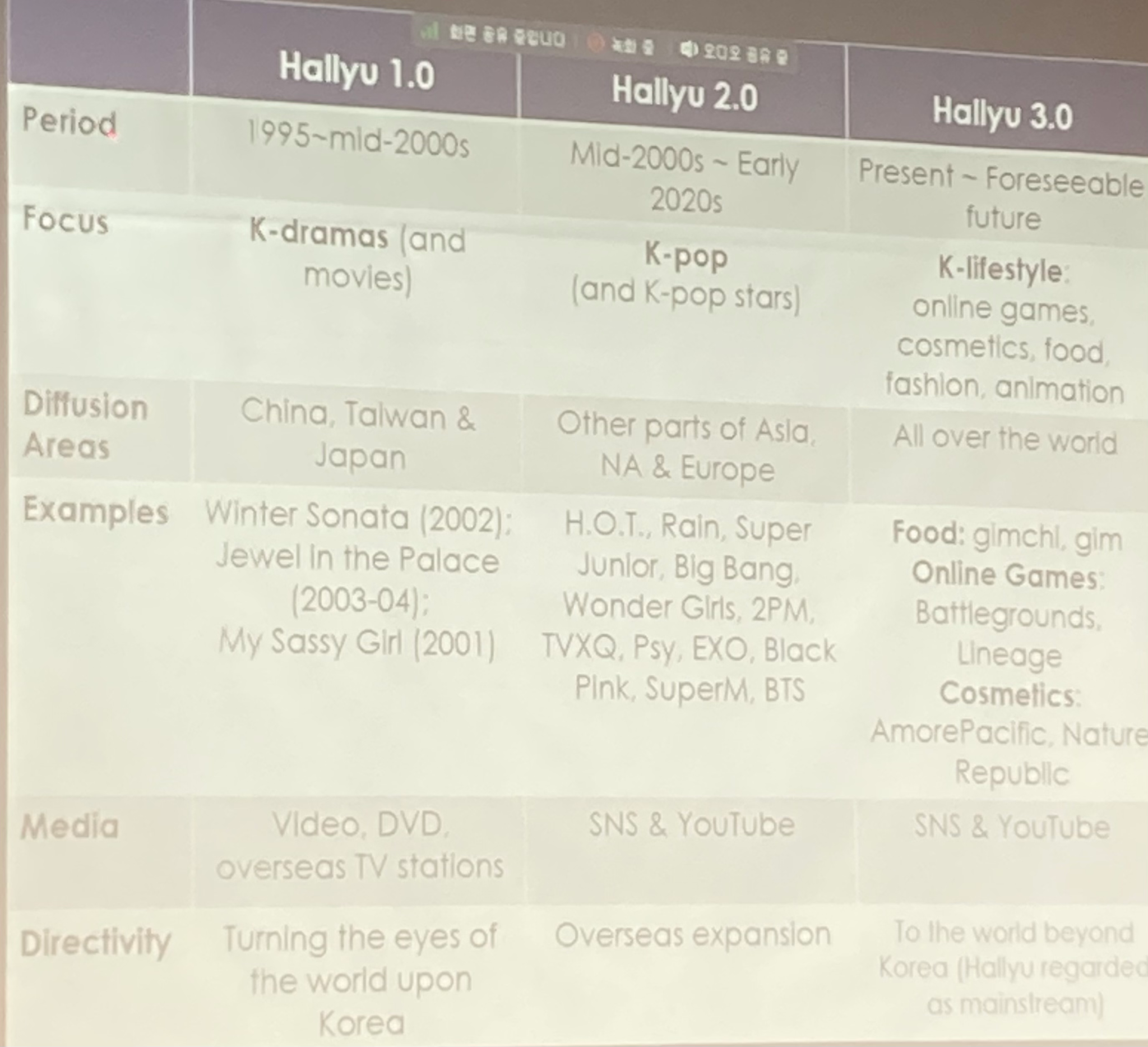
- Hallyu was drive by the spread of K-dramas across Asia in the first decade of the 21st century, but has evolved from a regional trend into an influential global phenomenon today
- Korea is now one of the leading exporters of popular culture among with the US, England, Germany, France and Japan
- American political scientist Joseph Nye interprets the Korean Wave as “the growing popularity of all things Korean, from fashion and film to music and cuisine”
- Indeed Hallyu now encompasses the popularity of other Korean cultural products such as
- Online games
- Animation
- Fashion (K-fashion)
- Food and alcohol (rameyon, chimaek, samgyeopsal, soju)
- Cosmetics (K-Beauty)
- The prominent British weekly news magazine, The Economist thus called K-pop culture “Asia’s foremost trendsetters”
Hallu 1.0- Kdramas
The most famous dramas that put K-dramas on the world TV map are:
- Winter Sonata (2002)
- Daejanggeum (Jewel in the Palace, 2003-2004)
- It became one of the highest-rated TV dramas in Korea before exported to 91 countries around the world
- In Iran it had a viewer rating of 86% in 2007 when it aired
- Korean dramas have been particularly popular in Asia, including China, Japan, Taiwan< Indonesia, the Philliphones and Thailand
- Today Korea is one fo the world’s top exporters of television dramas
- Top exporters of TV dramas in the last 5 years
- 1) US
- 2) UK
- 3)Korea
- 4) Spain
- 5) Argentina
- Top exporters of TV dramas in the last 5 years
- Korean dramas are now being ‘remade’ in many countries
- More importantly, Korean dramas are very popular on the streaming platform and on over-the-top subscription video-on-demand services like Netflix
- Netflix acquired 41 K-dramas in 2020 alone
- However, a Netflix series that has given a fresh thrust in establishing K-dramas as a force in the international TV market is Squid Games, which was released in all Netflix worldwide markets in September 2021
- The series remains Netflix’s most watched series of all-time
- Attracted more than 142 million member households
- Amased 1.65 billion viewing hours during its first 4 weeks from launch
- The top-viewed program in 94 countries
- A 2022 report shows that 60% of Netflix’s global viewers watched at least one Korean film or drama series
Hallyu 2.0- K-Pop
- The Korean Wave began with TV dramas but the most popular form of Hallyu today is K-pop
- Since the mid-2000s the K-pop music market has experienced doubt-digit growth rates every year
- In 2021, K-pop exports totalled nearly $1 billion, prompting Time magazine to claim that is ‘South Korea’s Greatest Exports’
- First-generation K-pop artisist include H.OT., g.o.d., S.E.S., Fin.K.L, Sinwha, BoA and Rain
- Second-generation K-pop artists include Super Junior, Big Bang, Wonder Girls, Girls’ Generation, 2PM, Kara, 2NEI, EXO, TVXQ, TWICE, Red Velvent, ITZY, NCT, BLACKPINK and BTS
Recent milestones attained by k-pop artists
- December 21st 2012- Gangnam Style by PSY became the first youtube video to reach 1 billion views
- 2013
- TVXQ’s Tohoshinki Live Tour in Japan sold oevr 850,000 tickets generating nearly US$100 million in revenues
- In fact, over 60% of the K-pop industry’s export revenue is derived from the sale of concert tickets at the time
- K-pop idol band selling this many concert tickets is also noteworthy for the fact that all the foreign acts selling out auditoriums, arenas and stadiums in Japan had hitherto been all Western acts, especially those from the US and UK
- March 2014- 2NE1’s Crush reached No.61 on Billboard 200 (album sales chart in US0
- The highest charting album by a K-pop artist up to this date
- April 2015-MArch 2016- Big Bang’s MADE World Tour attracted 1.5 million fans around the world, making it the largest world tour by any Korean act up to this date
- June 2018- Black Pink became the highest-charting female K-pop on Billboard 200 with Ddu-Du Ddu-Du, peaking at #40
- June 2018- April 2019
- BTS became the first K-pop artist and the first Asian artist to top the Billboard 200 chart in June 2018 with their album Love Yourself: Tear
- Love Yourself: Answer became BTS 2nd chart-topping album in the US in September 2018
- BTS is also the 19th artist of all time to have two No.1 albums in the same year
- BTS scored 3rd No.1 Album on Billboard 200 Chart with Map of the Soul: Persona in April 2019
- August 2018- BTS sold out its first US stadium show in New York’s City Citi Field, in 20 minutes which holds 42,000 people
- MArch 2020- BTS had fourth No.1 album on Billboard 200 with Map of the Soul: 7
- November 2020- BTWS earned its fifth No.1 album on the Billboard 200 chart with BE
- June 2022- BTS earned its sixth No.1 album on the Billboard 200 chart with Proof
- September 2022
- BlackPink became the first female Korean artist and the first female artist from Asia, to have a 1# album on the Billboard 200 with its second studio album, Born Pink
- The album is the best-selling album of all time by a female act in Korea and the first to sell over two million copies
- August 2023
- Of all the performing artists in the world, BLACKPINK has the largest number of YouTube subscribers with 90.8 million
Other KPOP Artists with #1 Album on the Billboard 200
- October 2019
- Super M became the second K-pop artist to reach Number 1 in the Billboard 200 with their self-titled EP
- April 2022
- Stray Kids had their first No.1 Album on the Billboard 200 with Oddinary
- October 200
- Stray Kids had their second No.1 album on the Billboard 200 with Maxident
- February 2023
- TXT had their first No.1 album on the Billboard 200 with The Name Chapter: Temptation
The Socioeconomic Impact of the Korean Wave
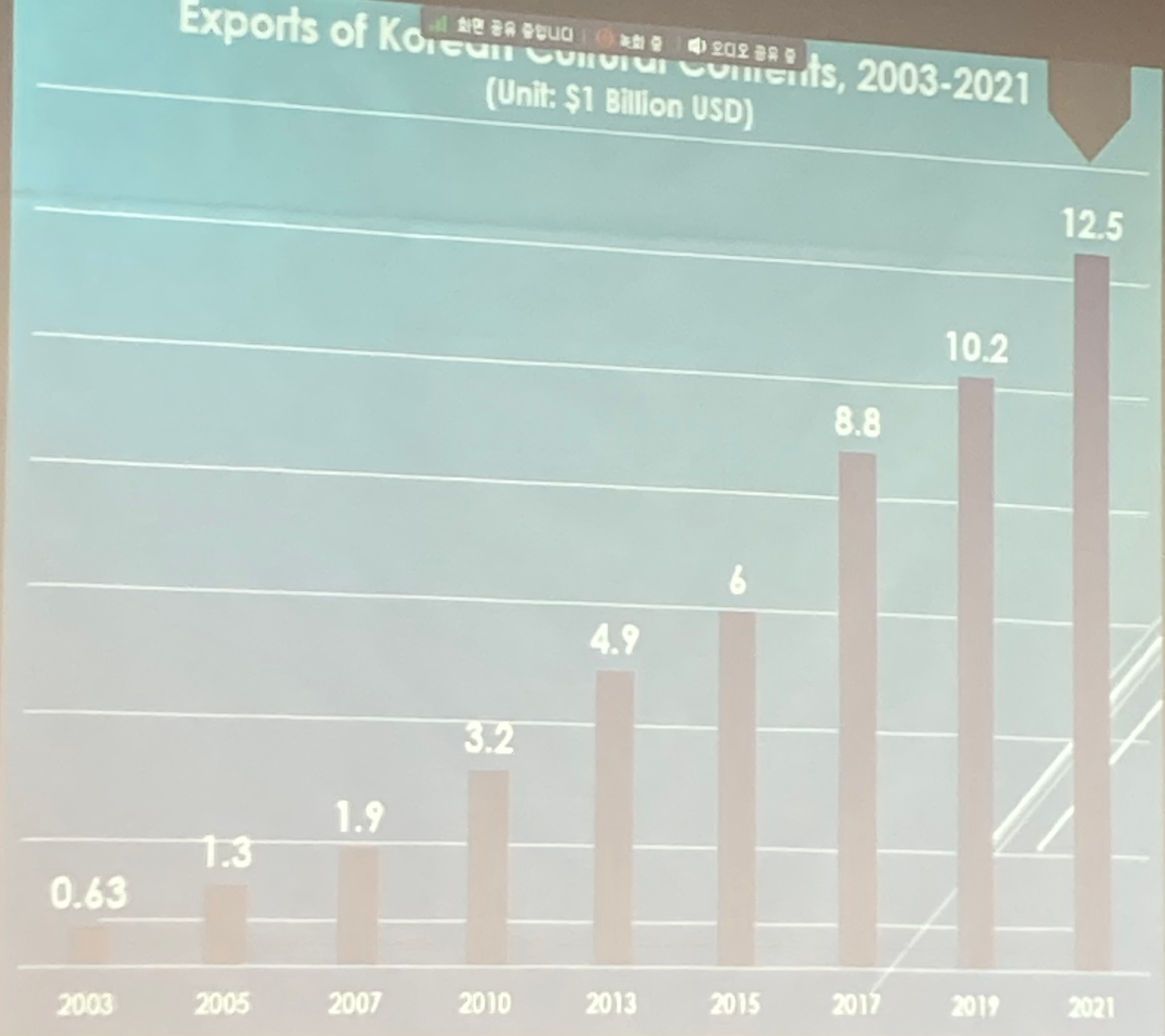
- The Increase in Exports of Korean Cultural Contents
- Totalled over $12.5 billion in 2021, jumping nearly 20 times from 2003 ($630 million)
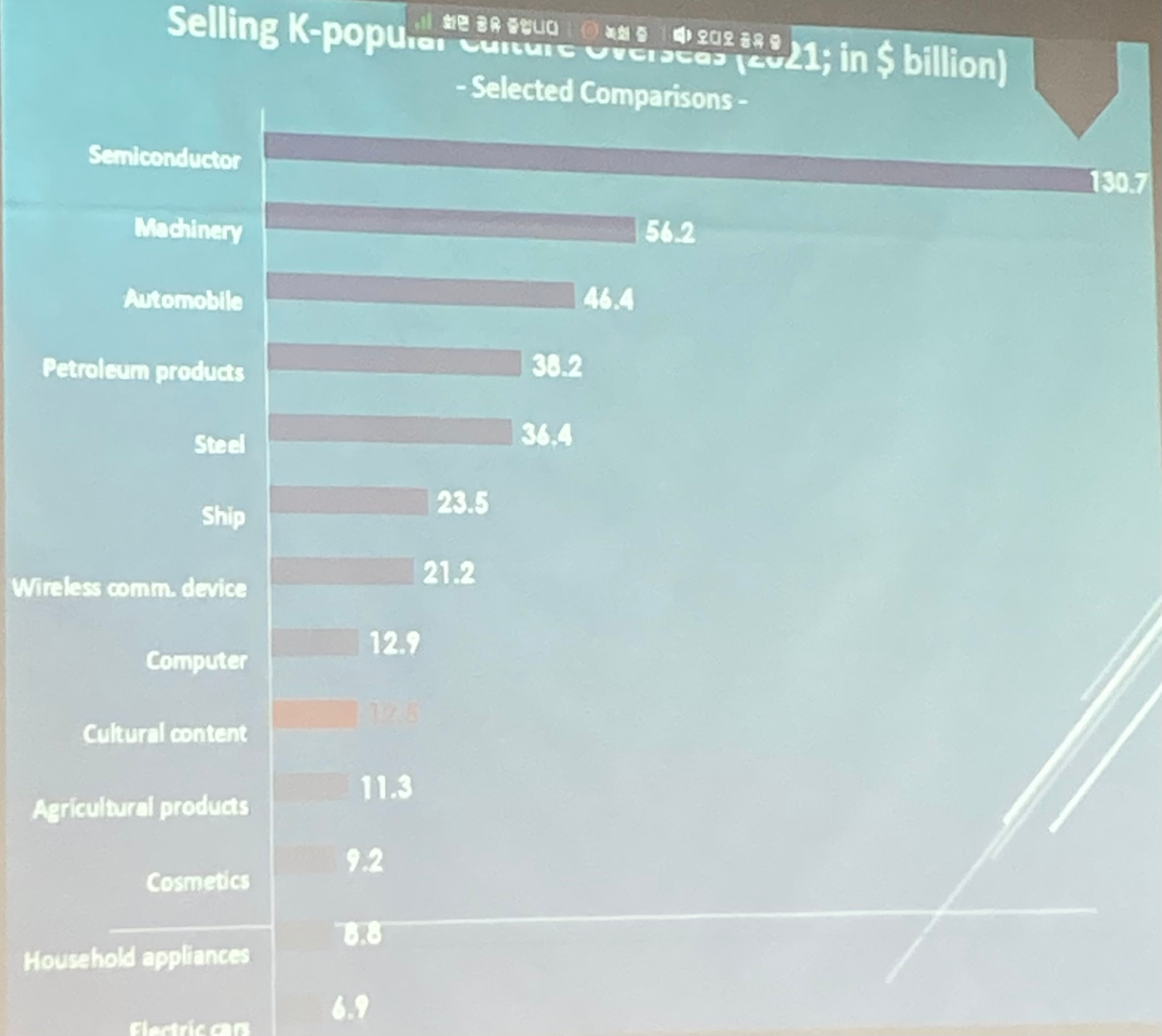
- A noteworthy fact about the export total of cultural contents is that it exceeded the figures for other notable Korean exports such as:
- Agricultural products
- Cosmetics
- Electric cars
- Household appliances (Samsung and LG)
Which cultural contents had the highest export sales in 2021?
- In terms of sales volumes, the top 3 cultural content export items were:
- 1) Online games (e.g. Battlegrounds, Lineage Revolution)
- 2) Music
- 3) Characters (Pororo the Little Penguin, Larva, etc)
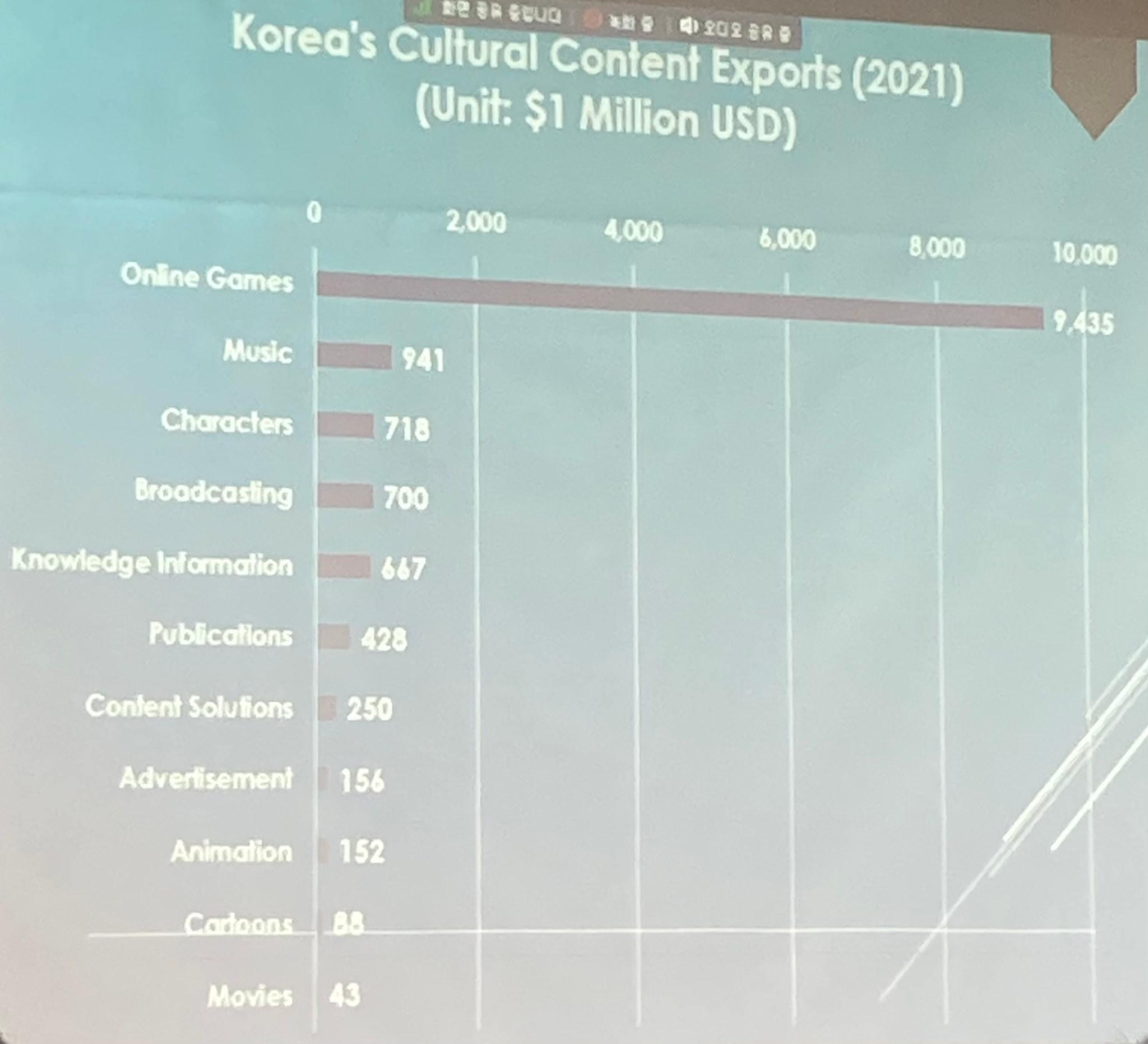
- As for Korean movies, while they are not as big as K-pop dramas or K-pop in total exports, it is worth noting that Korea is one of only 5 countries in the world in which cosmetically produced movies have more than 50% of the domestic movie market
- China, Korea, India, US, Japan
- Increase in International Tourism to Korea
- Number of international tourists to Korea jumped nearly 6x between 1990 and 2019 soaring form
- 1990: 2.96 million
- 2018: 17.5 million
- Does not count 2020-2022 due to Covid
- As of 2016 Korea is the world’s 20th most visited country by international tourists
- Increases in Exports of Other ‘Cultural Products’
- Cosmetics- Exports of cosmetics totaled nearly $9.2 billion in 2021, jumping more than 11 times from 2012 total of $831 million
- Korea exported cosmetics to 131 countries
- Top Korean brands include: Innistree, OHUI, MIssha, ETUDE HOUSE, SU:M37
- In terms of cosmetics export total,Korea ranked 3rd in the world trailing only:
- 1) France- e.g. Chanel, Guerlain, Givenchy, Christian Dior, Lancôme, Yves Saint Laurant, Sisley Paris
- USA was 2nd
- Korea is currently the largest exporter of seaweed in the world
- Its exports total in 2022 was $656 million, a more than a 4-fold increase from the 2010 total of $152 million
- The total accounts for about 70% of the global seaweed market
- Export toal fo Dry Seaweed in Selected Years, 2010-2022
- 2010-$152 million
- 2015- $349 million
- 2020-$640 million
- 2022-$656 million
- Biggest Importing Countries of Korean Dry Seaweed in 2022
- 1) USA- $148 million
- 2) Japan- $117
- 3) China- $96 million
- 4) Thailand- $44 million
- 5) Russia- $42 million
- Formation of a More Positive Image of Korea
- Popularity of Hallyu → more positive images of Korea
- E.g. a BBC poll in 2016 revealed that public opinion of South Korea has been improving every year since data have been collected starting in 2009
- Hallyu as a Source of National Pride
- The global popularity of Korean popular culture has been a source of national pride for Koreans living in and outside of Korea
- Greater Interest in the Study of Korea
- Greater enrolment in Korean language and culture classes at universities and Korean culture centres abroad
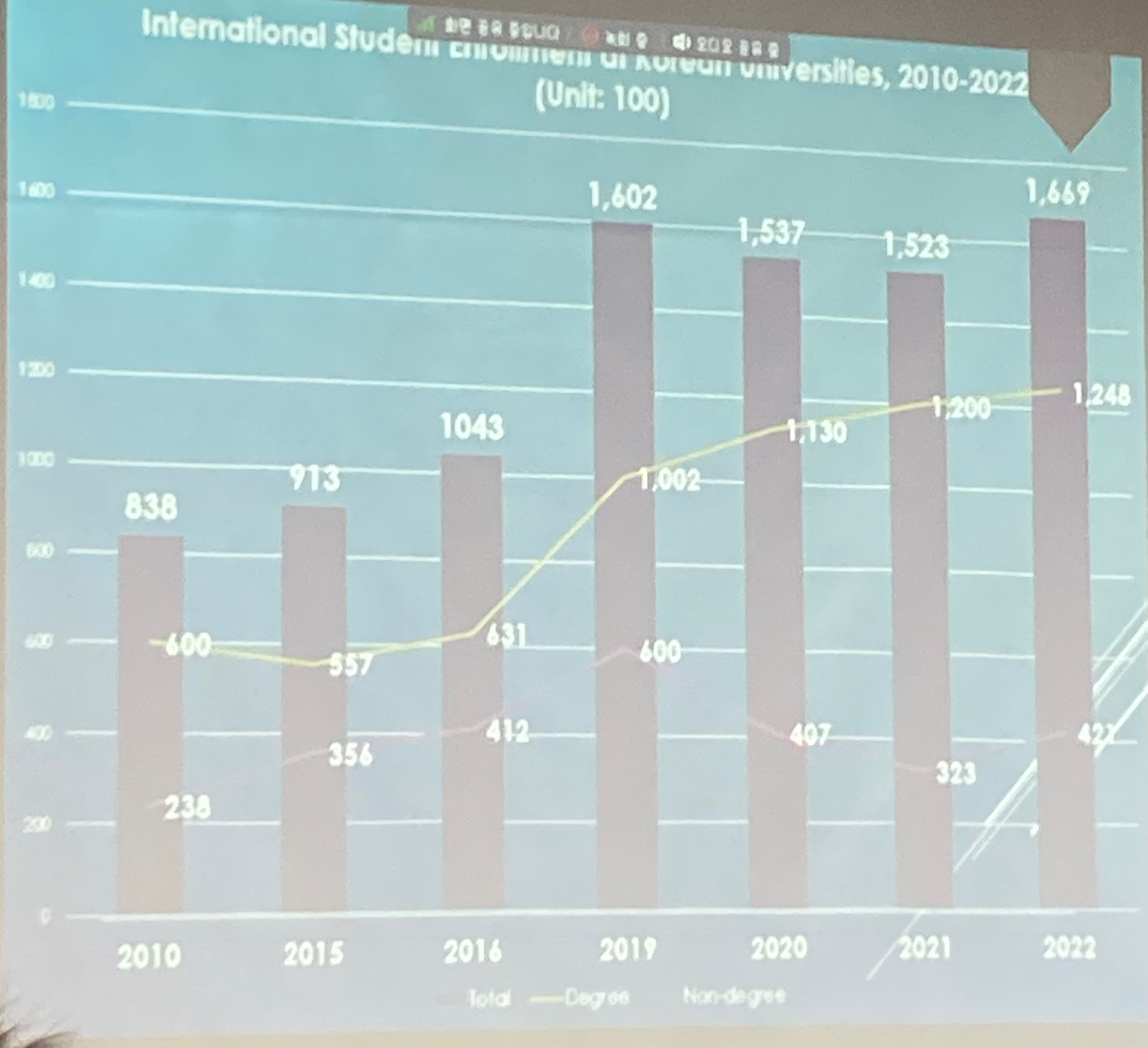
- Also evident are increases in the number of foreign students in Korea
- The total jumped from some 83,842 in 2919 to 166,892 as of April 2022
- Impact of Hallyu on World Popular Culture
- Korean popular culture has made a considerable impact in the music, movie and TV industries in many parts of the world since the 2000s
- All of this implies that Hallyu is challenging the ‘monopoly’ of Western, especially American, popular culture
- Indeed, Hallyu represents the growing diversity in the way people all over the world enjoy popular culture
- K-Pop, K-dramas and K-movies represent forms of popular culture which are unique and are different from the ‘Western model’
- Hallyu’s Contribution to “Asian Pride”
- Hallyu especially Kpop can be said to have inspired what can be called “Asian pride”
- With Hallyu, many Asians in and outside of Asia, finally have international stars with whom they can relate to better as being the “same” Asians
- Transnational popular stars have been typically Westerners, especially Americans
- Also, cultural superpowers such as the US have produced cultural products in which Asian presence is often ignored or non-existent or depicted sterotypically
- K-dramas show Korean (Asian) stories
- With the K-pop/K-drama’s boom in popularity all over the world, Asians, their histories and stories finally have a spotlight in the eyes of the global public
- Things Aisan as being more accepted and recognised all over the world
- Breaking down stereotypes on Asians
- It’s cool to be an Asian
- Things Aisan as being more accepted and recognised all over the world
Potential negative impact- Class Disscussion
- Fetisation
- Coming to Korea for wrong reason where they not appreciate Korea for the right reasons just liking their idols
- Misrepresentation of True Korea in K-dramas and K-pop videos
Factors for the Success of Hallyu
- What are the factors behind the increase success of Hallyu-Class discussion:
- Technological factors with Netflix and Internet- increased globalisation with easier access
- Covid potentially with greater success in the past 3 years
- But Hallyu did begin before this so slightly limiting
- Economic success of Korea
- Is Kpop popular due to being exotic (local fragrance) or because it has ale the factors of having universal appeal
- Marketing a not exportic also dubbed as ‘cultural ordinance’
What are the factors for the succes of Hallyu?
- Hard Power (Competence)
- The success of Hallyu is closely linked to the rapid economic success of South Korea
- Economic Success → enabled Korean entrepreneurs to make high-quality, attractive, ‘sophisticated and stylish’ cultural products
- Soft power (Economic Affluence= Attractiveness)
- Soft power- it refers to the intangible power exercised by a country through its positive image rather than a hard force such as military or economic power
- Example: The US’s likable image (“wealthy country”) olays a very important role in why people around the world:
- Buy Levi’s jeans, Apple iPhones, Larlboro cigrattes and Coke soft drinks
- Enjoy hip-hop, blues, ja and Hollywood movies
- Also the concept of soft powers is intimately related ot hte world popularity of famous luxury brands like Louis Vuitton, Chanel, Prada, Gucci, Burberry, Hugo Boss, Giorgio Armanim Bulgari, Hermes, etc
- Also, the concept of soft power is intimately related to the world popularity of famous brands such as LV, Chanel, Prada, Gucci, Burberry, Hugo Boss, Georgio Armani, Bulgari, Hermes, etc
- There is indeed a direct correlation between the economic strength of a nation (and a high living standard) and the outreach of its culture, including language, arts and even religion, as evideinced by the expample of the West, especially the US
- Following such “soft power argument”, the Korean Wave has succeeded also because of the country’s readily evident economic affluence, hence its rising soft power
- South Korea is now the 10th largest economy in the world, with a total GDP, amounting to more than$1.8 trillin, with names like Samsung, LG and Hyundai becoming household names
- Gradually the world is associating with affluence and high living standard and becoming more interest in things Korean because of that
- Technogical Factor: Changes in Communications Technology
- Hallyu is the first case of spreading popular culture through IT (information technology)
- Internet and internet-based social media such as Youtube, Facebook, Twitter and blogs functioned as ‘global superhighways’ by which Korean popular culture reached overseas Hallyu fans faster and wider than ever before
- Streaming services (e.g. Netflix, Amazon Prime Viedo, Disney + etc) did the same for K-dramas
- Streaming platforms and on over-the-top subscription video on-demand services allow viewers to watch K-dramas anytime and anywhere
- Streaming platforms have also been “a revolution in not only distributing TV shows but also expanding the genres of TV dramas, especially in Korea”
- I.e. drama series in genres as diverse as action and horror to fantasy complete with scenes of extreme violence and crude language
- Policy Factor: Korean Governemnt’s Support for Cultural Export
- In 1994, a report was made to the president suggesting that the governemnt promote media production as a national strategic industry
- Such a move was promoted by the shocking news that the overall revenue from teh Hollywood blockbuster, Jurassic Park (1993) was worth the sales of 1.5 million Hyundai cars
- The comparison of a film to Hyundai cars which at that time were considered the ‘pride of Korea’- was apt enough to awaken Korean policymakers and the public to the idea od culture as an industry
- Importance fofo cultural industry
- From that chance but momentous beginning the Korean government has come to believe that:
- An increased interest in Korean popular culture abroad can benefit the country’s export sector
- The growing popularity of Korean pop can also → increase its soft power
- From that chance but momentous beginning the Korean government has become to believe that:
- An increased interest in Korean popular culture abroad can benefit the country’s export sector
- The growing popularity of Korean pop culture can also → increase its soft power
- Reestablished as the Korea Creative Content Agency (KOCCA) in 2009
- And a phrase that best captures the distinctive characteristics of KOCCA is “cultural engineering mindset”
- According to the UNESCO Institute for Starbucks, the global trade of cultural goods amounted to USD 16.4 trillion in 2017, and the Korean government is eyeing a signficant part if that pue
- “Cultural engineering mindset” of KOCCA includes:
- Provision of subsidies and low-inetrest loans to companies involved inteh creation and development of cultural contents and programs
- Operation of regional hub institutions at 16 metropolitan cities to support the development of the content industries
- Regulation of content quality (while not affecting creative control)
- Nurturing talents and training content creators by hosting workshops
- Provision of support for expansion into overseas markets through
- Provision of support for global market entry, including translation, dubbing, and marketing of Korean cultural contents
- Hosting international cultural content-related trade fairs and supporting companies to participate in overseas export fairs and roadshows
- Operation of business centres in many countries including those in USA (LA), China (Bejing and Shenzhen), Japan (Tokyo), Vietnam (Hanoi), Indonesia (Jakarta), Europe (Paris) and UAE (Dubai)
- Overseas buyer matching
- Provision of overseas trend information
- Overseas expansion consultation
- Building a local network
- Promotional marketing support
5. Strategy Factor: The role K-pop entertainment Agencies
- Korean K-pop entertainment agencies are experts at ‘polished packaging’ producing top-notch products
- K-pop companies train the artist, produce and promote their music and manage them
- Common characteristics of these entertainment companies are that they operate as an entertainment conglomerate managing under one roof:
- Record label
- Talent agencies, replete with recruiters and trainers in charge of trainees
- Music production company, compete with song writers, musicians, sound engineers and producers
- Event management company
- Concert production company
- Music publishing house
6) Fandom Factor Dedicated Fan aAse
- Unique Roles of K-pop Fan Clubs
- Fans publicise the news about latest sings, concerts etc of their idol groups
- Fans translate Korean song lyrics in English and other languages for casual fans
- Fan loyally (blindly) buy their idol groups cd and other merch
- Club members listen to sings over and over to boost their bands statistics on YouTube and music streaming sites
- BTS butter holds the record of the most Youtube views with 24 hours of release (108.2 million views in May 21-22, 2021)
- Unique Roles of K-pop Fan Clubs
Implications
- What is the future Hallyu?