Semaphore In Operating Systems
Key Information:
Semaphore: A synchronization mechanism used in operating systems
Types: Binary semaphore (0 or 1), Counting semaphore (integer value)
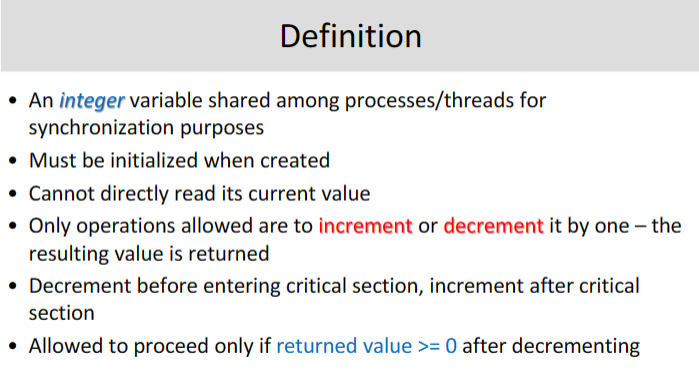
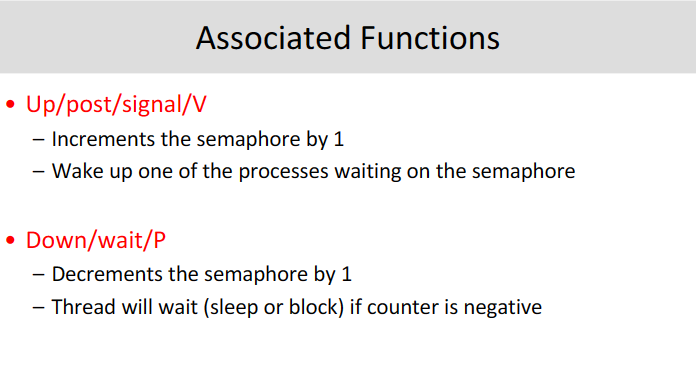
Operations: Wait (decrements value, blocks if value is zero), Signal (increments value, unblocks waiting processes)
Purpose: Prevents race conditions, controls access to shared resources
Deadlock: Can occur if semaphores are not used correctly
Implementation: Kernel-level or user-level semaphores
Advantages: Provides synchronization, avoids busy waiting
Disadvantages: Can lead to deadlocks, requires careful programming
Semaphore in Operating Systems
Definition
A synchronization tool used in operating systems
Controls access to shared resources
Prevents race conditions and ensures mutual exclusion
Types of Semaphores
Binary Semaphore
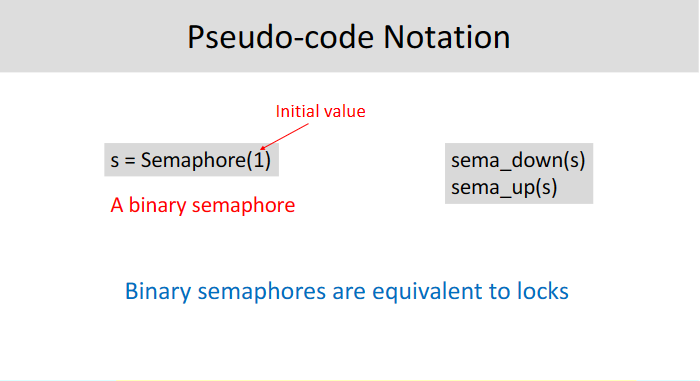
Can have only two values: 0 or 1
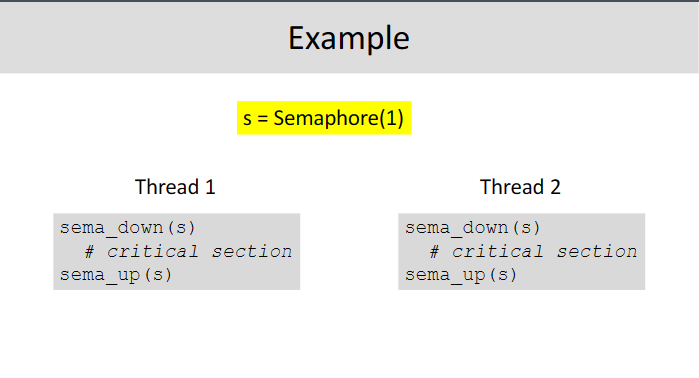
Used for mutual exclusion
Example: mutex semaphore
Counting Semaphore
Can have any non-negative integer value
Used for resource allocation and synchronization
Example: semaphore for available printer slots
Semaphore Operations
Wait (P)
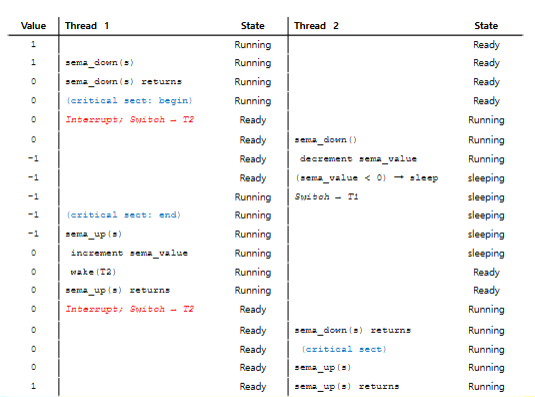
Decreases the semaphore value by 1
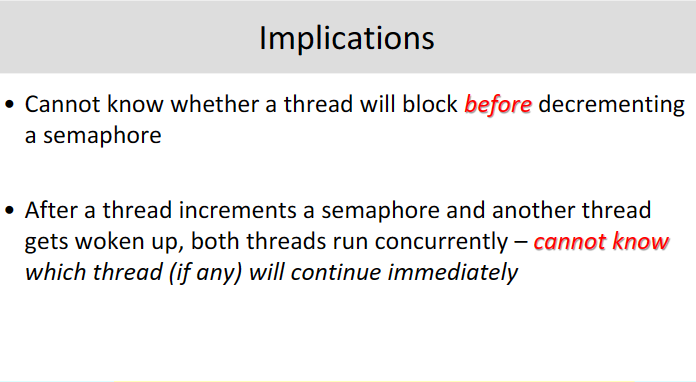
If the value becomes negative, the process is blocked
Signal (V)
Increases the semaphore value by 1
If there are blocked processes, one is unblocked
Semaphore Concepts
Mutex
Mutual exclusion semaphore
Ensures only one process can access a resource at a time
Deadlock
Situation where processes are unable to proceed due to circular dependencies
Starvation
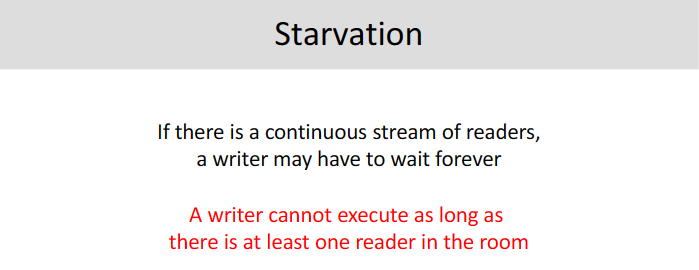
Situation where a process is unable to access a resource indefinitely
Advantages of Semaphores
Provides a simple and efficient way to synchronize processes
Prevents race conditions and ensures orderly access to resources
Disadvantages of Semaphores
Requires careful design to avoid deadlocks and starvation
Can be complex to implement correctly in large systems
Examples of Semaphore Usage
Process synchronization
Resource allocation and management
Producer-consumer problem
Readers-writers problem
Semaphore in Operating Systems
Semaphore is a synchronization tool used in operating systems to control access to shared resources, prevent race conditions, and ensure mutual exclusion. It plays a crucial role in maintaining the integrity and efficiency of concurrent processes. Let's delve deeper into the concept of semaphores and explore its various aspects.
Definition
A semaphore is a variable or an abstract data type that holds a non-negative integer value and provides synchronization capabilities. It is used to manage and coordinate access to shared resources among multiple processes or threads. By utilizing semaphores, operating systems can enforce mutual exclusion and prevent conflicts that may arise when multiple processes try to access the same resource simultaneously.
Types of Semaphores
There are two main types of semaphores: binary semaphore and counting semaphore.
Binary Semaphore
A binary semaphore, also known as a mutex semaphore, can have only two values: 0 or 1. It is primarily used for mutual exclusion, ensuring that only one process can access a resource at a time. When a process acquires a binary semaphore, it sets its value to 0, indicating that the resource is currently in use. Other processes attempting to access the resource will be blocked until the semaphore value becomes 1 again.
Counting Semaphore
A counting semaphore can have any non-negative integer value. It is used for resource allocation and synchronization purposes. For example, consider a scenario where there are multiple printer slots available. A counting semaphore can be used to keep track of the number of available slots. When a process wants to use a printer, it checks the semaphore value. If it is greater than 0, the process can proceed and decrement the semaphore value. If the value is 0, indicating that all printer slots are occupied, the process will be blocked until a slot becomes available.
Semaphore Operations
Semaphore operations, also known as P and V operations, are used to manipulate the semaphore values.
Wait (P) Operation
The wait operation decreases the semaphore value by 1. If the resulting value becomes negative, indicating that the resource is currently unavailable, the process invoking the operation will be blocked, effectively suspending its execution until the resource becomes available.
Signal (V) Operation
The signal operation increases the semaphore value by 1. If there are any blocked processes waiting for the resource, one of them will be unblocked, allowing it to proceed. The unblocked process can then acquire the resource and continue its execution.
**Semaphore Concepts