Excretion
Excretion
the biological process of removing waste products from the body
includes substances produced during metabolism
crucial for maintaining internal balance
prevents the accumulation of harmful materials in bodily systems
Egestion
the biological process of expelling undigested food material from the body as faeces through the anus
Formation of Urea
deamination
excess amino acids are broken down in the liver
amino group is removed to produce ammonia
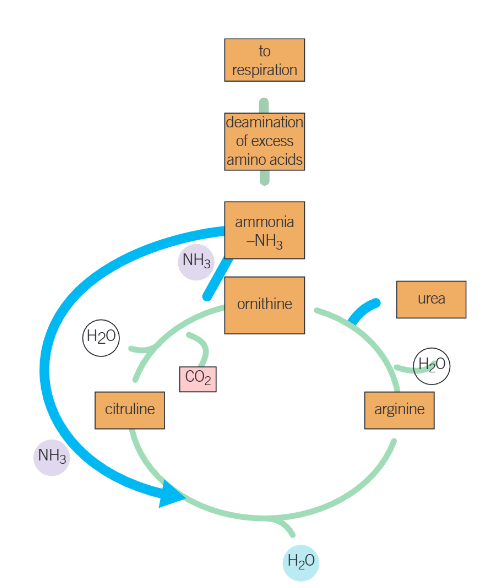
ornithine cycle
ammonia is converted into less toxic urea
requires ATP
The ornithine cycle
ammonia from deamination is combined with carbon dioxide to form urea and water
urea is less toxic and less soluble than ammonia making it safer for transport and excretion
urea is then transported to the kidneys and excreted in urine
Removal of carbon dioxide
carbon dioxide dissolves in blood plasma forming carbonic acid and hydrogen ions thus lowering pH
hydrogen ions can bind to haemoglobin, reducing oxygen transport and forming carbaminohaemoglobin
excess CO2 can lead to respiratory acidosis, causing symptoms like drowsiness, confusion, and rapid heart rate
(H+ ions lower pH so blood is acidic)