Biotechnology 2 final solutions flash cards
Q1) Suggest a strategy step by step for separation and purification of the glucose isomerase enzyme, which is accumulated in Bacillus coagulans cells. Please indicate all the steps clearly. Which method do you prefer over the alternative methods that can be used for the same purpose (for example, for the separation of insoluble part) and explain the reasons for preferring it?
SOLUTION
Here's a simplified approach to purifying glucose isomerase from Bacillus coagulans:
Break open the cells: Gently disrupt the cells to release the enzyme.
Remove cell debris: Separate the cell debris from the enzyme-containing solution using centrifugation.
Salt out the enzyme: Add salt to the solution to make the enzyme clump together and precipitate out.
Clean up: Dissolve the enzyme precipitate, remove excess salt, and purify it further.
Separate by size: Use a technique like gel filtration to separate the enzyme from other proteins based on their size.
Check purity: Ensure the enzyme is pure and active using appropriate tests.
Q2)
Write your suggestions briefly for the cases given below:
a) It is desired to decrease the “lag phase” period of the cell growth in a batch culture.
b) It is desired to reduce raw material cost of an industrial scale fermentation process by using low-cost nutrients. Give 3 examples for potential nutrients.
c) It is desired to select a subpopulation which can withstand the stress of high product (ethanol) concentration.
d) A steady state chemostat is desired to be operated at high dilution rates.
e) It is desired to design a continuous bioreactor system to produce a secondary product with high efficiency.
f) Reuse of the cells is desired in order to reduce the cost of the process.
g) Diffusion of the substrates into the cells, which are immobilized in polymer beads, is desired to be enhanced.
h) It is desired to reduce the resistance of the filter cake formed after filtration of an antibiotic product.
i) It is desired to reduce the gel formation occurred on the membrane of a filtration system.
j) The remaining water in a heat-sensitive product after the purification process is desired to be removed.
SOLUTION:
a) Decrease lag phase in batch culture:
Inoculum optimization: Use a high-density, actively growing inoculum.
Medium optimization: Ensure the medium contains all essential nutrients in sufficient concentrations.
Temperature and pH control: Maintain optimal growth conditions throughout the lag phase.
Consider using a pre-culture: Grow the cells in a smaller volume before transferring them to the production vessel.
b) Reduce raw material cost:
Use of inexpensive carbon sources:
Agricultural waste: Corn steep liquor, molasses, whey
Industrial byproducts: Glycerol (from biodiesel production), cheese whey
Renewable resources: Lignocellulosic biomass (after pretreatment)
c) Select for ethanol tolerance:
Continuous ethanol stress: Gradually increase ethanol concentration in the culture medium.
Strain improvement: Use techniques like mutagenesis or genetic engineering to improve ethanol tolerance.1
d) Operate chemostat at high dilution rates:
High growth rate strains: Use strains with high specific growth rates.
Improve mass transfer: Enhance oxygen and nutrient transfer to the cells (e.g., by increasing agitation or aeration).
Reduce substrate inhibition: Use substrates that do not inhibit cell growth at high concentrations.
e) Continuous bioreactor for secondary metabolite production:
Fed-batch strategy: Feed limiting nutrients continuously to maintain high cell density and induce secondary metabolite production.
Two-stage process: Use a first stage for cell growth and a second stage for product formation.
Immobilized cell systems: Can improve stability and control of secondary metabolite production.2
f) Cell reuse:
Immobilization: Immobilize cells in a suitable matrix (e.g., alginate, k-carrageenan).
Membrane bioreactors: Confine cells within a membrane, allowing for easy separation and reuse.
g) Enhance substrate diffusion in immobilized cells:
Reduce bead size: Smaller beads provide shorter diffusion distances.
Increase porosity: Improve the pore structure of the polymer beads.
Use more permeable polymers: Select polymers with higher diffusion coefficients.
h) Reduce filter cake resistance:
Pre-coat filtration: Apply a layer of diatomaceous earth or other filter aid before filtration.
Optimize filtration conditions: Control pressure, flow rate, and temperature.
Improve flocculation: Enhance cell aggregation to form larger flocs, which are easier to filter.
i) Reduce gel formation on membrane:
Regular cleaning: Clean the membrane regularly to remove accumulated gel.
Use anti-fouling agents: Add chemicals to the feed stream to prevent gel formation.
Membrane modification: Use membranes with anti-fouling properties.
j) Remove water from heat-sensitive products:
Lyophilization (freeze-drying): Sublimation of water under vacuum.
Spray drying: Atomize the product into a hot drying chamber.
Supercritical fluid extraction: Use supercritical CO2 to extract water.
Disclaimer: These are just brief suggestions, and the most appropriate solution will depend on the specific details of each case.
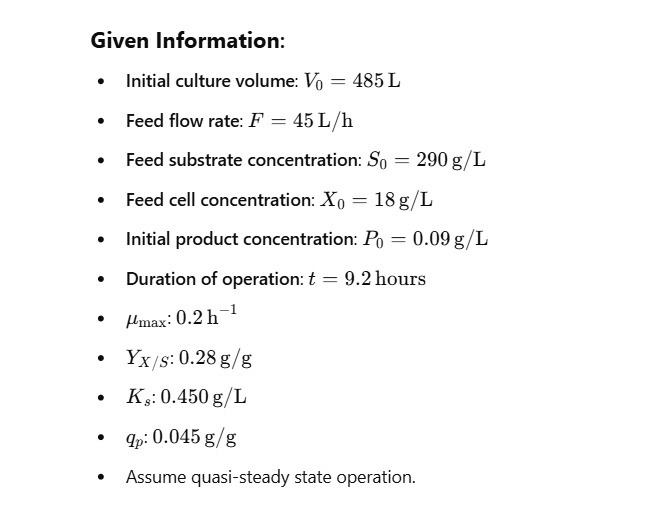
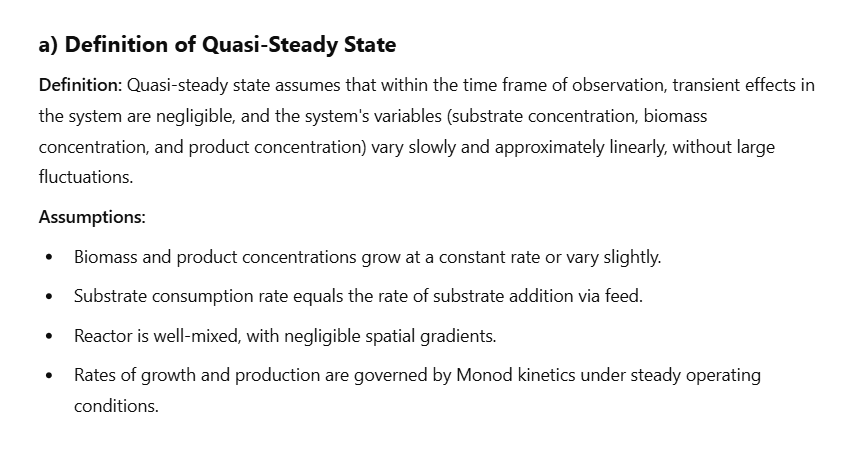
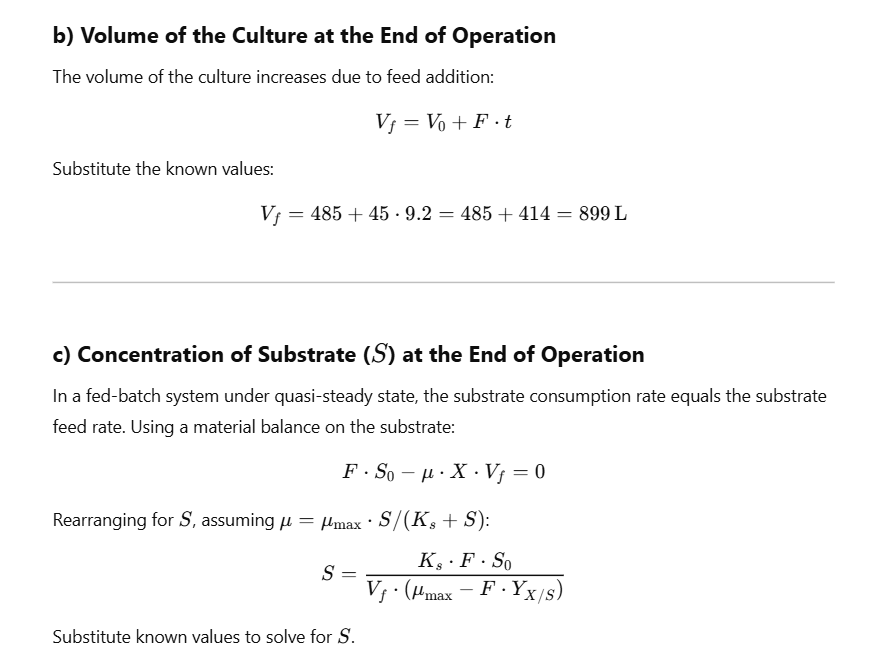
Q3)
SOLUTION
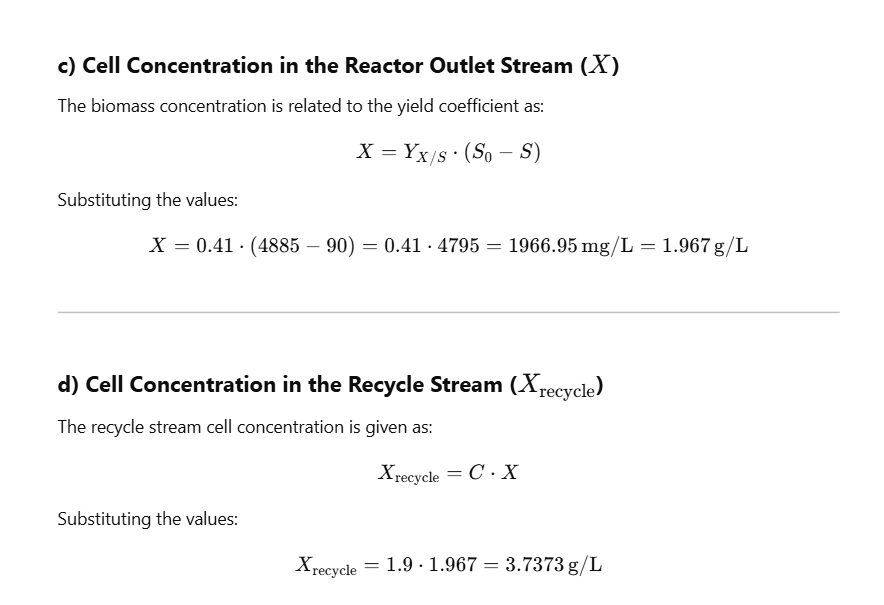
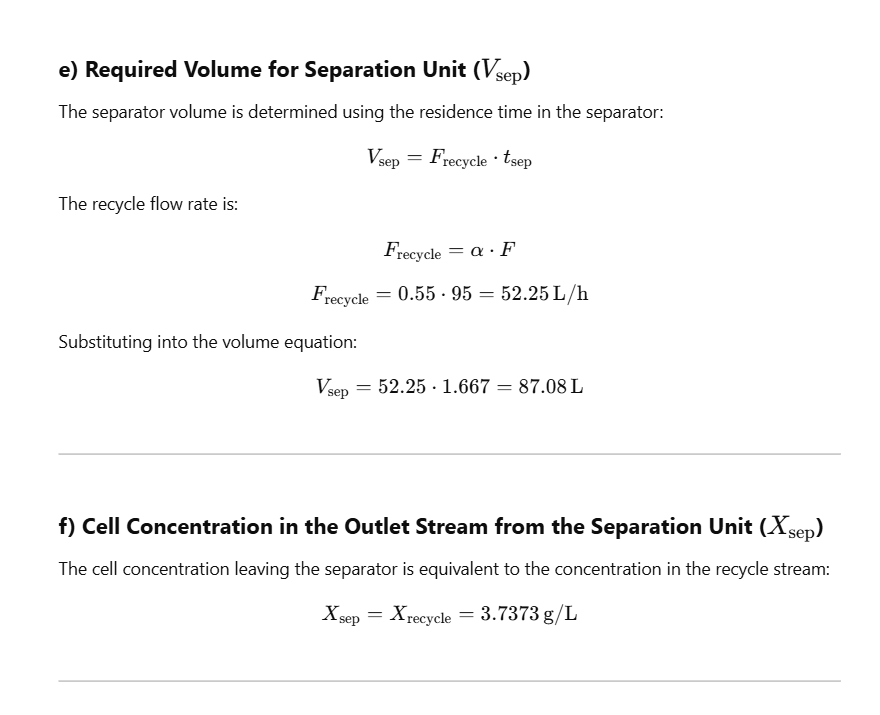
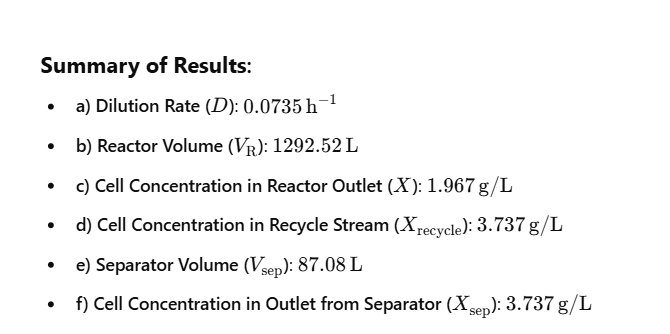
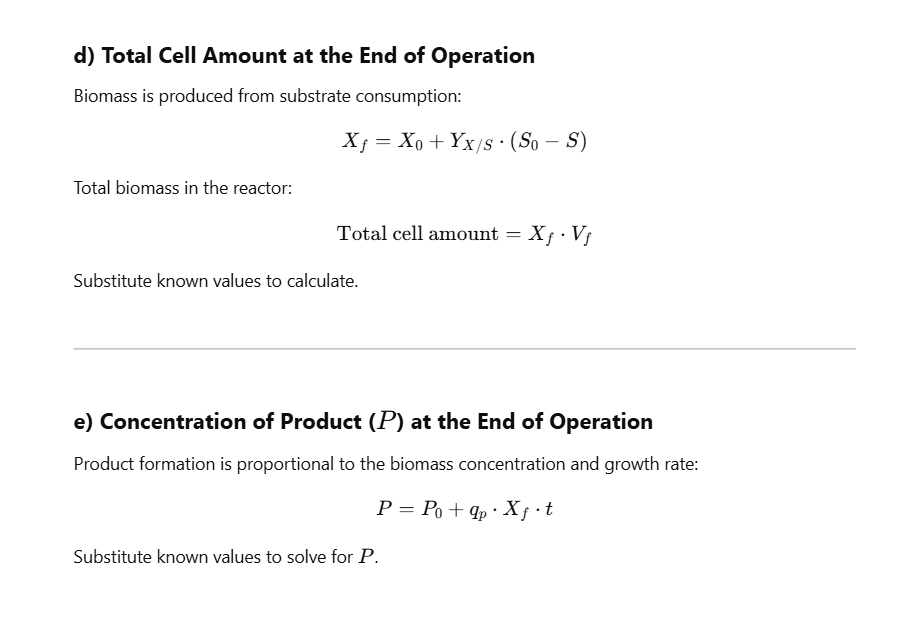
Q4)
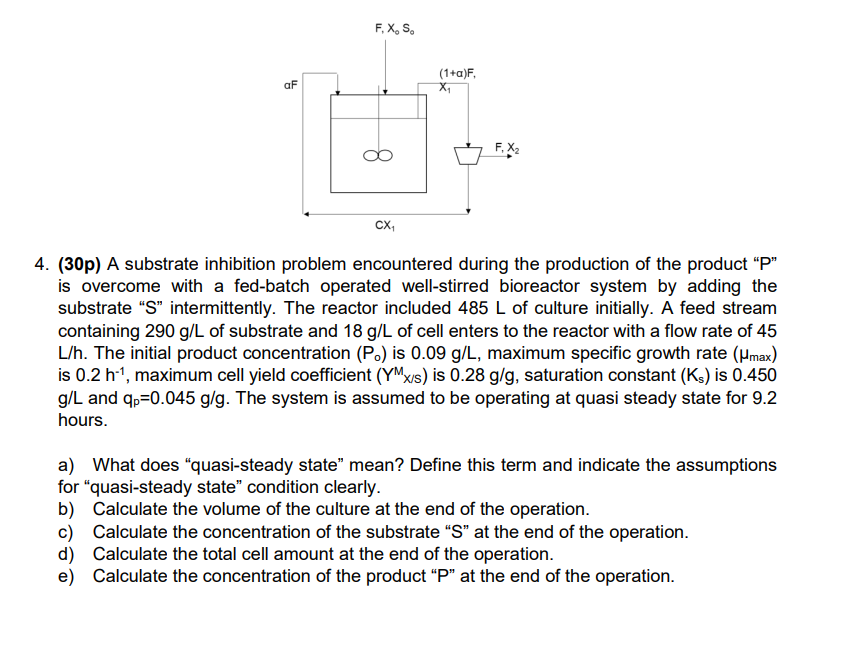
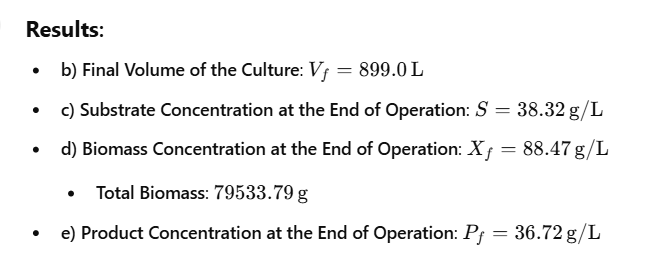
SOLUTION