ACIDS AND BASES
Acids: Substances that release hydrogen ions (H+) in solution, typically have a sour taste, and can react with bases in neutralization reactions. *acidic solution has more hydrogen ions than hydroxide ions, blue litmus paper→ red
Bases: Substances that accept hydrogen ions or release hydroxide ions (OH-) in solution, often have a bitter taste and slippery feel. *more hydroxide ions, red litmus paper→ blue
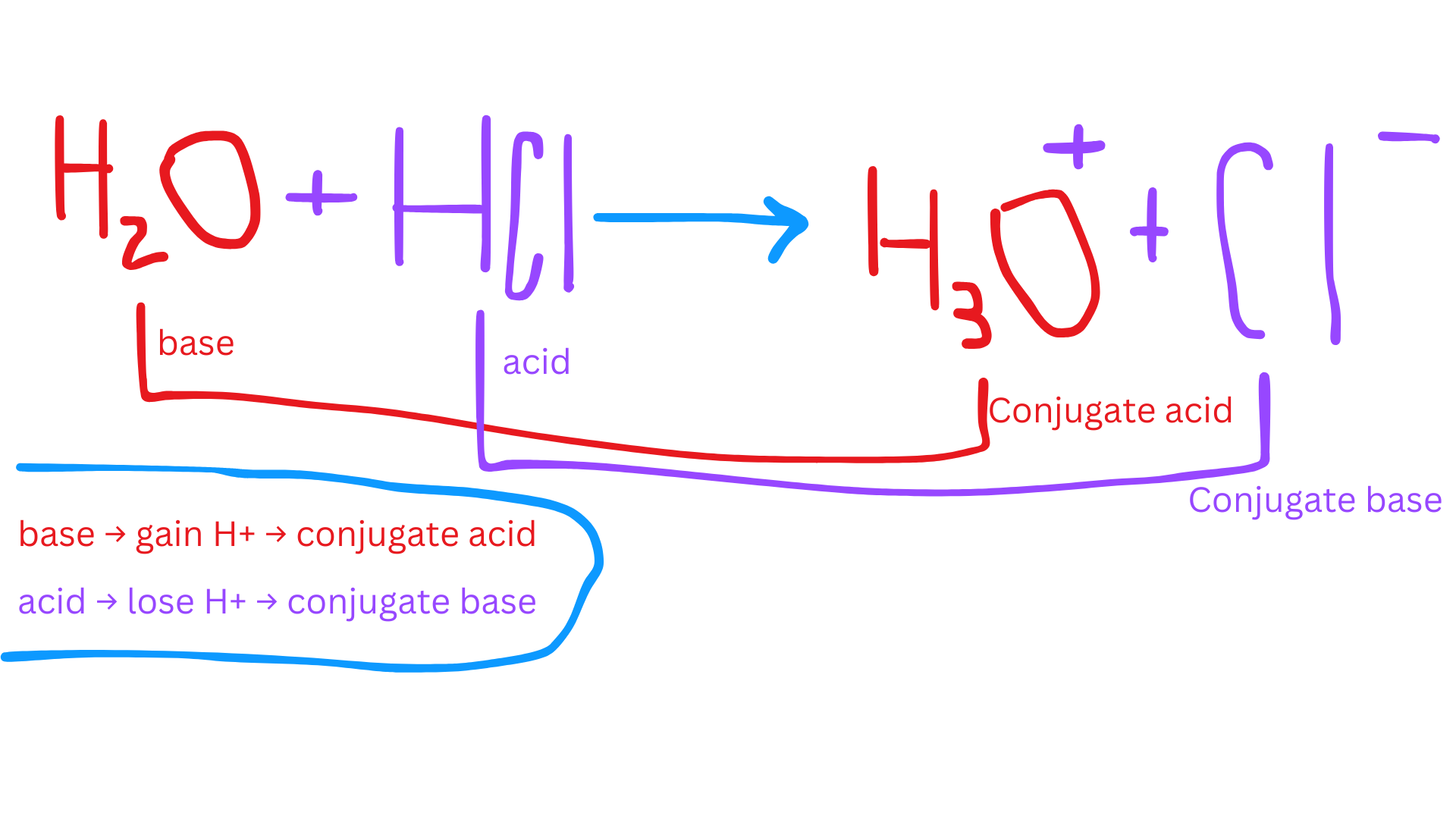
Conjugate acid-base pairs: Acidic and basic species that transform into each other through the gain or loss of a hydrogen ion, illustrating the Brønsted-Lowry acid-base theory.
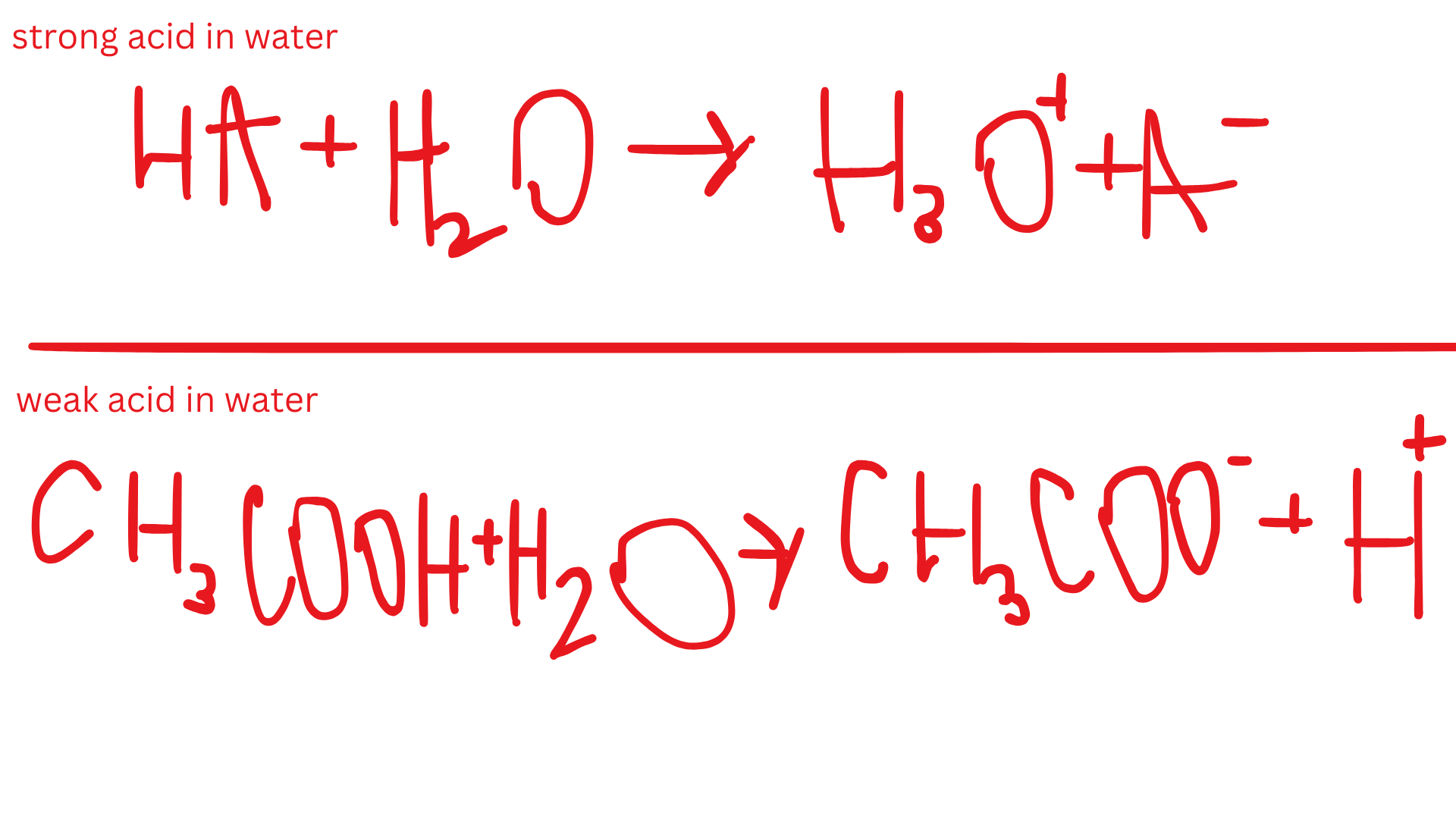
Strong acids: Substances that completely dissociate in water, resulting in a high concentration of hydrogen ions. Examples include hydrochloric acid (HCl), sulfuric acid (H₂SO₄), and nitric acid (HNO₃), which can cause significant changes in pH and are capable of corroding metals.
e.g. hydrochloric acid (HCl), hydrobromic acid (HBr), hydroiodic acid (HI), nitric acid (HNO3), sulfuric acid (H2SO4), and perchloric acid (HClO4)
Weak acids: Substances that do not fully dissociate in water, leading to a lower concentration of hydrogen ions compared to strong acids. Examples include acetic acid (CH₃COOH), carbonic acid (H₂CO₃), and phosphoric acid (H₃PO₄), which only partially ionize in solution, maintaining an equilibrium between the undissociated acid and the ions produced.
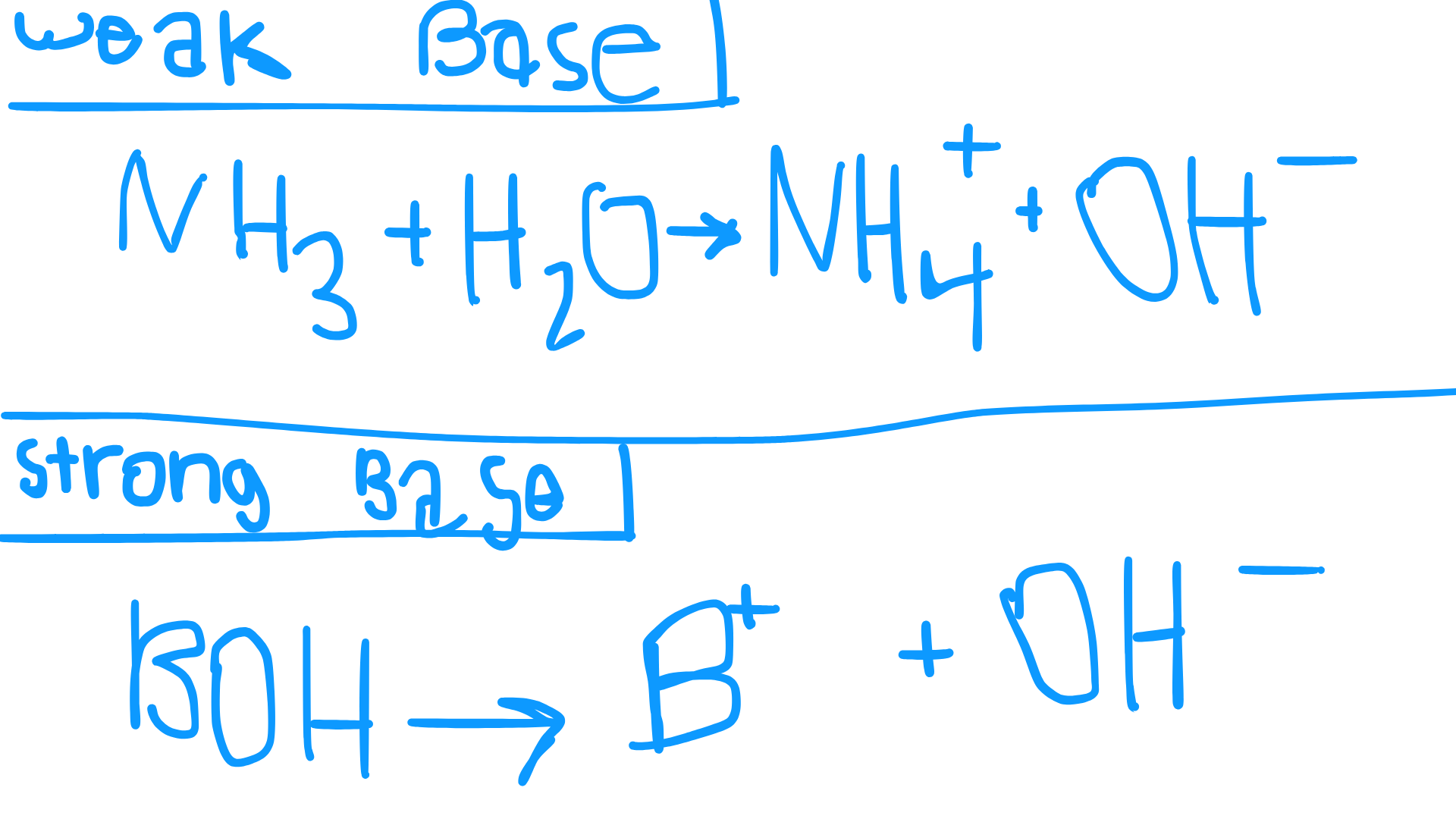
Strong bases: Substances that fully dissociate in water, resulting in a high concentration of hydroxide ions. Examples include sodium hydroxide (NaOH), potassium hydroxide (KOH), and calcium hydroxide (Ca(OH)₂), which can significantly raise the pH of a solution, making it very alkaline and capable of saponification reactions.
e.g. lithium hydroxide (LiOH), sodium hydroxide (NaOH), potassium hydroxide (KOH), rubidium hydroxide (RbOH), cesium hydroxide (CsOH), calcium hydroxide (Ca(OH)2), strontium hydroxide (Sr(OH)2), and barium hydroxide (Ba(OH)2).
Weak bases: Substances that only partially dissociate in water, leading to a lower concentration of hydroxide ions compared to strong bases. Examples include ammonium hydroxide (NH4OH), magnesium hydroxide (Mg(OH)₂), and sodium bicarbonate (NaHCO₃), which can create a less alkaline solution and may not support saponification reactions effectively.
Naming Acids and Bases examples
NH3 | Ammonia- base |
HCN | hydrocyanic acid, acid |
FeOH3 | Iron hydroxide, base |
PH- a measure of the hydrogen ion concentration in a solution
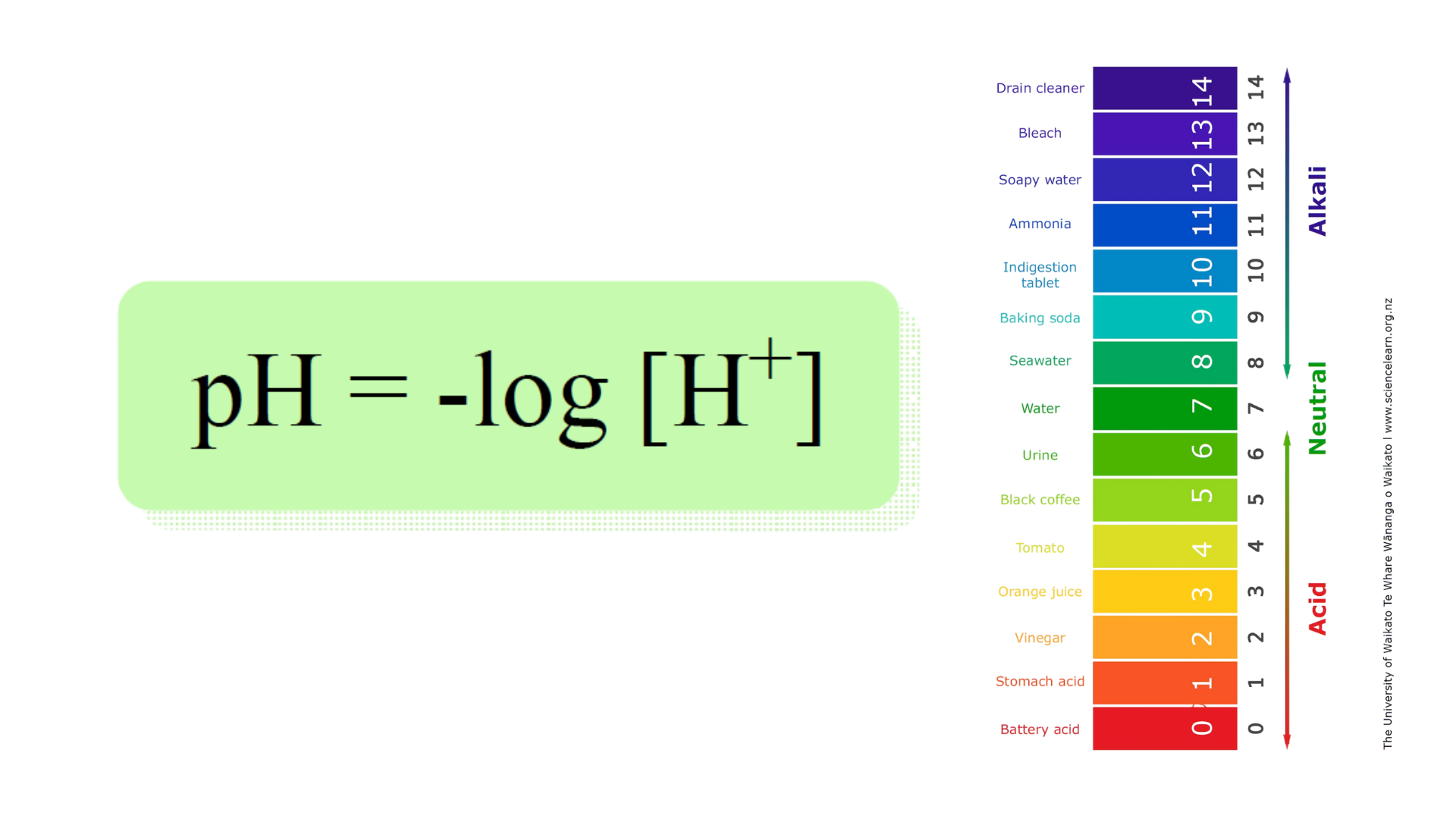
PH + POH = 14
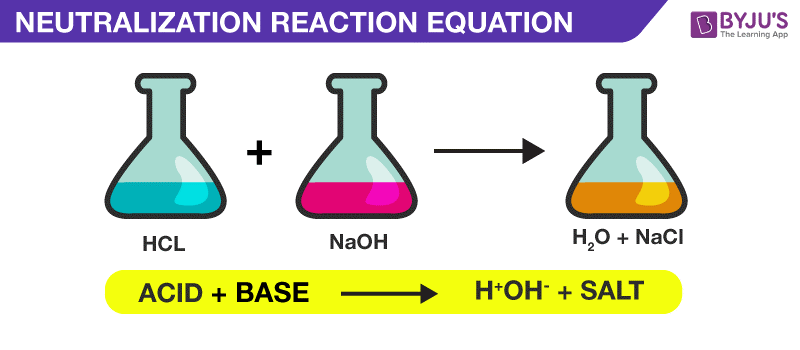
Neutralization: The reaction between an acid and a base that produces water and a salt.
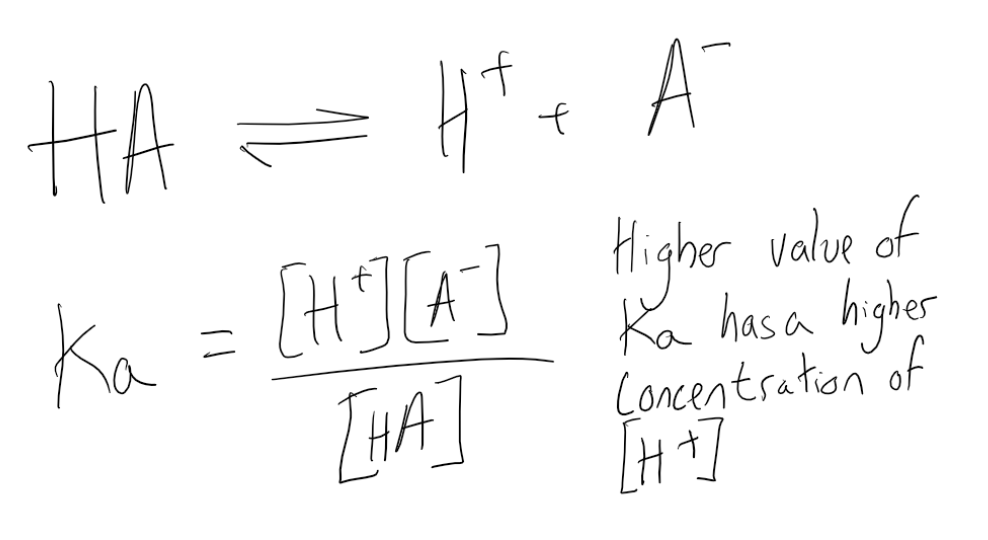
Ka/ Kb values: The strength of an acid or base is quantified by its dissociation constant, Ka for acids and Kb for bases. A higher Ka value indicates a stronger acid, while a higher Kb value indicates a stronger base.
Buffers and Salt Hydrolosis
Salt hydrolosis- the process by which an anion from a salt reacts with water to form a weak base, or a cation from a salt reacts with water to form a weak acid, affecting the pH of the solution.
The cation of salt comes from its parent base
The anion of salt comes from its base acid
Weak acid + Strong base → salt solution with a Ph greater than 7 (basic)
Strong acid + Weak base → salt solution with a Ph less than 7 (acidic)
Strong acid + Strong base → salt solution with a Ph of 7 (neutral)
Weak acid + weak base → n/a
Arrheinous acid- a substance that increases the concentration of hydrogen ions (H+) in aqueous solution.
Arrheinous base- a substance that increases the concentration of hydroxide ions (OH-) in aqueous solution.
Bronstead Lowry acid- a substance that donates a proton (H+) to another substance, thereby acting as a proton donor in acid-base reactions.
Bronstead Lowry base- a substance that accepts a proton (H+) from another substance, functioning as a proton acceptor in acid-base reactions.
Lewis acid- a substance that can accept a pair of electrons to form a covalent bond, often involving coordination complexes.
Lewis base- a substance that donates a pair of electrons to form a covalent bond, thereby acting as an electron pair donor in chemical reactions.