Vce Biology Units 3 And 4
Mind Map: VCE Biology Units 3 and 4
Central Idea
VCE Biology Units 3 and 4
Main Branches
1. Cell Biology
Structure and Function
Cell organelles
Prokaryotic vs Eukaryotic cells
Cell Membrane
Fluid mosaic model
Transport mechanisms (diffusion, osmosis, active transport)
Cell Division
Mitosis
Meiosis
2. Genetics
DNA Structure and Function
Nucleotide composition
Replication process
Gene Expression
Transcription
Translation
CRISPR
Spacers in the CRISPR array
Spacers are used to create the crRNA that Cas-9 uses as guide RNA (gRNA)
CRISPR-Cas9 only cuts DNA
restriction endonuclease only cuts DNA (at a specific recognition site)
Cas9 is more versatile than restriction endonuclease as it can be programmed to target any specific sequence dictated by a single piece of gRNA
Inheritance Patterns
Mendelian genetics
Punnett squares
Sex-linked traits
3. Evolution
Natural Selection
Mechanisms of evolution
Adaptation and Fitness
Speciation
Types of speciation (allopatric, sympatric)
Evidence of evolution (fossils, comparative anatomy)
Phylogenetics
Cladograms
Common ancestry
4. Ecology
Ecosystems
Biotic and abiotic factors
Energy flow and nutrient cycles
Population Dynamics
Carrying capacity
Population growth models
Biodiversity
Importance of biodiversity
Conservation strategies
5. Human Biology
Body Systems
Circulatory system
Respiratory system
Nervous system
Factors affecting the rate of Enzyme’s
when the is above optimum, the enzyme can denature. when temp is below optimum there will be less kinetic energy ∴ rate of reaction ⬇
Hormonal regulation
Health and Disease
Pathogens and immunity
Genetic disorders
Preparing for Exam
Important info to remember:
Primary lymphatic organs:
• bone marrow (B-cells and T-cells are made & where B-cells mature)
• thymus (where T-cells mature)
→ provide an environment for stem cells to divide and mature into lymphocytes
Secondary lymphoid tissues/organs:
• lymph nodes -> storage of B and T cells against all the pathogens encountered
• Tonsils
• Spleen
→ Secondary lymph tissues act as a filter of sorts, monitoring the contents of extracellular fluids such as blood, lymph and tissue fluid. Site of antigen presentation AND lymphocyte activation
• Clonal selection is the process by which immune cells are chosen for activation based on their ability to bind to a specific antigen
• Clonal expansion refers to the subsequent rapid multiplication and proliferation of the selected cells.
Autoimmune disease prevention using immunotherapy
Autoimmune disease: when self cells are detected as foreign by the person’s own immune system. As a result, the immune system launches an immune attack on these misidentified cells.
Immunosuppression via immunotherapy
• Monoclonal antibodies used to suppress the immune system
• Hence, reducing its ability to attack self cells
Monoclonal antibodies can:
• Cytokine inhibition - monoclonal antibodies can bind to cytokines and inhibit them
• B and T cell depletion and inhibition - monoclonal antibodies can bind to specific autoreactive lymphocytes and either inhibit them, or stimulate their destruction by other
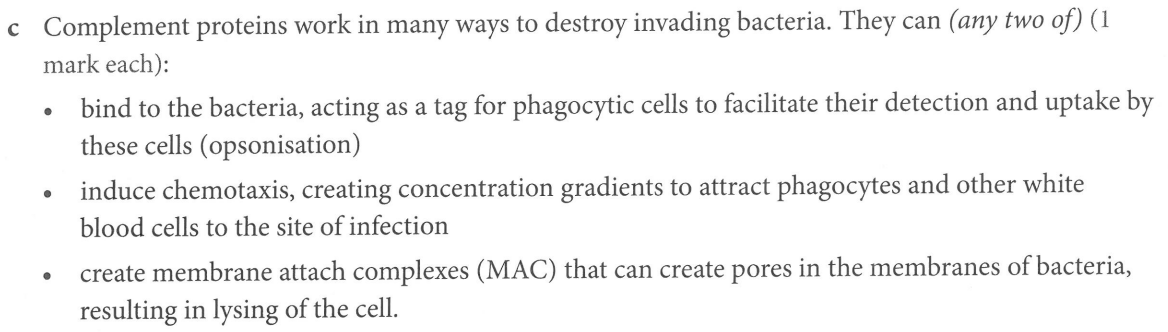
Complement proteins
· Complement proteins stick to the surface of a pathogen. Phagocytes have receptors the recognize complement proteins and will engulf the pathogen. -> Complement proteins allow phagocytes to bind more easily to the pathogen, increasing the likelihood of phagocytosis occurring.
· Complement proteins join together on the surface of pathogen forming a MEMBRANE ATTACK COMPLEX (MAC), which creates pores in the membrane. Pathogen swells and bursts
The activation of an initial complement protein starts a series of enzymatic reactions
→ other complement proteins are activated
(1) Molecules interact with each other because of complementary shape and charge.
(2) When they interact with each other, they change each other's shape.
CRISPR
CRISPR is not 100% efficient – in a large sample of modified organisms/cells there will be some in which CRISPR won’t work
If a gene is being silenced using CRISPR, the gene product may still be produced due to another gene coding for it, or it being the product of another biochemical pathway
PCR & Gel electrophoresis
Regarding the purpose of PCR specifically for gel electrophoresis – PCR is needed to amplify the amount of DNA so there is enough to be visualised as a distinct band on the gel
Immunity
Comparison of benefits provided by vaccinations and antibody injections:
The benefit of vaccination is that it results in the production of memory cells, which provide long-term immunity (active)
The benefit of an injection of antibodies is that it gives immediate protection as the antibodies can bind to the pathogen and the person is likely to have less symptoms (passive)
Antigenic shift can produce entirely new virus strains whereas antigenic drift will result in a closely related strain.
Antigenic shift may result in the infection of a new species whereas antigenic drift will more likely result in infection in the same species.
Here’s a good scaffold for explaining why vaccinations need to be updated yearly for many viruses:
The original vaccine or exposure to a virus will have enabled a person to produce memory cells against the antigens (proteins) on the surface of the virus.
When the antigen shape changes, the person’s antibodies may not be complementary / able to bind at all to the new virus antigen.
This results in the loss of immunity to the virus.
Photosynthesis
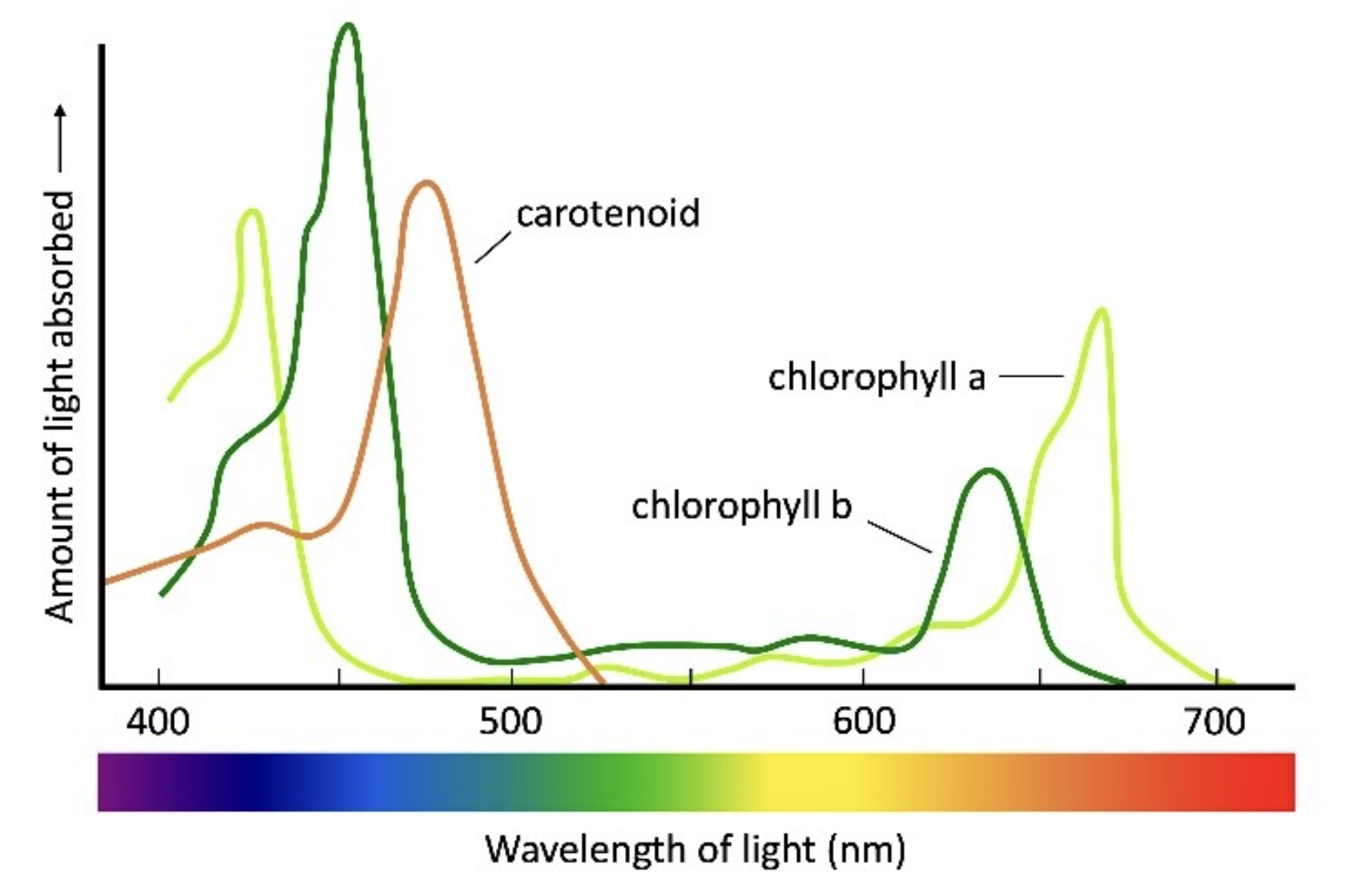
Plants can have accessory pigments, such as carotenoids, which can absorb wavelengths of light that chlorophyll cannot, allowing plants to photosynthesise in low light/non-optimal light conditions.
Antigenic shift and drift
Some more information about antigenic shift and drift:
Both involve changes in the nucleic acid, antigen/protein of the virus.
In antigenic shift, viruses swap whole sections of their genomes, leading to widespread changes in surface proteins, whereas in antigenic drift there may be a small change in one protein due to a point mutation.
Evolution
Why can the fossil record only provide limited information about evolution of closely related species, such as those within the Homo genus?
There are limited fossils finds, fossil record is incomplete, so some species may be missing from the record.
Some samples may only be a small part of the organism making it difficult to compare species.
Closely related species may not show any great differences in physical structure so it is harder to determine their relatedness.
What is the really important factor in speciation?
Isolation of populations to prevent gene flow combined with different selection pressures on each population
This results in natural selection of different mutations, alleles and traits in each population
Experimental Design
Regarding validity – it is maintained in experiments by two factors (both of which should be discussed):
Controlling all variables other than the independent variable as much as possible
Comparing results to known values to confirm findings, e.g., comparing a patient’s gel electrophoresis lane to that of a known disease allele to confirm the patient has the disease in question
for example
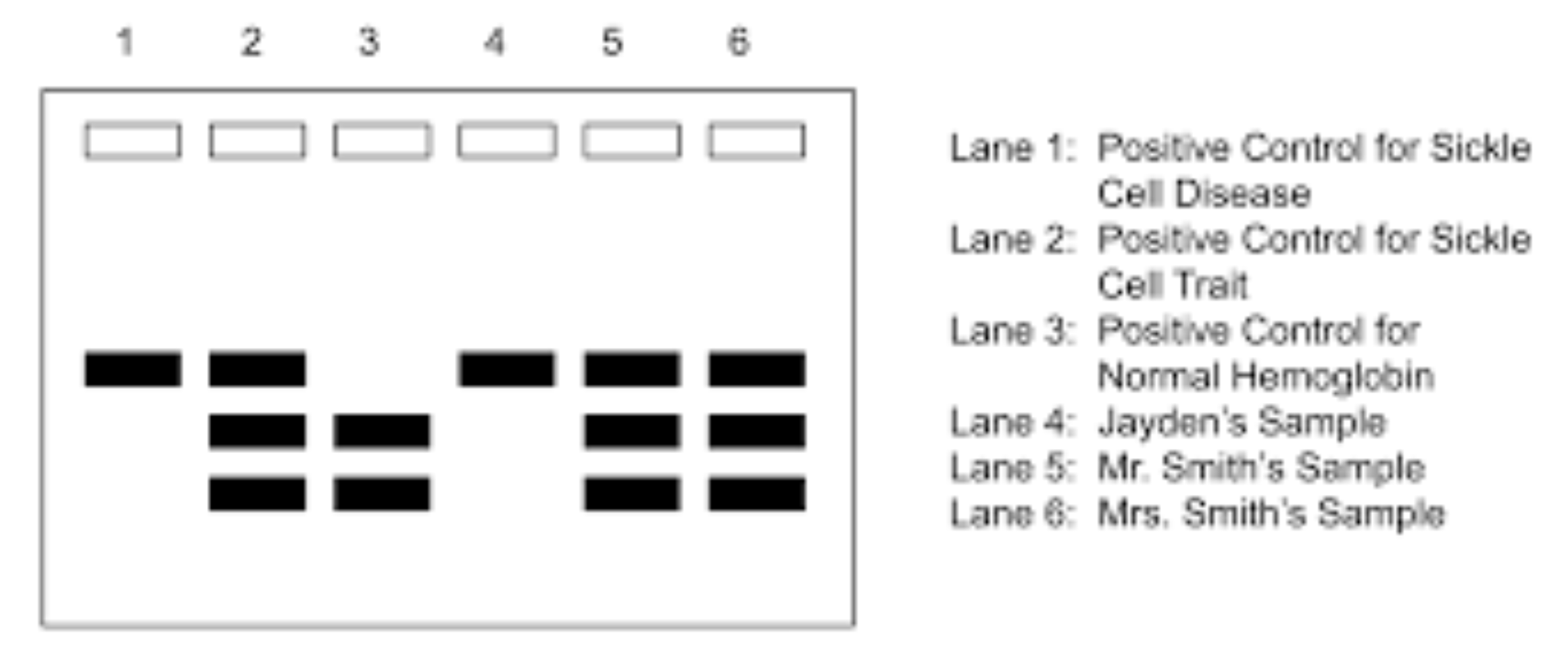
Lane 1 – 3 are used to compare with the patient samples to determine if the patients have the disease – this maintains validity in the experiment.
MISTAKES I’VE MADE:
SAC 4: Evolution
c) Predict and explain the potential for extinction of the blue whale populations due to genetic drift.
explain why it’s bad
If whaling continues then the whale population will decline and a smaller population means a smaller gene pool and less alleles in the gene pool for adaptive potential if a deadly threat occurs, such as if a virus were to adapt and infect the whale population. Since the population is more fragile to large-scale events and has less alleles and less chance to bounce back from a threat it causes the population to be at higher risk of extinction
c) Describe how a strain of virus can arise very quickly…
talking about antigenic shift, explain process, and why its a threat to Blues whales and there small population.
Experimental design
When asked to design an experiment discuss the following in context of the question (unless given in the stem):
Independent variable – how it is applied/altered
Dependent variable – measurement technique (if available) and inference about biological concept
Two controlled variables directly related to the experiment (minimum)
“Repeat many times using a large sample size”
Describe an appropriate experimental control
Hypothesis or predicted results with biological reasoning
2023 practice test Unit 4
Universal = The same sequence is code for the same amino acids in all living things
Haemoglobin has a quaternary structure
Exons removal would result in fewer nucleotides than normal to be translated.
Describe how natural selection caused the medium ground Finch population on Daphne major to change during and after the drought in 1977
didn’t use a scaffold of natural selection
Heritable variation exists within a population of medium ground finches for beak depth.
selection pressure of seed abundancy and soft vegitation scarcity meant alleles underlining deeper beaks where more advantageous than smaller beaks, as such are passed on at higher frequencies than other alleles. eventually the deeper- beaked phenotype became more prevalent in the population.
*when it’s talking about breeding programs
reintroduced selectively breed finches causing prevalence of deeper beak depth in future generations of medium ground finches
A lack of genetic diversity is often associated with a reduction in survival rates. Explain a potential reason for this observation.
A less genetically diverse population may have integrating occur, increasing the leader's alleles in offspring and future generations. Decreasing adaptive potential means less chance of individuals having alleles to cope with new selection pressures and populations are more fragile.
Explain why the European population had a strong resistance to diseases such as bronchitis, measles, scarlet fever, chicken pox, and even the common cold. But exposure to these diseases was often fatal to aboriginal populations
European population had a quiet active immunity and immunological memory to these diseases (1) via development of specific memory cells (1). Aboriginal populations had not been exposed to the disease thus had no chance to develop immunity.
State the functions of the lymphatic system and nodes
The lymphatic system is a transport network for specific B&T cells working against tuberculosis, and other leukocytes travel, Running the immune system. Lymph nodes have a structure that encourages interactions between B & T cells & APC. They are also the sites for antigen recognition by T & B lymphocytes.
What is the aim of the Vaccination program?
The vaccination program aimed to immunize a large portion of the population. heard immunity benefits those who have a weaker immune system and can't receive the vaccine e.g. Elderly, and cancer patients. By reducing the transmission rate due to fewer susceptible hosts.
the role of interferons:
They bind to receptors on body cells making them change and resistant to viral infection as well as less permeable to influence of virus
Define the term hominin
hominin: Modern humans, extinct homo species and all immediate erect -walking ancestors
Why is the implication of Homo naledi burying their dead so controversial in this instance
Cranial capacity increased during hominin evolution; H. naledi has a smaller cranial capacity than H. sapiens. If H. naledi buried their dead, it could be a sign of advanced intelligence usually associated with later homo species.
Suggest why there are rigorous criteria for identifying intentional human burial
keyword is intentional: how could a burial be shown that it is intentional, perhaps corpse is buried with artifacts or position in a respectful way etc.
forgot why mtDNA is better than nuclear DNA
mtDNA
Less sequences and base pairs
only changes through mutation not recombination
tract through a female bloodline
2022 Test 1: What is the role of nucleic acids and proteins in maintaining life?
the Hierarchal level of an enzyme’s protein structure is usually
tertiary: b/c quaternary structure are composed of two or more polypeptides joined together
* The quaternary structure also influences the protein's 3-dimensional shape and is formed through the side-chain interactions between 2 or more polypeptides
The human growth hormone protein consists of 14 amino acids. What is the minimum number of codons for this hormone?
16: b/c its asking codons sets of 3, each codon codes for one amino acid, there also needs to be a start and stop codon.
Gene expression is often suppressed by the end product
acting as a regulator: b/c the protein product of a gene expression can be used to regulate a gene; once it is in excess, it switches off the gene, ∴acting as a regulatory protein
RNA polymerase has a globular shape
2024 NHS Exam:
Q1: what does degenerate and universal mean
The same sequence is code for the same amino acids in all living things
The codon is considered degenerate because more than one codon may code for the same amino acid
Q1 c): Golgi apparatus function:
it modifies and packages proteins and lipids into vesicles for transport to various locations.
Q2: explain why wheat seeds that have been edited using CRISPR Cas 9 May be advantageous over transgenic wheat seeds
CRISPR Cas 9 edited wheat seeds do not have genes from another species inserted into their genome this reduces unknown harmful effects and improves public perception.
Q2 b): what is the function of sgRNA
sgRNA is a complementary sequence to the target DNA & guides Cas 9 endonuclease as to where to cut the DNA.
Q3: explain why consumption of glucose and production of lactate change when the cell is prevented from uptake of pyruvate
The cell relies on fermentation for its energy production as such more glucose is required and consumed and lactate builds up because the cell cannot breakdown pyruvate.
*If 2-DG is a non competitive inhibitor, increasing the glucose concentration beyond a certain concentration will not result in any further glucose-6-phosphate molecules. This is big cause non competitive inhibitors are not displaced by the substrate-glucose-as it doesn't compete with substrate for active site. If 2-DG is a competitive inhibitor, Increasing the glucose concentration results in higher amounts of glucose-6-phosphate being formed. At very high concentrations of glucose, the amount of glucose-6-phosphate formed would be similar to that of the uninhibited enzyme. This is because competitive inhibitors can be displaced by adding more substrate to solution.
*Chlorophyll does not absorb green light ∴ less ATP and NADPH produced in light-dependent reaction. could be fixed by inserting a gene that codes for accessory pigment.
Q5 a) describe how complement proteins could destroy B cells
· Complement proteins form membrane attack complexes (MACs) on B cells’ plasma membranes and cause the lysis of B cells.
· Opsonisation occurs when complement proteins coat the B cells and induce phagocytosis of the B cells.
· Complement proteins can also recruit other inflammatory cells that destroy the B cells.
Q6 b):
Memory cells and antibodies decline in number over time. A booster will trigger an immune response, leading to the production of more antibodies and more memory cells. The person can then mount a faster and larger immune response if infected again, so is less likely to have rabies symptoms.
Q9 b): explain why fossilised remains may not give scientists a more detailed understanding of the relatedness of Homo species
There are limited fossil finds; the fossil record is incomplete as some species may be missing from the record. Some samples may only be a small part of the Organism making it difficult to compare species closely related. Homosapiens may not show any great difference in physical structure, so it is harder to determine their relatedness
2024 TSSM Trial Exam:
Enzymes are used in DNA manipulation to both cut DNA and join DNA the bonds that these enzymes are acting upon are:
C. Phosphodiester bonds; (the bonds B/ween nucleotides are phosphodiester bonds)
When attenuation in the trp operon occurs
B. RNA polymerase quickly transcribes the two trp codons in the Leader region
*Reminder: denaturation at 95oC; annealing at 55oC; and elongation at 72oC
A tRNA anticodon has the three nucleotide sequence of UUA. The corresponding sequence on the coding strand of DNA would be:
B. TTA; (what codon is complementary to UUA → AAU and what is complementary to AAU on DNA → TTA)
The optimal temperature for inserting a plasmid into bacterium via heat shock is:
D. 40oC ; (At this heat it allows the membrane to become more fluid without causing damage)
The production of buyer ethanol requires a series of steps, one of which is enzymatic hydrolysis. The purpose of enzymatic hydrolysis is to:
C. Break stored sugars into monomers; (Monomers of glucose are an input into anaerobic respiration. Hydrolysis used a water molecule to break bonds between polymers.)
A student conducted an experiment to observe the right of cellular respiration in yeast. Prior to undertaking the experiment, they conducted research and identified the yeast cells to have mitochondria, therefore can undergo aerobic respiration. They added a yeast and sugar solution to a beaker and placed an airtight lid on top. They used an ethanol, carbon dioxide and oxygen probes to measure the changes in the solution over a 30-minute period.
After 30 minutes it would be expected that
D. anaerobic respiration would occur. ; (Due to lack of oxygen entering the solution)
The change in carbon dioxide levels would be due to:
A. Carbon dioxide being an input in glycolysis ; (b/c it's anaerobic, all CO2 is produced by glycolysis)
Which organelle in beta cells is insulin synthesized?
Ribosomes
Briefly describe the relationship between that repressor gene, the operator region and the trp structural genes.
The trp regulatory gene produces the repressor protein that binds to the operator region (1). Controlling expression of the structural genes (1)
A mutation occured in the operator region of the trp operon, causing a change in the sequence. Outline the potential consequences for this cell.
Regulation of trp through repression cannot occur (1), as the operator is no longer complementary to the repressor protein (1). As such, the trp will continually be produced (1) leading to the wastage of energy (1)
What is the purpose of the Pam sequence in CRISPR Cas 9 technology
It provides a binding site for Cas 9 (1) & it prevents CAS 9 from cutting self-DNA (1)
A scientist wanted to use crisper technology to modify tomato plants by inserting a gene that would slow ripening. They created a complimentary gRNA sequence to the target sequence And add it to a cell with Cas 9. There repeated the experiment hundreds of times without success. Proposed a reason for this.
The scientist may not have added the slow ripening gene that is to be inserted (1). As such, whilst Cas9 could cut at the target sequence, the specific sequence of nucleotides to be inserted was not there (1).
Both EcoR1 and BamH1 Produce sticky ends. What is meant by this term and what is the advantage of these ends?
When it is cut, it creates an overhang of nucleotide bases (1) which allows fragments to join via complementary base pairing & DNA ligase to join them together easily and correctly (1)
What is photorespiration and what does it produce?
Photorespiration occurs when oxygen binds to rubisco (1) producing carbon dioxide as a product (1)
Identified 2 co-enzymes required for photosynthesis to occur.
NADPH / NAD+ as well as ADP + Pi / ATP
Despite being essential for photosynthesis to occur, provide 2 pieces of evidence as to why the molecules in part (i) are not considered an enzyme?
they do not catalyze reactions/lower the activation energy of reactions (1). They change In a reaction, whereas enzymes do not (1)
Carbon fixation is required to produce glucose. What is carbon fixation, and how does it differ between C3 plants and plants with photosynthetic adaptations?
Carbon fixation is the conversion of inorganic carbon products into organic carbon products (1). In C3 plants, carbon fixation only occurs in the presence of Rubisco (1). C4 and CAM plants use PEP carboxylase for initial carbon fixation (1). C4 plants separate carbon fixation by space (1) and CAM plants separate carbon fixation by time (1)
Oxygen is an input into the final stage of the aerobic cellular respiration. Explain the role of oxygen in this stage, and how it can act as a limiting factor.
Oxygen binds with H+ ions that have passed through ATP synthase (1) maintaining a concentration gradient (1) allowing the electron transport chain to continue (1). If there is no oxygen, co-enzymes can not be unloaded (1) and the cell will revert to anerobic respiration (1) producing 2 ATP instead of 30 or 32 (1)
Topic 5 test: responding to antigens and acquiring immunity
Q6: In innate immunity, which cells destroy virus-infected cells?
I put: phagocytes
Correct Answer: Natural Killer Cells
Section B-
Q2: Define the term vaccine
an attenuated virus that triggers an immune response
List an example of a physical and chemical barrier explain the function:
Physical barrier: intact skin, this prevents pathogens from entering the underlying tissue of the human body.
Chemical barrier: lysozymes in tears and saliva degrade bacterial cell walls
State the name of the protein and cell involved during the asthma attack
lgE antibodies and mast cells
Test 11: Changes in species over time
what kind of evolution did the Galapagos island finches go through.
A. Adaptive radiation; this is rapid evolution in a short period of time from one ancestral species, whereas convergent evolution is where 2 separate species become more similar
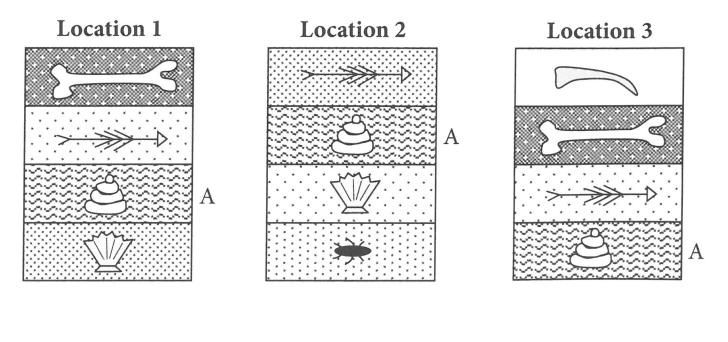
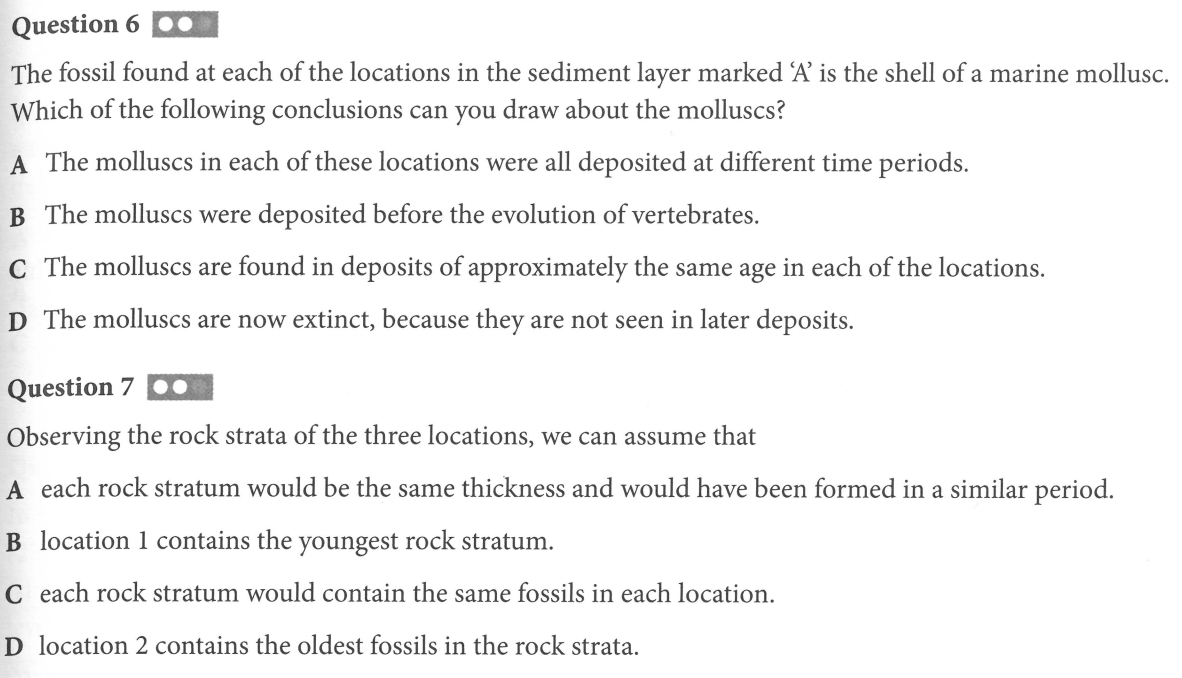
Q6: answer is C
Q7: answer is D
Q9: Speciation of these Howea palms could have occurred through
I put- the rate of photosynthesis
correct answer: C. The altitude that the palms grew from the ocean, if trees are at different altitudes than pollination would occur between those that are closer to each other, making aa divide by altitude.
*Remember carbon 14 dating technique measures the ratio of carbon 12 to carbon 14 in organic remains; once Organism dies C-14 decays but C-12 remains constant
Q1 b) What technique do scientists use to numerically date a sample?
Scientists measure the amount of decay of a radioisotope found in the sample to calculate its age.
Q1 d) What is one problem that can interfere with the reliability of relative dating?
the layers may have been overturned by large earth movements
or
Layers of sediment may have been lost to erosion
Q2 c i) State one reason why carbon 14 dating is frequently used to date animal remains
animal remains frequently fall into the time period in which carbon dating is useful
Q2 c ii) what is meant by an isotope's half life
the time a radioactive substance takes to lose half its radioactivity through decay
Q3 b)
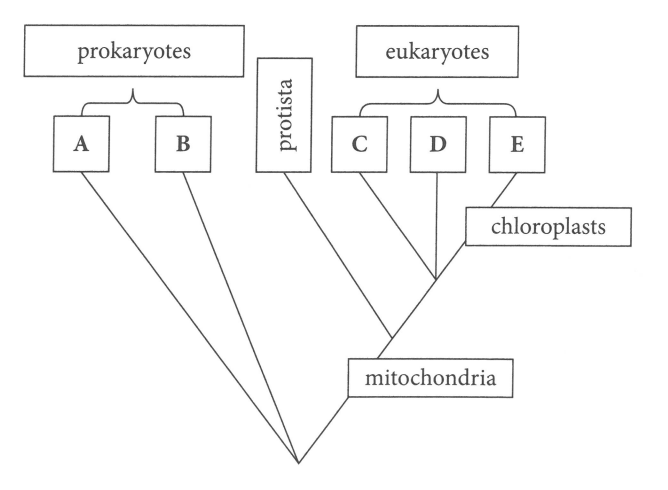
A = Bacteria or Archaea
B = Bacteria or Archaea
C = Fungi or plants
D = Fungi or plants
E = Animals
aced Exam 2023:
Section A
Q10: which statement is true
starting the Calvin in the mesophyll cell (only C4 plants have a bundle sheet cell)
Q17: why are the bacteria here, referred to as transgenic
I put- it is a GMO (could also mean they have been selectively bred)
It has non-bacterial DNA
Q25: how can monoclonal antibodies be an effective treatment for an autoimmune disease?
I put- it triggers appoptosis
Because of its ability to block the realse of cytokines (the monoclonal antibodies treatment would need to suppress the action of the immune system. Blocking cytokines is a form of immune repression.)
Q36: Primates
I put- carry out bi-pedal locomotion
have sensitive touch receptors in their figures (other unique features exclusively for primates are: - 3D, colour, binocular vision - Prehensile 5-digit hands and/or feet with one opposable digit and nails - Large cranium relative to body size)