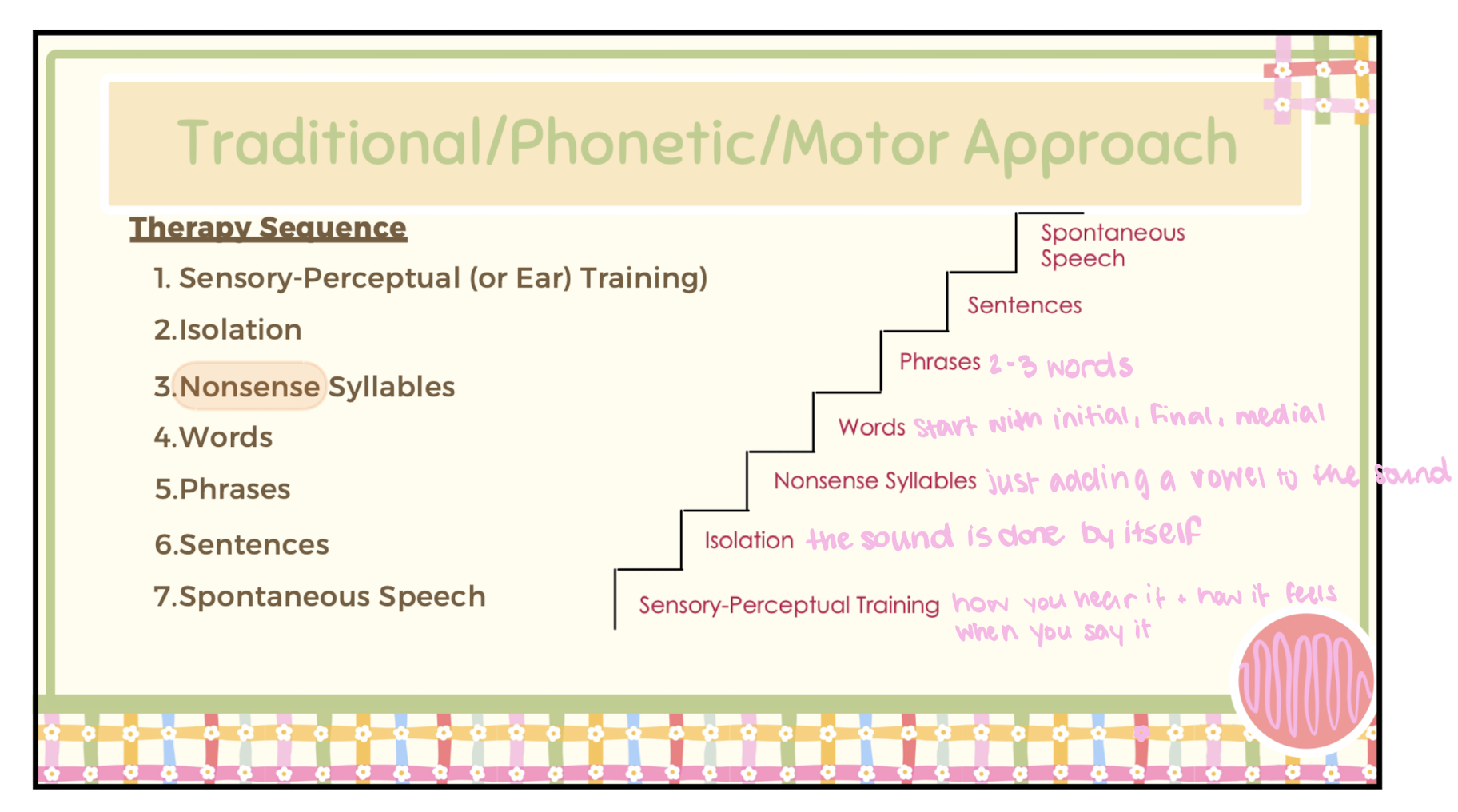
Articulation Therapy
Identification and discrimination
woops
discriminate from other speech sounds
therapist presents random consonant sounds
child makes predetermines response every time he hears the sound
at first, choose sounds that aren’t easily confused
then make sounds more similar
discriminate sounds in more complex contexts
train to discriminate sounds in single words
begin with the target sound in initial position of the words you will present to them
child can identify when the sound occurs in an yposition
identify in phrases and sentences
identify the sounds in positions of words
discriminate correct from incorrect production
therapist repeats a word 3-4 times makign occasional errors
the child indicates which of the words are incorrect
present a series of words
child evaluates their own speech
only after they can produce the sound well
use a tape recorder to let them judge whether they said the words right or wrong
if they note and self correct, they are not penalized
Production
if the child can produce the sound correctly in any context, start there
if not, start by producing in isolation
therapist produces sound while child watches
child produces sound once, if unsuccessful:
use kinesthetic method to move articulators
phonetic placement
artificial-tongue depressors
repreat 1 and 2 many times- use mirror
get more than 1-2 correst responses
nonsense syllables
continue practicing sound in isolation
add the sound followed by vowels
put sound in medial position
final position
NOTE: spend minimal time at this level
short simple words
begin at initial position (no clusters!)
sometimes production is more easily controlled in final/medial position with blends; be flexible according to client needs
if errors are inconsistent, work the sound in difficult phonetic contexts for them
design a core vocabulary meaningful and familiar to the client
phrases/sentences
carrier phrases, questions/answers can be used
controlled conversation
create situations where child pays less attention to their articulation and more to content and action (ex: role playing, playing a game, etc)
free off-guard speech
not distinct from controlled
more continuous and rapid speech that involves more distraction