(5) Obesity & weight management
Energy in = Energy out —→ stable body weight.
Energy intake > Energy expended —→ weight gain.
Energy intake < Energy expended —→ Weight loss.
BMI= weight (kg)/ height (m) ².
BMI < 18.5 = underweight, BMI 25-29.9=overweight, BMI ≥ 30 =Obesity
Fat cell development
Excess “energy in” is stored in fat cells of adipose tissue.
As the size of fat cells enlarges, cell proliferation is stimulated and the number of cells increases. Thus, the amount of fat in adipose tissue reflects both size and number of fat cells.
The number of fat cells increases most rapidly during the growing years of late childhood and early puberty.
When energy expended exceeds energy intake, only the size of fat cells decreases, not number. So, people with extra fat cells regain lost weight rapidly.
People with an average number of fat cells may be more successful in maintaining weight loss.
Thus, prevention of obesity is most critical during the growing years when fat cells increase in number.
Causes of obesity
Genetic factors
Family history increases obesity risk by 2-3 times.
More than 100 sites in the human genome are associated with fat distribution and obesity.
Lipoprotein lipase (LPL)
Located on surfaces of fat cells.
Promotes fat storage in fat cells by converting blood TGs into fatty acids, and pulling glycerol into cells for reassembly.
Modest excess in energy intake has a more dramatic effect on obese people due to the larger, and greater number, of fat cells, with more LPL enzymes.
Role of leptin & ghrelin in hunger and satiety
Leptin
Obesity gene (ob) codes for leptin.
Leptin hormone is secreted by fat cells and responsible for satiety by way of hypothalamus.
If fat cells increase—→ leptin production increases—→ appetite suppression occurs.
If fat loss—→ Leptin production is suppressed—→ increases appetite.
Ghrelin
Synthesized and secreted by stomach cells to promote a positive energy balance, so it stimulates appetite.
Its levels rise before a meal and fall after it. It also promotes sleep.
A lack of sleep increases ghrelin and decreases leptin.
Environmental factors
Obesogenic environment: the sum of influences in life (surroundings, opportunities, or conditions) that promote obesity in individuals or populations.
Ex: overeating, physical inactivity.
Obesity treatment
Weight loss is recommended for obese and overweight people (BMI 25—30 <) with one or more of the following:
HTN
Fatty liver disease
Abnormal blood lipids
Diabetes or prediabetes
Sleep apnea
Inappropriate obesity ttt
Fad diets
Rapid weight loss: not healthy. Indicates muscle and water loss.
Quantities and limitations: avoid restrictions of entire food groups, even if on multivitamins.
Specific food combinations: no evidence of efficacy
Rigid menus: some diets are not possible for the rest of your life
No exercise: regular exercise is essential for good health and weight management
Weight-loss products (OTC products)
Herbal products and dietary supplements, even though few have proved to be effective, and many have proved to be harmful
Other Gimmicks i.e. hot baths, steam, sauna
Aggressive obesity ttt
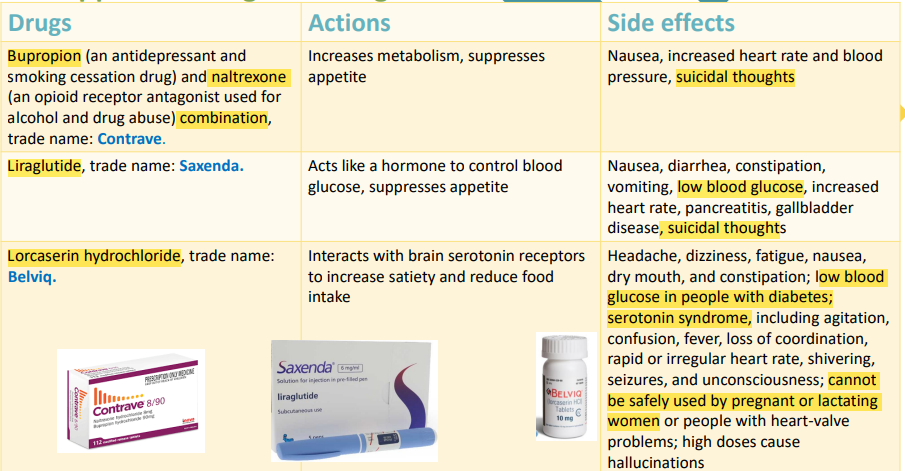
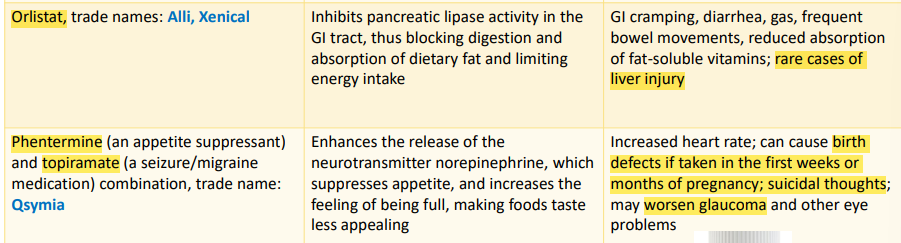
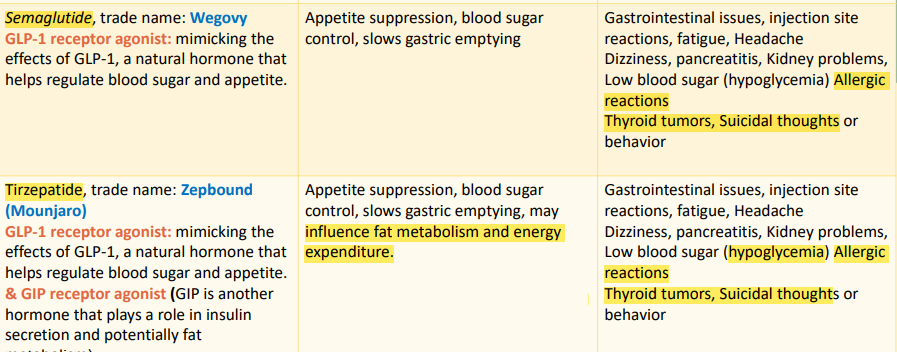
Drugs
Weight-loss drugs should be prescribed only to those with medical risks—not for cosmetic reasons—and in conjugation with a healthy diet and activity program.
Surgery
Bariatric surgery may be an option in conditions:
Unable to achieve adequate weight loss with diet and exercise
BMI ≥ 40 or BMI ≥ 35 with obesity-related health problems (such as diabetes or hypertension)
No medical or psychological contraindications
Understanding of risks and strong motivation to comply with post-surgery treatment plan
Depending on the type of surgery, 20 to 30 percent of the excess weight remains lost after 10 years.
Strategies for weight loss
A successful, long-term weight control program involves three elements:
Diet | Reduce no. of calories—and fat content—consumed. Watch portion size. Choose complex carbohydrates (fruits, vegetables, grains). Choose lower calorie foods. |
Exercise | Goal is to expend 200-400 calories/day with exercise. |
Behavior modification |
|
Rate of weight loss
Gradual weight losses are more likely to be maintained than rapid losses
Depending on the initial body weight, a reasonable loss rate for overweight adults is ½ to 2 pounds loss/week, or 5 to 10% loss over 6 months.
Weight gain strategies
Eat enough to store more energy than you expend—at least 500 extra kcalories a day.
Exercise to build muscle.
Be patient. Weight gain takes time (1 pound per month would be reasonable).
Choose energy-dense foods most often.
Eat at least three meals a day and add snacks between meals.
Choose large portions and expect to feel full.
Cook and bake often—delicious cooking aromas stimulate the appetite.
Invite others to the table—companionship often boosts eating