Anglo-Saxon England before 1066
1065
kingdom of England had only existed for 100 years, previously there were separate regions with separate rulers
English kings had strong, central control over their realm and it was divided into shires to make it easier to control
most shires had several burhs (fortified towns) where markets and trade were held
mints were set up to encourage trade and make taxation easier
under the law every persons life was given a cash value called ‘wergild’
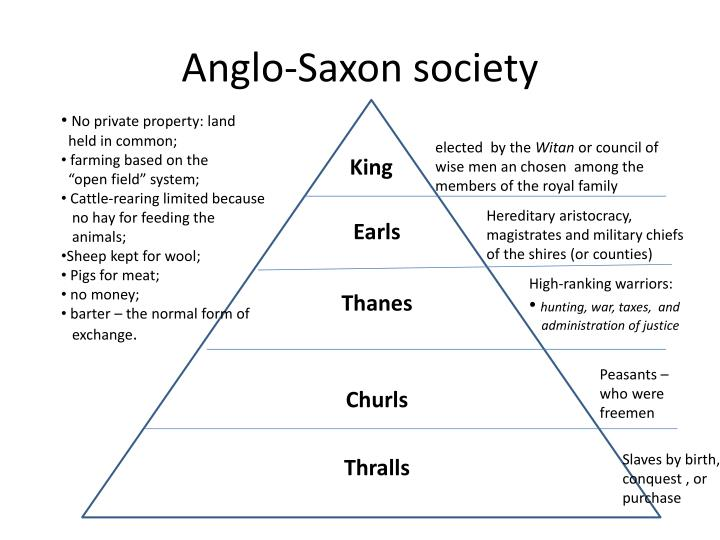
the life of a ceorl was worth 160 shillings
the life of a thegn was worth 1200 shillings
the life of an earl was worth 4800 shillings
the life of a prince was worth 9000 shillings
the life of a king was worth 18000 shillings
a woman’s wergild was the same as a mans but it increased by fifty percent if she was pregnant
religion
the church was very important
the pagan Anglo-Saxons gradually converted to Christianity after 597AD
the English church used English while the European church usually used Latin
some villages didn’t has a village so they would worship around a stone cross
few could read so the bibles were only for the priests
the Pope doesn’t like/agree with the English saints
lots of people believe in charms and spells, even though the church doesn’t like it
the priests often say they eat and drink too much and are sexually immoral
Dunstan was a rich monk who became Archbishop of Canterbury in 960AD. he used his money to improve monasteries
ended corruption from the leaders
improved the education of monks, nuns and priests
forbade priests to marry
rebuilt churches, abbeys and monasteries
when he died he was made a saint when he died in 988. reforms did not continue because the vikings began raiding and the church did not recover.
in the eleventh century the church was corrupt
when Edward the Confessor (a devout Christian) became king he brought Norman priests to England
including, Robert of Jumieges (archbishop of Canterbury in 1051) who tried to reform the church but English priests resisted it
within a year, Harold Godwinson forced Edward to replace Robert with a new archbishop: Stigand
Stigand was not particularly religious and he cared more about the king than the church
he committed pluralism and simony and became very rich
the pope was unhappy about this
English clergy were poorly educated compared to Europe
culture
the Anglo-Saxons produced high quality art
engravings
jewels
the Alfred jewel featured high-quality enamel and intricate gold metalwork
few survived but some argue it was a golden age
they had rich and varied literature
Beowulf → set in Scandinavia
the Anglo-Saxon chronicle → a history starting with the Roman invasion
calendars
maps
poems
books about astronomy, grammar and medicine
buildings
most buildings were made with wood, clay and straw
fire and rot
some thegns had houses with two floors
the houses were beautifully decorated
some churches were made of stone
burh geats
there were royal burhs which were fortified towns but there were also smaller defended sites called burh-geats which showed the status of the thegns
e.g. Goltho in Lincolnshire
they were about the size of a football pitch, the were enclosed and contained the thegn’s house
wooden palisade
banks and ditches