CHN PRELIM
Community - Derived from latin “communicas” which means group of people, sharing common geo, boundaries, value and interest. NO TWO COMMUNITIES ARE ALIKE.
Complex network - having a formal and informal power structure and a communication system
Geographic boundaries - Communities are define by geographic boundaries with certain identifiable characteristics.
Shared interest - Community has common or shared interest that binds the member together to exists.
Fluid boundaries - area which problem can be identified and solved
Health - Is a state of complete physical, mental and social well-being and not merely the absence of disease and infirmity.
Dunn (1995) - HEALTH is an integrated method of functioning which is oriented toward maximizing the potential which the individual is capable
Orem (1985) - HEALTH state characterized by soundness and wholeness of human structure and bodily and mental functions.
The Universal of Human Rights, Article 25, Section 1 - Everyone has the right to a standard of living adequate for the health and well-being of himself and of his family, including food, clothing, housing and medical care and necessary social services, and the right to security in the event of unemployment, sickness, disability, widowhood, old age or other lack of livelihood in circumstances beyond his control.
Community Health - part of para medical and medical intervention/approach which concerned on the health of whole population.
Nursing - both profession and vocation. Assisting stick individuals to become healthy individuals to achieve optimum wellness.
CHN - The utilization of the nursing process in the different levels of clientele-individuals, families, population groups and communities, concerned with the promotion of health, prevention of disease and disability and rehabilitation.\
Maglaya - The utilization of the nursing process in the different levels of clientele-individuals, families, population groups and communities, concerned with the promotion of health, prevention of disease and disability and rehabilitation
Jacobson, 1975 - "Nursing practice in a wide variety of community services and consumer advocate areas, and in a variety of roles, at times including independent practice.... Community nursing is certainly not confined to public health nursing agencies."
RUTH B. FREEMAN - "A service rendered by a professional nurse to communities, groups, families and individuals at home, in health centers, in clinics, in schools and in places of work for the promotion of health, prevention of illness, care of the sick at home and rehabilitation."
Community health - implies in integration of Preventive, Promotive and Curative aspects of health services. The nurse most directly concerned with giving health education and care to individuals and families in the community.
COMMUNITY: It is a social group determined with geographical boundaries, common values and interests. It’s members know and interact with each other. It functions within a particular structure and exhibits and creates norms, values and social institutions.
HEALTH - is a state of complete physical, mental, social, spiritual well-being, and not merely an absence of disease or infirmity.
Nursing - is a service which includes care to the sick, care of the whole patient, the care of patient’s environment, health education and health services to the individual family and society for the prevention of disease and promotion of healthCOMMUNITY HEALTH NURSING
Community Health Nursing It is defined as nursing services organized by a community or agency to carry out nursing aspects of community health program in homes, schools, industries or in the health centers.
Community Health Nursing is a synthesis of nursing and public health practice applied of promoting and preserving the health of people. The practice is general and comprehensive. It is not limited to a particular age group or diagnosis, and continuing, not episodic.
Biomedical Concept - Traditionally health has been viewed as an absence of disease, and if one was free from disease, then the person was considered healthy. This concept known as biomedical concept. It has the basis in the germ theory of disease. The medical profession viewed the human body as a machine, disease as a consequence of the breakdown of the machine and one of the doctors task is repair of the machine
Ecological Concept - Deficiencies in the biomedical concept gave rise to other concepts. Health as a dynamic equilibrium between man and his environment and disease is a maladjustment of human organism to environment.
Rene Dubos - health implies the relative absence of pain and discomfort and a continuous adaptation and adjustment to the environment to ensure optimal function. The ecological concept raises two issues- imperfect man and imperfect environment
Psychological concepts - Contemporary developments in social science revealed that health is not only a biomedical phenomena, but one which is influenced by social, psychological, cultural, economic and political factors of the people concerned. These factors must be taken in to consideration in defining and measuring health. Thus health is both a biological and social phenomena.
Holistic Concept - The holistic model is a synthesis of all the above concepts. It recognize the strength of social, economic, political and environmental influences on health. It has been variously described as a unified or multidimensional process involving the well- being of the whole person in the context of his environment. This approach implies that all sectors of society have effect on health.
Physical Dimension - The stage of physical health implies the notion of “perfect functioning” of the body. It conceptualizes health biologically as a state in which every cell and every organ is functioning at optimum capacity and in perfect harmony with the rest of the body.
Mental Dimension - Mental health is not mere absence of mental illness. Good mental health is the ability to respond to many varied experiences of life with flexibility and a sense of purpose. Mental health has been defined as a state of balance between the individual and the surrounding world, a state of harmony between oneself and others, a co-existence between the realities of self and that of other people and that of the environment. •A mentally healthy person is free from internal conflicts: he is not at war with himself.
•He is well-adjusted, ie., he is able to get along well with others.
•He searches for identity.
•He has a strong sense of self-esteem.
•He has good self-control balances
•He faces problems and tries to solve them intelligently.
Social Dimension - •Social well-being implies harmony and integration within the individual, between each individual and the world in which they live. It has been defined as the quantity and quality of an individual’s interpersonal ties and the extent of involvement with the community. The social dimension of health includes the level of social skills one possesses, social functioning and the ability to see oneself as a member of a large society.
Spiritual Dimension - Spiritual health refers to part of the individual which reaches out and strives for meaning and purpose of life. It is the intangible something that transcends physiology and psychology .It includes integrity, principles and ethics, the purpose in life, commitment to some higher being and belief and belief in concepts that are not subject to state of the art explanation.
Emotional Dimension - Historically the mental and emotional dimensions have been seen as one element or as two closely related elements. Mental health can be seen as knowing or cognition while emotional health refers to feeling. The mental and emotional aspects of humanness may have to viewed as two separate dimensions of human health.
Vocational Dimension - “new dimension” It is a part of human existence. When work is fully adapted to human goals, capacities and limitations, work often plays a role in promoting both physical and mental health. MAYBE A SOURCE OF INCOME
Physical Work - is usually associated with an improvement in physical capacity, while goal achievement and self-realization in work are a source of satisfaction and enhanced self-esteem
Vital Statistics - constitute an essential tool in demography like statistical study of population and public health. They provide answer to various health related questions. May be defined as the systematic, collection and compilation and presentation, analysis and distribution of statistics pertaining to vital events are recorded. E.g., live birth, deaths, marriages etc that occur in the community
John Graunt - Who studied the weekly bills of mortality and discovered Urban death and Rural death. He is called father of vital statistics
William Farr - Who analyzed the vital events , which serve as Yard stick for measuring the health status of the population. He is called Father of Medical Statistics
Healthy Lifestyle - Wellness is determined partly by lifestyle choices.
•Studies by the National Institute of Aging show that:

Fitness: can prevent heart disease, hypertension, and lower back pain.
Preventive care: including immunizations and health care screening tests.
Spiritual health: Reduce anxiety, stress, anger and depression
Safety: prevention of injuries and accidents, emeis a specialized field that focuses on promoting and maintaining the health and well-being of entire communities. This presentation will explore the foundational principles of community health nursing and the crucial role of epidemiology in this practiceeparedness, CPR.
Alternative Health Practices - Health or medical practices are called “alternative” if they are based on untested, untraditional, or unscientific principles, methods, treatments, or knowledge. If the “alternative” health practice is offered along with conventional medicine, it is referred to as “complementary” medicine.
Holistic Health Care - Care that promotes physical, emotional, social, intellectual, and spiritual well-being by treating the whole body, mind, and spirit. Each person is recognized as a unique person with different needs. Uses many methods of diagnosis and treatment in addition to traditional Western medical practice.
CHN - is a specialized field that focuses on promoting and maintaining the health and well-being of entire communities. This presentation will explore the foundational principles of community health nursing and the crucial role of epidemiology in this practice
Population focused - Community health nurses work with entire populations, rather than just individual patients, to address the unique needs and challenges of a community.
Prevention Oriented - The primary focus is on preventing health issues and promoting wellness, rather than solely treating illness.
Holistic Approach - Community health nurses consider the social, environmental, and cultural factors that impact the health of a community.
Economic Factors - Income, employment, and access to resources can significantly influence individual and community health outcomes.
Education and Literacy - Higher levels of education are associated with better health behaviors and outcomes.
Physical Environment - The built environment, including housing, transportation, and access to green spaces, can impact health.
Social and Community Factors - Social networks, community engagement, and cultural norms can shape health behaviors and access to care.
Epidemiology - examines the patterns and trends of disease within a population, identify the factors that increase the likelihood of an individual or community developing a particular health condition,
Epidemiologic data - is used to develop and evaluate public health interventions and policies.
Host - The individual or population susceptible to a disease or health condition.
Agent - The biological, chemical, or physical factor that causes or contributes to a disease or health condition.
Environment - The external factors, such as physical, social, and cultural conditions, that can influence the occurrence and spread of a disease.
Incidence - The number of new cases of a disease or health condition that occur within a specific time period and population.
Prevalence - The total number of cases of a disease or health condition, both new and existing, within a specific population at a given time.
Significance - These epidemiologic measures provide crucial information for understanding the burden of a disease and planning appropriate public health interventions.
Detection - Identifying and reporting unusual patterns or clusters of disease within a community
Investigation - Collecting and analyzing data to determine the cause, source, and spread of the outbreak.
Intervention - Implementing appropriate control measures to contain the outbreak and prevent further spread.
Screening - Early detection of disease or risk factors through systematic testing and assessment.
Immunization - Vaccination programs to protect individuals and communities against infectious diseases.
Health Promotion - Interventions and education to encourage healthy behaviors and reduce risk factors
Data Collection - Gathering information about the demographics, health status, and resources within a community.
Identification of needs - Analyzing the data to determine the specific health and social needs of the community
Prioritization and Planning - Developing targeted interventions and strategies to address the identified community needs.
Data driven intervention - Community health nurses utilize epidemiologic data to design and implement effective, evidence-based programs and policies.
Population health approach - Epidemiologic principles help community health nurses focus on the overall health and well-being of the entire community.
Collaborative partnerships - Community health nurses work closely with other professionals and community stakeholders to address the complex, multifaceted factors that influence population health.
Documentation - •is an important component of the nursing process. It serves a number of functions among which are: It serves as a proof of that thinking and decision-making that nurses do. It could protect the nurse from a lawsuit. It gives decision makers an idea of the workload of nurses. It provides information that could be used in research and quality assurance activities for training in purposes.
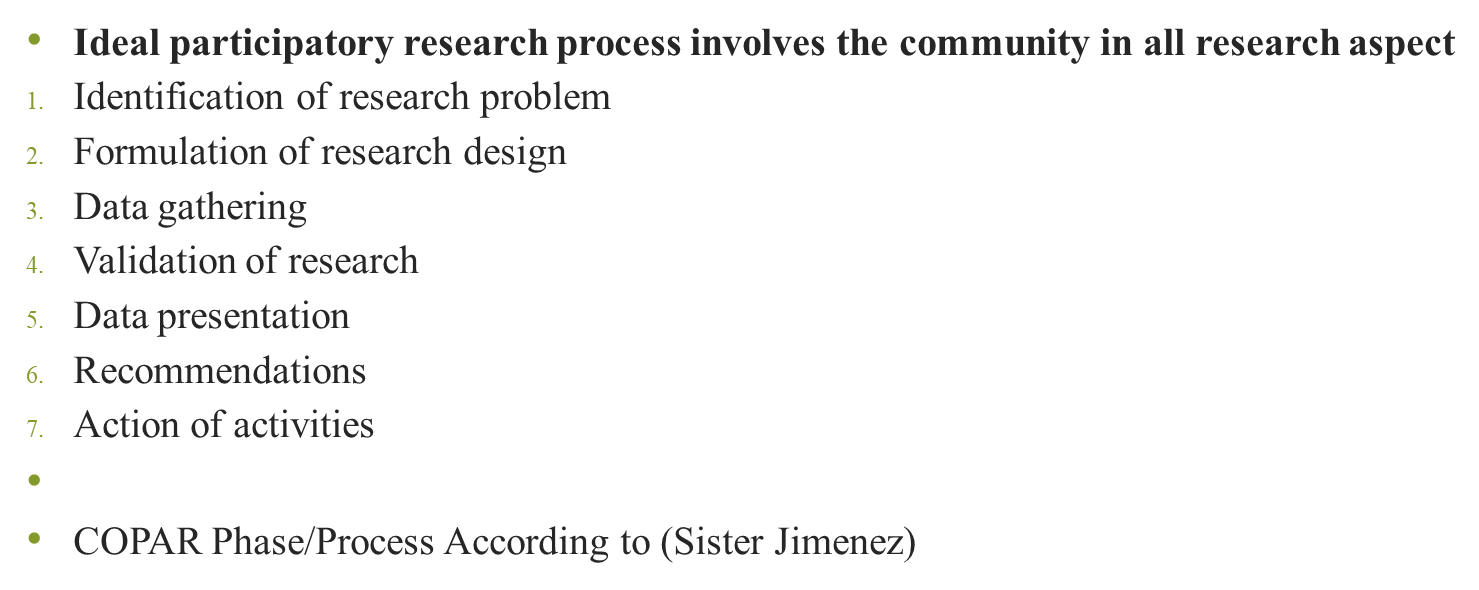
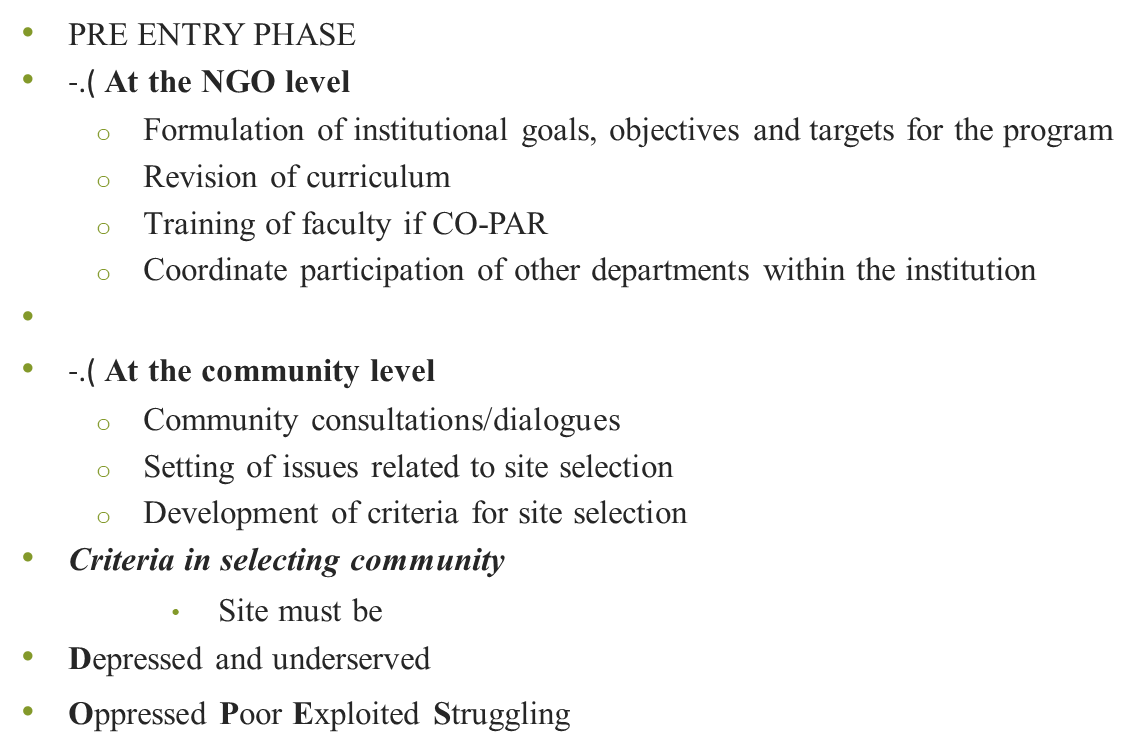
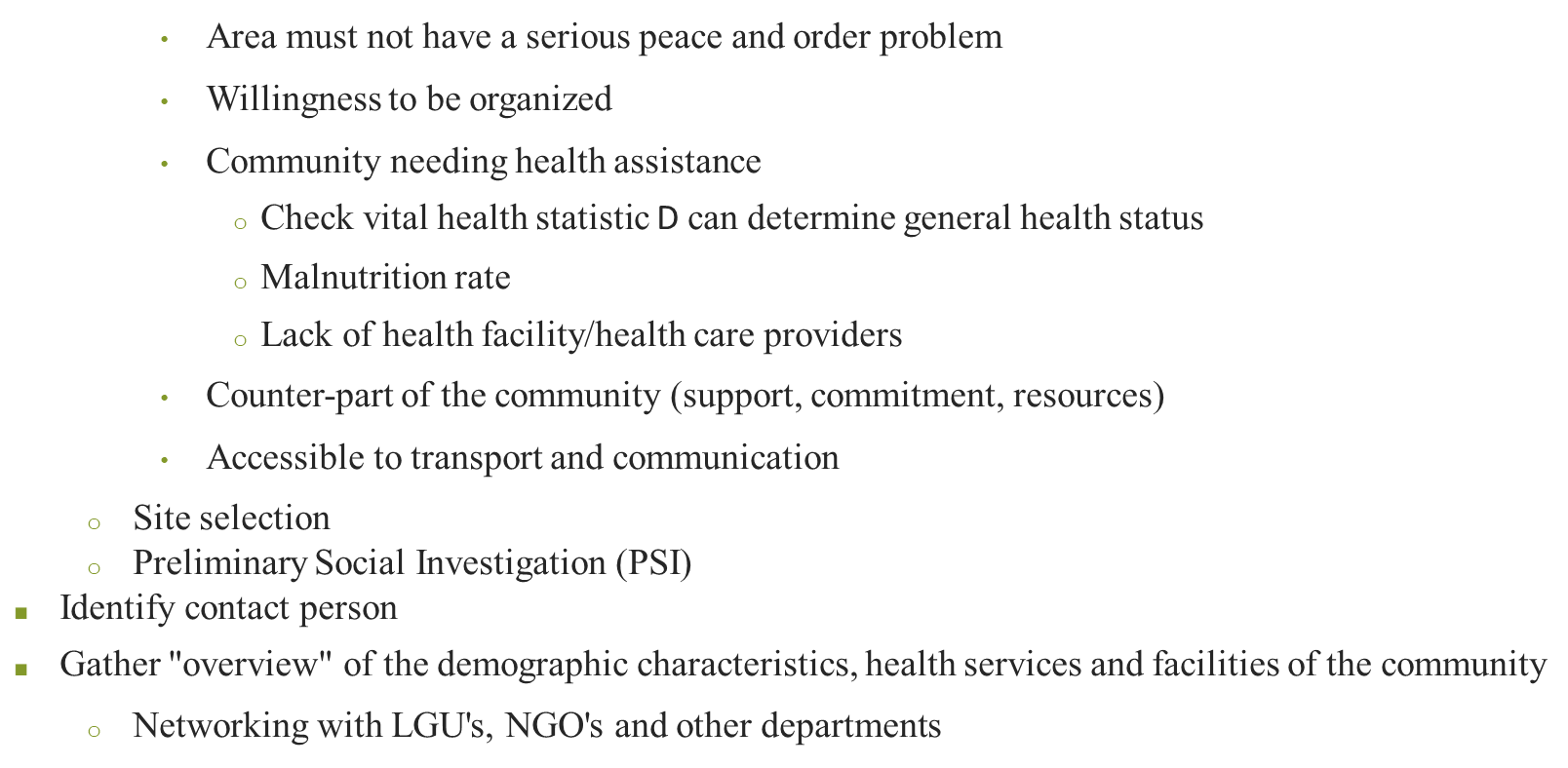
COPAR - stands for Community Organizing Participatory Action Research ● A social development approach that aims to transform the apathetic, individualistic and voiceless poor into dynamic, participatory and politically responsive community.
Community Organizing - •Process by which health services, agencies, and people and of the people of the community brought together to: Identify/learn their own problem, Plan activities, Act on this basis, Evaluate