Alpha 1 Blockers
Alpha1 Blockers
Alpha1 blockers treat hypertension as well as symptomatic benign prostatic hypertrophy (BPH).
Prototype and Other Medications
The prototype medication for the category of alpha1 adrenergic blockers that treat hypertension is doxazosin. Other medications in this category are prazosin and terazosin.
Expected Pharmacologic Action
Most alpha1 receptors are in vascular smooth muscles and cause vasoconstriction when activated by epinephrine and norepinephrine, resulting in increased blood pressure and peripheral resistance. Alpha1 blockers do exactly what they say they do – block alpha1 receptors, which prevents them from being stimulated. Because stimulation of alpha1-receptors usually results in constriction of the target organ, blocking their stimulation will result in dilation. In this case, venous and arteriolar dilation.
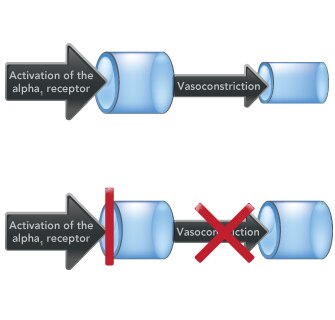
Adverse Drug Reactions
One side effect of alpha1 blockers is orthostatic hypotension, especially with the first dose, and whenever the dose is increased. Reflex tachycardia may also occur, as well as headaches and dizziness. It’s important to remember that “reflex” tachycardia is the body’s natural, or reflexive, response to a sudden decrease in blood pressure, with the purpose of maintaining adequate cardiac output.
Interventions
When caring for clients taking an alpha1 blocker, monitor and report frequent headaches. Report to the provider a significant drop in systolic blood pressure that is greater than 20 mm Hg systolic between lying and standing, as well as tachycardia. Monitor for orthostatic hypotension and an increase in pulse two to six hours after the first dose, or after any increase in the dosage.
Safety Alert
When caring for a client experiencing orthostatic hypotension, carefully measure the drop in blood pressure that occurs when they change position. First take the client’s blood pressure while lying in bed. Then have the client sit on the side of the bed and take the blood pressure 1 to 3 min after sitting up. If the client tolerates this change in position, have them stand and again, take the blood pressure 1 to 3 min after standing up. Provide for the client’s safety during this procedure by having another team member stand next to the client. If a 20 mm Hg drop occurs in the systolic blood pressure, or a 10 mm Hg drop in the diastolic blood pressure occurs, orthostatic hypotension is present, and the client must only ambulate with assistance or remain in bed until the medication’s effects lessen.
Administration
Alpha1 blockers are available in oral form only. Give them at bedtime, especially the first dose, due to the risk for orthostatic hypotension. Individualize subsequent doses based on orthostatic blood pressure changes.
Client Instructions
When giving clients instructions regarding alpha blocker therapy for their hypertension, be sure to tell them to report dizziness, syncope, rapid heartbeat, or palpitations to their provider. Tell them to take this medication at bedtime, and to rise slowly from lying, to sitting or standing to prevent injury from falls. Warn them against performing hazardous activities, such as driving, for at least 12 hours following the first dose, and after subsequent dosage increases. Reinforce the idea that a client must report to their provider persistent headaches, or an increase in the frequency of headaches.
Contraindications and Precautions
A sensitivity to doxazosin, or to other alpha1 blockers such as prazosin and terazosin, is one of the contraindications to doxazosin. Use of doxazosin with children is also contraindicated, as well as in clients who have a history of hypotension or syncope. Use doxazosin with caution in clients with hepatic disease and in geriatric clients. Safety for use during pregnancy or lactation has not been established.
Interactions
Concurrent use of doxazosin with sildenafil, or other phosphodiesterase inhibitors may increase clients’ risk for hypotension.