Microbiology
Microbiology is the study of all living organisms that are too small to be visible with the naked eye
0.1 mm smallest thing the naked human eye can see
Sneezes and coughs are referred to as droplet transmission
Particles om the air are referred to as airborne transmission
Covid has a single strand of RNA in the genome
Influenza has 8 strands of RNA in the genome
Ames strain is the worst form of anthrax disease
Anthrax bacterium has the ability to make spores and has a rod shaped look
Ecoli O157:H7 (enterohemorrhage E.coli) damages the lining of the intestinal walls
A strain is a genetic variant, subtype, or culture of a microorganism
Strains ae made up of organisms that belong to the same species but have different characteristics
E coli can be found in cow intestines but does not affect them, however, it can affect humans
These toxins found in e coli affect our red blood cells
Nosocomial infections are hospital acquired diseases
MRSA (Methicillin-resistant staphylococcus aureus) is a staphylococcus bacteria that has become resistant to many antibiotics, can be gained through a hospital or community associated
Self assessment
how many infectious diseases you learned so far (Lecture 1 and 2)? List them out and their causative organism (its scientific name, and what type of microorganism: whether it is a bacterium, fungi, yeast, or a virus
Influenza (Alphainfluenzavirus influenzae) is a respiratory virus
Covid (SARS-Cov-2) is a virus
tuberculosis (Mycobacterium tuberculosis) is a bacterirum
Anthrax (Bacillus anthracis) is a bacterium
E coli (Escherichia coli) is a bacterium
MRSA (Staphylococcus aureus) is a bacterium
Carbohydrates have three types
Monosaccharides (monomers) and Disaccharides (dimers) are made up of sugars. Monomers are made up of one units and dimers made up of two
Polysaccharides (polymers) are made up of many units
glucose and fructose are made up of two monosaccharides sucrose is made up of two
Beta 1-4 in cullulose (the first carbon combined with the fourth)
Alpha 1-4 in starch
Lipids are made of fats / triglycerides
They contain ester bonds
Phospholipids- the head is hydrophobic and the body is hydrophilic
Steroids consists of cholesterol and ergosterol
Proteins are made up of amino acids, they always have a central carbon atom made up of four groups, a carboxyl group, amino group, and a hydrogen bond, they also have a side chain (basically the reason why their are different amino acids)
Peptide bonds
Nucleotides
There are two types of pentose sugars, deoxyribose nucleic acid (DNA) and ribonucleic acid (RNA)
Nitrogenous bases
DNA has the double helix structure and does not contain uracil
RNA is single stranded
ATP is the universal energy molecule
It breaks down the high energy bonds between the phosphates releases energy that can be used for cellular functions
Self assessment:
1. What is an enzyme?
2. Why are enzymes required for an organism?
3. What is metabolism?
4. What is catabolism?
5. What is anabolism?
Domain - most broad
Kingdom
Phylum
Class
Order
Family
Genus
Species - most specific
Homo Sapiens (humans)
Genus species
Whenever written underline both, whenever typed italicized both!
Genus names are always capitalized, species are always lowercase!!
Eukaryote vs prokaryote
Has nucleus vs doesnt
Bacteria can take up three different shapes: Bacillus(rod), Coccus(sphere), and spirillus (spiral)
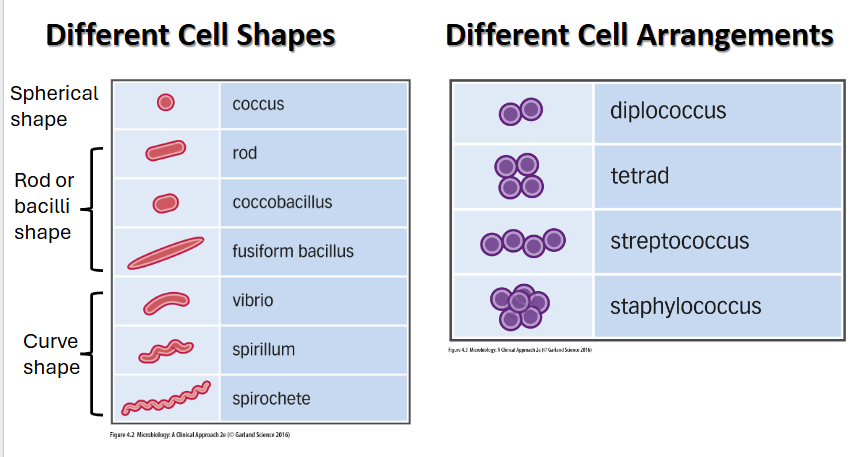
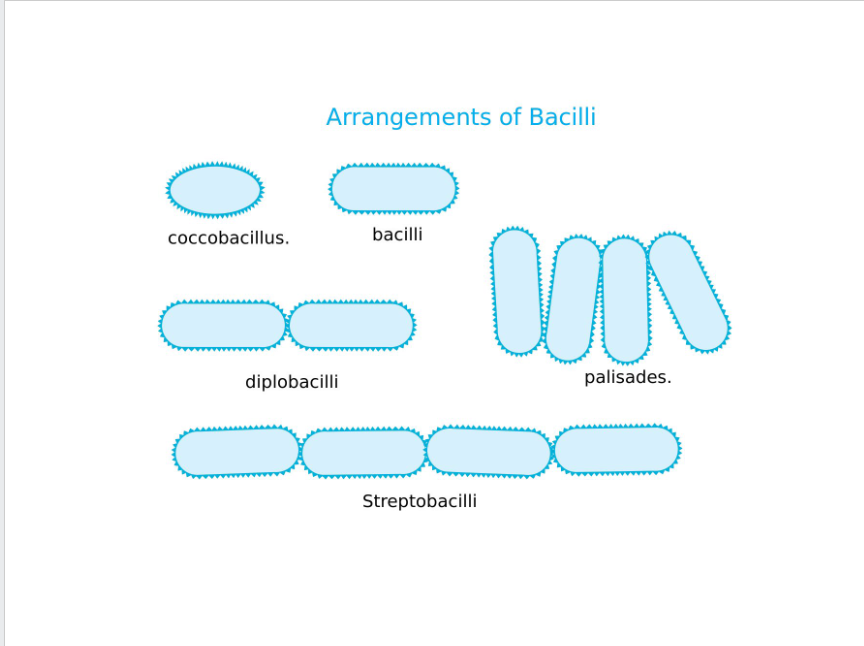
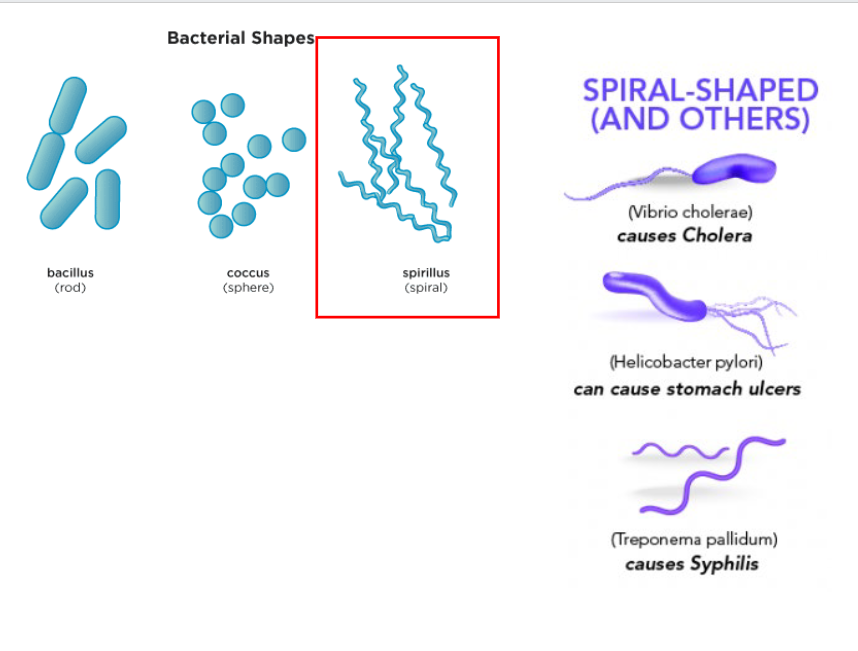
Bacteria are colorless, but their cell wall can be colored using dye molecules. This method is called staining.
The dyes are positively charged and are attracted to the negative charges of the cell wall.
Gram positive is when they have a thick peptidoglycan layer
Gram negative the peptidoglycan layer is very thin
Ziel Neelson acid fast stain
Disease is like tug of war, pathogens vs the human host
The black death (bubonic plague, Yersinia pestis) was caused by a flea bite and is called a vector bond disease
Pathogens are any organism that can infect humans and cause illness
A host is an organism that supports the growth of a pathogen or parasite
Pathogenicity is the capacity to produce a disease
Virulence is the intensity of the disease produced vary among different microbial species
Non-pathogenic bacteria vs pathogenic bactea ria, the difference is the virulence
Normal flora (resident flora) refers to the microorganisms that live in or on the body that are fine and help the body, they maintain a postive or mutualistic host microbe relationship (ecoli in a specific person)
Transient flora is the microorganisms that are temporarily harbored on the superficial surface of the body (they can be washed away)
Primary pathogens cause disease in healthy individuals (plague, cold, mumps, flu, etc)
They evolve their mechanisms that allow them to overcome host defense mechanisms
Opportunistic pathogens can cause disease in the immunocompromised host (ecolu staphyloccocus aureus, etc)
For a bacteria to be pathogenic they must do five things: get in, stay in, avoid the defense mechanism, damage the host and spread the infection, and exit and find another host to infect
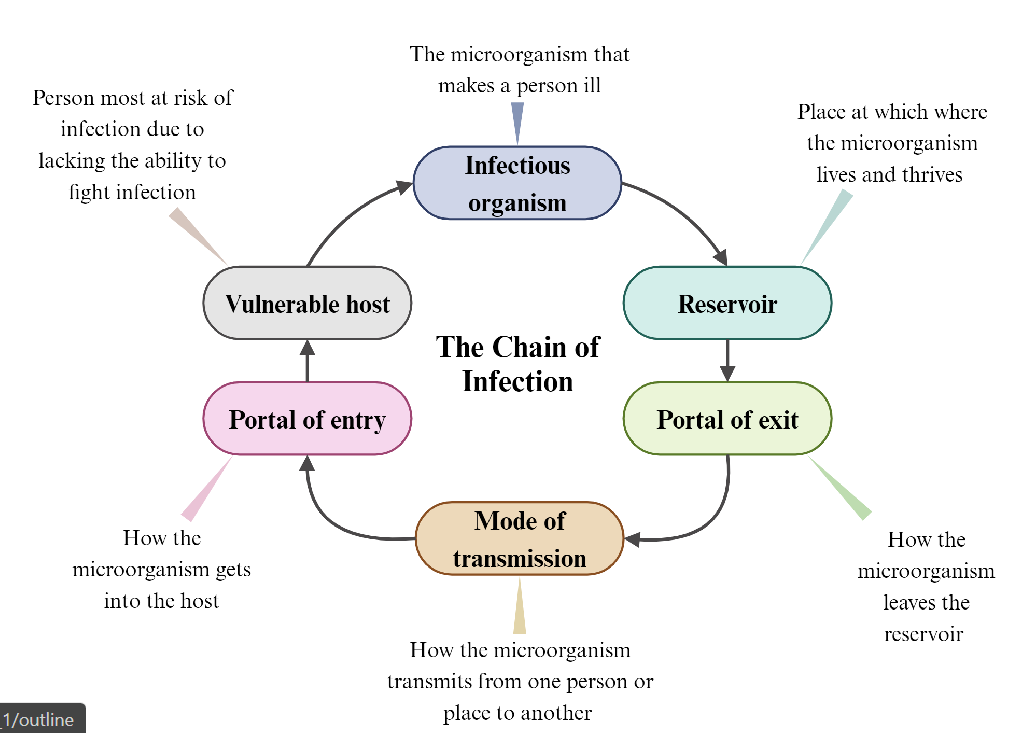
Virulence factors of pathogens are encoded by genes found in the chromosome and plasmids
Quorum sensing is a form of cell to cell communication that allows bacteria to monitor their population density and coordinate collective behavior
Bacteria releases autoinducers (signaling molecules) which accumulate and trigger a group-wide response once a threshold concentration is reached, synchronizing activities like biofilm formation, bioluminescence, and virulence factor production
Biofilms are communities