B6: Human nutrition
Diet
Balanced diet: all of the food groups in the correct proportions
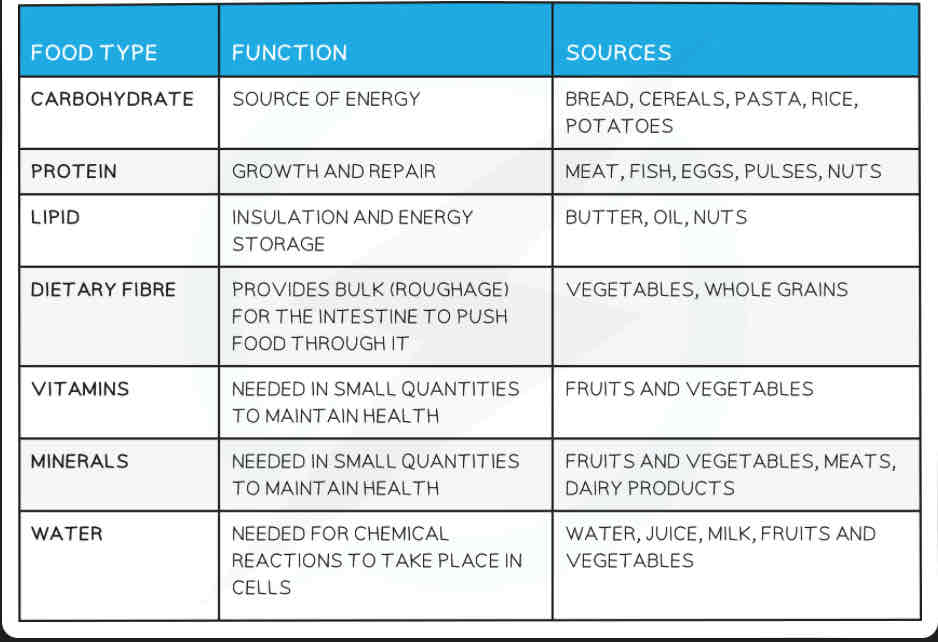
Vitamins:
Vitamin C:
foods that contain it: citrus fruits, raw vegetables
why its needed: make collagen, repair tissues
deficiency disease: scruvy → causes pain in joints and muscles and bleeding from gums and other places
vitamin D
butter, egg yolk, sunlight
helps calcium absorb for making bones and teeth
rickets → bones become soft and deformed
Minerals:
Calcium: for bones and teeth, for blood clotting.
found in: dairy products
iron: making haemoglobin
found in: liver, red meat,..
Digestive system:
Alimentary canal:
mouth
oesophagus
stomach
small intestine (duodenum and ileum)
large intestine (colon, rectum, anus)
Associated organs:
salivary glands
pancrease
gall bladder
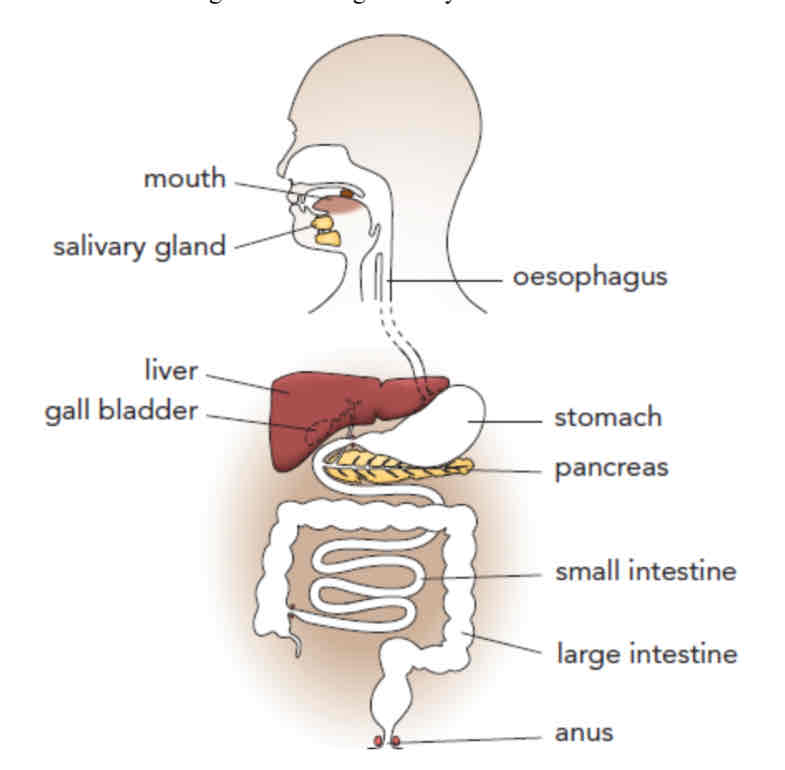
function: digest food and absorb nutrients
ingestion: food/drinks are taken in by the mouth
mechanical digestion: food is broken down without chemical change
chemical digestion: large insoluble molecules → small soluble molecules
absorption: small food molecules and ions move through the wall of the intestine into the blood
assimilation: nutrients get absorbed by individual cells and used for energy/make new substances
egestion: food that has not been digested/absorbed passes out of the body as feces
Digestive system functions:
mouth: food is ingested → mechanical digestion
salivary glands: secretes saliva into the mouth → lubricates food for swallowing
oesophagus: connects mouth to stomach
stomach: churns to continue the process of mechanical digestion
hydrochloric acid provides suitable pH for enzymes and destroys pathogens in food
liver: produces bile → aids digestion of fags and neutrlizes stomach acid as it exits
gall bladder: amylase, protease, lipase production
small intestine:
duodenum: complete chemical digestion
iluem: absorbtion of nutrients into the blood via villi
large intestine:
colon: formation of feces
rectum: storage of feces
anus: egestion → feces leaves the body
Digestion
Physical:
breakdown of food into smaller pieces without chemical change
increases surface area for enzymes to react
carried out:
by chewing
churning of the stomach
emulsification of fats by bile in duodendum
Bile in the gallbladder:
alkaline to neutralize hydrochloric acid
breaks down large drops of fat into smaller ones (emulsification)
chemical digestion:
after physical digestion: large molecules are broken apart into smaller molecules
involves chemical reactions catalysed by enzymes
are soluble in water → easier to be absorbed into cells
Enzymes in digestion
Amylases: produced in the mouth and pancreas (secreted into duodenum)
starch → smaller sugars
Proteases: secreted in the pancreas → acts in the stomach/duodenum
proteins → amino acids
Lipases: produced in the pancreas, secreted into the duodenum
lipids → fatty acids and glycerol
Hydrochloric acid
Kills bacteria
gives acid pH for enzymes to work
helps stomach remain within optimum range for pepsin to work