Key Concepts of Beijing's Imperial Architecture and Urban Planning
Ceremonial Axis in Beijing:
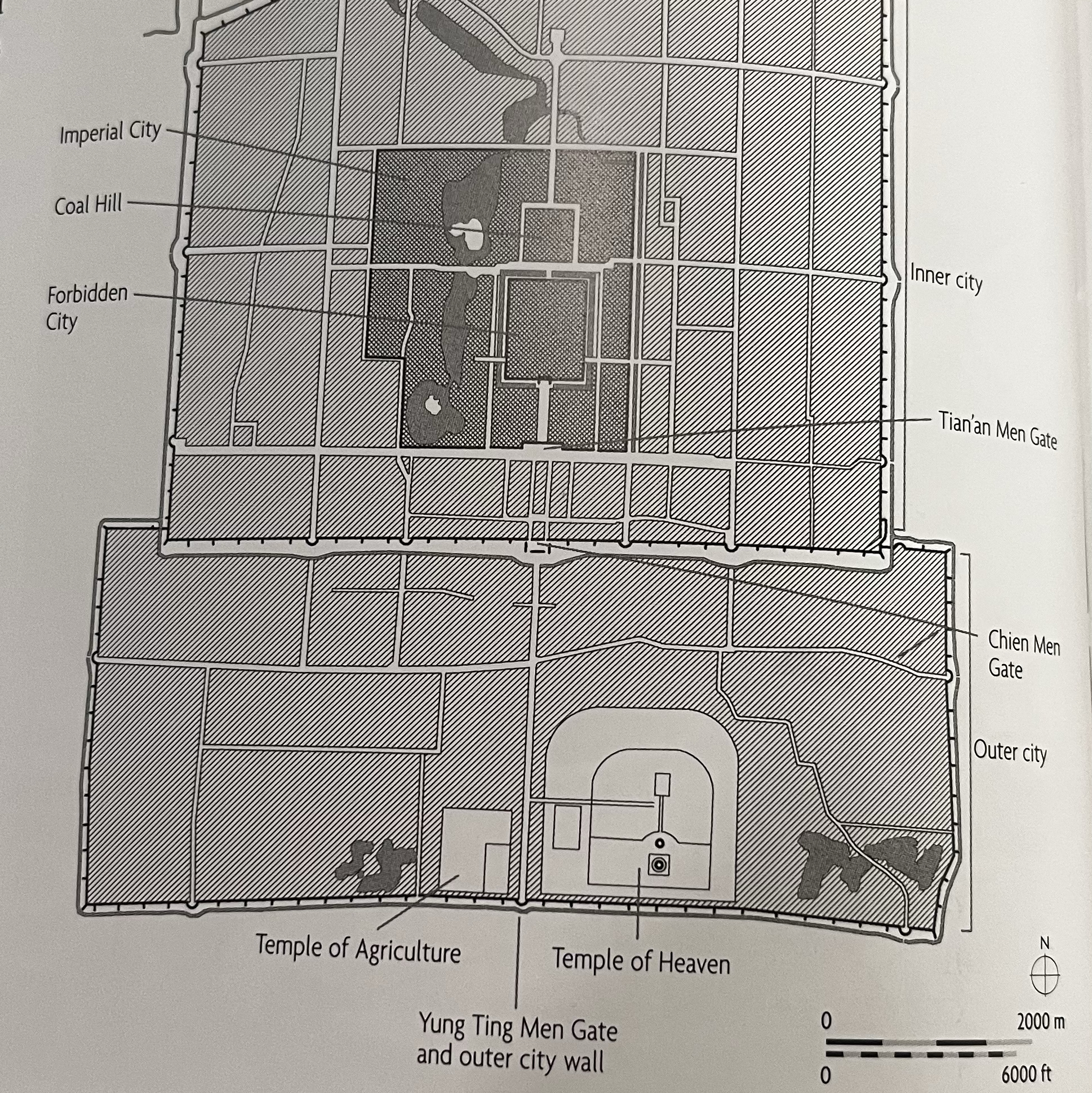
Focuses on Coal Hill (Prospect Hill) with viewing pavilions.
New nine-mile wall built in 1552 for the outer city to manage population growth.
Integrates classical Chinese city-planning, realizing ancient traditions.
Access to the Imperial Court:
Visitors pass through four walled areas: Outer City, Inner City, Imperial City, Forbidden City.
Moats enhance separation and protection.
Tianan Men Gate & Imperial Square:
Square enlarged for public spectacles, leading to enclosed courtyards and gates like the Duan Men.
Temples existed for agriculture and ancestral worship; one replaced with People's Palace of Culture.
Forbidden City Layout:
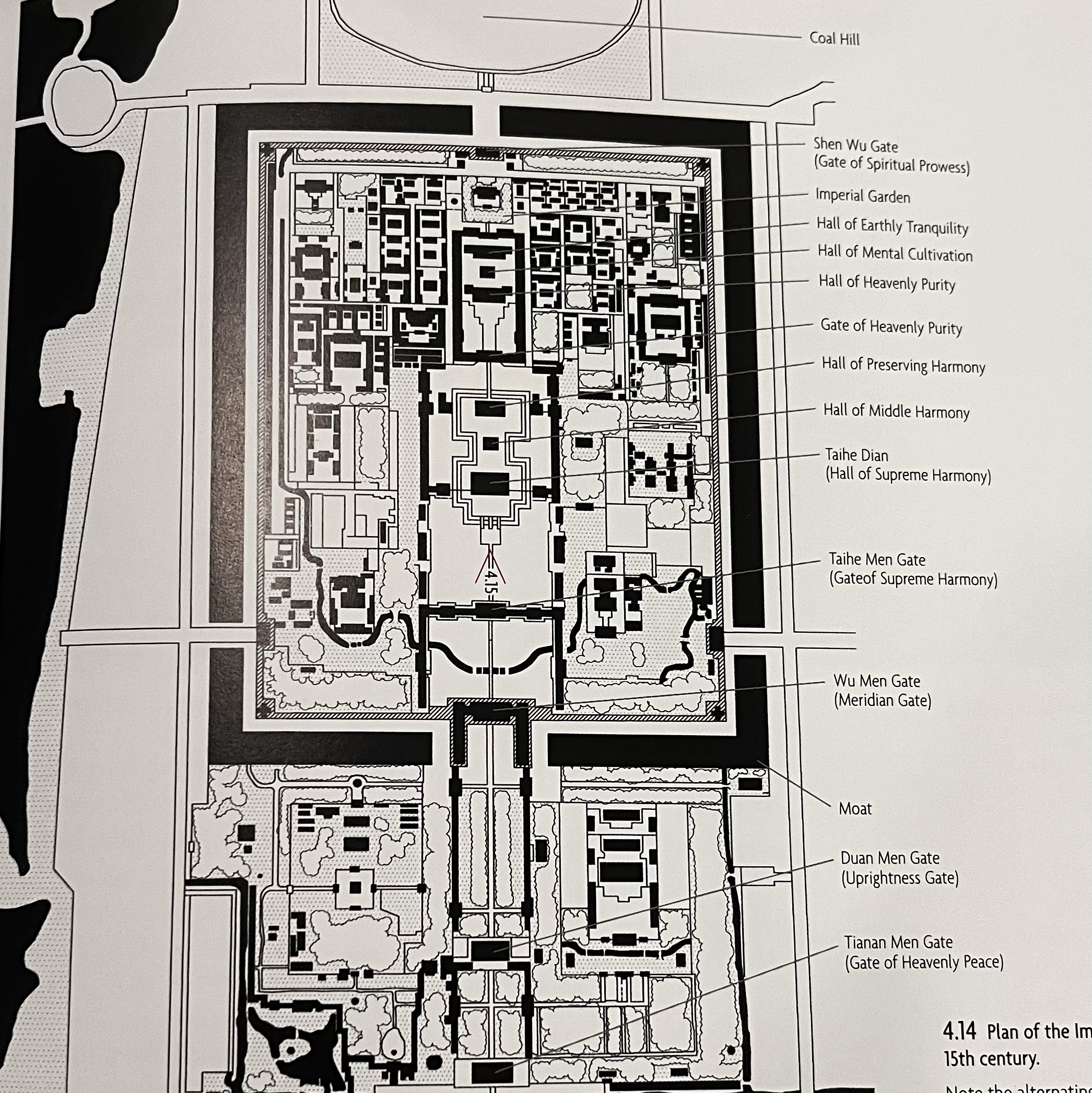
Wu Men Gate guards passage over moat into the Taihe Men Gate (imperial audience hall).
Guests witness grandeur (Hall of Supreme Harmony) on a triple podium, demonstrating imperial status.
Features over 9000 structures, finest materials, and craftsmanship.
Designed for gradual revelation to affirm dignified imperial presence.
A moat surrounds the the walls of forbidden city
Cultural Significance:
Reflects Confucian hierarchy and authority deference.
Emperor's halls share architectural principles with commoners' homes, but on a grand scale.
Traditional homes were walled compounds emphasizing privacy and family orientation.
Architectural commonality between royal and commoner dwellings, emphasizing orientation and function over complexity.