Astronomy
everything outside the Earths atmosphere
closely related to physics, chemistry, geology
History of astronomy
one of the oldest natural sciences
practical uses of astronomy in Ancient times:
helped to make calendar
religious ceremonies
orientation during navigation
timing of agricultural activity
Greeks
Earth is a sphere
ship sailing away disappears gradually→curved horizon
curved shadow of the Earth during lunar eclipse
Anistarchus→Heliocentric theory- the Sun is the center of the Universe→was forgotten
Eratasthemes→ estimated the circumference of our planet
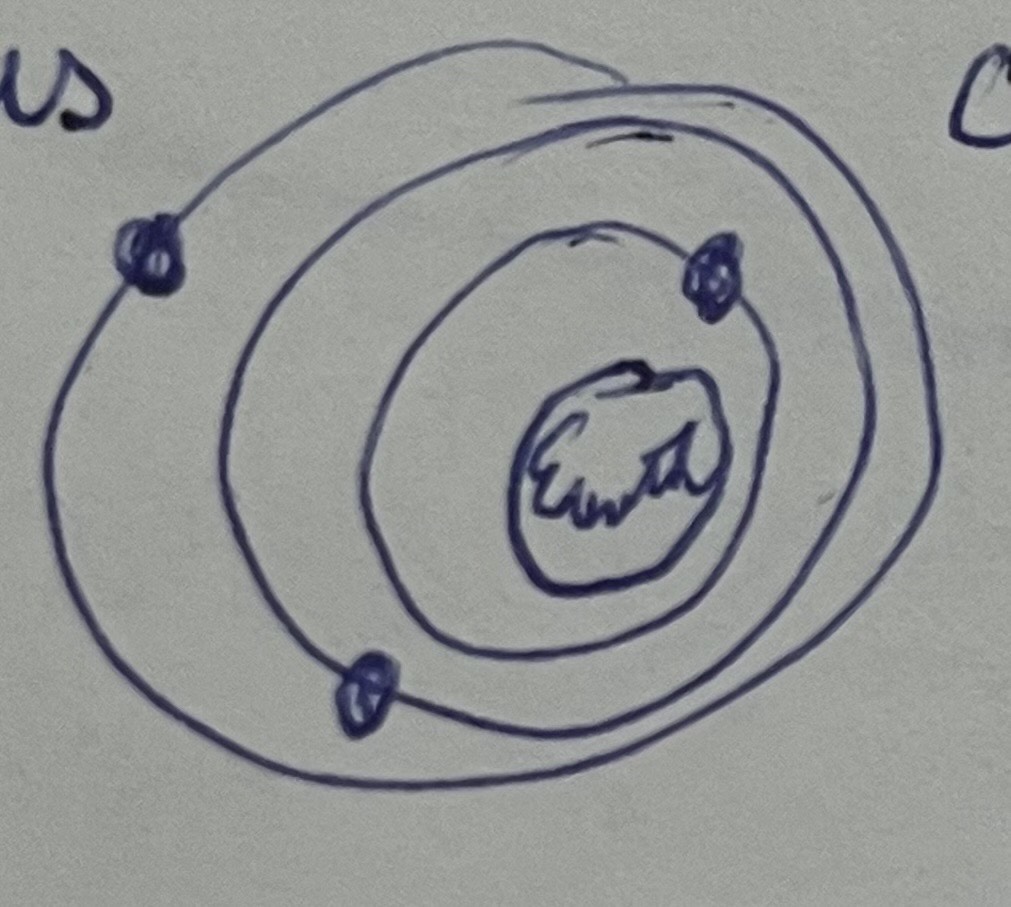
Aristotle and Eudoxus→concentric spheres
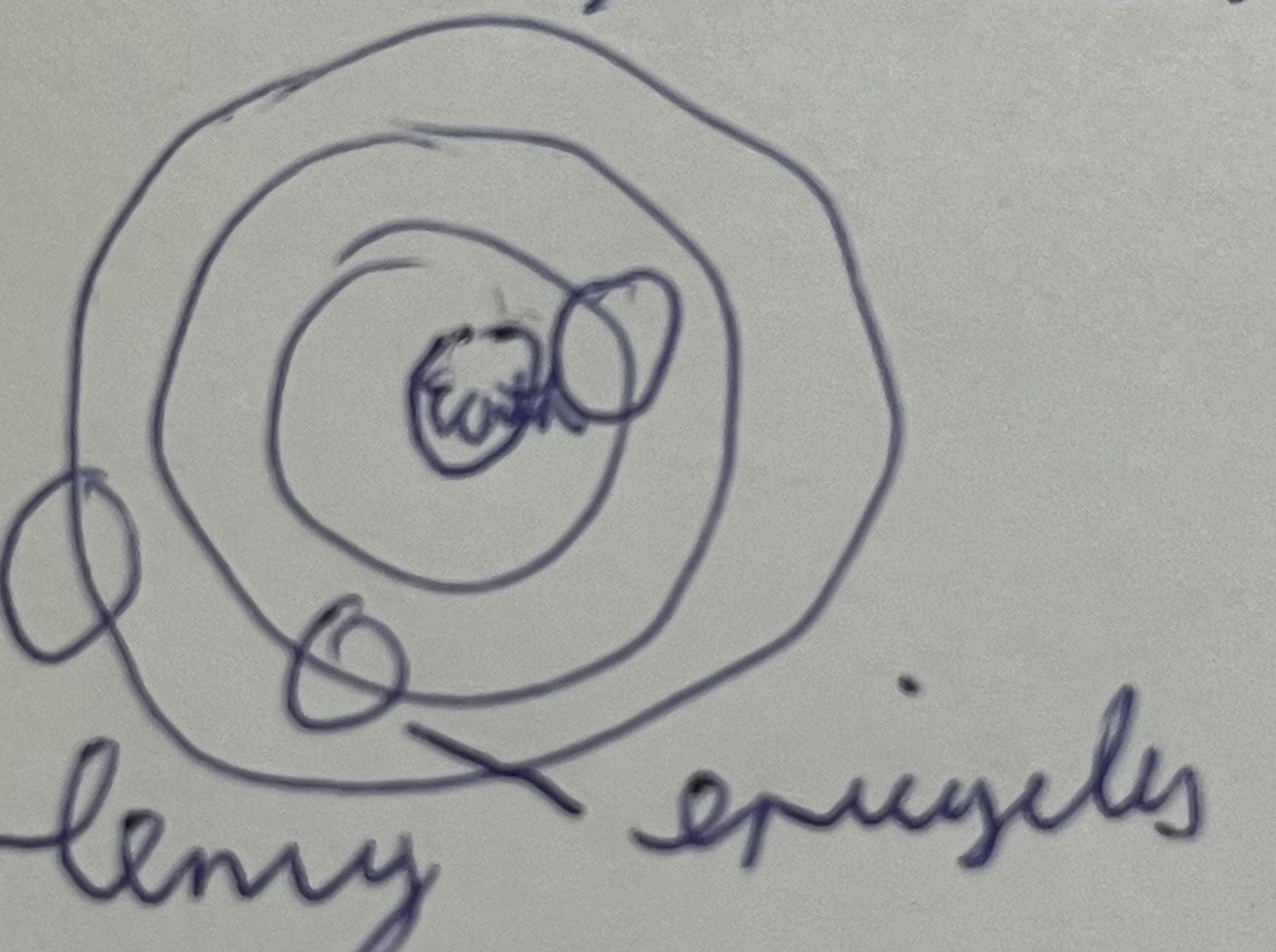
Ptolemy→geocentric theory in 2nd AD
Nicolaus Copernicus 16th century→heliocentric theory
Johannes Kepler→planetray orbit is elliptical-one of the foci is the Sun
Galileo Galilei→ first telescope(20x)
4 moons of the Jupiter
Craters of the Moon
sunspots
Isaac Newton→gravitational force
Large numbers
AU = Astronomical Unit ~150 million km
LY = light year ~ 9 trillion km
About stars
def: Stars are hot shining massive masses of gasses. Thea are able to produce energy on their own
T = 3 000- 30 000 c°
Energy production: thermonuclear fusion (4) H→2 He
Our Solar system
star: Sun
planets: Mercury, Venus, Earth, Mars, Jupiter, Saturn, Uranus, Neptune, (Pluto)
asteroids
meteors
comets
Sun
110x Earth diameter
4.6 billion years ago
2nd generation star
differential rotation: at the equator the surface rotates faster than at the poles. It is possible bc the Sun is not a solid body(similar effects are seen in the gas planets)
the core rotates as a solid body
surface of the sun: photosphere
sunspots: “cool” regions
solar wind: low density stream of charged particles emmited by the Sun
Significance
Positive
heat and light
weather elements: Temperature, Wind, Water cycle
Photosynthesis→plant:producers→food chain
UV light→ vitamin D
Negative
UV light→ burning, skin cancer
may disturb electricity networks, telecommunication networks
Solar Eclipse
total or partial
the Moon is between the Earth and the Sun
Planets
Earth type/inner/terrestrial
Mercury, Venus, Earth, Mars,(Pluto)
small and solid
Jupiter-type/outer/Gas Giants
Jupiter, Saturn, Uranus, Neptune
gas and big
Mercury
orbit period: 87 days
rotation period: 59 days
Venus
brightest and hottest→~460°C
pressure: 96 bar
orbit period: 224 days
rotation period: 243 days
retrograde rotation
1 day is longer than a year
Earth
Mars
smaller than Earth
seasons
very broad temperatures
2 moons
Jupiter
750 million km from the Sun
Saturn
ring system→Galileo Galilei
Uranus
retrograde rotation
axial tilt: 98°
coldest planet
Neptune
rings, moons
faint
fast winds
Pluto
dwarf planet = Kuiper Belt Object
Other objects in our Solar System
Asteroids
Asteroid belt →Mars-Jupiter
Diameter is < 1 000 km
The largest: ceres
Comets
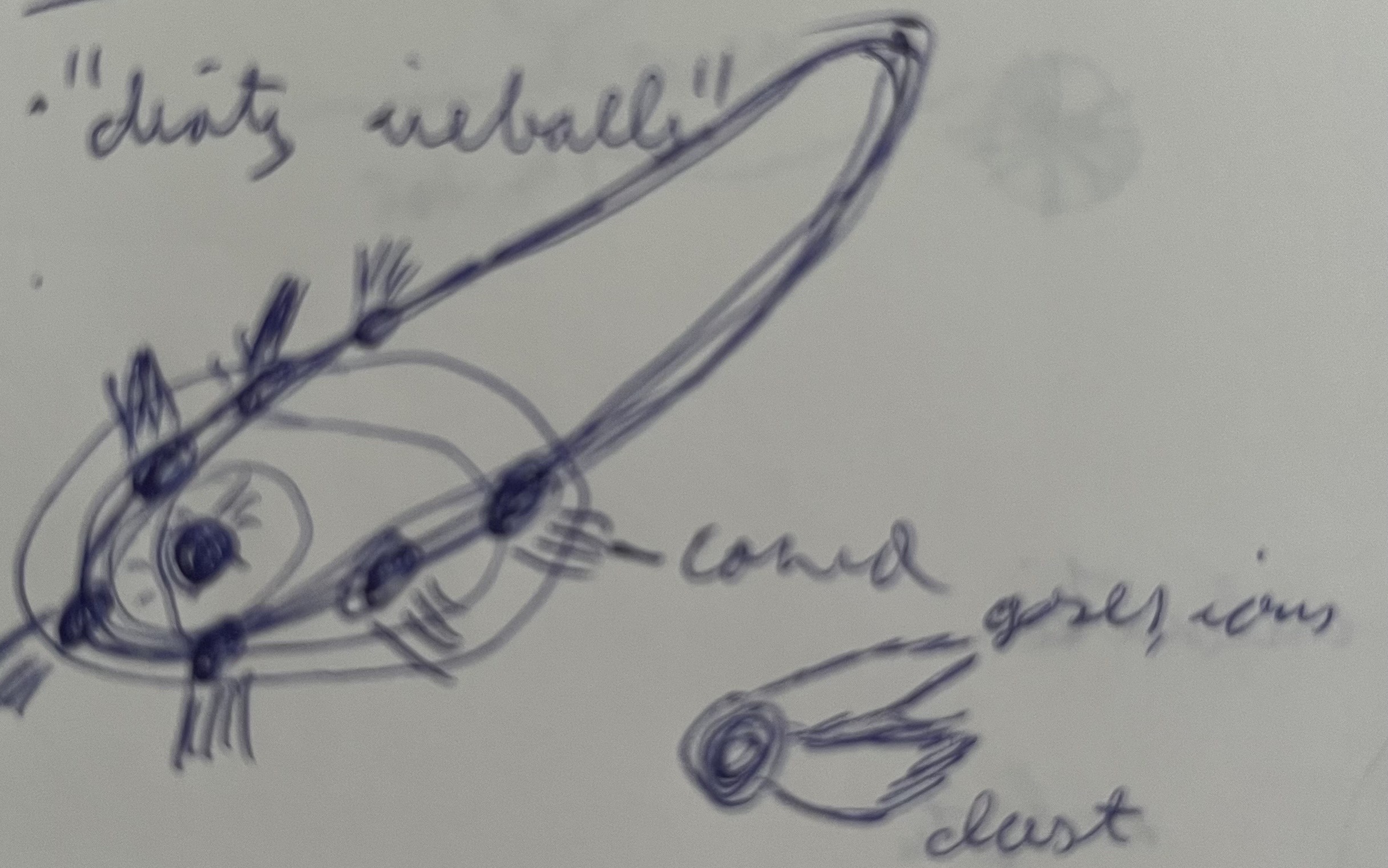
“dirty iceballs”
coma-gases,ion and dust
Meteors
“shooting star”
“falling star”
space debris
95-98% burns in the atmosphere
if it reaches the surface→meteorite
Earths motions
Revolution and rotation
Revolution
elliptical orbit→around the Sun
365.25 days→ leap year
consequences:
changes of seasons
changes in the length of days and nights
Rotation
direction: West to East
duration: 24 h
1h→ 15°
4 min→1°
proven by Leon Foucault
consequences:
changes of days and nights
shape of our planet: geoid
tides
coriolis effect/force
The Moon
second brightest object in the sky
orbits around the Earth once per month
tides
bc of gravitational forces
rotates synchronously:
the same side is always facing toward the Earth
no atmoshpere
two types of terrain:
highlands:
heavily cratered
very old
maria:
smooth
younger
concentrated on the near side
Apollo and Luna→ rock samples
origin:
impact theory
Earth collided with a very large object and the Moon formed from the ejected material