social sciences
Slavery in west africa
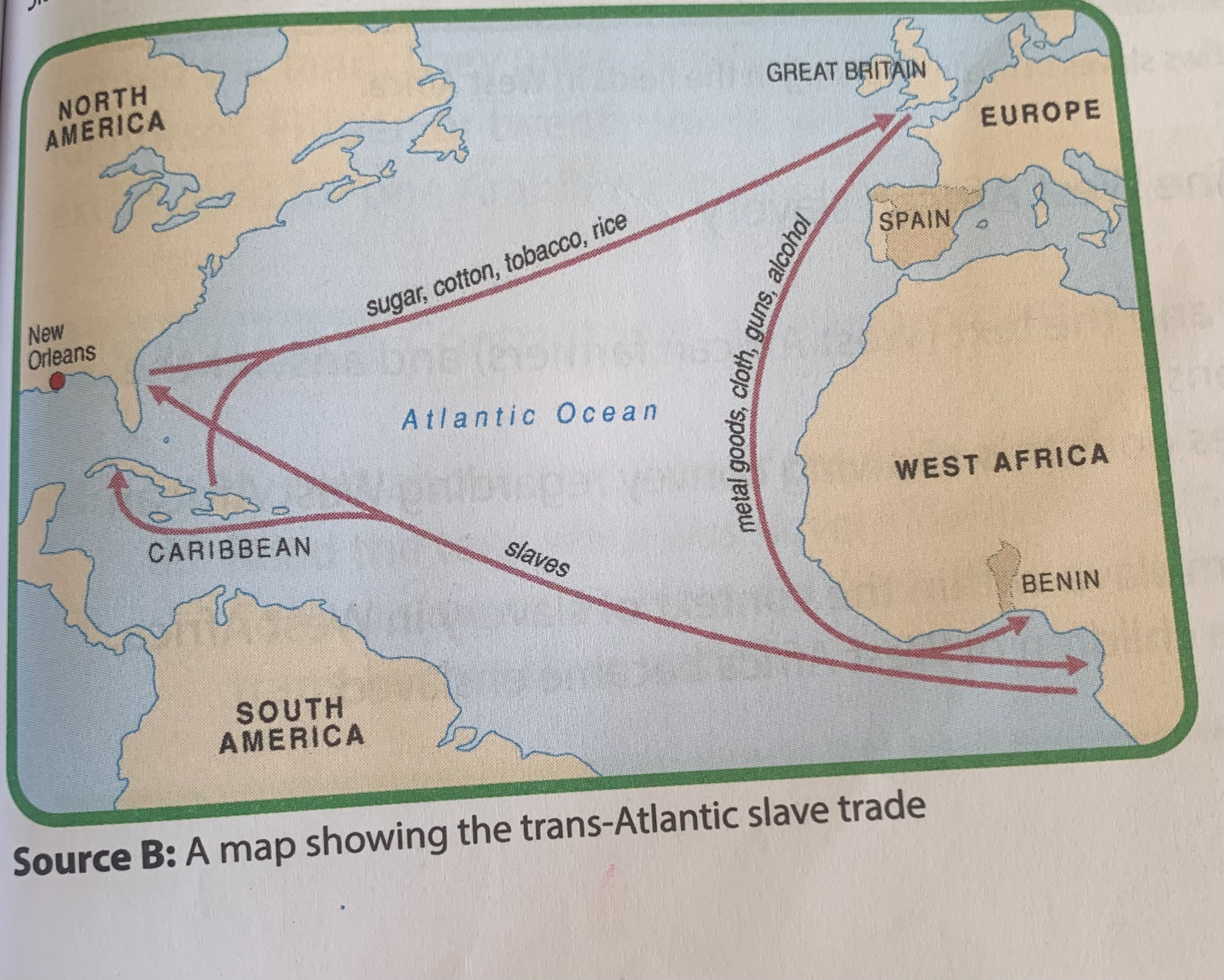
The trans-Atlantic slave trade (1451–1870) involved the forced transport of about twelve million Africans from West Africa to the Americas to work as slaves on plantations. Their labor produced raw materials like sugar, rice, cotton, and tobacco, which were sent to Europe. European manufactured goods were then sold in Europe and West Africa, forming a triangular trade network.
West African farmers
Most West Africans lived in settled farming societies. Farmers grew food to feed themselves and their families. If there was food left over, they traded it for other goods that they needed.
Farming and herding livestock required a lot of people to do the work.
Even if a community was settled on good land with good water supplies, they still needed people to farm the land. Farmers who needed extra workers would sometimes exchange some of their grain for a child from a poor family. The child would then work for the family who bought him or her. Often, people who were very poor voluntarily became slaves in exchange for food and shelter. When people think of slavery today, they usually think of slavery from long ago in the United States of America - where black slaves from West Africa were owned by white masters.
What was slavery Like in West africa
Slavery has existed in many forms throughout history. In West Africa, it existed before the trans-Atlantic slave trade but was different—smaller in scale and less brutal than the slavery that developed under European influence.
In West Africa, slavery was only practised on a smalll scale. These slaves were usuallly people who:
Were captured in battle
Were criminals
Had been chased by other local societies
were bought to preform unskilled or domestic labour
Might become part of the slave owners family
Might later become soilders
The Trans-Sahara Slave trade
From the 7th century, West African slavery expanded as thousands of black slaves were sent to North Africa, the Middle East, and southern Europe. Powerful rulers like Mansa Musa raided weaker neighbors, keeping or selling captives as slaves. Slaves worked in gold mines, on farms, and as soldiers, and were often traded—sometimes 15 to 20 slaves for one Arabian
horse.
Slavery in America South
The British colonised the east coast of what is now the USA, forming the Thirteen Colonies. Indigenous Americans had lived there long before, but the British used force, violence, and advanced weapons to conquer their land. Many Indigenous people died from new diseases brought by the colonists. Lacking enough workers, the British soon began importing slaves from West Africa to do the labour.
The Thirteen Colonies were British colonies established along the east coast of what is now the United States of America. They were:
1. Virginia
2. Massachusett
3. New Hampshire
4. Maryland
5. Connecticut
6. Rhode Island
7. Delaware
8. North Carolina
9. South Carolina
10. New York
11. New Jersey
12. Pennsylvania
13. Georgia
The American Declaration of Independence
In the 1760s, conflicts arose between Britain and the Thirteen Colonies. These disputes led to war, and in 1776 the colonies declared independence. By 1783, they won their freedom, leading to the creation of the United States of America.
Slavery in the USA
A document called the 'American Declaration of Independence' was drawn up by the new government of the USA.
The American Declaration of Independence was misleading because it claimed equal rights, but only wealthy men or property owners could vote. Slaves, women, and poor men were excluded. This is seen as hypocritical—saying one thing about fairness but acting differently.
Plantations in South America
As American colonists moved south and west, they established large plantations in the southern states, using enslaved Africans for labor. These plantations produced cash crops like tobacco, rice, sugar cane, and cotton, which were sold for profit. The southern economy became based on agriculture and slavery.
Slave states allowed slavery, while free states did not. The southern coastal states—Georgia, South Carolina, North Carolina, Virginia, and Maryland—had the most slaves, mainly working on plantations. In the north, slaves were mostly used in homes and businesses. Slavery existed in all thirteen original colonies, and it remained legal in the north for over 200 years. In the north, owning slaves was a sign of wealth and status. Most northern slave owners had few slaves, and the northern states gradually abolished slavery.
Slavery became a key cause of the American Civil War and was fully abolished in the U.S. in 1865.
Reasons for Slave Labour
American plantation owners lacked enough workers, so slave traders brought enslaved people from West Africa to do the hard labor on southern plantations.
What was Slavery
Slavery existed in Africa before European arrival, but when Europeans colonised regions, they introduced chattel slavery—a harsher system where slaves were treated as property and bought or sold like cattle.
Slaves were taken from West Africa to the Americas where they:
Were treated like a piece of property
Were treated like they were not human
Were treated with extreme brutaility
were slaves for life-children became slaves
Were forced to work for their owner
Didnt get any wages
Had no rights
Were not allowed to learn to read ot write
How slaves were captured,Sold and tranported from West Africa
European slave traders either kidnapped Africans or bought them from local chiefs, who often captured fellow Africans in exchange for goods like guns, whiskey, cloth, and metal items. The traders set up coastal bases in West Africa, where captives were held in prisons called barracoons until sold. Once sold, slaves were branded with a hot iron showing the company’s mark, then shipped across the Atlantic Ocean.
Number of Slaves taken to America
The exact number of Africans taken and transported across the Atlantic as slaves is unknown, but estimates suggest it was in the millions. Historians believe around 12 million Africans were taken to North America through the trans-Atlantic slave trade.
What happened to raw materials that slaves produced
The cash crops were harvested and were packed onto ships and taken to England, where they were made into products in factories. Cotton was woven into material, which was made into clothes. Sugar cane was turned into sugar to sweeten foods and drinks. Tobacco was made into pipe tobacco and chewing tobacco.
These products were sold to people in Britain and exported to British colonies to be sold there at big profits.
Keywords
Auctions- events where items or goods are sold to the highest bidder
Barter- means to trade goods or services with bo money involved
Slave- A person owned by someone else
Raid- Invade or attack
Voyage- Journey or travel
Conquest- taking something over by force
Colonise- to take over and control a country or a piece of land and their government
Indingenous people- the local inhabitants or people who originally lived in the area
Immunity- havig the ability to fight off an infectious disease
Plantation- a bug farm where crops are grown on a large scale
Cash crops- crops like rice,tobaccos, sugar cane and cotton sold for money
Chattell- personal property that can be bought, sold or owned
Barracons- a slave warehouse, an enclosure where slaves are usuallly kept
Extra Info: