Neurotransmitters
Cholinergic System:
Cholinergic synapses utilize acetylcholine (ACh) as neurotransmitter
can be excitatory OR inhibitory (not both)
found throughout CNS and PNS
has two categories:
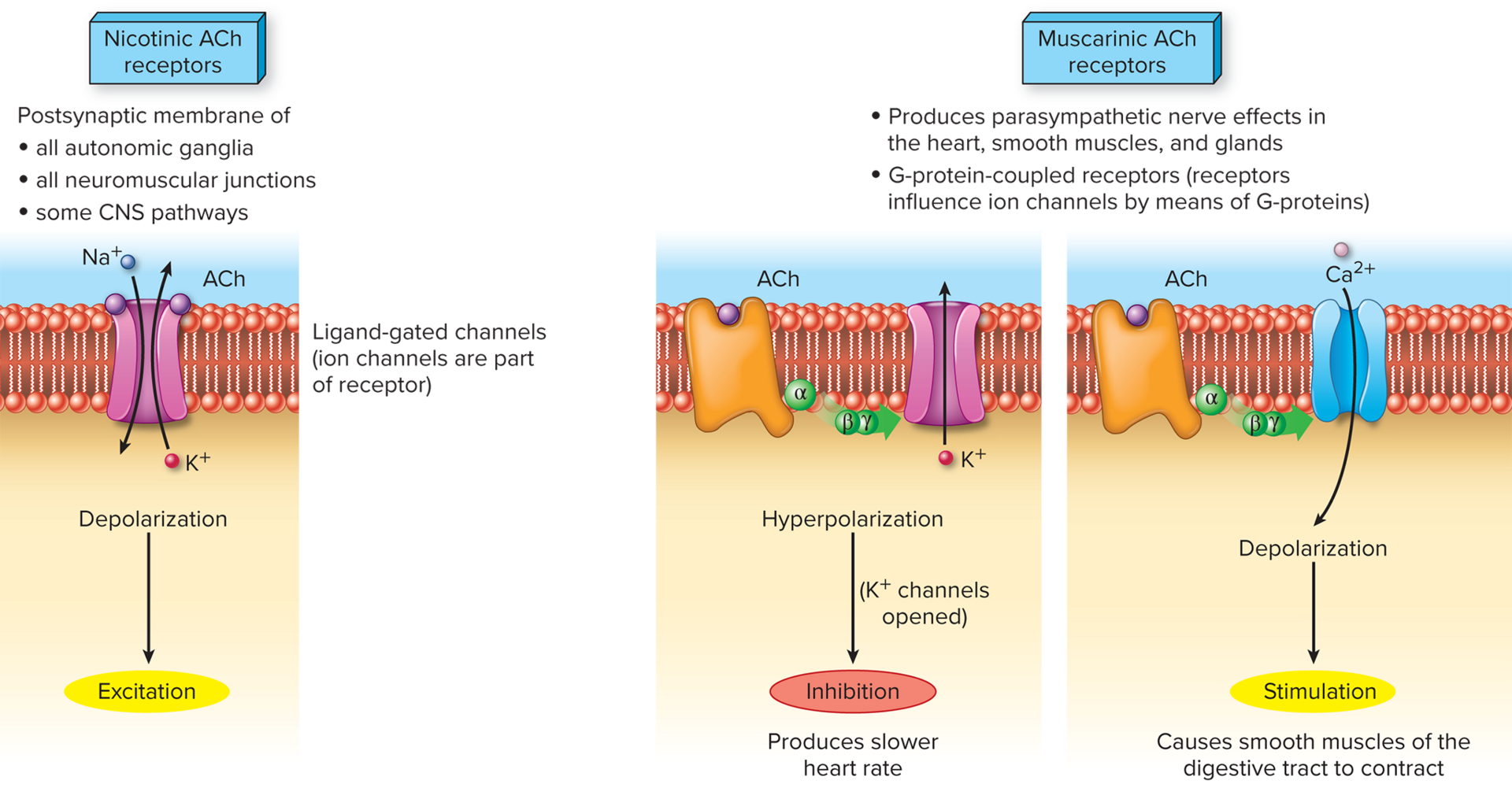
Nicotinic ACh Receptors: Always excitatory
use ligand-gated channels
acetylcholine (neurotransmitter) acts as ligand that binds to ligand gated channels
causing Na+ to rush into cell body, moving down concentration gradient
causes depolarization
leading to EPSP
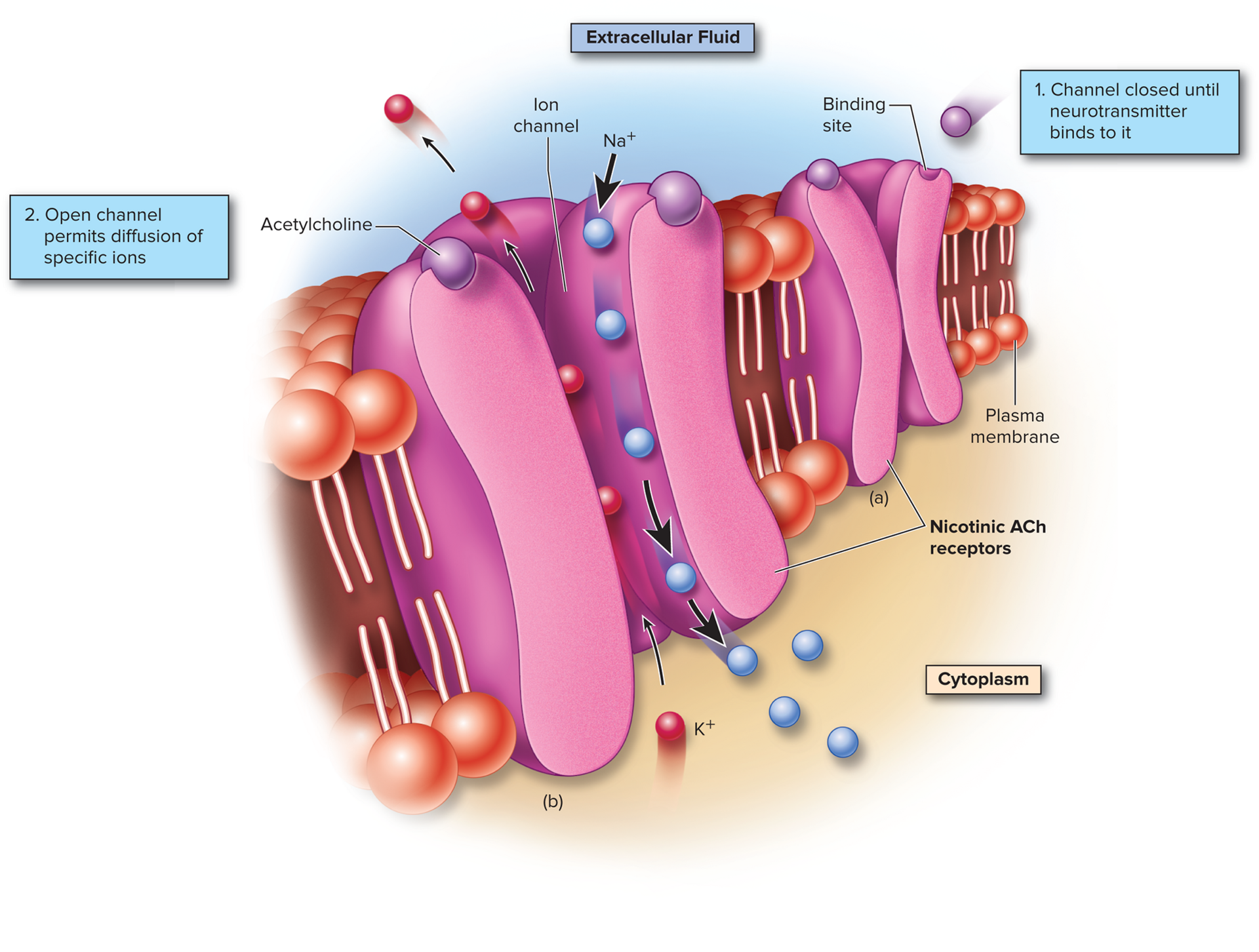
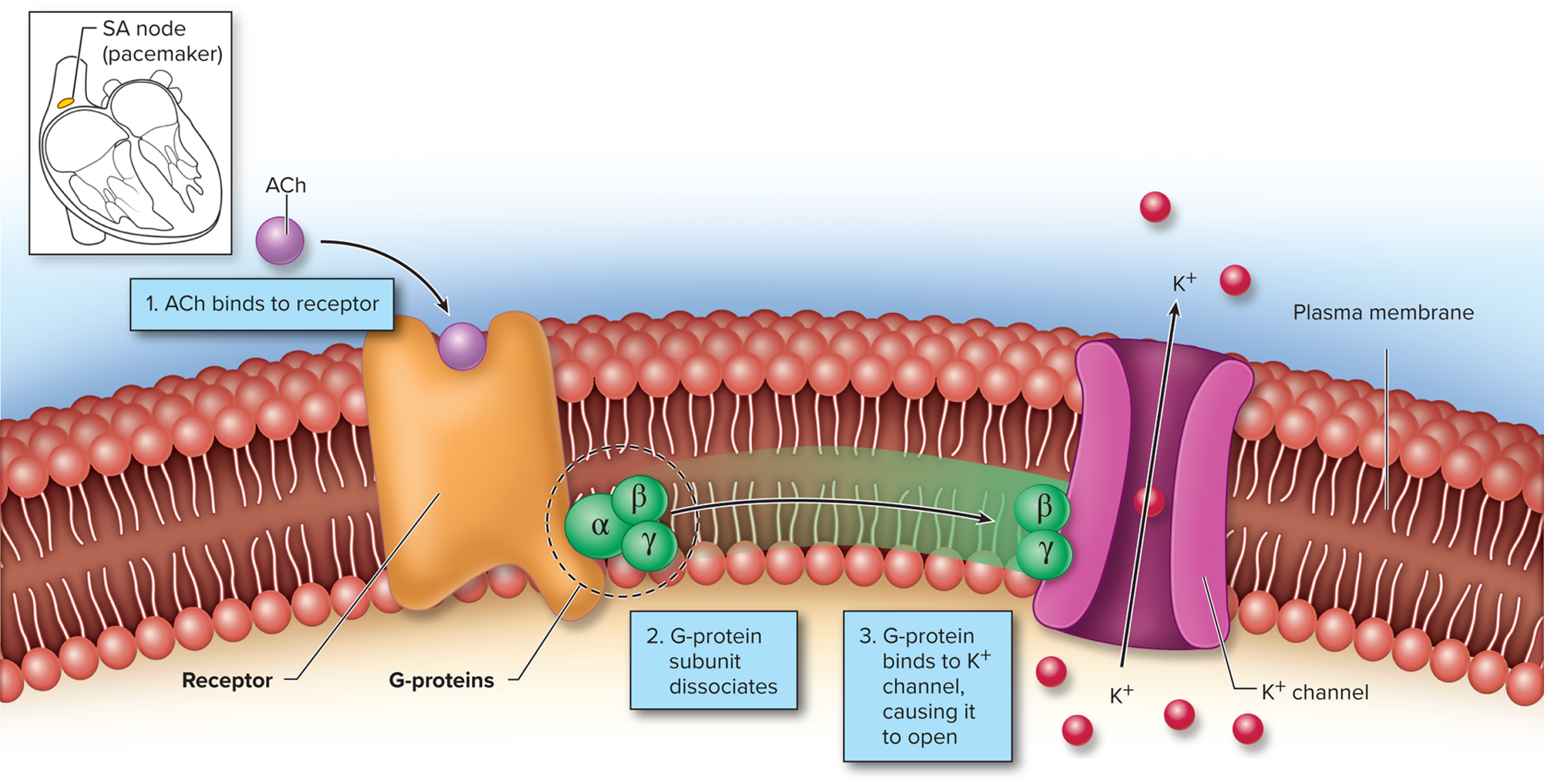
Muscarinic ACh Receptors: can be excitatory or inhibitory
use secondary messenger systems called G-Protein
acetylcholine binds to receptor
causes G-Protein to disassociate and bind to K+ channels, causing it to open
K+ exits the cell, moving down concentration gradient
causes cell body to become more negative, leading to hyper-polarization
leading to IPSP
depending on what type of neurotransmitter binds, this will determine whether the neuron becomes more excitatory (EPSP) or inhibitory (IPSP)
Synaptic Clearing of Acetylcholine (ACh)
if release neurotransmitter into synapse and leave it there, it will continuously stimulate
must be cleared
two ways neurotransmitters are cleared from synaptic membrane:
Acetylcholinesterane (AChE): enzyme used in post synaptic membrane that breaks down Acetylcholine to make it chemically inactive
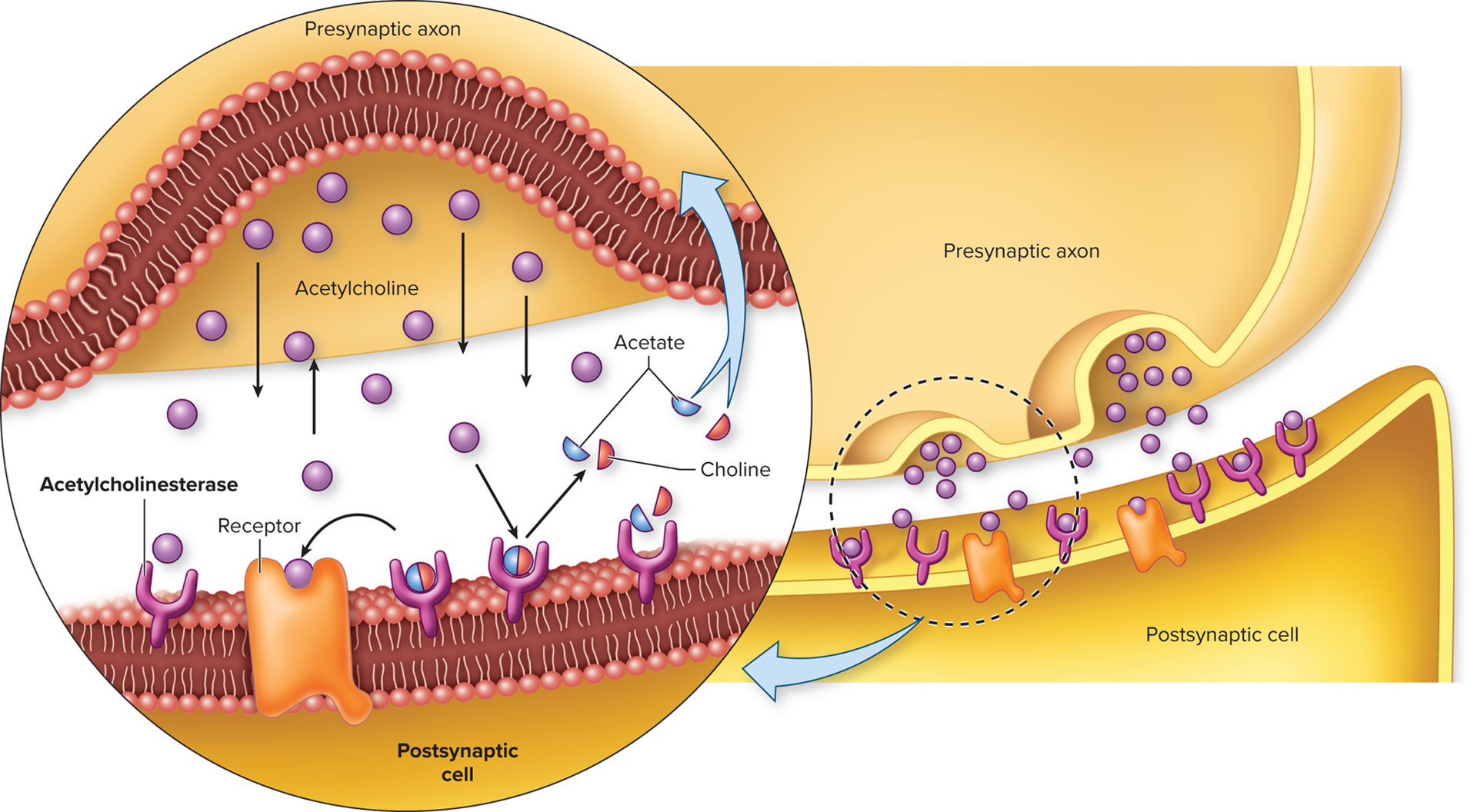
Reuptake: the process by which neurotransmitters are absorbed back into the presynaptic neuron after their release, via endocytosis
there are medications (anti-depressants) that affect reuptake
prevent neurotransmitters from being reabsorbed by the presynaptic neuron
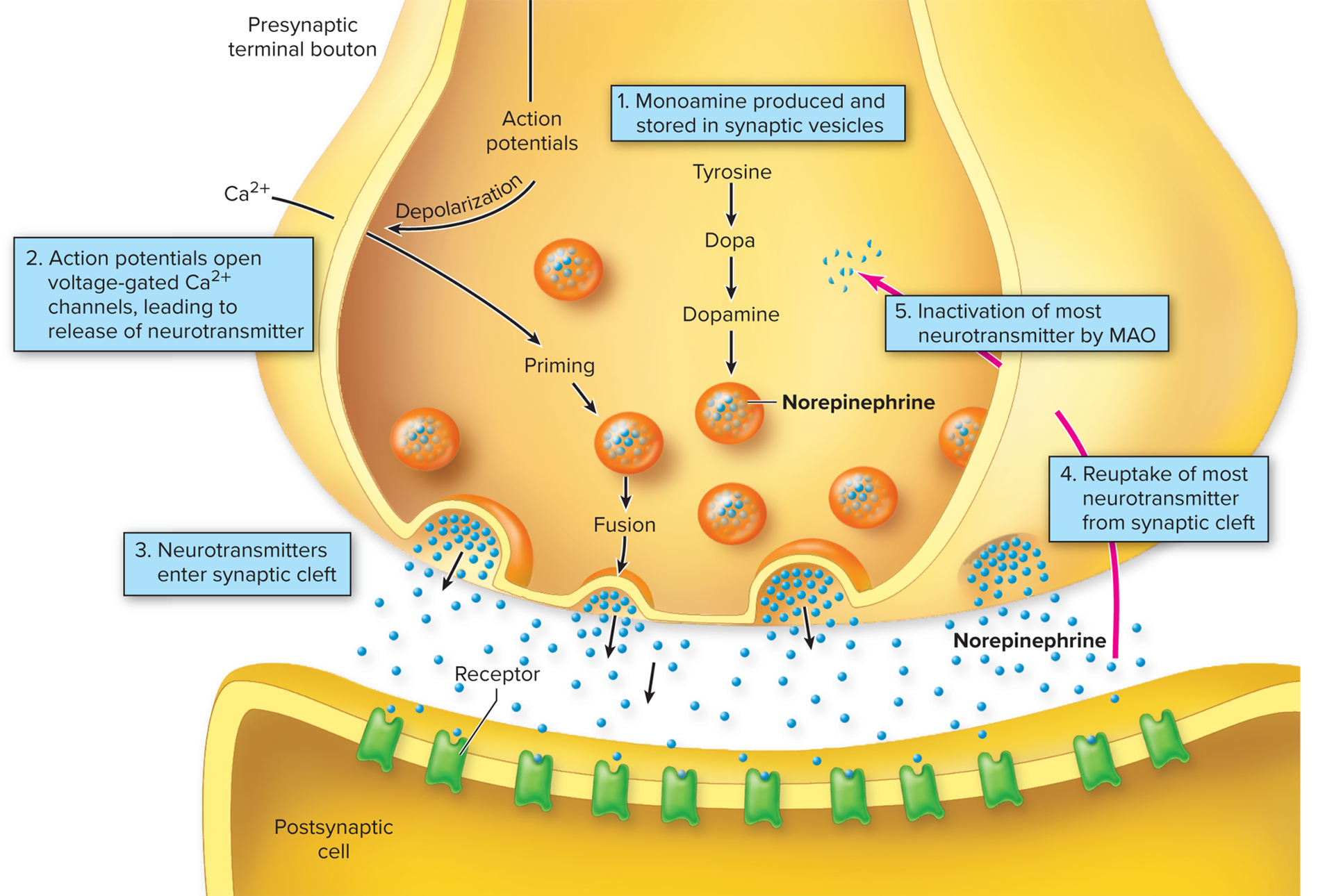
Cholinergic synapses also utilize Monoamines
Monoamines: regulatory molecule derived from amino acids
4 types of Monoamines:
dopamine
epinephrine
serotonin
norepinephrine
uses secondary messenger called G-Proteins
also a hormone when released in blood, but when released in synapse, it is a neurotransmitter
cleared from the synaptic cleft by reuptake
Other Neurotransmitters
Glutamate: excitatory neurotransmitter
an amino acid used as the major neurotransmitter in the brain (CNS)
produces EPSPs in 80% of synapses in cerebral cortex
GABA: inhibitory neurotransmitter
most common neurotransmitter in brain
produces IPSPs by binding open Cl- channels, causing influx of Cl-
leads to hyper-polarization
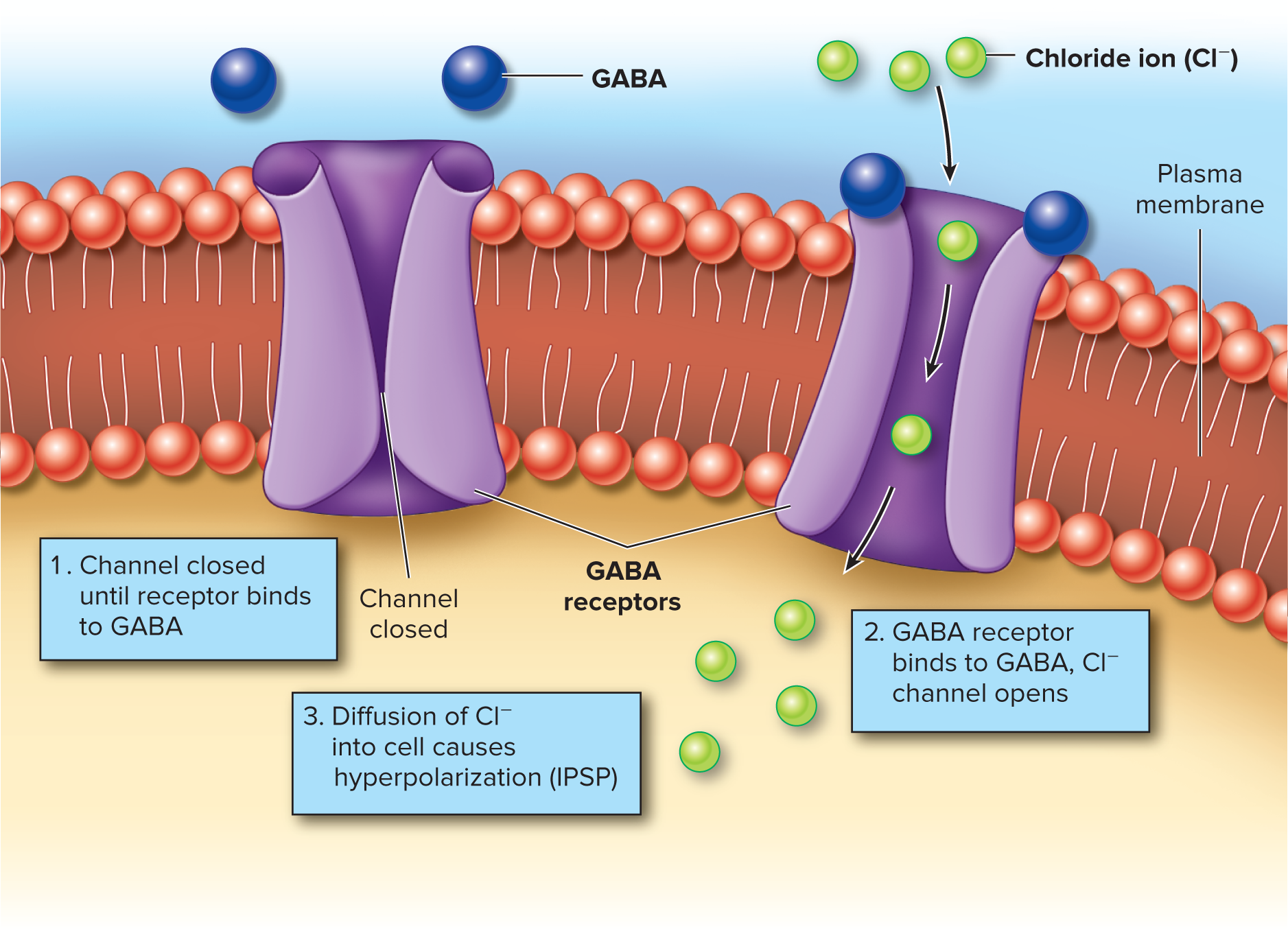
Glycine: inhibitory neurotransmitter
produces IPSPs by binding open Cl- channels, causing influx of Cl-
leads to hyper-polarization
Neurotransmitters responsible for subconscious control of skeletal muscle:
excitatory neurotransmitters responsible for subconscious control of skeletal muscle:
Glutamate neurotransmitters
Dopamine neurotransmitters
inhibitory neurotransmitter responsible for subconscious control of skeletal muscle:
GABA neurotransmitters
Relationship of Motor Circuit to Parkinson’s disease
Nigrostriatal System includes the Dopaminergic pathway
Dopaminergic pathway: neurons in circuit releases dopamine into synapses
Parkinson's disease: death of neurons that release dopamine in Substantia Nigra
symptoms include loss of control of skeletal muscle
dopamine is still sent to Substantia Nigra but neurons are dead so neuron does not get command, and communication is not in tact with skeletal muscle
Relationship of Motor Circuit to Huntington’s disease
Huntington's Disease: death of neurons releasing GABA in the Caudate Nucleus due to genetic defect
effects inhibitory pathways
when GABA is released into synapse, caudate nucleus’ neurons are dead and cannot react to it to prevent inhibitory mechanism, so antagonist muscle still contracts when should be inhibited to allow agonist muscle to contract
symptoms include spastic motion of limbs and facial muscles, abnormal muscle contractions
Mesolimbic pathway in Limbic System:
Mesolimbic system includes a dopaminergic pathway
reward pathway, actions cause someone to feel good
related to drug use making one feel good
plays a crucial role in the reinforcement of behaviors that are perceived as pleasurable, which can lead to patterns of addiction when drugs artificially stimulate these reward pathways.
Neurotransmitters in Autonomic Nervous System
Cholinergic Responses
Cholinergic Responses always release ACh
use Acetylcholine (ACh) Nicotinic Receptors
ACh binds to Nicotinic Receptors, using ligand-gated channels
always excitatory
Excitatory Response to Acetylcholine (ACh) Nicotinic Receptors:
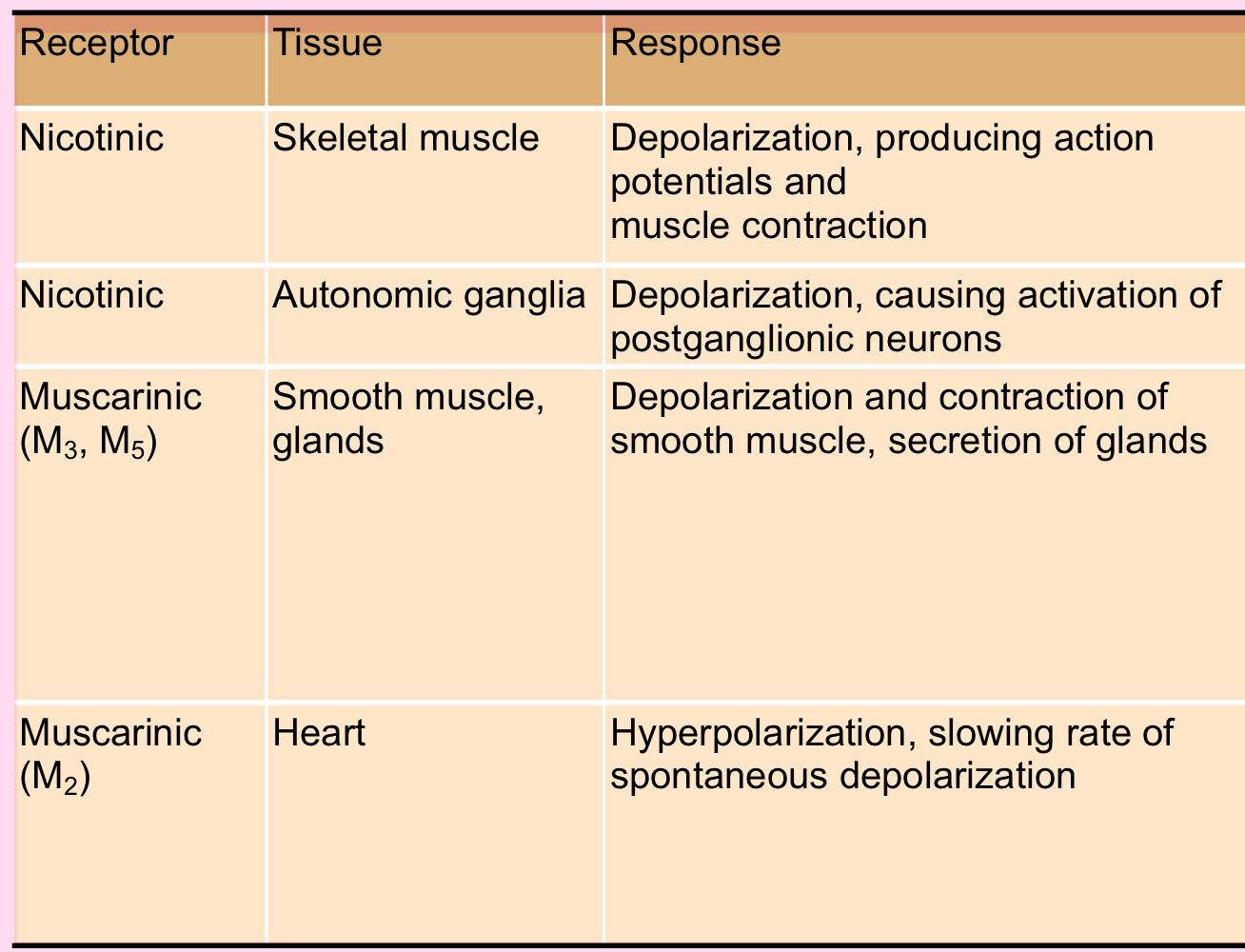
causes depolarization in:
Skeletal muscle
producing action potentials and muscle contraction
autonomic ganglia
all autonomic ganglia have ACh nicotinic receptors (both sympathetic and non-sympathetic nervous system)
causes activation of post ganglionic neurons
use Acetylcholine (ACh) Muscarinic Receptors
ACh binds to Muscarinic Receptors, using G-proteins
ALL parasympathetic and few sympathetic effector synapses in autonomic nervous system
either excitatory or inhibitory
Excitatory Acetylcholine (ACh) Muscarinic Receptors (M3 or M5):
causes depolarization in smooth muscle and glands:
contracting of smooth muscle
stimulating secretion of glands
Inhibitory Acetylcholine (ACh) Muscarinic Receptors:
causes hyperpolarization in heart
slowing of heart rate
Adrenergic Responses
Adrenergic Responses release Norepinephrine
almost all sympathetic effector synapses are Adrenergic (bind norepinephrine)
adrenergic responses cause epinephrine to be released into the blood from adrenal glands and norepinephrine to be released from sympathetic nerve endings
Norepinephrine binds to 3 major categories of adrenergic pathways:
Adrenergic Alpha Receptors
Adrenergic Alpha-1 Receptors: cause vasoconstriction in viscera and skin
vasoconstrictor effect of the sympathetic nerves always result from activation of alpha-adrenergic receptors
Adrenergic Beta Receptors:
Adrenergic Beta-1 Receptors: cause increased heart rate and contractility (how hard contraction is)
example: beta blockers bind to beta-1 receptors to keep heart rate low
Adrenergic Beta-2 Receptors: cause dilation of bronchioles and blood vessels
all Adrenergic receptors bind via G-proteins