Comparative Essays
Overall
How?
to what effect?- how is the author portraying it
utilise- use or include
or - focus on one not all
find similar things that happen, about the question
find differences things that happen about the questions
Thesis
make thesis 2 sentences for theses
show overall themes that are the same and or different
using however
what is the key message of the author
Introduction
hook that explores the Topic of the question
brief summary statements of both works taht connects to your question(one sentence to two per story)
comparative thesis statement with rich ideas and wording of the questions
Body Paragraph
answer the question in every paragraph
discuss authorial choices - analyse the choose the author has made, why did he do this and what are key factors of this
clear topic sentences with wording of the question and rich idea
concrete detail with literally features
commentary about the authors choices
transition words and phrases
comparative language and contrast

use authors name Farley often
litterly devices
authors choices
at lot of referring to the the story
write analytically
in the thesis write one sentence for similarities and differences
need to use the key terms of the question a lot of times
quotation not a quote
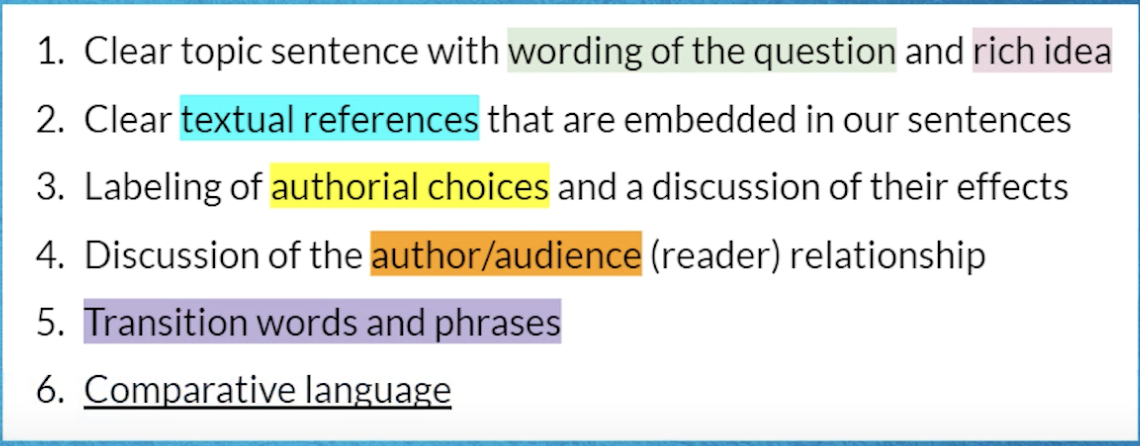
reference the story a lot
Videos
/
Overall
How?: Analyze how the author conveys their messages.
To what effect?: Consider the impact of these portrayals on the audience.
Utilise: Integrate quotes and examples effectively into your analysis.
Or: Choose to focus on one aspect instead of multiple aspects of the story.
Find similarities: Identify recurring themes or motifs that the texts share in response to the question.
Find differences: Note contrasting themes or approaches between the two texts relevant to the discussion.
Thesis
Frame your thesis in two comprehensive sentences that encapsulate the essence of your comparison.
Highlight both similarities and differences in themes, preferably using the word "however" to emphasize contrasts.
Clarify the key message or argument the author is making within the thesis statement.
Introduction
Start with a captivating hook that piques interest in the topic of the question.
Provide a brief summary of both works that connects to your question, ideally one to two sentences per story.
Conclude the introduction with a comparative thesis statement laden with rich language and thoughtful insights derived from the question.
Body Paragraph
Ensure that each paragraph directly answers the question.
Discuss specific authorial choices: analyze the selections made by the author, the motivations behind these choices, and their crucial implications.
Use clear and focused topic sentences that reference the wording of the question while encompassing rich ideas.
Include concrete details that showcase literary features, such as symbolism or imagery.
Provide thorough commentary on the authors' choices, explaining their significance in relation to the context of the stories.
Employ transition words and phrases to ensure coherence and fluidity between ideas.
Utilize comparative language to draw contrasts and similarities effectively throughout your analysis.
Additional Guidelines
Frequently reference the author's name, especially Farley, as you discuss their works.
Incorporate literary devices and authorial choices into your analysis.
Ensure that you are consistently referring back to the stories during your writing.
Write analytically, focusing on deeper meanings rather than surface-level observations.
In your thesis, strive to compose one sentence that encapsulates both the similarities and the differences presented in your analysis.
Make extensive use of the key terms found in the question to reinforce your arguments.
Opt to use the term "quotation" rather than "quote" for formality.
References
Consistently reference the stories throughout your analysis to ground your arguments in concrete examples.