IDU e-assessment
Nature and nuture
Have you ever wondered, who am I? Who are we?
In this video we will explore this question and look at both nature and nurture.
Nature refers to the genetics you’re born with. It’s the genes you inherit from your parents and the traits that they code for such as your eye colour or potential height.
Nature relates to how DNA shapes who you are.
Then there's nurture, which is all about the environment around you; the relationships you form, the schools you go to, the culture you grow up in.
These experiences and surroundings mold and shape you over time. The choices your parents make, the friends you hang out with, and even the food you eat can impact who you become.
Which is more important in forming your identity, nature or nurture?
The truth is, they’re both important. They work together to make you, you! Your genes might give you a starting point, but your environment helps shape how these traits develop.
Take, for example, someone playing basketball. Some people might have natural height and athletic ability; they can shoot hoops easily from a young age. But without hours of practice, learning the strategies, and a good coach, they won’t reach their full potential. So, it’s both their genetics and their environment that shapes their skills.
So, in short, our genetics and the environment around us influence who we are, developing our identity.
Nominative determinism
What’s in a name?
Historically many names originated from occupations, trades or professions.
An artist called Painter, a pastry chef called Baker, a wood maker called Carpenter. These names were not a coincidence; the names were a direct consequence of their environment because many careers were passed down from parent to child.
However, in more recent times, occupations are no longer inherited. People can do whatever they want, and their career pathway is not associated with their name.
Or is it?
For example, these athletes are all called Victoria. The name Victoria has Latin origins meaning winner or conqueror.
Is it sheer coincidence that these athletes are winners or has their name contributed to their success?
There’s a term for this idea: nominative determinism, which means that people are drawn to a life journey that matches their name.
An article in the Chicago Tribune called “In name game, Loser wins and brother Winner loses” we are told the story of two brothers, one legally named Winner and the other Loser.
We learn that the brother called Loser was a star student and an athlete who later became a police detective. However, the brother called Winner has not had the same positive life path. Despite growing up in the same family and community environment as his brother, Winner’s life has led to crime and time in prison.
Maybe it’s true, a name does influence the life path taken by an individual or perhaps it may direct them to the opposite path?
©
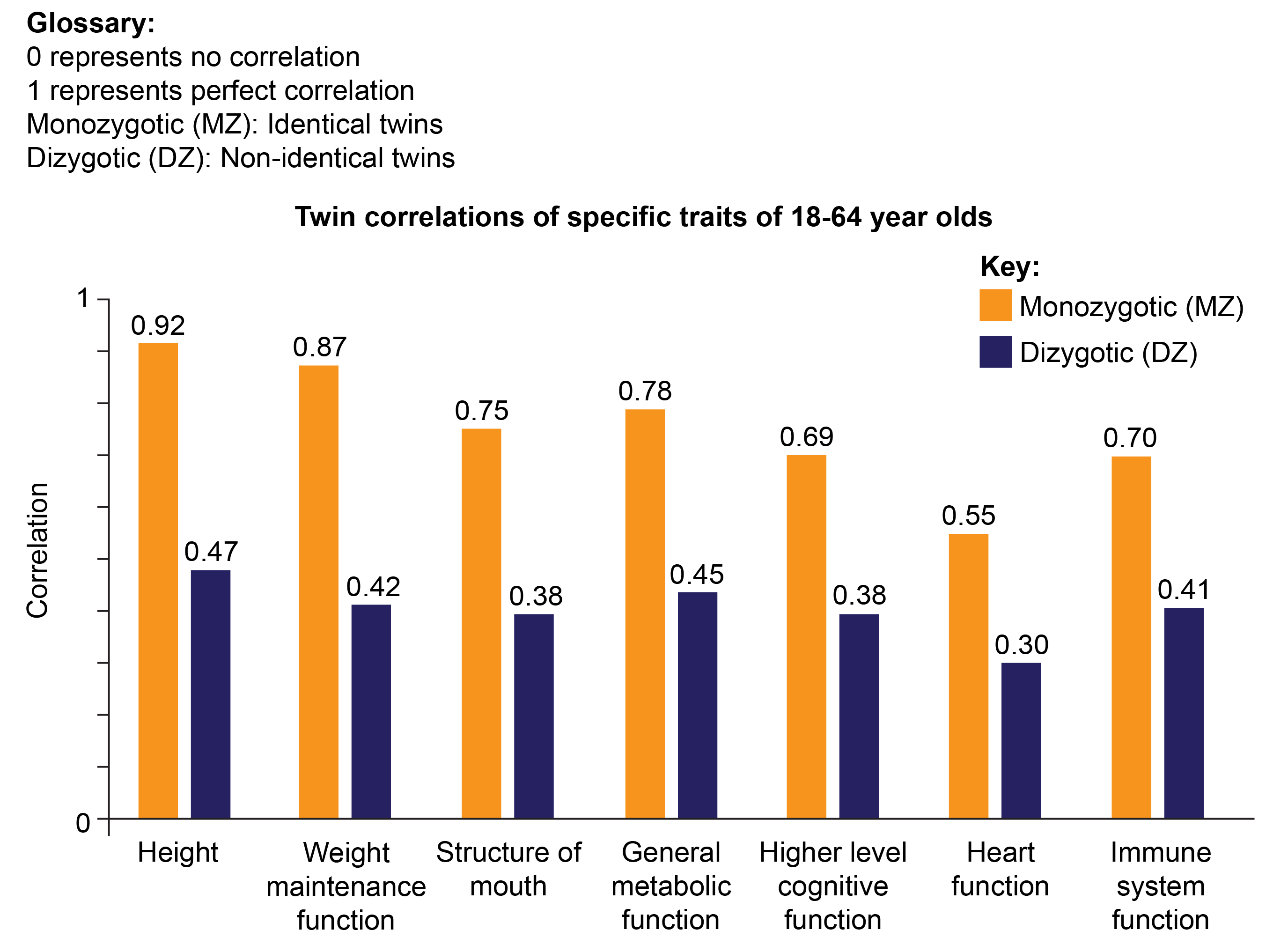
Understanding the variation of human traits is important in the sciences and psychology. Twin studies enable the exploration of relationships between genes and human traits. The following data extract comes from a meta-analysis of twin studies of human traits over a fifty-year time scale.
Glossary:
Meta-analysis: a statistical process that combines data from multiple studies to draw a single conclusion about a topic
Impact of Ultra processed food (UPF) on health
The NOVA system classifies foods according to the nature, extent and purpose of food processing. There are four food groups:
Unprocessed or minimally processed foods, for example, fresh, frozen or dry fruits, vegetables, nuts, legumes, plain chicken breast and milk.
Processed culinary ingredients, for example, sugar, salt, oils and butter.
Processed foods, for example, canned fruits and vegetables, artisan breads and cheeses.
Ultra-processed foods (UPFs), for example, chips/crisps, biscuits, burgers, salami, chicken nuggets, mass-produced bread, crackers, instant soups and cereals.
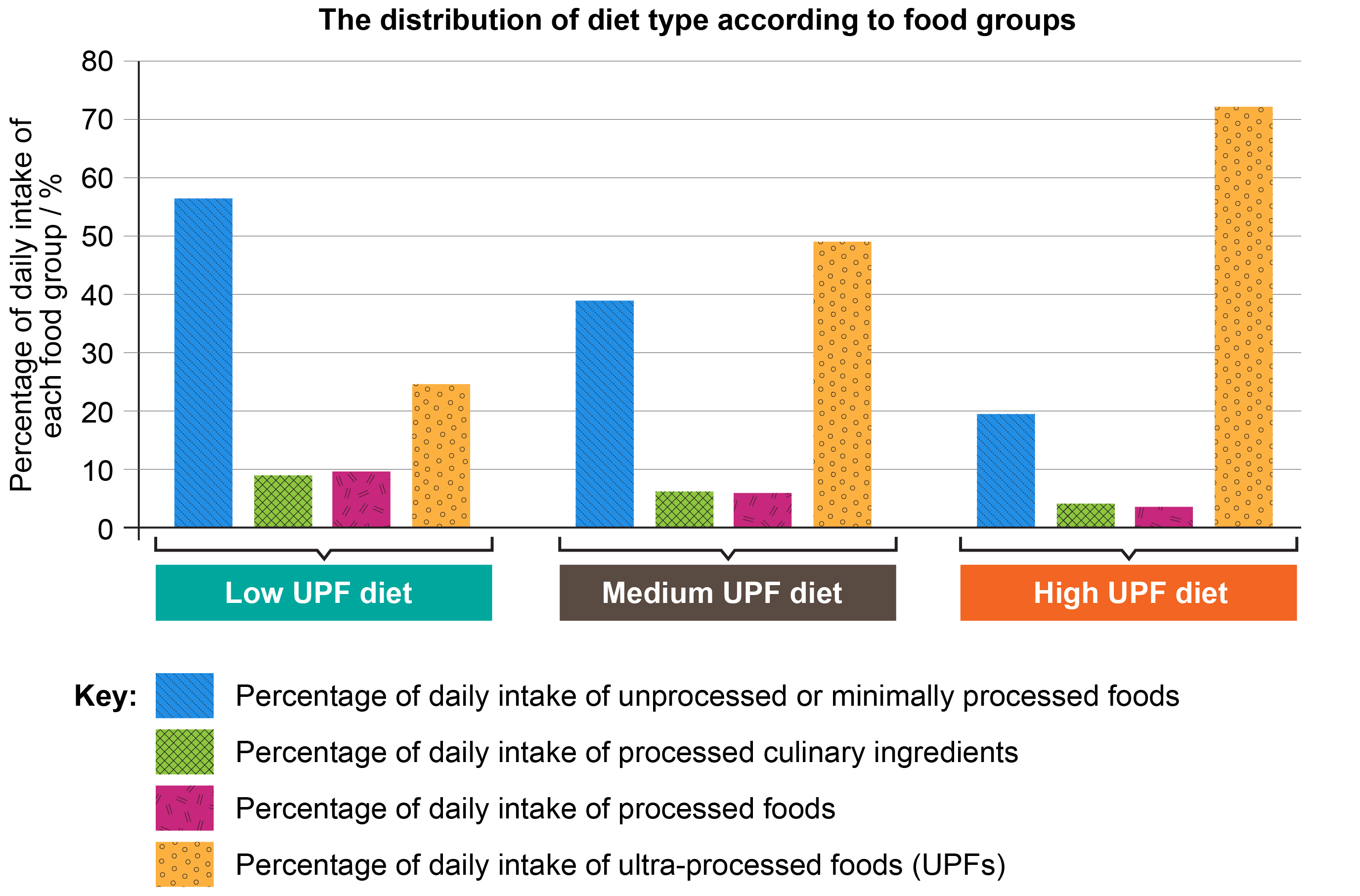
The following data is taken from Statistics Canada, Canadian Community Health Survey 2015.
Number of participants: 13 608
Year of study: 2015
Ages: 19 years or older
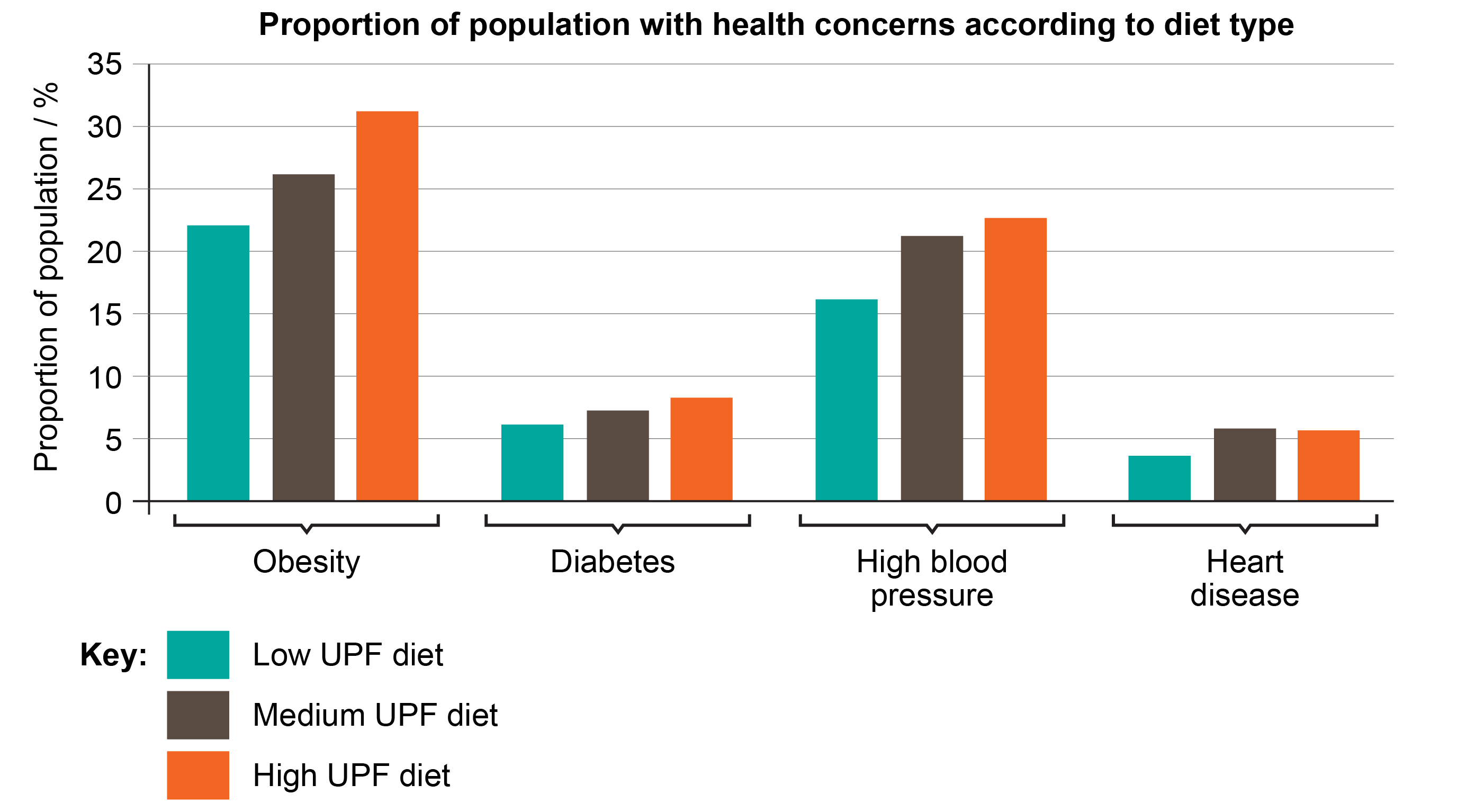
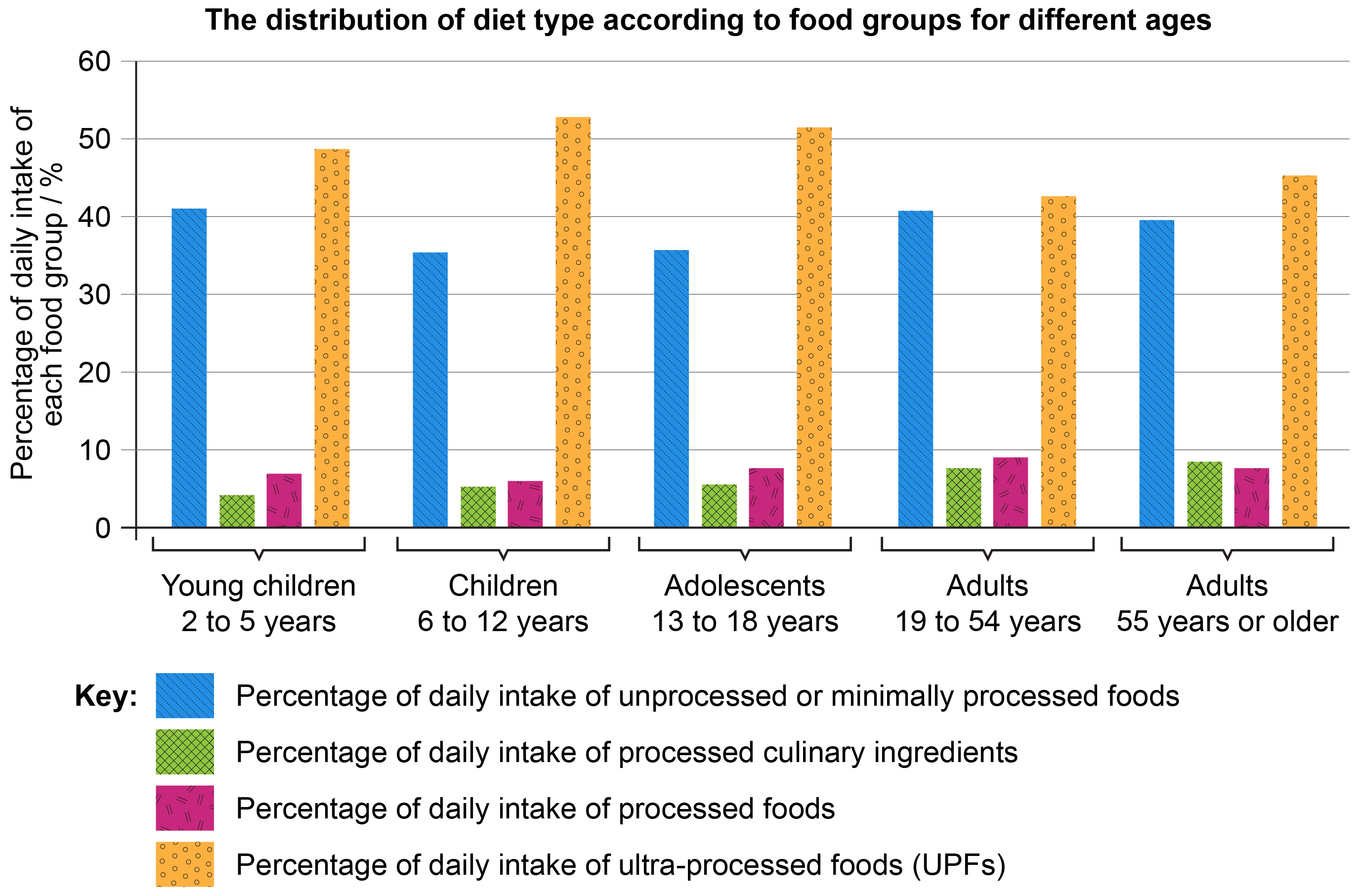
The following data is taken from Statistics Canada, Canadian Community Health Survey 2015. The data shows the distribution of daily energy intake according to food groups for different ages.
Number of participants: 20 080
Year of study: 2015
Ages: 2 years or older
I ate ultra-processed foods, my twin didn't. The results were shocking.
Published 27 June 2023 at 5:26 EDT by Aimee Kingston
Before taking part in a study of the impact of ultra-processed foods (UPFs), I would say my diet was balanced. I love cooking, so I ate a lot of homemade food from whole, less processed groceries.
However, I didn't really make a conscious effort to avoid UPFs, and was probably more likely to choose a food based on the number of calories or labeling, rather than the ingredients list.
Earlier this year, Twins UK—a registry of twins available to contribute to scientific research— asked us if we would be interested in taking part in a test carried out by Professor Tim Spector from King's College London, which would see me eat only UPFs for two weeks.
My twin sister, Nancy, would consume the same number of calories, nutrients, fat, sugar, and fiber, but eat only non or low-processed foods.
We had both previously taken part in the ZOE Predict studies, analyzing how different people respond to food, and already knew Tim Spector. Plus, my sister had been following his previous research on UPFs.
She'd read all of Professor Spector's books and was a weekly listener of the ZOE Science and Nutrition podcast, so she thought this was a really exciting opportunity. I obviously agreed. We are both keen on science and contributing where we can.
During the study, my typical breakfast was pancakes with syrup, hash brown and sausage, an instant flavored porridge with syrup and honey-roasted nuts, breakfast cereal with a blueberry muffin, or a flavored creamy yogurt and a croissant.
For lunch I ate either a peanut butter and jelly sandwich on white bread with chocolate milk and some chips, a turkey and mayo sandwich with chips and some packaged peaches, or ravioli with cheese and a cookie.
Dinner was meals like cheeseburger and chips, beef with mash gravy and tinned sweetcorn, a meatball sub with cheese and some crackers, or ready-made turkey quesadillas with sour cream, a Diet Coke, and a chocolate bar.
There was very limited fresh food, and no fruits or vegetables. Everything was really easy to eat mindlessly; I didn't have to put any effort into eating it. It's the type of food I could eat quickly, and it would taste consistently good.
I felt the increase in hunger early on. Within the first meal or two, I felt a real urge to snack between meals. Changes to my mood took a bit longer, maybe about a week but then I was noticeably lower in mood.
The biggest change I noticed was being hungry all the time. Despite eating more calories than my typical diet pre-study, I was waking up really hungry in the morning and didn't find my meals satisfying.
I felt really tired. So much so that by the end of the two weeks, friends and family commented on how exhausted I looked.
I constantly felt like I had less energy and found it really hard to concentrate—especially at work in the afternoon as I was constantly thinking about food. Very sweet, refined carbohydrates made me feel worse.
At the end of the study, I was ready to go back to a more normal diet. It was exhausting to feel so hungry and tired all the time, even if only for two weeks.
More than anything, I was looking forward to cooking my own food again and choosing what I was going to be eating, as the meals had been prepared by a chef for us.
Whilst mentally I was looking forward to going back to my normal diet, I was surprised that my body was still craving UPFs.
The results of the study showed that in just two weeks, I had put on weight and my blood sugar and fat levels had worsened. Meanwhile, Nancy's results showed the opposite—she was slimmer and had better blood results.
Neither of us is overweight or unwell in any way, so I was shocked that as a young, healthy person, it affected my health in as little as two weeks.
During the study, my sister didn't really feel hungry and didn't feel the need to snack, which I definitely did. She actually felt full and sometimes didn't even manage to finish her meals. Her mood was also better than mine.
To a certain extent, it was difficult to wean myself off the ultra-processed diet. I didn't really enjoy the food but finished everything I was given and was always left wanting more. I also liked the convenience of the food.
As a result of the study, my sister has tried new foods, like porridge made with quinoa rather than oats, which she noticed kept her fuller for longer.
This experience has definitely changed the way I approach food. I initially believed my diet was low on UPF, but actually, I was eating way more of them than I thought.
For example, fruity-flavored yogurts, sliced brown bread, and cereal bars marketed as "whole foods", but which contained emulsifiers, preservatives, and sweeteners.
Now, I'm making a conscious effort to eat more whole foods, especially when it comes to snacking.
I don't think it's sustainable, or even possible to cut them out completely, but I'm eating UPFs a lot more mindfully now—enjoying them when I fancy them, but aware of how they affect my body.
Somatotyping
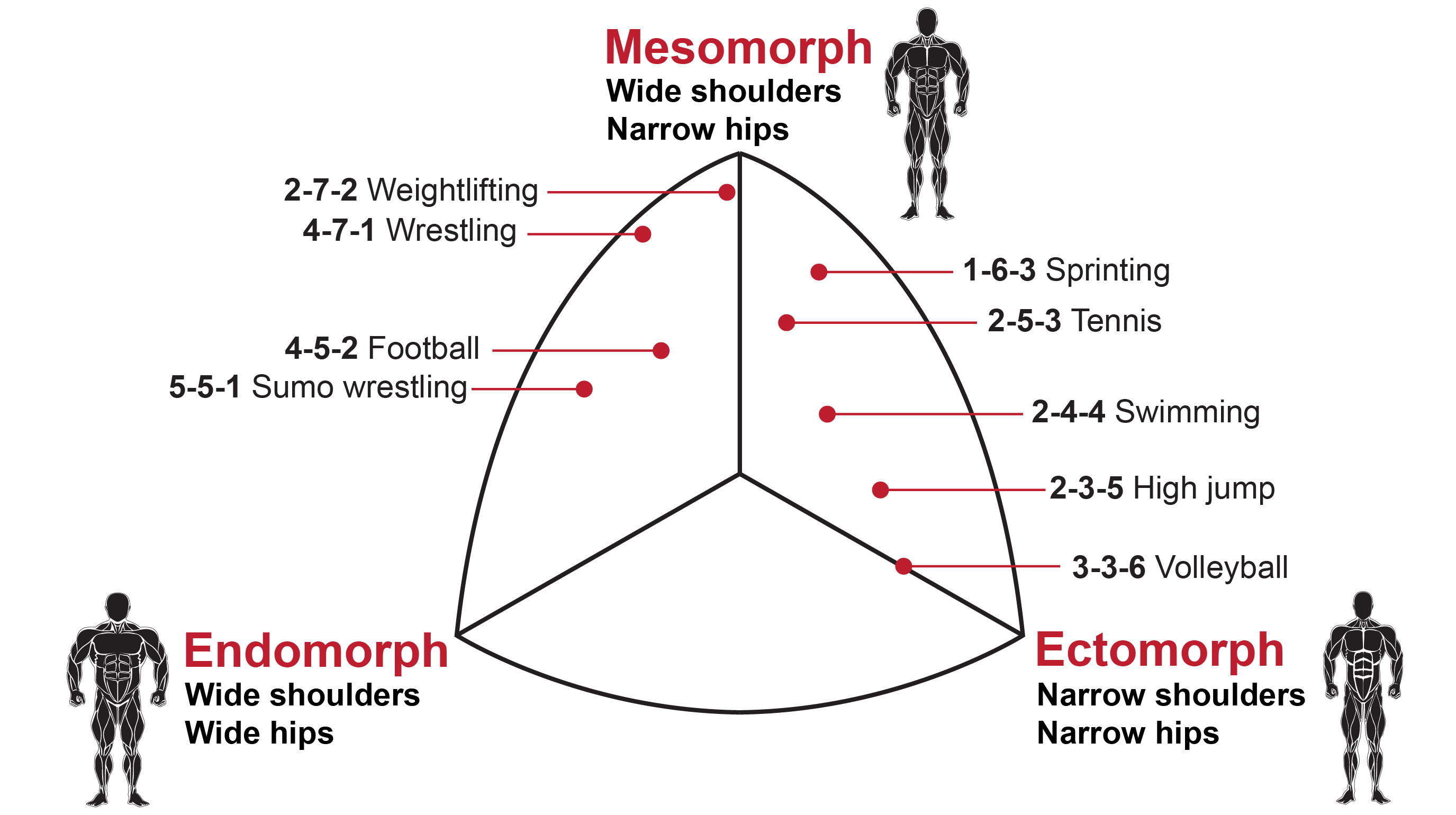
Somatotyping is a technique that assesses the shape and composition of the human body. It is quantified using a three-digit rating on a scale of 1 to 7 for example:
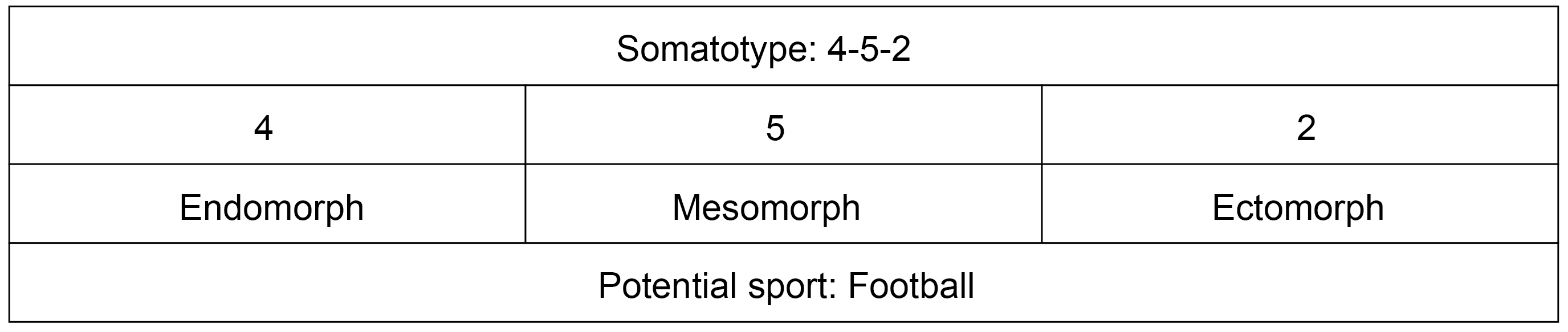
Identifying a person's somatotype is often used to design training programmes and identify potential athletes.
The following diagram shows a somatoplot. A somatoplot is a representation of somatotype characteristics and associated sports.