Lecture 4 Gender socialization
Theories of gender development
gender socialization- the internalization of the social expectations and attitude associated with different genders
Behavioral theories
according to behavioral theories, gender development consists of learned behaviors
2 ways to learn behavior:
reinforcement (operant conditioning)
modeling (observational learning)
-in modeling, individuals learn responses simply by observing and repeating behavior
no direct reinforcement
example: bandura’s bobo doll study
social learning theory
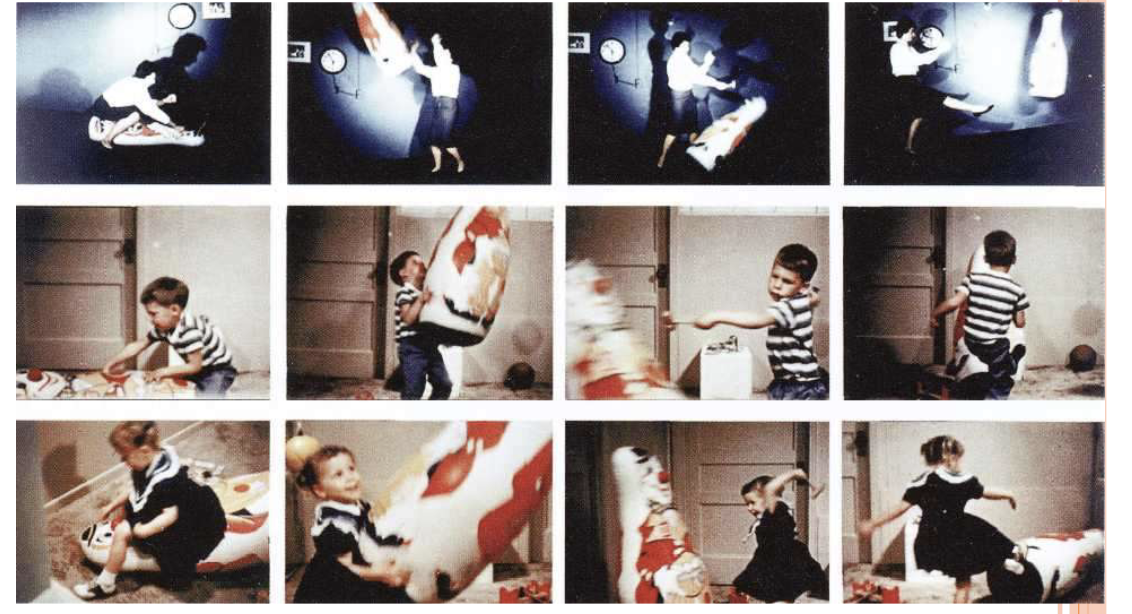
observational learning or modeling
children develop gender roles by patterning their behavior after models in the social environment
can occur from exposure to TV, books, people, etc.
children will become sex-typed by imitating the same sex
research shows that as early as age 3 children imitate same sex models more than other sex models
Operant conditioning
reinforcement
girls and boys are rewarded for different behaviors, and the consequences of a behavior determine whether the child performs it again
-e.g., reactions of parents when a boy versus a girl plays with a doll
research shows that we are less tolerant of and more likely to punish cross-sex behavior among boys than among girls
Cognitive developmental theory
views the acquisition of gender-related behavior as part of general cognitive development
-occurs through interactions with the environment
follows Piaget’s theory of cognitive development
-children’s abilities develop in stages
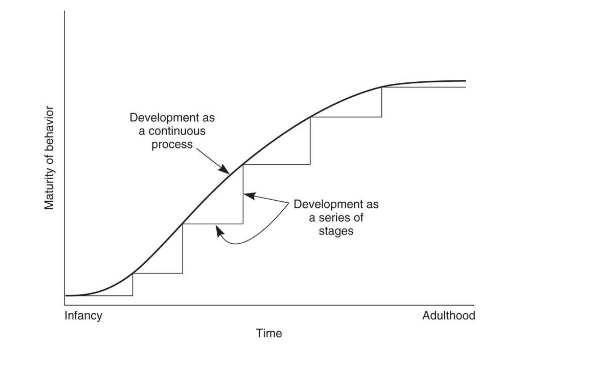
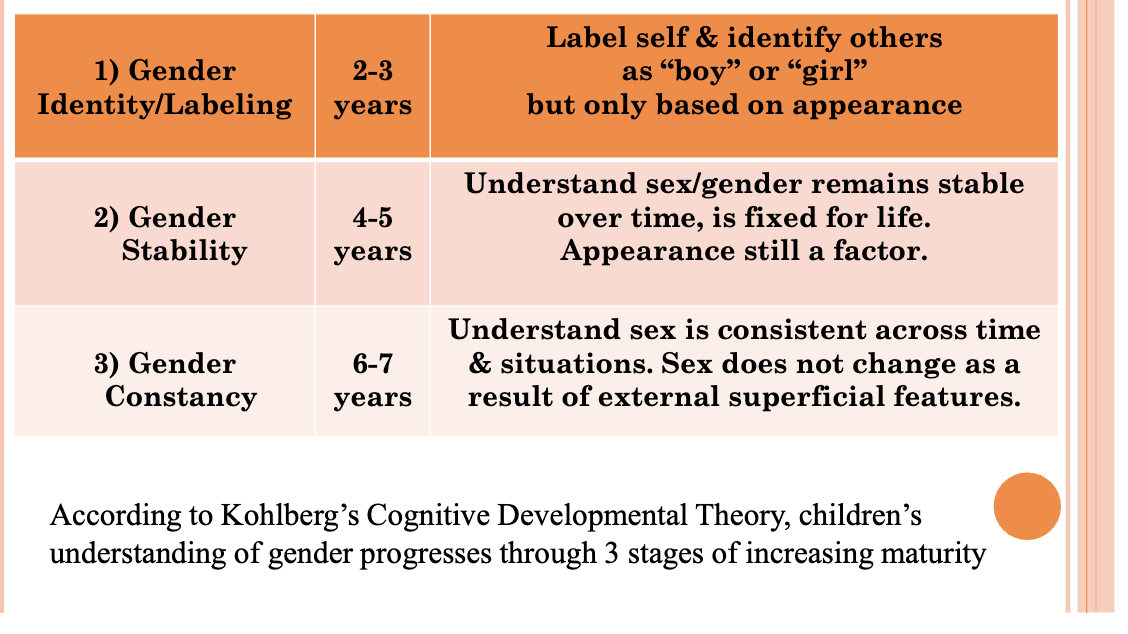
Stage 1: gender identity/labeling
gender labeling- the ability to say whether someone is female or male
at age 2-3 children learn the labels boy and girl and apply these labels to themselves and others
children at this age do not understand biology and are basing their labels on superficial traits
long hair or a dress means it’s a girl, short hair or wearing a suit means it’s a boy
still common for children to believe their sex can change
for boys to believe they can be mothers
Stage 2: gender stability
around age 4-5 children realize their own sex is stable it will not change over time
I’m a girl and I will always be a girl
a cisgender girl who has gender stability understands that she may be a mommy when she grows up but not a daddy
but they still do not fully understand that others sex is largely stable
appearance is still a factor
Stage 3: gender constancy
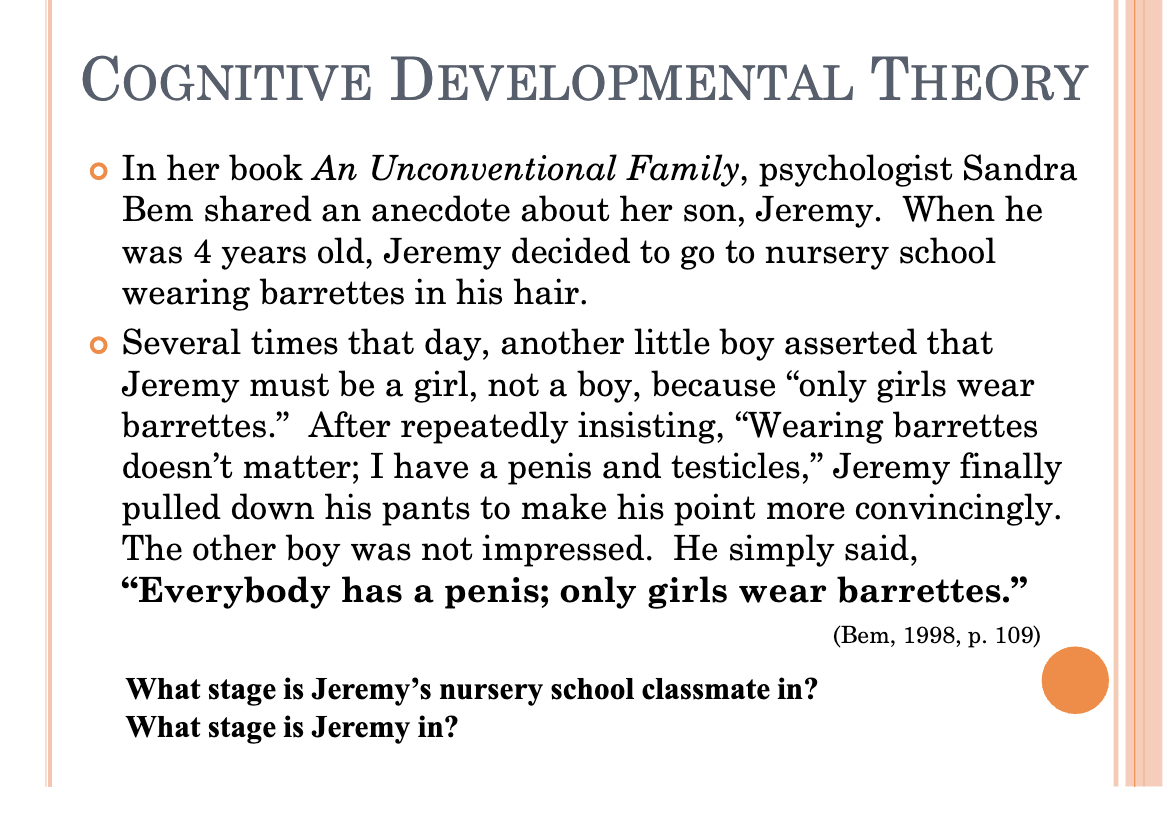
by age 6 or 7 children acquire gender constancy- the understanding that even if a change in physical appearance takes place, a girl will still be a girl and a boy will still be a boy
before children master gender constancy they may think that a girl can turn into a boy by getting a short haircut, or that a man can become a women by wearing a dress
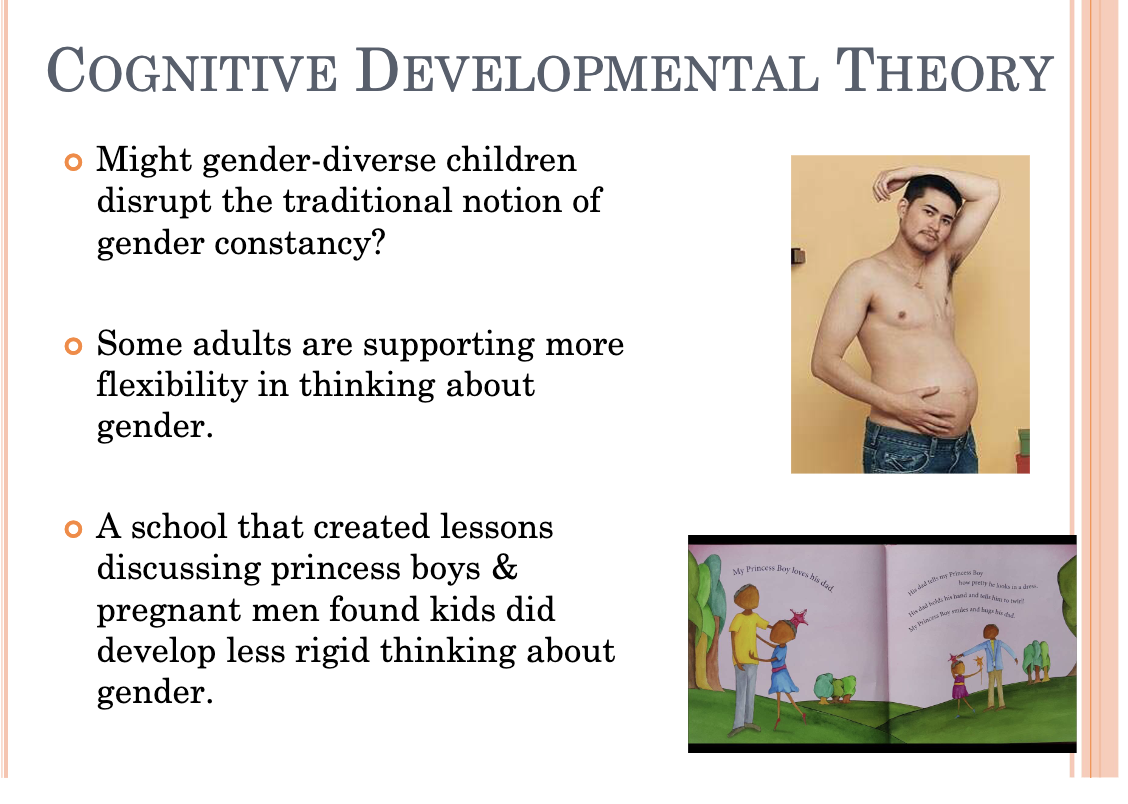
once kids realize they will remain girls or boys no matter what they do, their gender schemas generally become more flexible
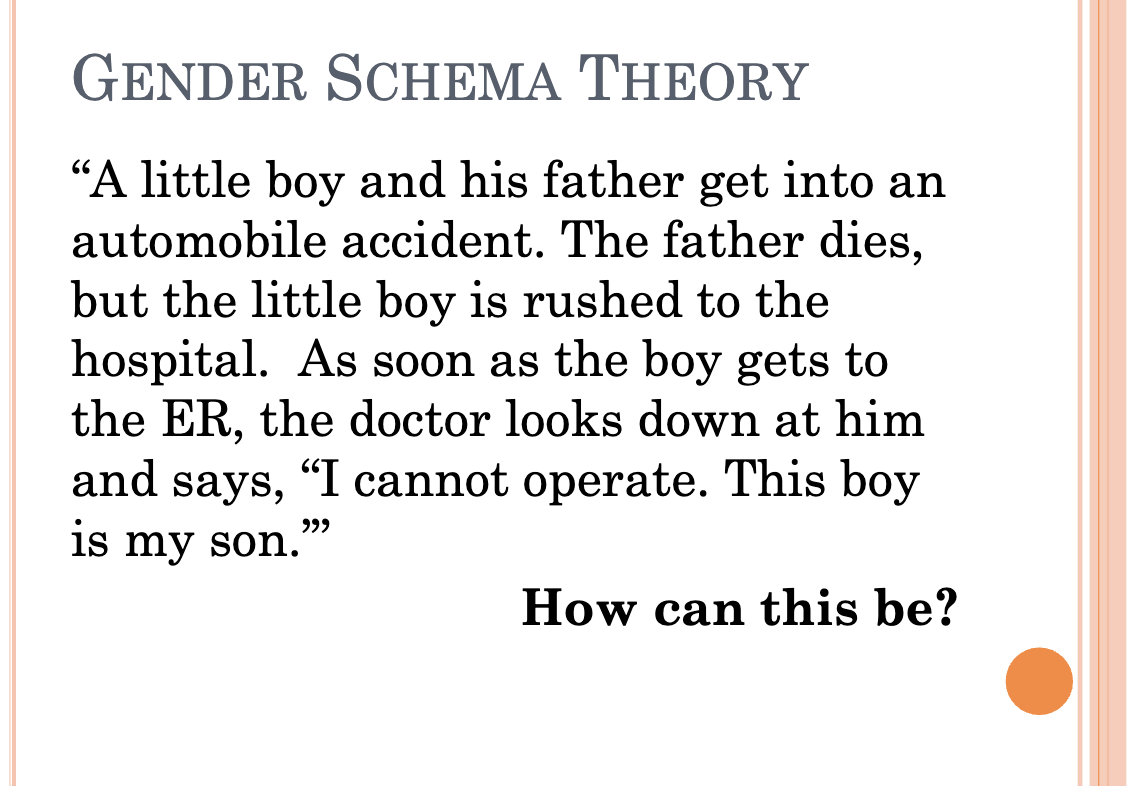
Gender schema theory
a cognitive theory that focuses on how, in developing an understanding of themselves, children integrate their network of assumptions about how people with different genders are supposed to think feel and act
their gender schema
schema- mental representation of some aspect of the world
like stereotypes, schemas can be helpful in processing information, they can also be harmful in terms of making generalizations that are damaging to an entire social group
a schema is similar to prototype
if you hear the world apple you probably picture a red fruit, if you saw a purple apple you would be thrown off initially because this does not fit your prototype
we have gender schemas that include our knowledge of what it means to be male or female
when boys and girls can identify their own and others sex, they build schemas for gender by seeking out additional information about gendered traits, behaviors, and roles
content of schema varies across people and their experiences