Physiology - lecture 15 - ADH and the Control of Osmolality
Learning Outcomes
Define Key Terms:
Osmolality, osmolarity, hypoosmotic, isoosmotic, hyperosmotic.
Countercurrent Multiplier:
Explain how the loop of Henle creates hyperosmotic interstitium in kidney medulla.
Kidney Functionality:
Describe urea handling and 'trapping' effects on medullary osmolality.
Vasa Recta Structure Importance:
Explain the role of vasa recta in osmotic homeostasis.
ADH Secretion:
How ADH responds to plasma osmolality changes.
Role of ADH and Aquaporins:
Detail how ADH regulates urine osmolality at the collecting duct.
Water in the Body
Adult human body is approximately 60% water.
Key properties of water under physiological control:
Volume Regulation:
Refer to lectures on blood pressure/baroreceptors/renin-angiotensin-aldosterone system.
Osmolality Regulation:
Optimal function is crucial for processes like action potentials and muscle contraction.
Osmolality Definitions
Osmolality:
The ability of solutes to lower the concentration of water
Defined as osmoles per kilogram of water.
Osmolarity:
Defined as osmoles per liter of water.
Clinical Preference:
'Osmolality' is typically preferred in clinical contexts, although both terms are often used interchangeably.
Relative Osmolality Terms
Isoosmotic (Isotonic):
Same osmolality as reference solution
Hypoosmotic (Hypotonic):
Lower osmolality than reference solution
Hyperosmotic (Hypertonic):
Higher osmolality than reference solution
Effects of Changes in Extracellular Osmolality
Isoosmotic Solution:
No change to 'cell'; equilibrium maintained.
Hypoosmotic Solution:
'Cell' expands due to water influx.
Hyperosmotic Solution:
'Cell' shrinks as water exits.
Nephron & Kidney Structure
Key Components:
Glomerulus, proximal convoluted tubule, distal convoluted tubule, vasa recta, Loop of Henle, collecting ducts.
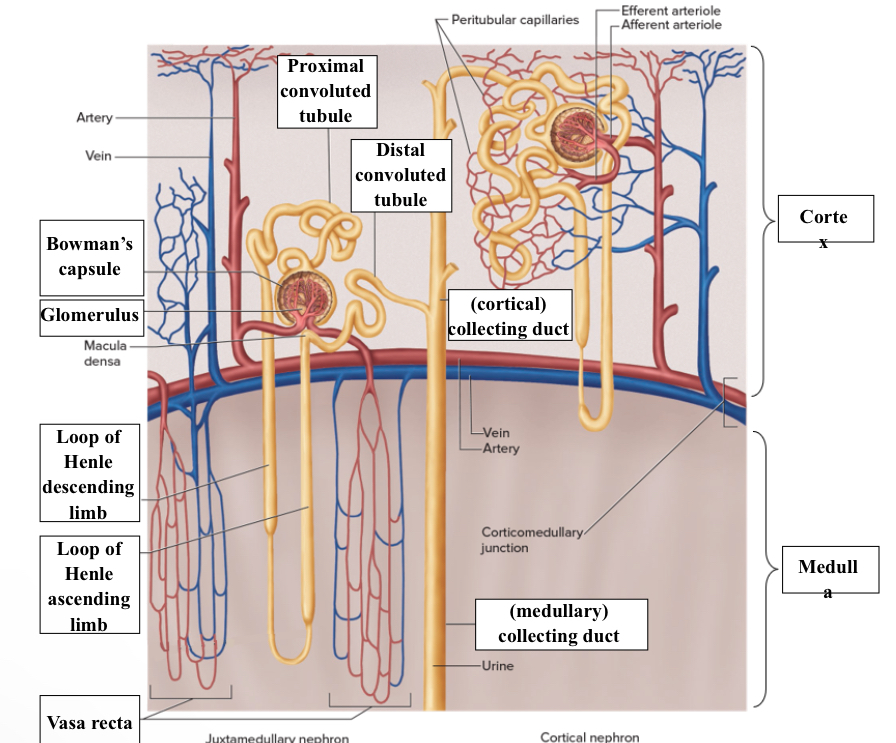
Segments of Nephron:
Proximal convoluted tubule is crucial for bulk reabsorption.
Contains microvilli
Distal convoluted tubule fine-tunes absorption.
Loop of Henle: essential to the ability to conserve water and control extracellular osmolality.
Vertebrate Groups and Loop of Henle
Mammals and Birds (Aves):
Have a Loop of Henle with distinct cortex and medulla.
Reptiles and Fish:
Lack Loop of Henle; cannot regulate osmolality effectively.
Urine Production and Osmolality
Obligatory Water Loss:
Minimum urine production is ~450 mL to excrete waste.
To control osmolality:
Kidneys must produce a range of urine concentrations from hypoosmotic to hyperosmotic.
Water reabsorption must be passive (osmosis).
Loop of Henle Function
Ascending Limb:
Actively reabsorbs solute (Na+, Cl-) and is water-impermeable.
Solute is actively reabsorved into the medullary interstitium
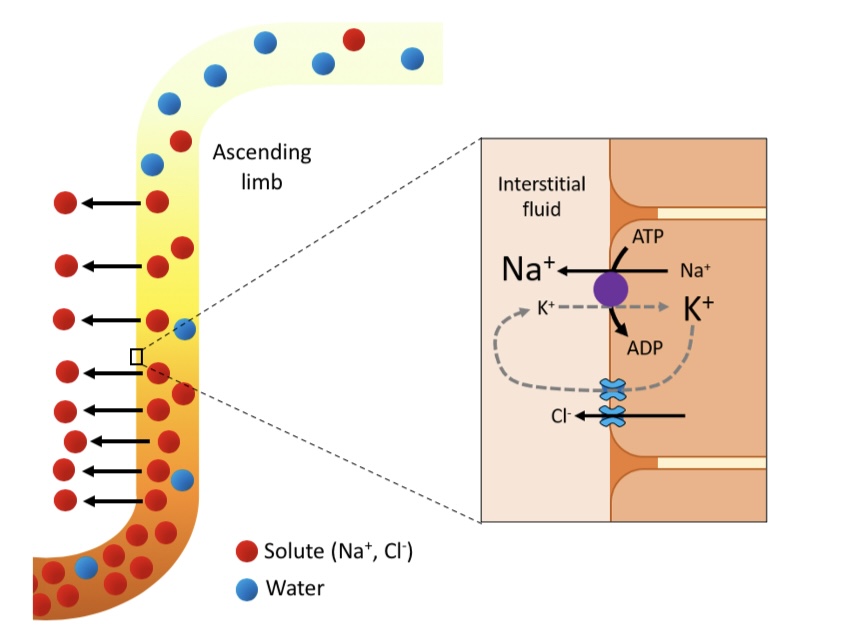
Descending Limb:
Freely permeable to water, allowing passive reabsorption into medullary
Water is reabsorbed until equilibrium is reached.
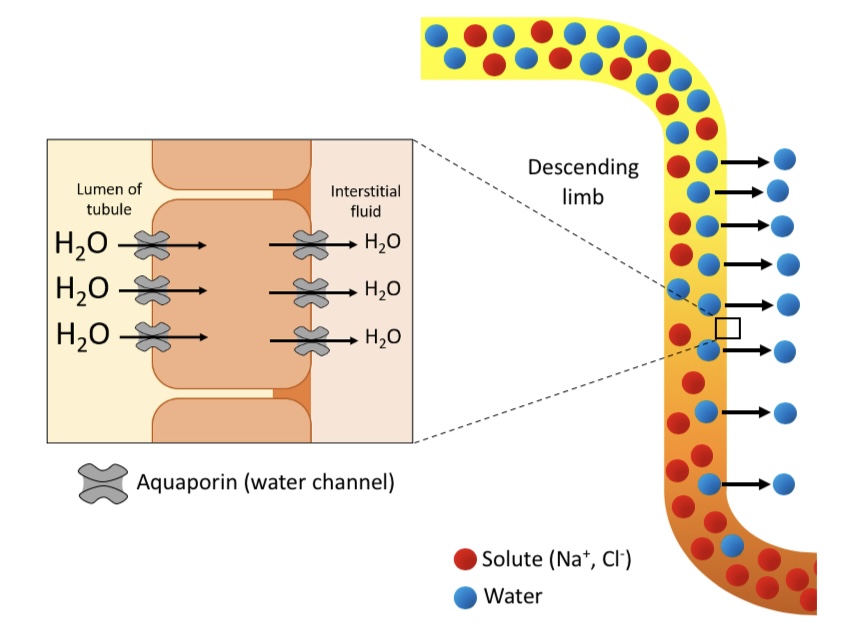
Countercurrent Multiplier Mechanism
Osmotic Gradient Creation:
Water is reabsorbed from the descending limb, equilibrating with medullary interstitium osmolality.
An osmotic gradient is created as the interstitium becomes progressively hyperosmotic.
Countercurrent multiplier: Creation of a hyperosmotic medullary interstitium by the loop of Henle
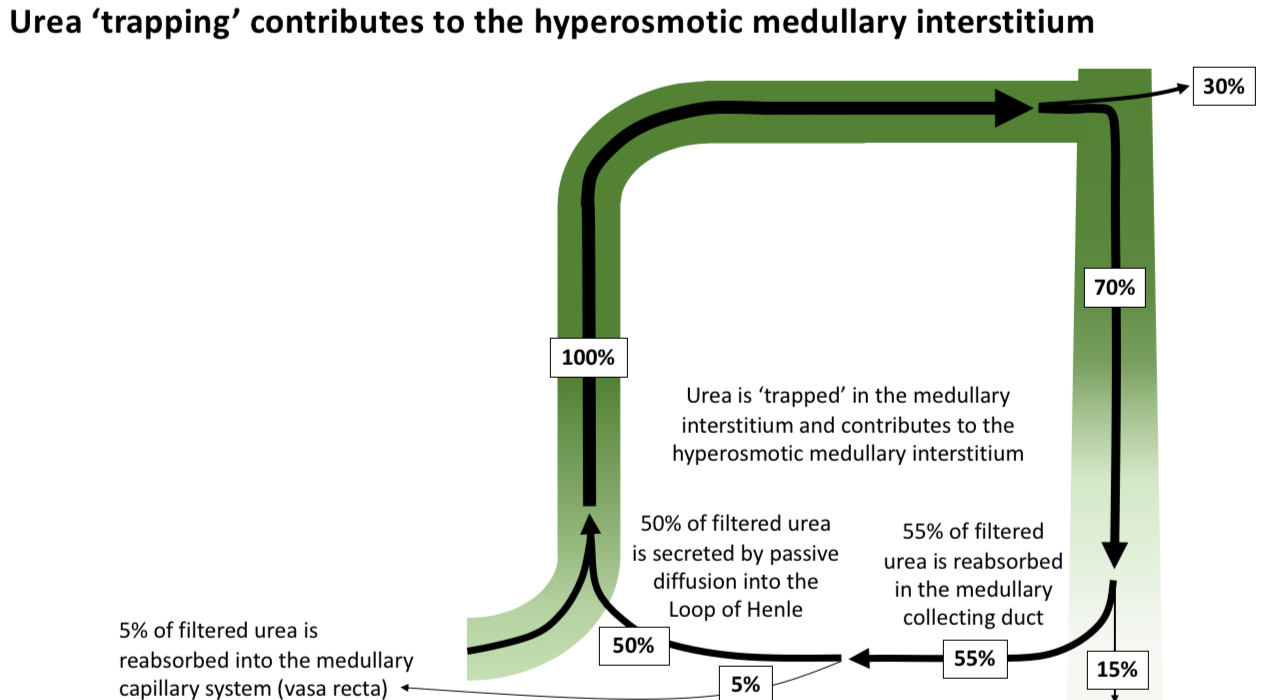
Urea Trapping
Role In Osmolality:
Urea is reused in medullary interstitium to enhance hyperosmotic conditions.
Urea Handling Statistics:
100% filtered, 50% reabsorbed in proximal tubule, 30% reabsorbed in distal convoluted tubule, 5% excreted.
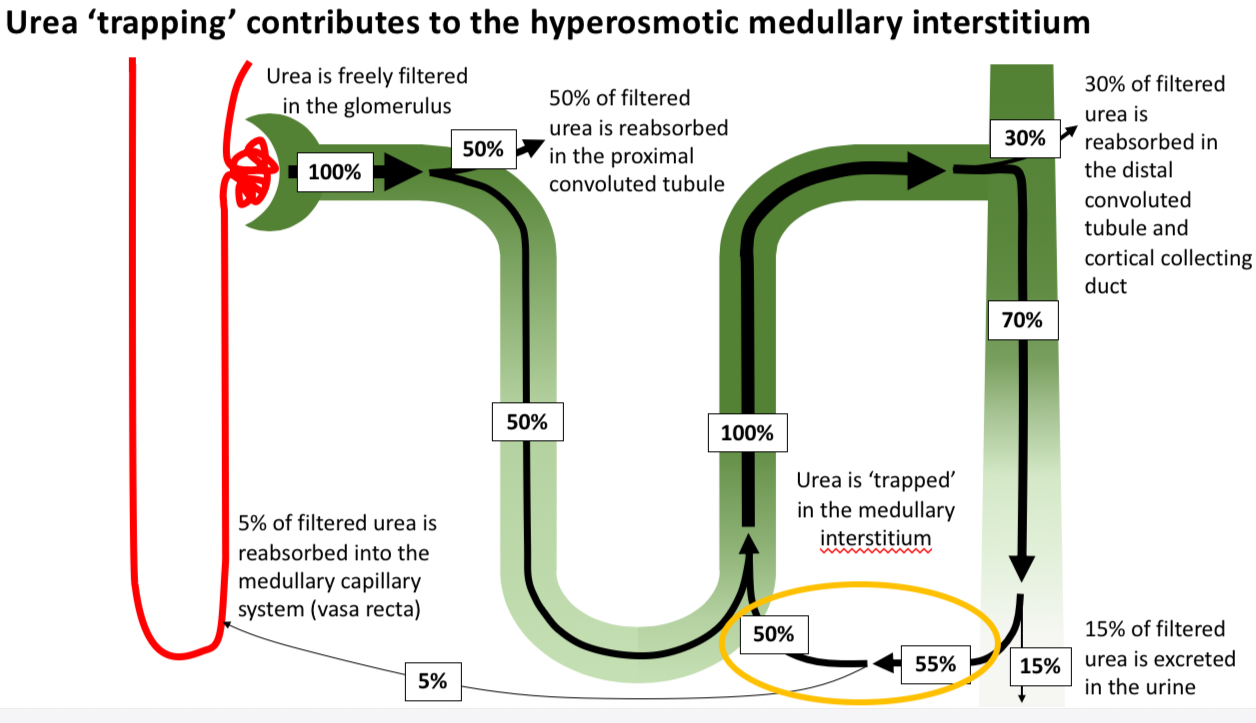
Vasa Recta Functionality
Maintaining Osmotic Gradient:
Special structure prevents blood flow disturbance of osmotic gradient.
Solute and water is reabsorbed by the loop of Henle are removed in equal so osmotic gradient is maintained.
Urine Concentration Processes
Hypoosmotic Urine Production:
Low permeability to water in collecting ducts leads to hypoosmotic urine.
Hyperosmotic Urine Production:
ADH increases collecting duct permeability via aquaporins for hyperosmotic urine.
ADH (Antidiuretic Hormone, Vasopressin)
Function:
Increases water absorption in kidneys by inserting aquaporins into collecting ducts.
Release Mechanism:
Synthesized in hypothalamus, released from posterior pituitary into blood.
By neurons in the supraoptic and paraventricular nuclei of the hypothalamus
ADH neurons receive input from central chemoreceptors that detect plasma osmolality changes
ADH binds to V2 GPCRs on medullary collecting duct cell membranes leading to a signalling cascade that inserts aquaporins.
Osmoreceptors and ADH Release
Detection of Osmolality Changes:
Osmoreceptors in hypothalamus control ADH secretion in response to plasma osmolality.
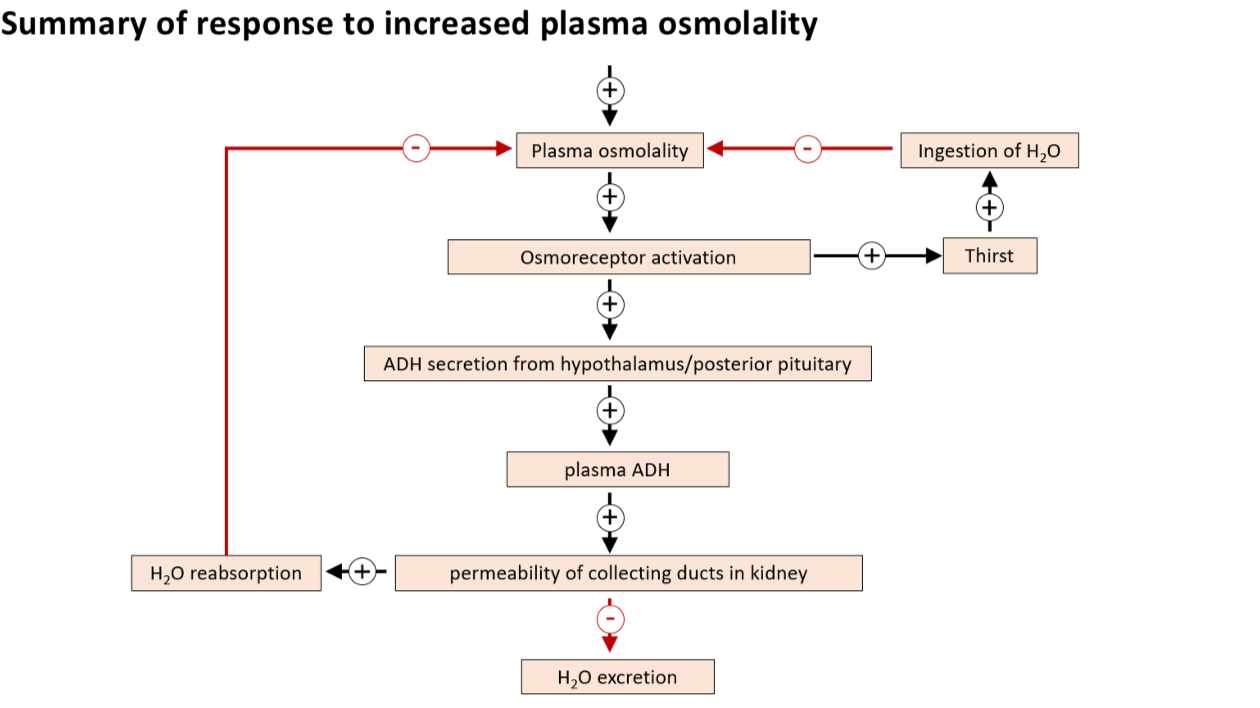
Summary of Response to Increased Plasma Osmolality
Increased plasma osmolality triggers:
Thirst, ADH secretion, water reabsorption promoting water balance.
Diabetes Insipidus Symptoms
Condition Overview:
Caused by inability to produce or respond to ADH.
Symptoms include excessive urine production due to lack of water reabsorption.