Westward expansion
Manifest Destiny and the Closing of the Frontier
Manifest Destiny
A 19th-century belief that the United States was divinely ordained to expand westward across North America.
Rooted in ideas of inevitability, national superiority, and a perceived duty to spread democracy and capitalism.
Served as a powerful ideological justification for westward expansion.
Motivations for Westward Movement
Railroads (1865–1900)
Rapid railroad expansion increased accessibility to the West.
Stimulated economic growth by creating new towns and commercial centers along rail lines.
Mining
The California Gold Rush (1848) sparked mass migration and widespread prospecting.
Mining booms attracted diverse populations seeking quick wealth.
Farming
Federal policies and promises of free or cheap land encouraged settlement of the Great Plains.
Farming reinforced the ideal of independent landownership.
Ranching
As open land diminished, wealthy cattlemen established large-scale ranches.
Ranching became a major economic activity in the later frontier period.
Historical Significance
Manifest Destiny accelerated territorial expansion, economic development, and population growth.
Also led to the displacement of Native Americans and intensified sectional and social conflicts.
The settlement of western lands contributed to the eventual closing of the frontier by the late 19th century.
The Transcontinental Railroad (1863–1869)
Construction and Scope
Built between 1863 and 1869, spanning over 2,000 miles.
Represented a major technological and infrastructural breakthrough.
Reduced cross-country travel time from months to less than a week, making travel faster, safer, and more affordable.
Impact on Westward Expansion
Accelerated westward migration by improving access to western territories.
Encouraged settlement by linking remote regions to eastern markets.
Undermined the perception of the Great Plains as an uninhabitable wasteland.
Labor Force
Constructed largely through manual labor.
Chinese immigrants comprised the majority of workers, especially in the western sections.
Endured harsh conditions, discrimination, and high mortality rates.
Irish and German immigrants also played significant roles.
Notably, eight Irish workers laid 3,520 rails in a single day, a record-setting feat.
Economic and Historical Significance
Integrated eastern and western economies.
Enabled efficient transportation of goods, people, and resources.
Contributed to the closing of the American frontier by eliminating geographic isolation.
The Open Range and the Cattle Frontier (c. 1865–1885)
The Open Range
For roughly two decades after the Civil War, much of the Great Plains remained unsettled by white settlers.
Land was known as the open range, allowing cattle to graze freely.
Indigenous peoples already inhabited the region prior to white settlement.
Railroads and Economic Opportunity
Expansion of railroads into Kansas connected the Plains to national markets.
Rail access transformed cattle ranching into a highly profitable industry.
Cattle Industry Process
Cattle were:
Purchased cheaply or gathered from wild herds in Texas
Driven north along established cattle trails
Delivered to railroad stockyards
Shipped by train to eastern and western cities for sale at substantial profit
Cowboys
Laborers who drove cattle herds were known as cowboys.
Their work was difficult, dangerous, and seasonal.
Though brief in duration, cowboy culture became a lasting symbol of the American West.
Historical Significance
The cattle frontier was short-lived, ending as land was fenced, settled, and regulated.
It contributed to the economic development of the West and the mythology of frontier life.
The Cowboy’s Life: Myth vs. Reality
Popular Image
Cowboys were romanticized in popular culture through Buffalo Bill’s Wild West Show and later Hollywood Westerns.
Often portrayed as independent, gun-wielding lone riders.
Reality of Cowboy Life
Daily life was physically demanding and uncomfortable.
Cattle drives involved long hours, harsh weather, minimal shelter, and few comforts.
Constant danger from:
Stampedes
Injuries from cattle
Natural elements
Conflict on the Trails
Early tensions sometimes involved Native American groups.
Increasingly, conflicts arose with farmers, who fenced land and resisted open grazing.
These disputes reflected the closing of the open range.
Workforce and Organization
Cowboys were ethnically diverse, including African American and Mexican workers.
Cattle drives were highly organized operations, including:
Trail boss (leader)
Cook
Cowhands/crew
Wages
Crew members earned roughly $1 per day.
Cooks earned slightly more.
Trail bosses could earn $100+ per month.
AP synthesis sentence
Although popular culture glorified the cowboy as a rugged individualist, the reality was a dangerous, poorly paid, and highly organized occupation shaped by economic demands and the closing frontier.
The Cowboy’s Life: Myth vs. Reality
Popular Image
Cowboys were romanticized in popular culture through Buffalo Bill’s Wild West Show and later Hollywood Westerns.
Often portrayed as independent, gun-wielding lone riders.
Reality of Cowboy Life
Daily life was physically demanding and uncomfortable.
Cattle drives involved long hours, harsh weather, minimal shelter, and few comforts.
Constant danger from:
Stampedes
Injuries from cattle
Natural elements
Conflict on the Trails
Early tensions sometimes involved Native American groups.
Increasingly, conflicts arose with farmers, who fenced land and resisted open grazing.
These disputes reflected the closing of the open range.
Workforce and Organization
Cowboys were ethnically diverse, including African American and Mexican workers.
Cattle drives were highly organized operations, including:
Trail boss (leader)
Cook
Cowhands/crew
Wages
Crew members earned roughly $1 per day.
Cooks earned slightly more.
Trail bosses could earn $100+ per month.
The Closing of the Frontier and the End of the Cattle Boom
Closing of the Frontier (1890)
In 1890, the U.S. Census Bureau declared the frontier closed.
There were no longer large, unsettled areas available for westward expansion by White Americans.
This announcement symbolized the end of the open range and the frontier era.
Decline of the Cattle Boom (c. 1880s)
Increased competition for land among farmers, ranchers, and railroads disrupted cattle drives.
Overgrazing severely damaged prairie grasslands.
Harsh winters (1885–1887) killed nearly 90% of cattle, devastating the industry.
Transportation Changes
Expansion of long- and short-haul railroads brought rail access directly into cattle regions.
Reduced the need for long-distance cattle drives to distant rail depots.
Barbed Wire and Settlement
Barbed wire, invented in 1868, enabled landowners to fence property.
Marked the end of free grazing and open trails.
Cowboys and cattle drives declined, replaced by fixed, commercial ranching operations.
The Closing of the Frontier and the End of the Cattle Boom
Closing of the Frontier (1890)
In 1890, the U.S. Census Bureau declared the frontier closed.
There were no longer large, unsettled areas available for westward expansion by White Americans.
This announcement symbolized the end of the open range and the frontier era.
Decline of the Cattle Boom (c. 1880s)
Increased competition for land among farmers, ranchers, and railroads disrupted cattle drives.
Overgrazing severely damaged prairie grasslands.
Harsh winters (1885–1887) killed nearly 90% of cattle, devastating the industry.
Transportation Changes
Expansion of long- and short-haul railroads brought rail access directly into cattle regions.
Reduced the need for long-distance cattle drives to distant rail depots.
Barbed Wire and Settlement
Barbed wire, invented in 1868, enabled landowners to fence property.
Marked the end of free grazing and open trails.
Cowboys and cattle drives declined, replaced by fixed, commercial ranching operations.
Federal Land Policies and Western Settlement
Homestead Act (1862)
Granted 160 acres of public land to settlers who lived on and improved it for five years.
Encouraged mass migration of farmers and families to the Great Plains.
Benefited primarily White settlers, accelerating western settlement.
Morrill Land-Grant Act (1862)
Provided federal land to states to fund land-grant colleges.
Promoted education in agriculture, engineering, and mechanics.
Expanded economic opportunity and technological innovation, supporting western development.
Dawes Act (1887) (note: often mistakenly dated 1877)
Divided Native American tribal lands into individual allotments.
“Surplus” land was sold to White settlers.
Undermined tribal sovereignty and communal landholding.
Much allotted land was unsuitable for farming, forcing many Native Americans to sell.
A 1909 policy allowed the federal government to seize land from Native Americans deemed “incompetent.”
How Expansion Shaped People’s Experiences
White Settlers
Gained land ownership, economic opportunity, and social mobility.
Federal policy actively supported their settlement and prosperity.
Farmers and Workers
Benefited from education and innovation through land-grant colleges.
Contributed to the agricultural transformation of the West.
Native Americans
Experienced land loss, cultural destruction, and economic marginalization.
Federal policies promoted assimilation at the expense of tribal autonomy.
Immigrant Farmers and the Great Plains
Migration Patterns
In the late 19th century, many immigrants to the United States were farmers.
Attracted by cheap, abundant land on the Great Plains, often promoted by federal land policies.
Challenges of Plains Life
Life on the Great Plains was harsh and uncertain, despite its promise.
Settlers faced:
Extreme weather
Isolation
Limited resources
Migrants from the eastern and southern U.S. encountered similar difficulties.
Economic Transformation
Through sustained labor and adaptation, settlers transformed the Plains into a major global agricultural region.
Agricultural output strengthened the national economy and food supply.
Frontier Farming: Benefits and Challenges
Benefits
Abundant and inexpensive land attracted both Americans and immigrants.
Federal policies, especially the Homestead Act, provided free land to qualifying settlers.
Land ownership promised economic independence and social mobility.
Farming offered the opportunity to build permanent family livelihoods.
Challenges
The Great Plains climate was extreme:
Severe cold in winter
Intense heat in summer
Scarcity of surface water forced settlers to:
Dig deep wells
Invent new irrigation and dry-farming techniques
Isolation and environmental hardship made survival uncertain.
Historical Significance
Success depended on adaptation, innovation, and persistence.
These challenges shaped a distinctive frontier culture of resilience and self-reliance.
Rivalries with Ranchers – Notes
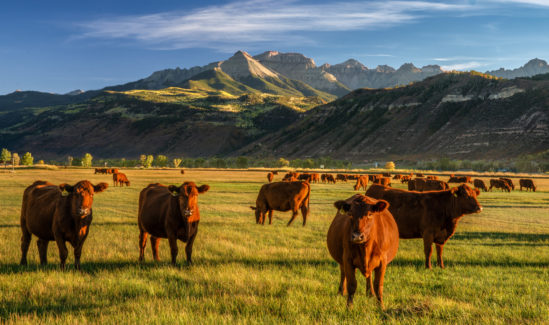

Open range system:
Ranchers did not own defined land
Cattle grazed freely on public land
Herds moved across large tracts of grassland
Cattle ownership:
Ranchers used brands to identify cattle
Branding allowed owners to sort cattle before drives to market
Change in land policy:
U.S. government began assigning defined plots of land (homesteads)
Land shifted from shared use to private ownership
Source of conflict:
Farmers fenced land to protect crops
Ranchers saw fences as encroachment
Grazing land and water became limited resources
Resulting rivalries:
Tensions and violent disputes (“range wars”)
Marked the decline of the open range
Accelerated the end of the cattle-driving era
Big idea:
Private land ownership clashed with the open range system, turning cooperation into conflict and freedom into fences.]
Railroad Expansion – Notes


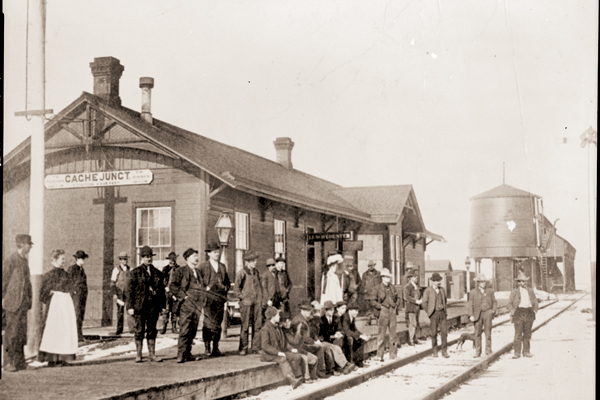
4
Government support:
Federal government gave railroads large land grants
Goal: expand railroads and encourage western settlement
Land grant system:
Railroads were supposed to sell land to settlers
In practice, many railroads kept the most valuable land
Role for farmers:
Railroads were essential for shipping crops to market
Connected frontier farms to national markets
Lack of regulation:
Early railroads had little government oversight
Charged high transportation fees
Farmer frustration:
High shipping costs cut deeply into profits
Led to anger toward railroad companies
Helped spark farmer protests and reform movements (later Granger & Populist movements)
Big idea:
Railroads fueled western growth but exploited farmers, turning opportunity into resentment and planting the seeds of reform.
Mechanization – Notes
Definition:
Mechanization is the replacement of hand labor with machine labor.
New machinery:
Steam-powered farm machines performed tasks once done by hand.
Work was completed faster and on a larger scale.
Impact on agriculture:
Greatly increased productivity and efficiency.
Allowed farmers to cultivate more land with fewer workers.
Who benefited:
Large, commercial farms could afford to buy or rent machines.
Encouraged single cash-crop farming.
Who struggled:
Small farmers often could not afford new equipment.
Lower production made it hard to compete with large farms.
Big idea:
Mechanization transformed farming into large-scale commercial agriculture, benefiting wealthy farmers while pushing smaller farmers behind.
Overproduction and Overcultivation – Notes
Increased production:
More land was farmed due to westward expansion.
Mechanized farming greatly raised crop yields.
Overproduction:
Crops were produced in abundance.
Oversupply caused crop prices to fall.
Cycle of debt:
Lower prices meant farmers earned less money.
Farmers tried to produce more to survive.
Producing more lowered prices even further, trapping many in debt.
Overcultivation:
The same crops were planted year after year.
Soil became depleted of nutrients.
Land grew less productive over time.
Overall impact:
Economic hardship for farmers.
Environmental damage worsened agricultural problems.
Big idea:
Overproduction and overcultivation lowered prices and exhausted the soil, pushing many farmers into long-term debt and instability.
Turner and the Safety Valve Theory – Notes
Author & date:
Frederick Jackson Turner, 1893
Essay: “The Significance of the Frontier in American History”
Written shortly after the 1890 Census declared the frontier closed.
Core idea (Frontier Thesis):
The frontier shaped what made the U.S. unique.
Helped create a distinct American identity.
American traits formed by the frontier:
Independence
Democracy
Ingenuity and self-reliance
Safety Valve Theory:
The frontier acted as a release valve for social pressure.
Gave opportunities to:
People unhappy with city life
Those seeking land or a fresh start
Turner’s concern:
With the frontier gone, Americans would lose an outlet for opportunity.
Risk of greater social conflict and division.
Big idea:
Turner argued that the frontier shaped American character and eased social tensions, and its closure threatened national unity.
Shifting Demographics – Notes
Cause:
Westward expansion created new jobs and opportunities.
Key industries: mining, railroad construction, farming, ranching.
Population movement:
Drew Americans from the East and immigrants from abroad.
Rapid population growth across western territories and states.
Cultural diversity:
The West became ethnically and culturally diverse.
Multiple groups settled and worked side by side.
Major immigrant groups:
Scandinavian immigrants
Often became farmers in the Great Plains.
Chinese immigrants
Worked heavily on railroad construction and in mining.
Irish immigrants
Employed in railroads, mining, and urban labor.
Broader impact:
Shaped western culture, labor systems, and communities.
Also led to tensions, discrimination, and conflict.
Big idea:
Economic opportunity in the West transformed the region into a diverse society built by immigrants and migrants from across the nation.
Scandinavian Immigrants – Notes
Origins:
Came from Sweden, Norway, Finland, Denmark, and Iceland.
Arrived in large numbers during the late 1800s–early 1900s.
Migration path:
Entered the U.S. through East Coast cities.
Moved west to the Midwest, Great Lakes region, and Great Plains.
Why they came west:
Many were farmers in their home countries.
The open land of the West was familiar and appealing.
Settlement patterns:
Later immigrants settled near earlier Scandinavian communities.
Led to growth of a strong Scandinavian farming population.
Community life:
Created their own churches, newspapers, and social organizations.
Preserved language and cultural traditions.
Challenges:
Faced isolation on large, spread-out farms.
Harsh conditions and loneliness shaped daily life.
Cultural representation:
O. E. Rolvaag’s Giants in the Earth describes the hardships of Scandinavian settlers.
Big idea:
Scandinavian immigrants shaped western farming while building tight-knit communities, even as isolation and harsh conditions tested their resilience.
Conflict in the West – Notes
Rising diversity:
Westward expansion brought together many cultural and ethnic groups.
Increased interaction intensified competition and tension.
Sources of conflict:
Economic: competition for jobs, land, and resources
Social: cultural differences, language barriers, and prejudice
Political: unequal laws and lack of protections for minorities
Discrimination:
Cultural and ethnic minorities often faced discrimination.
Prejudice came not only from White Americans, but also from other minority groups.
Impact:
Led to violence, exclusion, and segregation in some communities.
Shaped laws, labor systems, and social relations in the West.
Big idea:
Growing diversity in the West created opportunity but also fueled conflict, as economic competition and prejudice divided cultural and ethnic groups.
Buffalo Soldiers – Notes
Six African American Army regiments formed in the 1860s.
Tasked with protecting settlers and fighting Native Americans on the frontier.
Made up about 20% of U.S. cavalry in conflicts with Native tribes.
Both African Americans and Native Americans faced government discrimination.
Federal policy pitted two marginalized groups against each other.
Chinese Immigrants – Notes
Large-scale immigration driven by mining and railroad construction.
Played a crucial role in building the Transcontinental Railroad.
Faced widespread discrimination and racism.
Accused of taking jobs from Americans and other immigrants.
Led to discriminatory laws restricting Chinese immigration (e.g., exclusion policies).
Irish Immigrants – Notes
Immigrated throughout the 1800s due to famine and political unrest in Ireland.
Many stayed in eastern cities, but others moved west with railroad expansion.
Made up a large portion of railroad laborers, including the Transcontinental Railroad.
Paid more than Chinese workers, causing resentment and labor tension.
Viewed Chinese workers as economic threats.
Native Americans – Notes
The West was not empty; it had been inhabited for centuries.
Western settlement caused encroachment on tribal lands.
Conflicts arose from cultural misunderstandings, but mainly from government policies.
Federal actions repeatedly removed tribes from their land.
Policies aimed to force assimilation and conformity.
Mormons – Notes
Members of the Church of Jesus Christ of Latter-day Saints.
Began settling in Utah’s Salt Lake Valley in 1847.
Sought religious freedom after persecution in Illinois and Missouri.
Leader Joseph Smith was murdered in 1844.
Brigham Young led the migration west.
Around 70,000 people traveled over 1,000 miles to Utah.
Mining and Cattle Booms – Notes
Cattle boom (1860s–1890s):
Era of cowboys and the open range.
Driven by railroad expansion and refrigerated rail cars, which allowed beef to reach distant markets.
Ranching leaders:
Charles Goodnight was a prominent rancher.
Owned ranches in multiple states.
Helped establish major cattle trails used for drives to railheads.
Shift to big business:
Ranching became increasingly commercial and large-scale.
Small family ranches struggled to compete with larger operations.
Mining boom:
Followed the cattle boom as the next major western economic surge.
Attracted new settlers, investors, and workers to the West.
Big idea:
The West experienced successive economic booms, first cattle and then mining, as railroads and big business reshaped frontier life and reduced opportunities for small producers.
James W. Marshall & the California Gold Rush – Notes
Discovery:
James W. Marshall found gold on January 24, 1848.
Discovery occurred while he was building a sawmill on the American River.
Noticed shiny flakes in the water that turned out to be gold.
Gold Rush begins:
By 1849, news spread widely.
Thousands of prospectors rushed to California.
These miners became known as the Forty-Niners.
Reality of mining:
Mining was hard, dangerous, and uncertain work.
Very few miners actually became wealthy.
Marshall’s fate:
Marshall himself gained little profit from the discovery.
In 1872, he received a $200 monthly pension from California.
Despite his historical importance, he died poor.
Big idea:
The California Gold Rush brought massive migration and change, but wealth reached only a few, including almost none of the people who started it.
Mining Boom – Notes
Expansion of mining:
After Marshall’s 1848 gold discovery, new finds occurred across the West into the 1870s.
This period is known as the mining boom.
Types of minerals:
Gold strikes = discoveries of gold.
Other minerals mined: silver, copper, lead, zinc.
Boomtowns:
Large discoveries, called bonanzas, attracted miners and families.
Settlements quickly formed around mines.
These fast-growing settlements were called boomtowns.
Ghost towns:
When mines were exhausted, people left.
Abandoned boomtowns became ghost towns.
Environmental impact:
Mining caused severe environmental damage.
Altered land, water, and natural resources.
Impact on Indigenous peoples:
Mining was resented by Indigenous communities.
Destroyed resources and contributed to conflict and displacement.
Big idea:
The mining boom fueled rapid growth and settlement in the West, but left behind environmental destruction, abandoned towns, and lasting conflict with Indigenous peoples.
Alaska & the Klondike Gold Rush – Notes
Purchase of Alaska (1867):
Bought from the Russian Empire after the Civil War.
Motivated by Manifest Destiny and expanding Pacific trade.
Initially viewed by many Americans as unimportant.
Klondike Gold Discovery (1896):
Gold found in the Klondike region of northwestern Canada.
Sparked a massive gold rush.
Alaska’s role:
Alaska lay on two major routes to the Klondike.
Over 100,000 prospectors traveled through the region.
Skagway, Alaska, grew rapidly into a boomtown.
End of the rush:
By 1898, the Klondike rush declined.
Larger gold discoveries farther west drew miners away.
Popular slogan:
“North to Alaska!” encouraged fortune-seekers.
Big idea:
Although Alaska was first dismissed as insignificant, the Klondike Gold Rush revealed its strategic importance and tied it firmly to western expansion and resource extraction.
American Frontier Wars – Notes
Cause of conflict:
U.S. westward expansion brought settlers into Native lands.
Competition over land, water, and resources intensified.
Land ownership:
Settlers attempted to claim and privatize land already inhabited by Native peoples.
Directly challenged Native sovereignty and ways of life.
Indian Wars:
Commonly called the Indian Wars, though the term is misleading.
Involved repeated U.S. Army campaigns against Native nations.
Timeline:
Began around 1860.
Continued for 30 years or more, into the 1890s.
Nature of conflict:
Included relentless attacks, forced removals, and military assaults.
Resulted in major loss of land, lives, and autonomy for Native Americans.
Big idea:
The American Frontier Wars were driven by expansion and land seizure, leading to decades of violent conflict and the systematic displacement of Native peoples.
The Oklahoma Land Rush – Notes
Background:
Oklahoma land had been reserved for forced Native American relocation.
As available frontier land declined, settlers pressured the government to open this land.
Government action:
The Dawes Act was used to divide tribal lands.
Large portions of land were taken from Native American tribes.
Land Rush (April 22, 1889):
Land opened to homesteaders.
Thousands rushed in to claim 160-acre plots under the Homestead Act.
Marked rapid white settlement of Oklahoma.
Impact:
Massive loss of Native American land.
Accelerated settlement and conflict.
New Mexico Land Grabs – Notes
Treaty of Guadalupe-Hidalgo (1848):
Ended the Mexican-American War.
Promised property rights and U.S. citizenship to Mexicans in ceded territories.
Failure of enforcement:
Treaty protections were poorly enforced.
Mexican American landowners were vulnerable.
Methods of land seizure:
Squatting on land.
Fraudulent homestead and land claims by white settlers.
Resistance:
Some Mexican Americans actively resisted land theft.
Resistance highlighted ongoing injustice and conflict.
Big idea:
Federal policies and weak treaty enforcement enabled widespread land loss for Native Americans and Mexican Americans, fueling settlement while deepening racial and ethnic conflict in the West
The Cortina Wars – Notes
Cause:
After the Mexican-American War, Mexicans in the U.S. were supposed to retain their land.
Many Texans ignored Mexican land rights, leading to conflict.
Juan Cortina:
Former Mexican soldier.
His family owned land near the Rio Grande.
Personally affected by land grabs by Texans.
Conflict:
Cortina led armed resistance against land seizures.
Fought local Texans, the Texas Rangers, and the Confederate Army.
Timeline:
Conflicts lasted from 1859 to 1861.
Known as the Cortina Wars.
Significance:
Reflected Mexican American resistance to illegal land loss and discrimination.
Las Gorras Blancas – Notes
Who they were:
A Mexican American resistance group in New Mexico.
Active from 1889 to 1891.
Membership estimated at 700–1,500 people.
Why they formed:
Responded to individuals and corporations claiming former public lands.
Defended Mexican American land and labor rights.
Methods:
Operated mainly at night.
Destroyed fences, cut railroad lines, and damaged property.
Targeted those responsible for land seizures.
Goals:
Claimed to “protect the rights of the people.”
Focused on helping lower-class communities most affected by land loss.
Big idea:
Both the Cortina Wars and Las Gorras Blancas show how Mexican Americans resisted land theft and defended their rights in the face of westward expansion and weak legal protections.
U.S. Government & Native American Conflict (Late 1800s) – Notes
Two main forms of conflict:
Assimilation policies meant to force Native Americans to adopt European American culture.
Armed conflict between Native nations and the U.S. government.
Indian Wars:
Series of conflicts lasting about 30 years (c. 1860–1890).
Occurred as the U.S. expanded westward.
Underlying belief:
Driven by Manifest Destiny.
The U.S. believed it had the right to govern and control all lands and peoples it encountered.
Government tactics:
Military force and campaigns.
Forced relocation and confinement to reservations.
Efforts to suppress Native languages, religions, and traditions.
Native American response:
Many Native peoples resisted militarily.
Sought to defend their land, sovereignty, and ways of life.
Big idea:
U.S. expansion led to decades of warfare and coercive policies aimed at controlling Native Americans, who resisted in order to preserve their land and culture.
Bison (American Buffalo) & Native Americans – Notes
Importance of the bison:
Provided food, clothing, and shelter for many Native American tribes.
Central to economic survival on the Plains.
Held deep spiritual and religious significance.
U.S. military strategy:
During conflicts with Native Americans, the U.S. targeted buffalo herds.
Purpose was to destroy Native food supplies and weaken resistance.
Loss of buffalo meant loss of multiple essential resources at once.
Scale of destruction:
From 1860 to 1890, the buffalo population collapsed.
Numbers fell from about 13 million to roughly 1,000.
Impact on Native Americans:
Severe starvation and hardship.
Forced dependence on the U.S. government.
Accelerated loss of traditional ways of life.
Big idea:
The near-extermination of the American buffalo was a deliberate strategy that devastated Native American societies by destroying their primary resource and cultural foundation.
Reservation System – Notes
Purpose:
Confine Native American tribes, including nomadic tribes, to specific areas called reservations.
Supposed to protect tribes from settler encroachment and allow limited tribal sovereignty.
Reality:
Treaties and reservation boundaries were frequently broken or renegotiated.
When reservations interfered with westward expansion, the government ignored agreements.
Resulted in continued land loss and instability for Native Americans.
Impact:
Restricted movement and traditional lifestyles.
Increased dependence on the U.S. government.
Americanization Movement – Notes
Origins:
Began in the late 1800s among social reformers.
Claimed to oppose violence against Native Americans.
Belief:
Reformers believed Native Americans should be assimilated into European American culture.
Framed Native identity as a “problem” to be solved.
Methods (“civilizing” efforts):
Education and vocational training
Religious conversion
Promotion of Western values like private land ownership
Outcome:
Undermined Native cultures and traditions.
Justified coercive policies under the guise of reform.
Forced Assimilation – Notes
Government role:
Assimilation was mandated by federal policy, not voluntary.
Dawes Act:
Divided tribal land into individual plots for families.
Ignored Native traditions of communal land use.
“Surplus” land sold to non-Native settlers.
Family separation:
Native children were forcibly removed from families.
Many never returned home.
Impact:
Loss of land, culture, and family structures.
Long-term trauma for Native communities.
Residential (Boarding) Schools – Notes
Purpose:
Assimilate Native American children by removing them from their culture.
Immerse them fully in European American society.
Practices:
Forced to take Anglo names and wear Western clothing.
Forbidden to speak Native languages or practice traditions.
Conditions:
Often poor living conditions.
Students used for child labor.
Cultural identity was devalued and suppressed.
Impact:
Severe emotional and cultural damage.
Loss of language, tradition, and connection to family.
Big idea:
Through reservations, assimilation policies, and boarding schools, the U.S. government systematically attempted to dismantle Native American cultures, sovereignty, and family life in the late 1800s.
Key Conflicts of the Indian Wars – Notes
1864 – Sand Creek Massacre
Led by General John Chivington and the Colorado militia.
Nearly 100 Cheyenne men, women, and children were killed.
Cheyenne had already surrendered and were flying a white flag.
The massacre was extremely brutal.
Intensified Native American anger and fueled decades of further conflict.
1870–1890 – Ghost Dance Movement
A Native American religious movement that began in the 1870s.
Developed after widespread land loss, cultural destruction, and death.
Belief that spiritual forces would restore Native lands and ways of life.
Prophesied the rise of a Native deliverer who would remove White oppressors.
Viewed as a threat by the U.S. government.
1876 – Battle of Little Bighorn
Caused by U.S. failure to respect Sioux reservation lands after gold was discovered.
Sioux refused to return to reservations and gathered in Montana.
U.S. Army sent troops to force compliance.
Colonel George Armstrong Custer and his troops were ambushed.
Around 3,000 Sioux defeated Custer’s forces.
Worst defeat of the U.S. Army during the Indian Wars.
1877 – Resistance by Chief Joseph
Chief Joseph led the Nez Percé during the Nez Percé War.
Attempted to lead his people to freedom in Canada.
Forced to surrender just 40 miles from the border.
After surrender, turned to diplomacy.
Spent the rest of his life trying to regain Nez Percé lands.
1890 – Wounded Knee Massacre
U.S. government viewed the Ghost Dance as a threat and banned it.
Sitting Bull was ordered arrested and was killed during resistance.
Sioux fled and were captured by the U.S. Army.
Taken to Wounded Knee Creek.
After a gun went off, soldiers killed over 200 Sioux, including women and children.
Marked the violent end of the Indian Wars.
Big idea:
These events show how broken treaties, fear of Native resistance, and military force led to repeated massacres and the suppression of Native American culture and sovereignty in the late 1800s.
U.S. Government vs. Native American Perspectives – Notes
Government’s narrative:
Claimed it was protecting Native Americans from extinction.
Framed reservations as helpful land provided by the government.
Described assimilation as “civilizing” and beneficial.
Native American experience:
Forced removal from ancestral lands.
Confined to unfamiliar and often poor-quality reservations.
Loss of traditional livelihoods, culture, and autonomy.
Compliance enforced through threats, violence, and punishment.
Impact:
Experiences were traumatic and demoralizing.
Created long-lasting social, cultural, and psychological harm.
Big idea:
While the U.S. government portrayed its actions as protection and progress, Native Americans experienced them as coercion, loss, and cultural destruction.