Industry and new and emerging technologies
Industry and new and emerging technologies
Understanding how modern technologies transform industrial workplaces is crucial for recognising their impact on manufacturing, production processes, and employment patterns.
The workplace, automation and robotics
Modern industries are increasingly adopting automated systems and robotic technologies to enhance their operations. These technologies fundamentally change how work is performed and organised, creating both opportunities and challenges for businesses and workers alike.
infoNote
The integration of automation and robotics represents one of the most significant shifts in industrial practices since the Industrial Revolution, affecting everything from production efficiency to workforce requirements.
Automation in industry
Automation involves using control systems to manage industrial processes with minimal human intervention. This includes computer numerically controlled (CNC) equipment, quality monitoring systems, and robotic manufacturing units.
infoNote
The benefits of automation include:
Decreased labour expenses and enhanced productivity leading to quicker market delivery
Superior precision, improved control consistency, and better quality outcomes
Adaptable production capabilities as CNC equipment can be easily reconfigured
Enhanced career prospects for engineering professionals
However, automation also presents significant challenges that organisations must carefully consider:
chatImportant
Key challenges of automation:
Substantial investment required for purchasing, setting up, and maintaining systems
Vulnerability to power outages and technical malfunctions
Need for specialised technical expertise to operate and maintain systems
Robotics in manufacturing
Robotics refers to using mechanical systems to perform sophisticated operations, including component positioning on production lines and automotive welding processes.
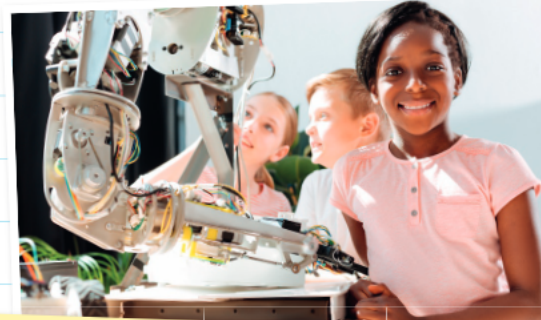
Robots excel in several critical areas that make them valuable additions to modern manufacturing:
infoNote
Robotic advantages:
Perfect for repetitive tasks requiring precision or involving dangerous conditions
Capability to handle extremely heavy materials without fatigue or loss of focus
Programmable for various tasks, boosting overall productivity
chatImportant
Important limitations to consider:
Cannot substitute human decision-making in complex situations
Potential reduction in employment opportunities for workers
Require significant technical support and maintenance
Buildings and the place of work
As technological innovations advance, companies must modify their work environments and operational approaches in multiple ways. The physical workplace is evolving to accommodate new technologies and work patterns.
Flexible building design and remote working
Organisations are implementing more adaptable building layouts to enhance efficiency and accelerate product development timelines. Automation enables remote work capabilities, such as centrally managed autonomous vehicles, allowing for greater flexibility in how and where work is performed.
infoNote
Modern building design increasingly focuses on modularity and adaptability, allowing spaces to be reconfigured quickly as operational needs change.
Just in time (JIT) strategy
Smaller production facilities benefit from automated material ordering systems that minimise storage requirements. Just in Time represents a strategic approach that boosts efficiency by accepting materials only when required for production, reducing storage costs and inventory levels.
chatImportant
The JIT strategy requires precise coordination and reliable supplier relationships, as any disruption in the supply chain can halt production immediately.
Automated storage and retrieval systems
Automated Storage and Retrieval Systems (ASRS) can eliminate manual material handling processes, further reducing space requirements and improving efficiency. These systems represent a significant advancement in warehouse management technology.
Tools and equipment
Current tools and equipment require modification to meet evolving industrial needs. The evolution of industrial tools reflects broader technological trends towards automation and flexibility.
Multi-purpose and flexible equipment
Multi-purpose equipment enhances operational flexibility by serving multiple functions. Manufacturing equipment will be arranged in adaptable production cells that can respond quickly to changing market demands.
Automated tools for safety and efficiency
Tools are becoming increasingly automated to enhance workplace safety and manufacturing speed. This automation reduces human error and creates safer working conditions, while simultaneously improving production quality and consistency.
infoNote
The trend towards automated tools reflects both safety imperatives and competitive pressures to improve efficiency and reduce costs.
Worked example analysis
lightbulbExample
Worked Example: Benefits of Increased Automation
When companies increase automation, they typically experience several measurable advantages:
Step 1: Space efficiency improvements
Storage space requirements decrease significantly due to automated inventory management
Floor space can be reallocated to production or other value-adding activities
Step 2: Production flexibility gains
Production becomes more adaptable and responsive to market changes
Quick reconfiguration capabilities allow for diverse product lines
Step 3: Safety and quality improvements
Human errors are minimised, reducing potential workplace injuries
Consistent quality standards are maintained across all production runs
bookmarkSummary
Key Points to Remember:
Automation uses control systems like CNC equipment to reduce costs and improve quality, but requires high initial investment
Robotics excels at repetitive, precise, or hazardous tasks but cannot replace human judgement in complex decisions
Just in Time (JIT) strategy reduces storage costs by accepting materials only when needed for production
Flexible building design and automated systems enable remote working and adaptable manufacturing
Multi-purpose equipment and automated tools increase operational flexibility while improving safety and efficiency